Tag: Caixin Media

Whitelist Wipeout

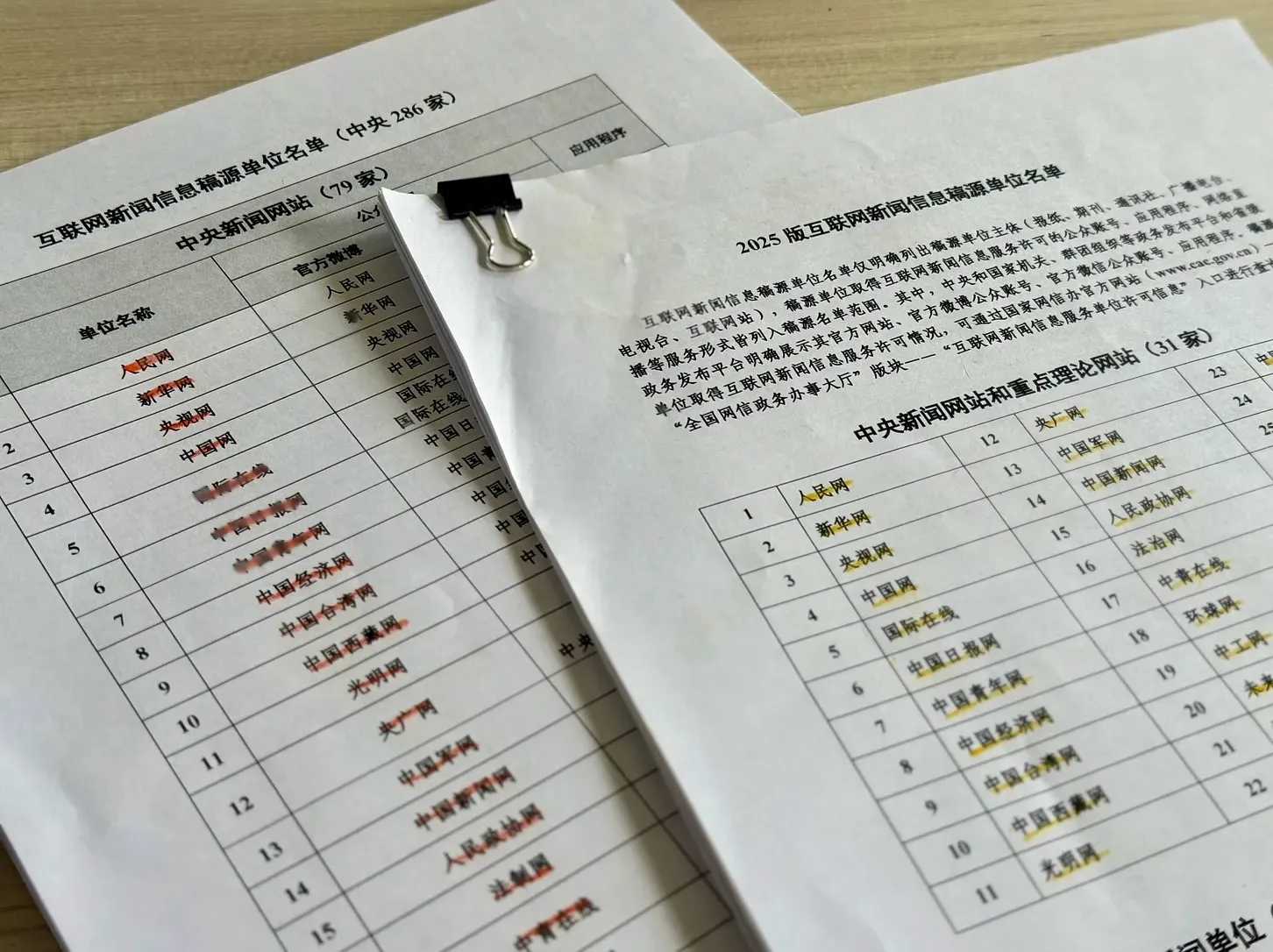
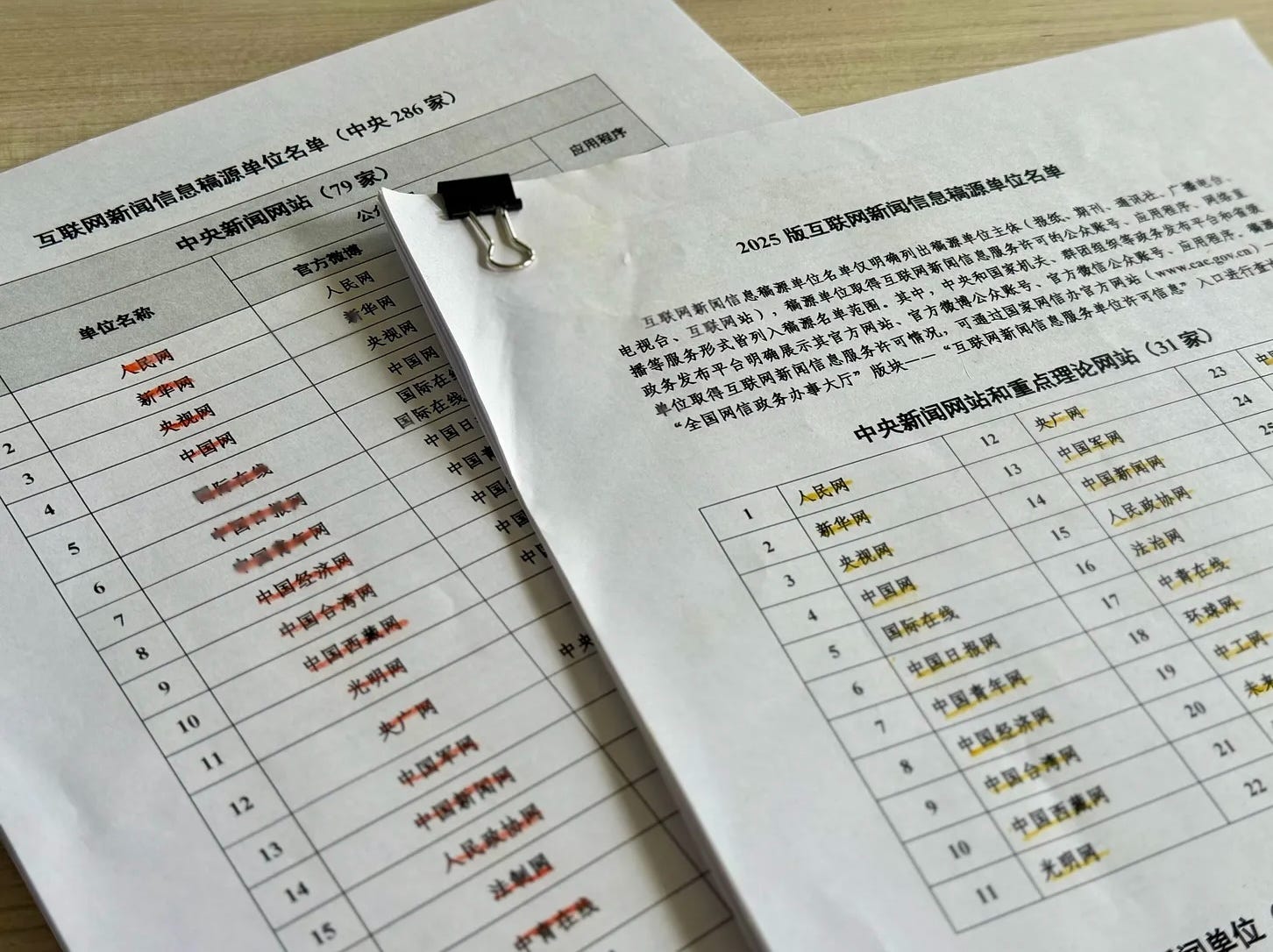
Last month, China’s top internet control body, the Cyberspace Administration of China (CAC) released its latest “whitelist” of approved news sources from which internet platforms are legally permitted to repost news content — a system that has become a cornerstone of information control under Xi Jinping. Journalists over at our Chinese-language sister publication Tian Jian (田間) combed through the list last week to compare it with the 2021 version of the roster. What did they find?
The most noteworthy change was the omission of a more outspoken news outlet, Sanlian Life Weekly (三聯生活周刊), a respected news magazine that had recently published sensitive investigative reports, including coverage of Beijing flooding and a rare story about cross-regional arrests. Both stories were subsequently deleted from Chinese internet platforms.

The scrubbing of Sanlian from the roster echoes the 2021 removal of Caixin Media, another respected outlet that has struggled over the past decade to maintain professional space. The updated 2025 list grew from 1,358 to 1,459 approved sources, with most additions being local government platforms — likely reflecting Beijing’s strategy to strengthen propaganda capabilities at the local level. Guangdong province alone added 59 new government-affiliated outlets.

Beijing Bristles

Ever since April 2, when President Donald Trump announced the imposition of deep tariffs from White House Rose Garden as a “Liberation Day” for America, China has pushed back hard, framing the United States as bullying, inflexible, and ultimately harmful to the world and itself. The rallying cry from the Ministry of Foreign Affairs (MFA) three days later set the tone of defiance: “The world needs justice, not hegemony!” (世界要公道,不要霸道).

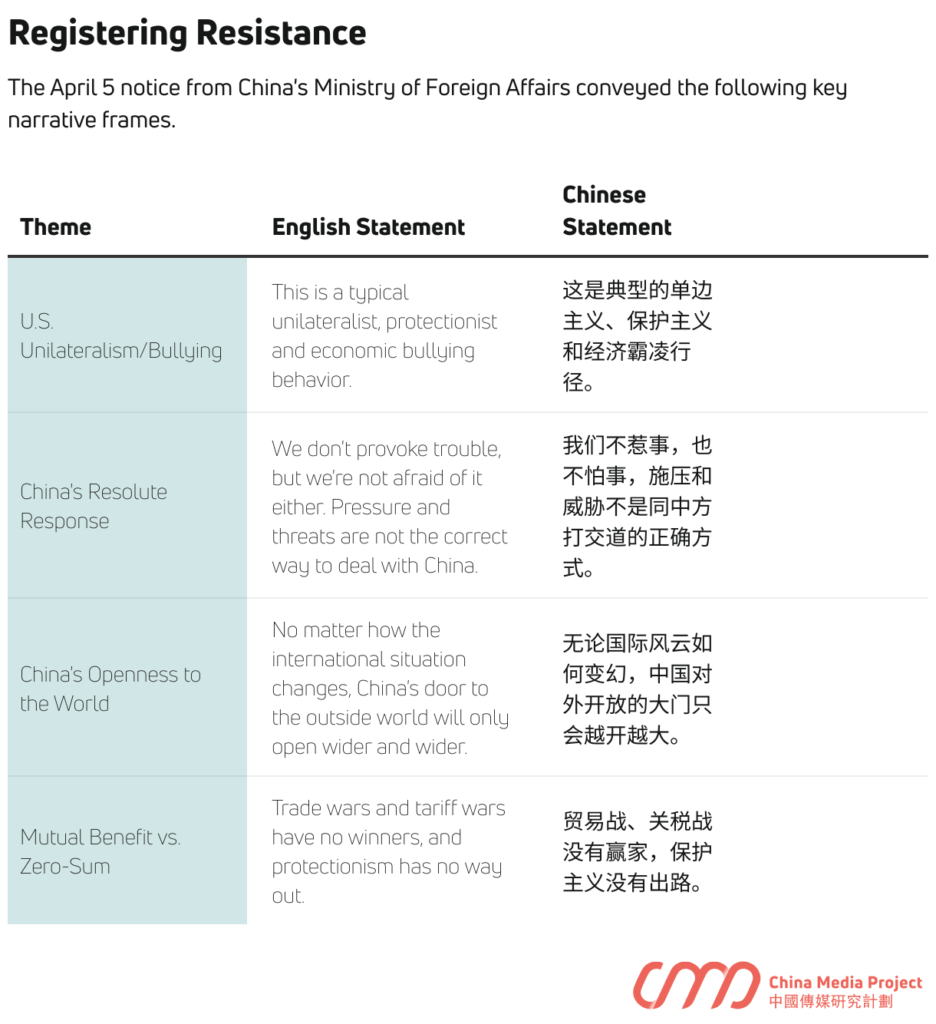
Filtered out through an official notice, or tonggao (通稿), from Xinhua News Agency, the MFA’s language accused the US of “economic bullying” and “zero-sum game playing,” and warned that “pressure and threats are not the correct way to deal with China.” The message reverberated throughout the media inside China, from the leadership’s People’s Daily (人民日報), to provincial mouthpieces like Guangdong’s Nanfang Daily (南方日報), and on to more commercial outlets like Caixin Media (財新) and the 21st Century Business Herald (21世紀經濟報道). In perhaps the subtlest sign of pique, the professionally-minded Caixin labeled the notice “Authorized by Xinhua for Release” (新华社受权发布). Translation: We were ordered to run this.

For a more detailed look at China’s framing of the US tariffs, stay tuned for our full analysis next week. Until then, here is a breakdown of the key narrative frames driving official coverage over the past two weeks — all evident in the original MFA release.