Tag: CCP

Hoops Oops

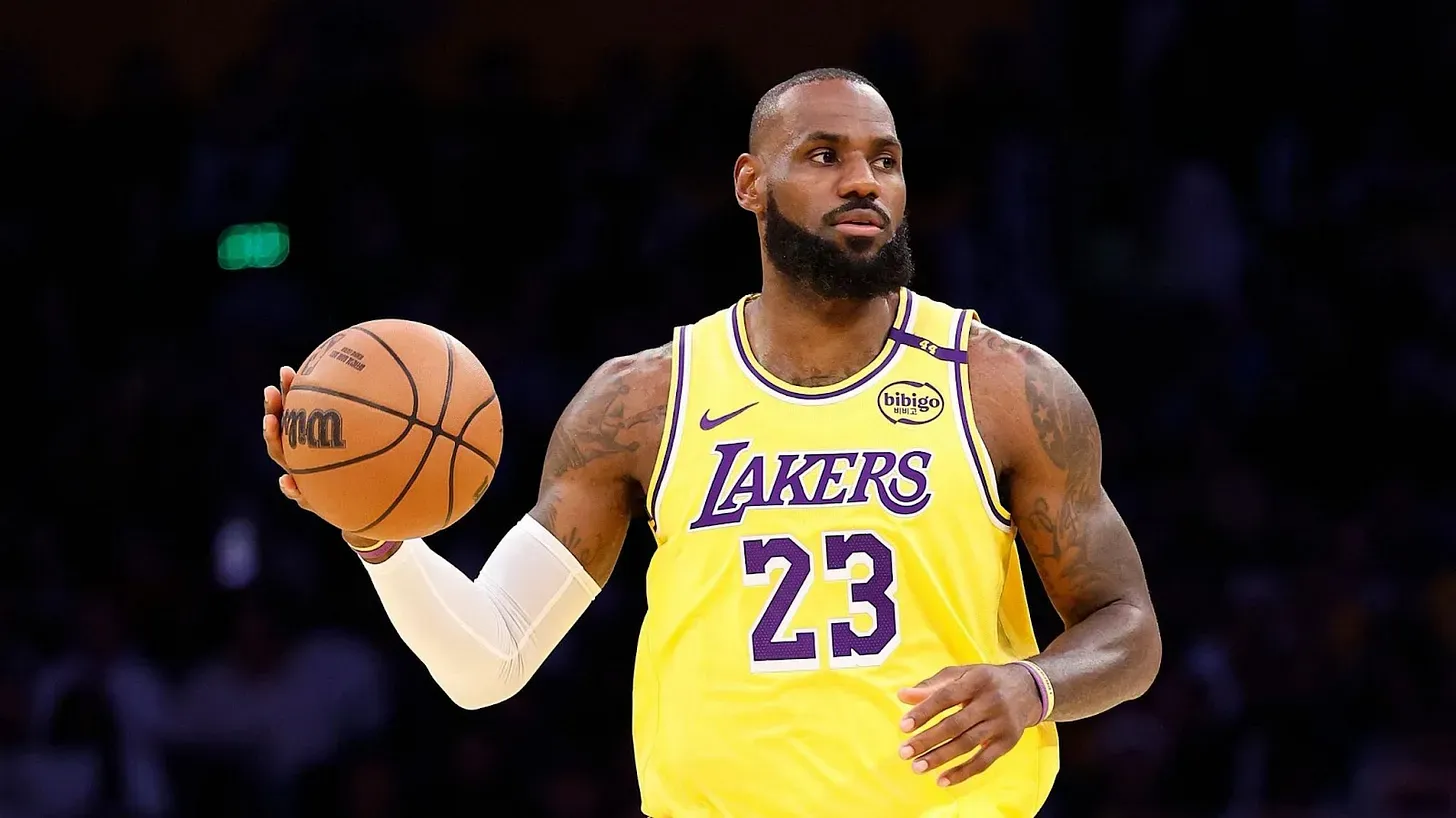
“Basketball is a bridge that connects us.” That was the headline of a commentary published in the Chinese Communist Party’s People’s Daily newspaper earlier this month, with a soaring byline from none other than LeBron James, the LA Lakers star who is the NBA’s all-time leading scorer. “I’ve been deeply moved by the enthusiasm and friendliness of my Chinese friends,” the commentary began, with a typical CCP frame of people-to-people friendship. “What I can do in return is give my all in every game as a way to show my gratitude to everyone.” For a generally insipid Party-run mouthpiece, such a celebrity endorsement was too good to be true — and of course it was. Representatives for LeBron James quickly disavowed the story. The star, they said, had only ever conducted interviews with Chinese media.

What does this tell us? The flagship newspaper of the CCP feels it is perfectly acceptable to fake a commentary by one of the world’s most recognizable public figures if it suits the agenda, in this case talking up “friendship” and people-to-people exchange.
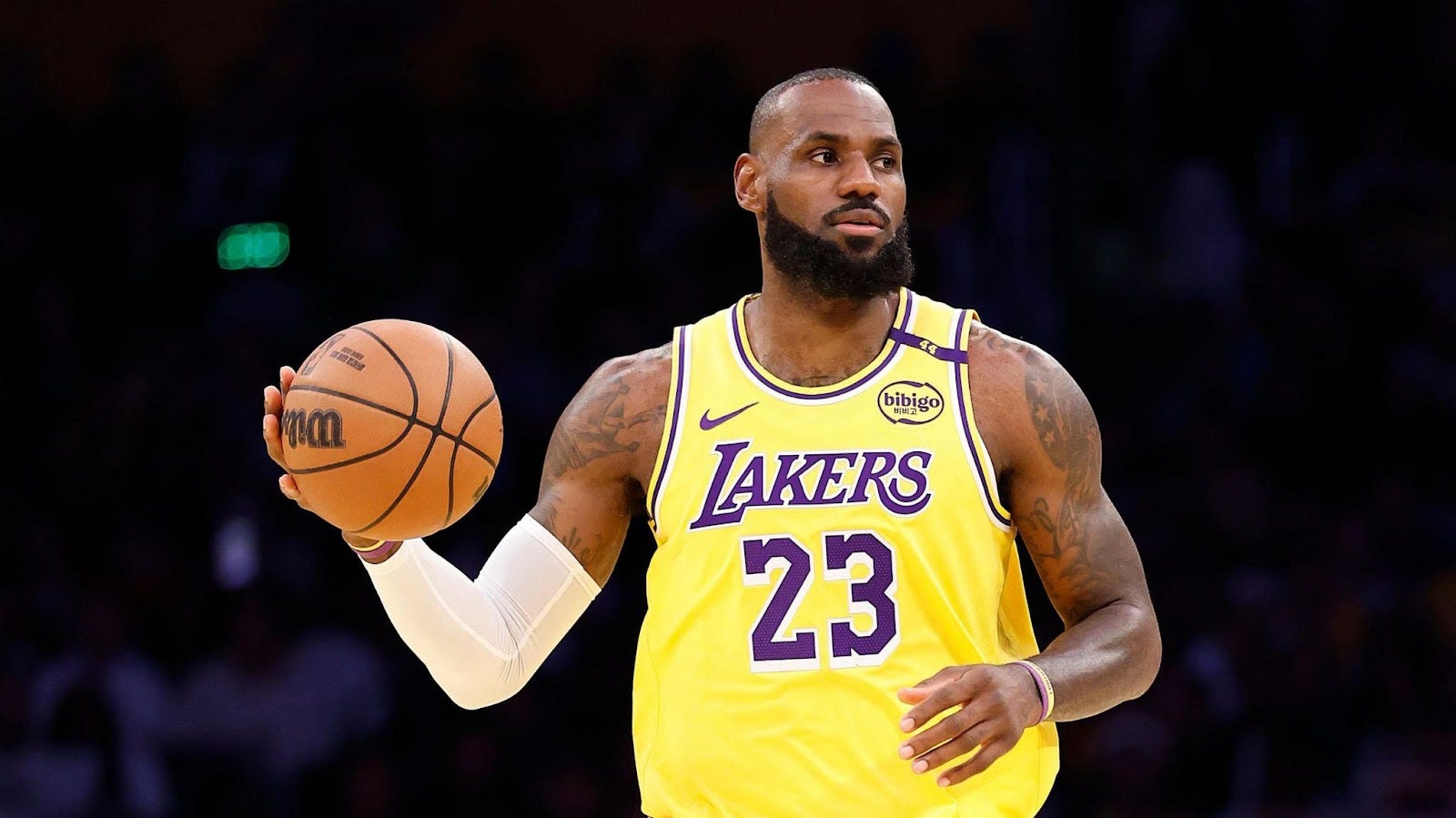
LeBron James. IMAGE: Wikimedia Commons.

It should not surprise readers that this is not an isolated case. In 2016, after a commentary with a byline from a journalism professor in the New York state university system appeared in the paper decrying the falsehood of Western freedom of speech, CMP reached out to the professor in question. In an e-mail exchange, the shocked professor said she had only spoken on the phone with a People’s Daily reporter and raised issues of journalism ethics more generally. Sound familiar?

At the People’s Daily, politics always trump professionalism. In order to have his official press card re-issued back in January, the staff member behind the LeBron James commentary, sports reporter Wang Liang (王亮) would almost certainly have taken refresher courses on the Marxist View of Journalism and fealty to the Party. The most basic ethics and good practice? Not so important. The People’s Daily has issued no public correction on the LeBron James commentary. Don’t bother waiting for the buzzer.

Guangxi Seeks Vietnamese Media Partners

Offering an inside look into how China is using provincial-level media resources to strengthen external propaganda, the official Guangxi Daily (广西日报) issued a call for bidding this month for an exchange program with Vietnamese journalists.

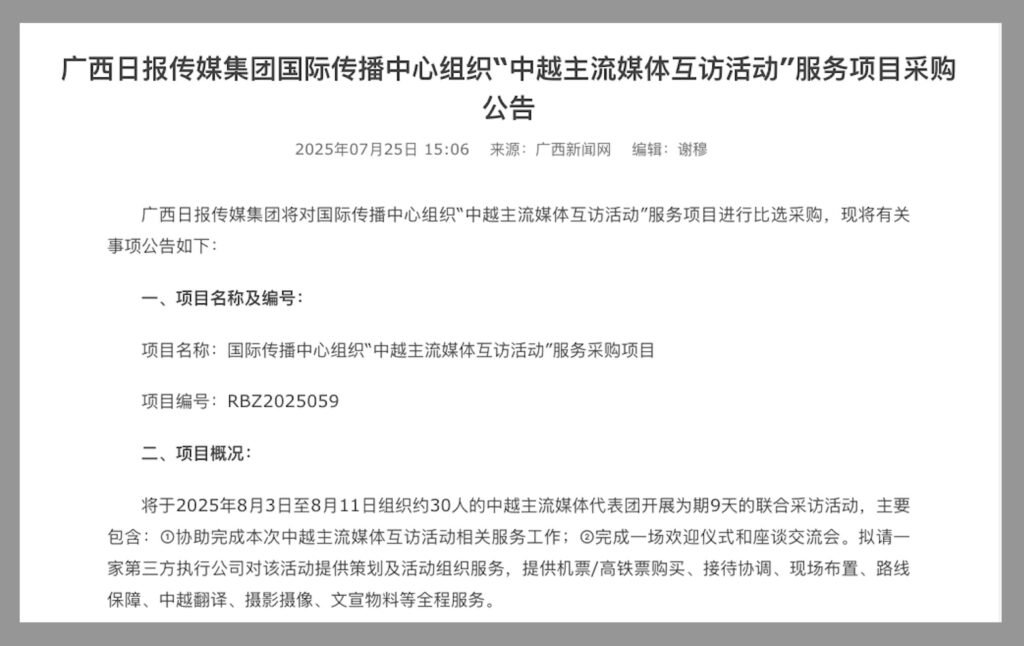
The procurement notice, published July 25, seeks a third-party contractor to organize a nine-day joint reporting activity from August 3-11 involving approximately 30 Chinese and Vietnamese mainstream media representatives. The program will include coordinated interviews, a welcome ceremony, and exchange sessions, with services covering transportation, translation, photography, and promotional materials.

A procurement notice from the Guangxi Daily Media Group is posted on July 25, 2025.

The initiative is being organized by the Guangxi Daily International Communication Center (广西日报国际传播中心), part of the Guangxi Daily Media Group. The center represents a key component of China’s expanding external messaging apparatus at the subnational level.

The formation of international communication centers, or ICCs, at the provincial, city and even county levels across the country responds to a call from Xi Jinping to remake the nation’s system for what the Chinese Communist Party has typically called “external propaganda” (外宣).

The idea driving the policy is that the leadership might, by empowering provincial and local media entities to establish their own international communication centers, leverage more direct knowledge of cross-border dynamics, shared cultural ties, and economic partnerships that national-level outlets might overlook.

This approach reflects a calculated shift from China’s traditional reliance on centralized state media to a more distributed network that can exploit regional advantages. The dispersed structure — which might be called “centralization+” — enables the party to maintain unified messaging while appearing to offer diverse perspectives, creating what officials describe as “singing an international communication ‘chorus'” (唱响国际传播”大合唱”).