Tag: China censorship

Sources in Arms

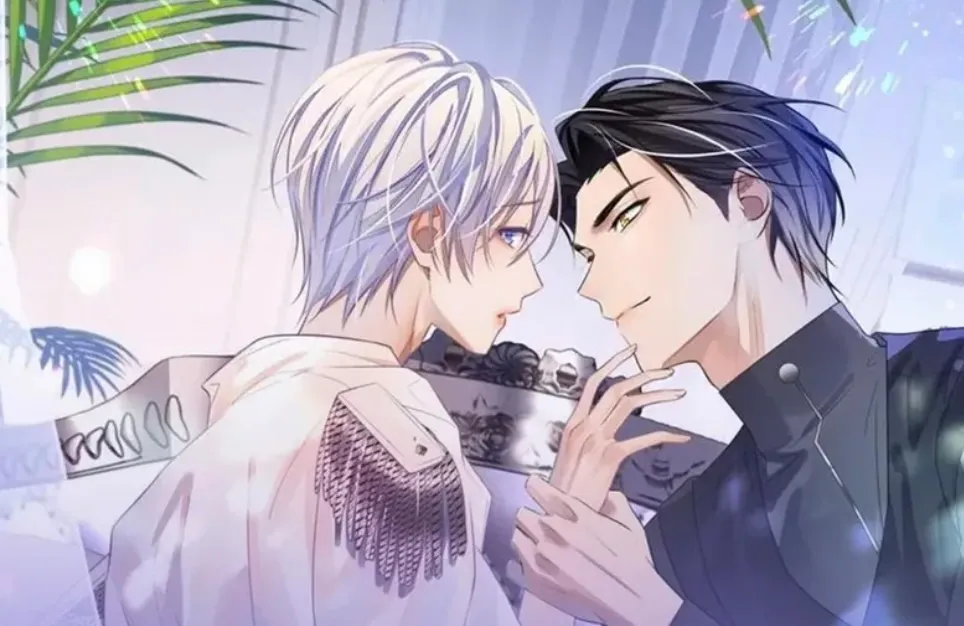
In a crackdown earlier this year that sent ripples through China’s popular online gay erotica scene, known as “Boys’ Love” fiction, or BL, police engaged in cross-border “remote fishing” (遠洋捕撈) operations that swept up mostly female writers publishing on a Taiwan-based platform called Haitang Literature City (海棠文化線上文學城).

Yesterday, our Chinese-language sister publication Tian Jian (田間) published an in-depth account based on the experiences of Chinese journalists who worked against the odds to break the media silence. The reporters encountered numerous obstacles, including sources too frightened to speak, editors rejecting story pitches (because Haitang’s servers were in Taiwan), and the constant fear of becoming targets themselves. Despite the risk, the journalists affirmed the importance of the work — and the closeness that can develop with sources. “When you do sensitive reporting, it’s very special,” one reporter told Tian Jian. “It’s like [journalists and sources are] engaged in battle side-by-side, strategizing together about how to keep everyone safe.”

Read the full story HERE.
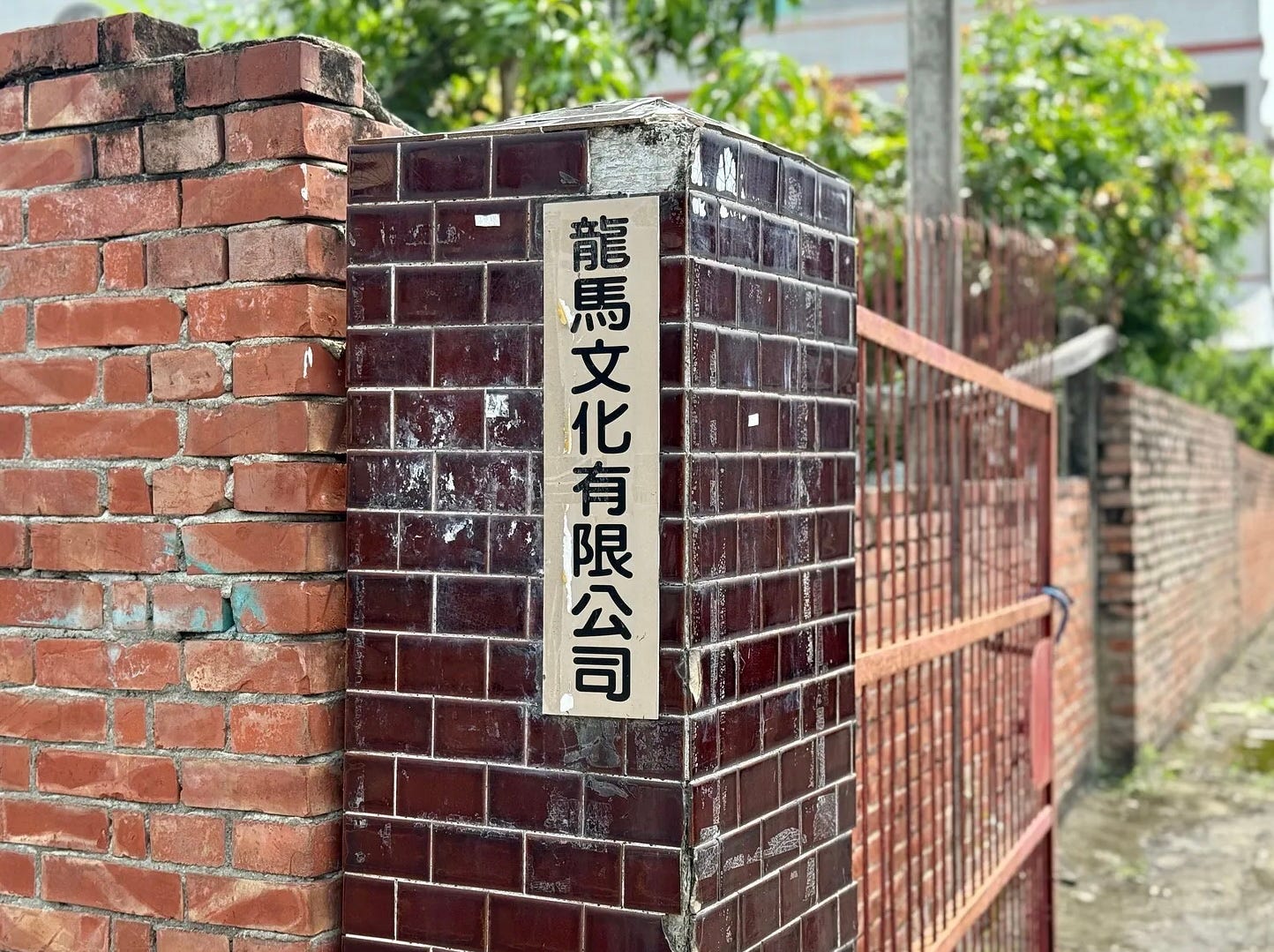
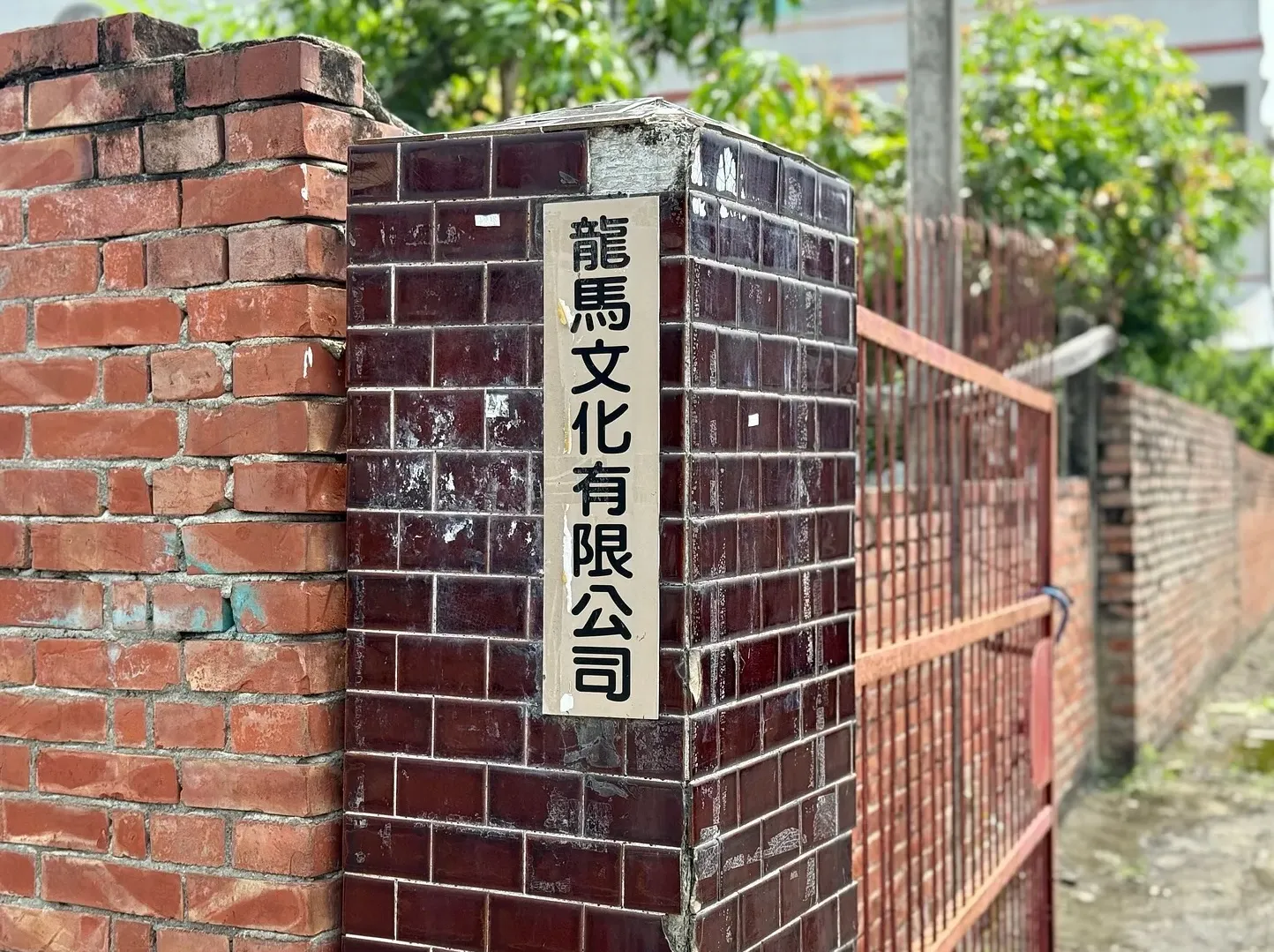
The parent company of ‘Haitang Culture Online Literature City’ is Longma Culture Company, located in Yunlin, Taiwan. Photo by Chien Heng-yu, Tian Jian.

“Picking Quarrels”

Chinese citizen journalist Zhang Zhan (張展), previously imprisoned for reporting on the COVID-19 outbreak in Wuhan, was sentenced to another four years in prison on September 19 on charges of “picking quarrels and provoking trouble” (尋釁滋事). The 42-year-old former lawyer, who completed a four-year sentence in May 2024 for her reporting from Wuhan during the pandemic, had been detained since August 2024 after supporting pro-democracy activist Zhang Pancheng (張盼成), who posted a video criticizing China’s human rights record. Zhang Zhan’s indictment accused her of “widely spreading insulting content about others and false information seriously damaging the country’s image on overseas social media, causing public disorder.” There has not been a peep about the case in China’s media — no surprise there. [Learn more about the “Picking Quarrels” charge in the CMP Dictionary.]

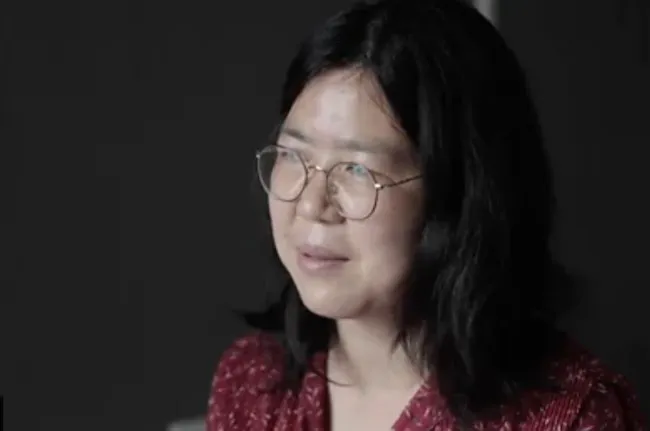
Zhang Zhan appears in a BBC interview in May 2020, several months before her initial detention.

Parade Crackdown

China intensified online censorship during its September 3 military parade, detaining or silencing social media users for mild criticism. According to China Digital Times, an Anhui resident who asked “What era is this still happening?” in a WeChat group was arrested within three hours and detained for ten days. Another user questioning why female soldiers wore makeup received a seven-day mute for “inciting hatred.” Singapore’s Lianhe Zaobao reported that a 47-year-old Hubei man was also detained for “defamatory remarks” about the parade, while post-event search results overwhelmingly featured praise.

Romance Lockdown

According to reporting by Taiwan’s Central News Agency, scores of writers in China have been arrested or fined for publishing on the Taiwan-based adult fiction website Haitang Literature (海棠文學城), which allows authors to earn money through subscriptions and tips. More than 50 writers of “danmei” (耽美) — romantic fiction featuring male-male relationships typically written by women — have been detained since June 2024 in what critics call “remote fishing” (遠洋捕撈). This refers to the practice by the authorities of crossing jurisdictions to make arrests. Police in Anhui province initially targeted high-earning Chinese authors on the platform, while recent arrests in Lanzhou focused mostly on young writers, many university students, who made just a few thousand yuan through their online writings. Several writers implicated in the crackdown posted on Weibo about depression and suicidal thoughts before their accounts were deleted. CNA reports that lawyers in Beijing and Shanghai have formed pro bono legal aid teams to assist detained authors. So far, no coverage of this story has appeared in the media inside China.

The River Runs Black

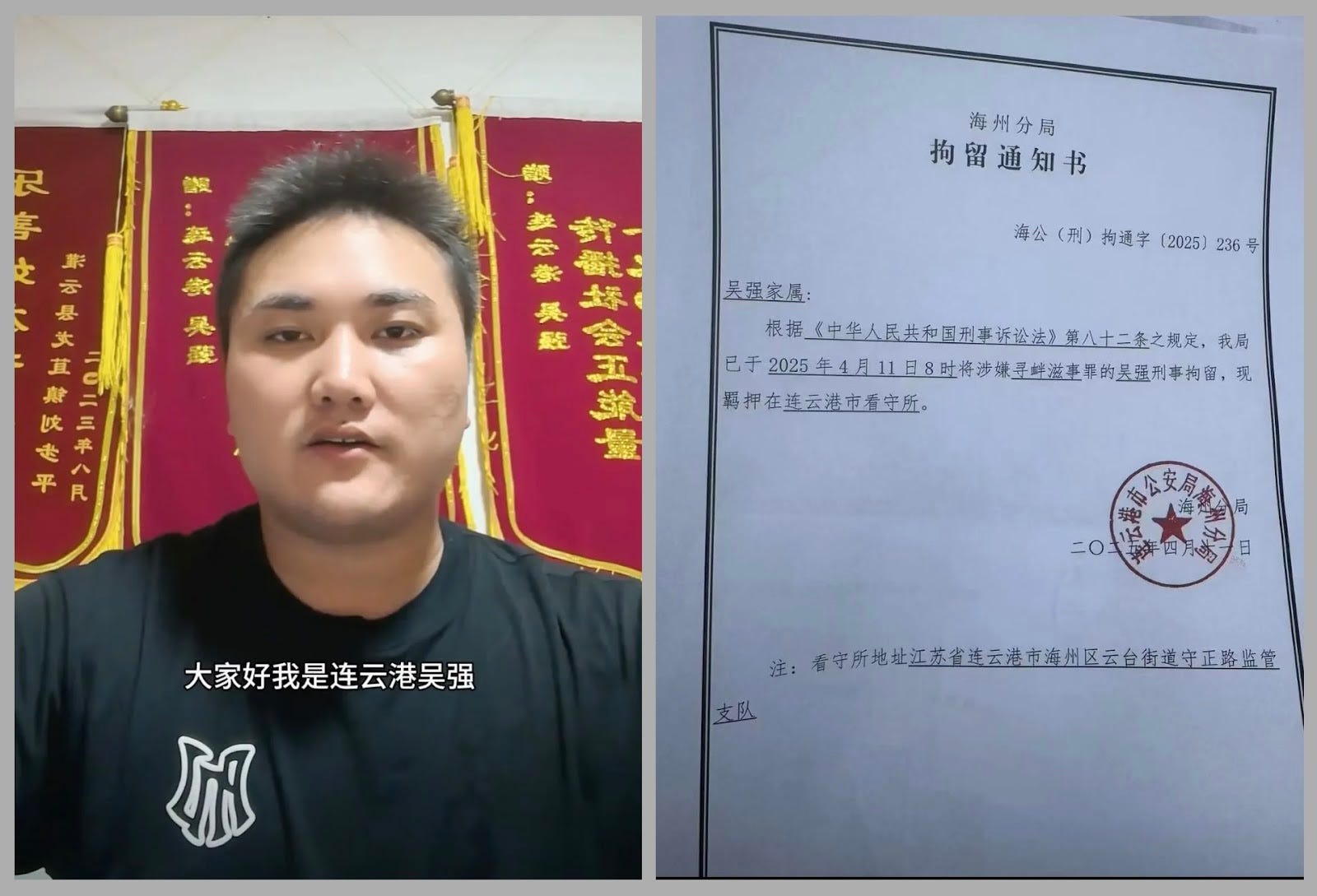
Wu Qiang (吴强), a citizen from the city of Lianyungang in northeastern Jiangsu province, was detained by police on April 11, just two days after posting on Weibo about “black, oil-like pollution” in the local Xinghai River (兴海河) as it passes through the Ganyu High-Tech Zone, home to a number of major manufacturing firms, including Roche Energy, headquartered in Shanghai. Wu was arrested on charges of “picking quarrels and provoking trouble” (寻衅滋事) — a charge often levelled at those carrying out acts of civil disobedience — and remains in custody. The river pollution case, not reported inside China, emerged last week on several social media accounts, including the Substack account Aquarius Era (水瓶纪元).

At left, Wu Qiang. At right, the detention letter issued by police in Jiangsu. SOURCE: Aquarius Era.