Tag: China Daily

China Daily Partners with Egypt’s Al-Ahram
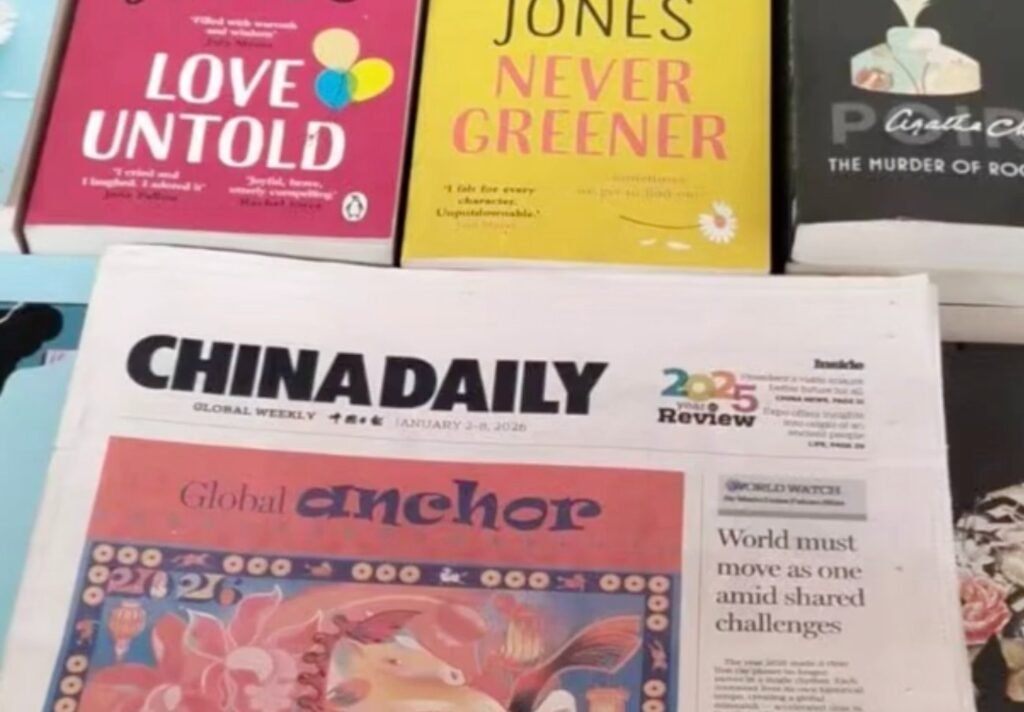
A partnership deal with Egypt’s most widely circulated daily newspaper, announced earlier this month, enables the government-run China Daily to distribute its English-language print edition to audiences in eight Egyptian cities, including the capital, Cairo. The arrangement, which appears to make use of the existing circulation network of Al-Ahram (金字塔報), one of the region’s most influential Arabic news sources, will place the China Daily in a wide range of locations — including embassies and consulates, government offices, universities, research institutions, hotels, and bookstores. 

A video shared by the China Daily announcing the partnership showed copies of the China Daily running off presses at an unspecified Al-Ahram print facility before being placed on newsstands and in bookstores. The edition was identified under the masthead as “Global Weekly,” which elsewhere in the world is a 32-page China Daily tabloid released every Friday. The headline for the online and video report on the partnership declared: “China Daily Printed in Egypt for First Time.” 

China Daily is operated by the Information Office of China’s State Council, which is essentially the foreign office of the Chinese Communist Party’s Central Propaganda Department (中共中央宣傳部). The newspaper has struck similar arrangements with media outlets around the world, including the Washington Post, the Wall Street Journal, the Los Angeles Times, the Hindustan Times, Kenya’s Star newspaper, and many others. Last year, the paper, which China’s government regards as one of its chief propaganda voices overseas, partnered with France’s Le Figaro to publish the inaugural French edition of its “China Watch” supplement, which in Chinese is revealingly referred to as the “China International Image Special Issue” (中國國家形象專刊) — a testament to its role not as a news source but as government communication. 

The deal with Al-Ahram, a state-owned Egyptian media outlet that, founded in 1875, is one of the oldest newspapers in the Arab world, is the latest move in China’s broader push to expand its media presence in North Africa and the Arab world.

Promotion Unlocked

Sun Shangwu (孫尚武), deputy editor of the state-run China Daily (中國日報) newspaper, will become deputy director of China’s central government Liaison Office (中聯辦) in Hong Kong, according to a report by Hong Kong’s Sing Tao Daily. The 56-year-old Sun, the paper reported, has “extensive foreign propaganda experience” (外宣經驗豐富) and will oversee external communication work for the office, which also closely controls such outlets as the Ta Kung Pao (大公報). This “extensive” experience is an apparent reference to Sun’s launch in 2021 of China Daily’s “Media Unlocked” (起底) studio, a combative social media brand that claims to produce “investigative documentaries” (调查纪录片) but more often peddles outright disinformation targeting critics of China in the West. “Media Unlocked” recently launched a personal attack on Simon Fraser University’s Darren Byler, who has criticized internment camps in Xinjiang.

Southern Celebrations

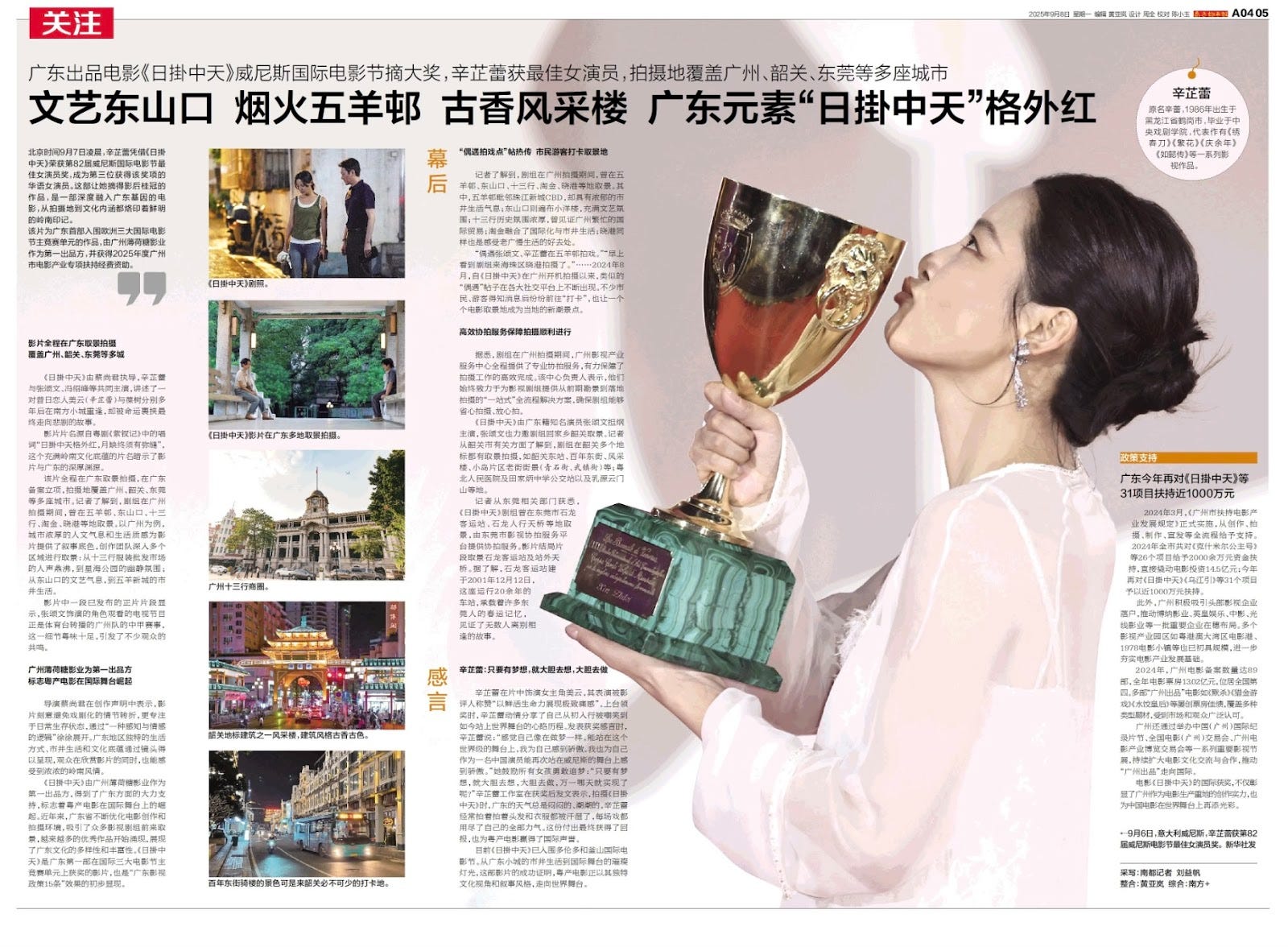
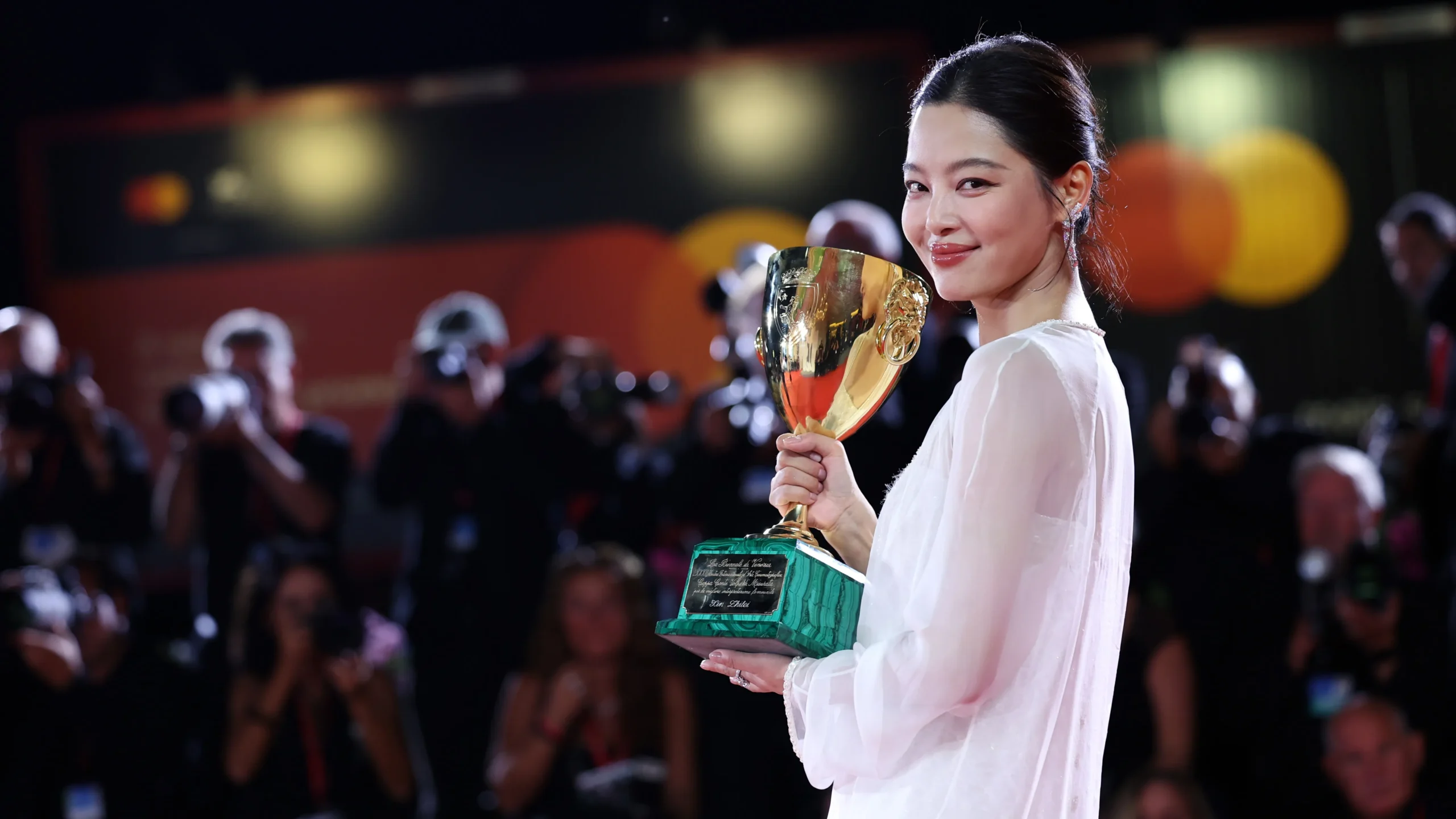
Actress Xin Zhilei (辛芷蕾) won the Best Actress Award at the 82nd Venice International Film Festival on Saturday for her performance in The Sun Rises on Us All (日掛中天), a story by neo-noir director Cai Shangjun (蔡尚君) about a pair of estranged lovers. As the state-run China Daily noted, Xin was just the second actress from China to win the honor — coming more than three decades after Gong Li (鞏俐) clinched the title for her role in Zhang Yimou’s The Story of Qiu Ju in 1992.

Coverage of Xin Zhilei’s Venice win made the front page of yesterday’s Southern Metropolis Daily newspaper in Guangzhou — and received (above) a full page spread on page 3.

Produced in Guangdong, The Sun Rises on Us All derives its title from the Cantonese opera The Purple Hairpin (紫钗記). The film is the first production from the province to compete in the main competition of a major European film festival. The news has been reported enthusiastically by media across southern China, and in Hong Kong — including HK01 and the state-controlled Ta Kung Pao (大公報) — as well as by Taiwanese outlets such as Mirror Media and ETToday.

Propaganda Pushback

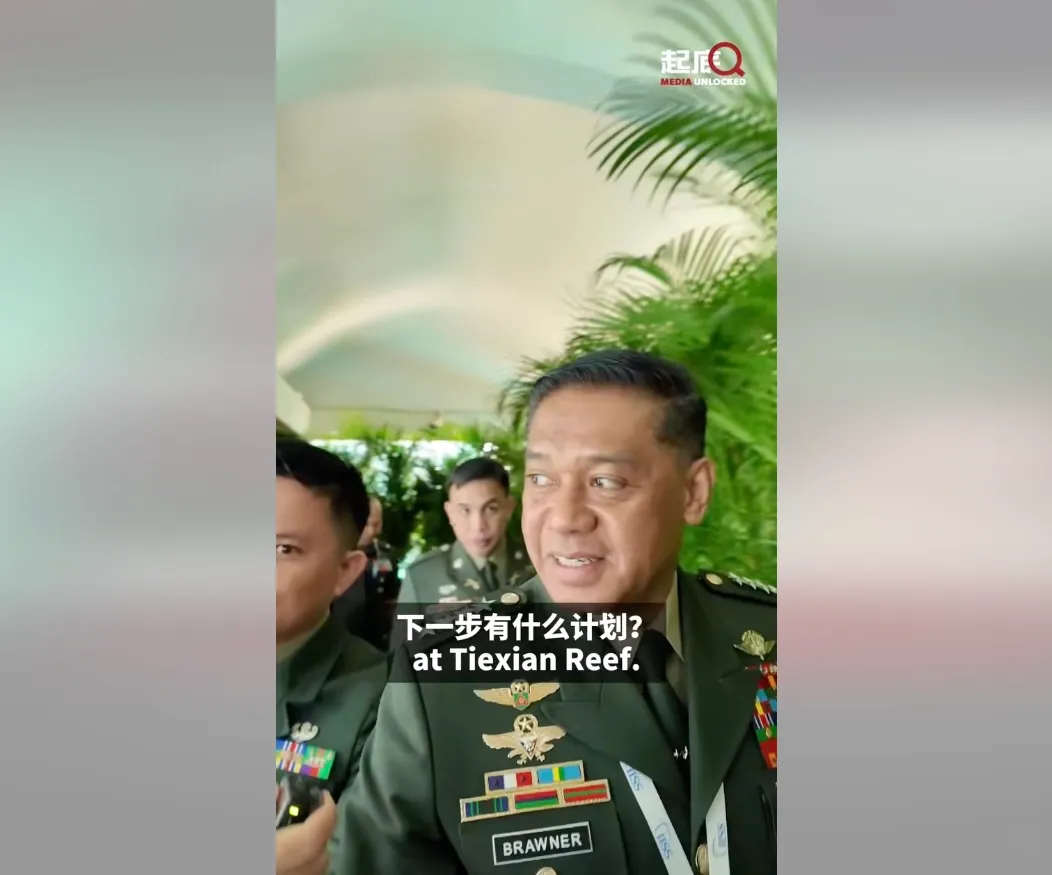
The Armed Forces of the Philippines dismissed as “propaganda” a China Daily video showing General Romeo Brawner Jr. allegedly avoiding reporters at Singapore’s Shangri-La Dialogue, held May 30-June 1. The video was posted online yesterday by “Media Unlocked” (起底), a social media brand of China Daily that takes a shallow and confrontational approach while purporting to explore topics more deeply. In the video, the “Media Unlocked” reporters appear to have not clearly identified themselves as reporters. They then allege that Brawner “dodged the question” about what they characterize as “the Philippines’ recent provocations in the South China Sea.”

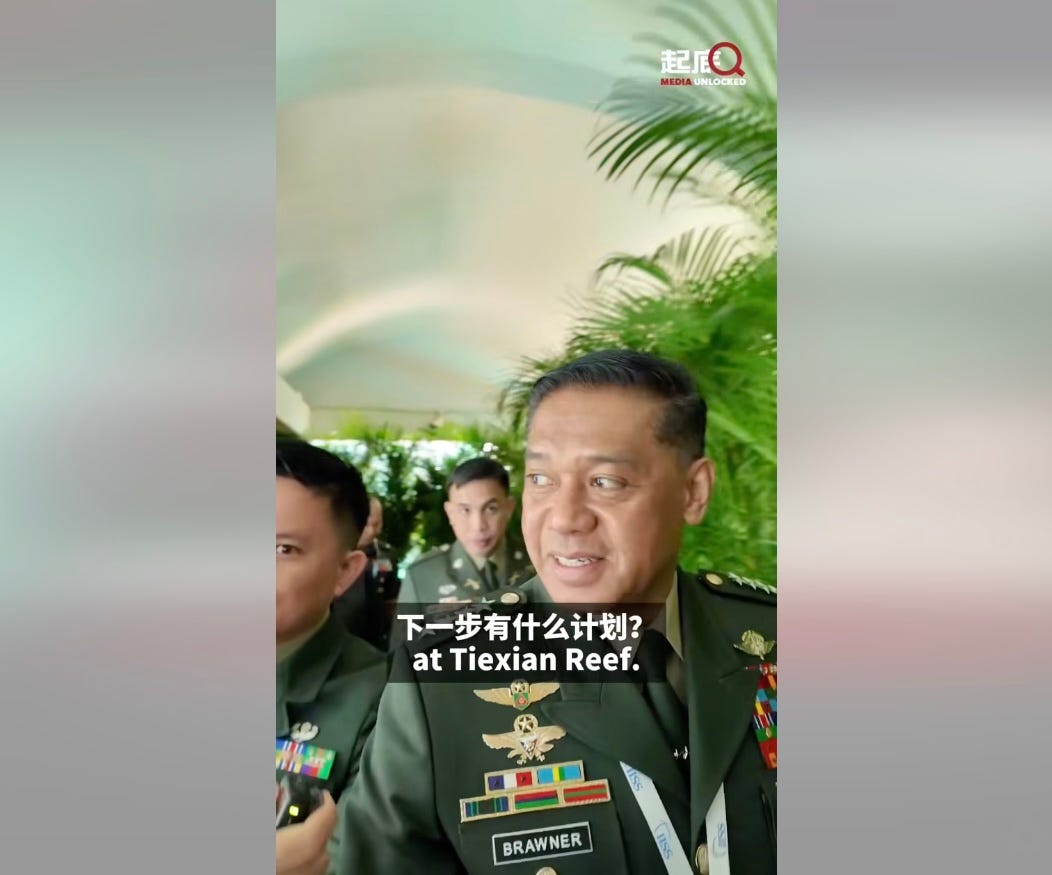
A screenshot of the China Daily “Media Unlocked” video in which Brawner and others are cornered for questions about territorial disputes.

Defense Secretary Gilberto Teodoro Jr. noted that China had not sent an official delegation to the security forum, where he addressed Beijing’s assertions in the West Philippine Sea (西菲律賓海) — referring to the portion of the South China Sea claimed by the Philippines.

The incident in Singapore reflects how maritime disputes between the Philippines and China over the South China Sea have intensified in recent months and spilled over into the information space, becoming a contest of narratives. But it also offers an illuminating look at how Chinese state media go on the attack — seeking to create and distribute propaganda and disinformation on issues of core interest through prescribed proxy media brands and viral content. The “Media Unlocked” video was produced by Meng Zhe (孟哲) and Xupan Yiru (徐潘依如), who are identified elsewhere as reporters for “the Unlocked Media Studio of China Daily” — though not in the video itself. The “Unlocked” brand is part of a growing social media “studio” system implemented by central CCP-run media in recent years, partly to distance core state media brands from more provocative statements and conduct, and partly to disguise their state affiliation on social media platforms. Notably, the military delegation from the Philippines was approached at the same time by a reporter from Yutuantantian (玉渊谭天), a social media brand under the CCP-run China Media Group. In April 2023, a top CMG executive said the account had been “planned in advance and prepared over the long term to deliver powerful punches at critical moments.”