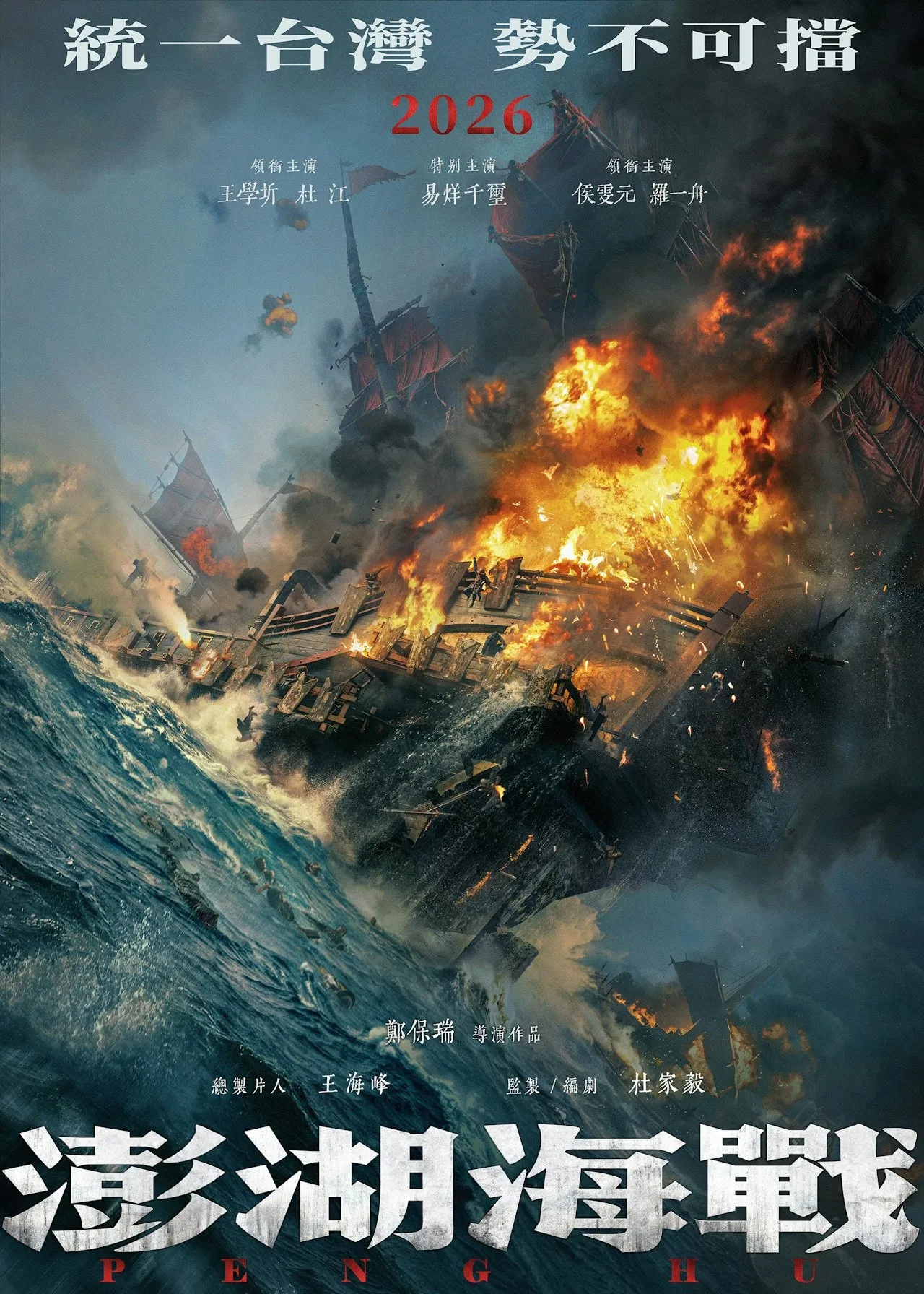
China’s state-backed film The Battle of Penghu (澎湖海戰), set for 2026 release, depicts the Qing dynasty’s 1683 defeat of Ming loyalists in Taiwan under the slogan “Unifying Taiwan is unstoppable.” But the reception of the promotional trailer, released on October 25, reminded authorities that history is never so simple. Some Chinese online criticized the film for celebrating the Qing’s conquest while sympathizing with Ming loyalists, according to Taiwan’s Central News Agency. One commenter sarcastically suggested Beijing might also make a film about Wu Sangui (吳三桂), the Ming general who infamously opened the gates for Qing forces. Authorities have since blocked negative comments on social media.
China’s government-run Xinhua News Agency published three consecutive commentaries on October 26, 27, and 28 under the byline “Zhong Taiwen” (鍾台文), a homophone for “China Commentary on the Taiwan Issue.” The articles called for cross-strait negotiations on a “one country, two systems” arrangement with “patriots governing Taiwan” (愛國者治台) after unification. Taiwan’s Mainland Affairs Council responded that Beijing seeks to replicate Hong Kong’s model where “patriots” means Communist Party loyalists, and warned that “Taiwanese will not be fooled.”
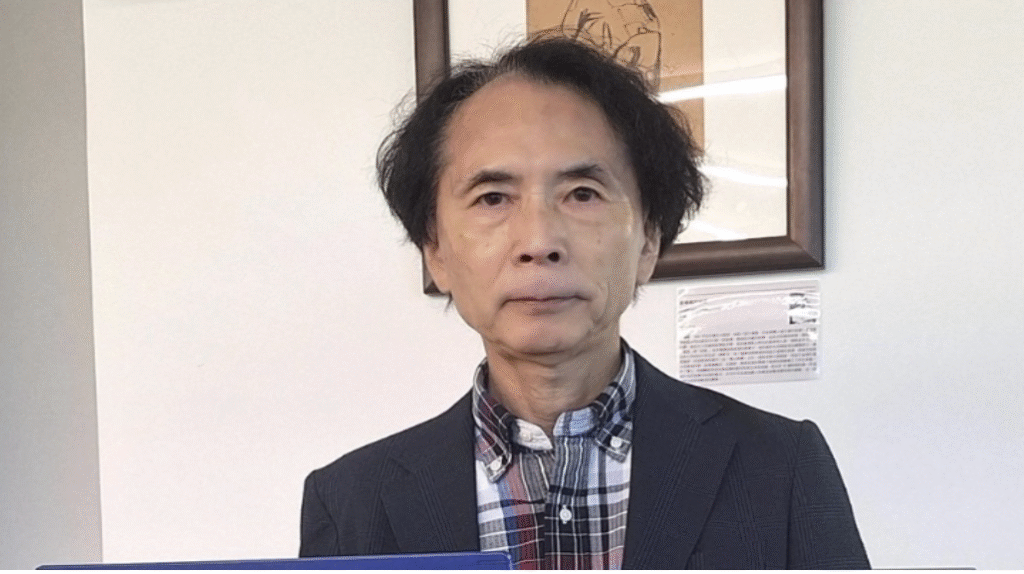
A Japanese scholar accused the China Times (中國時報) of fabricating his analysis of the results of the leadership election for Taiwan’s opposition Kuomintang (KMT) party. Yoshiyuki Ogasawara (小笠原欣幸), a political scientist and honorary chair professor at National Tsing Hua University who specializes in Taiwan politics, posted his analysis on Facebook on October 22 after Cheng Li-wen (鄭麗文) won the KMT chairmanship with just over 50 percent of the vote. Multiple media outlets in Taiwan reported Ogasawara’s commentary, but the scholar singled out the China Times for distorting his remarks.
Ogasawara publicly detailed the discrepancies on October 23, noting that the China Times had transformed his characterization of Cheng’s clearly pro-China line (明確的親中路線) into language instead emphasizing “historical-cultural continuity” (歷史文化的延續). He alleged that the newspaper had fabricated entire quotes that he never wrote, including claims about the party “rebuilding confidence” (重建自信). Ogasawara demanded that the matter be addressed as a matter of professionalism. “If the China Times still has media self-respect,” he said, “please make corrections.” The China Times subsequently deleted the article, but to date has not issued a correction.
Japanese political scientist Yoshiyuki Ogasawara. SOURCE: UpMedia.
Hong Kong outlet CRNTT (中評社) issued a public apology to Taiwanese director Lo Ging-zim (羅景壬), one of the creators of the recently popular political thriller seriesZero Day Attack (零日攻擊), after it labelled him as a “corruption defendant” in an August news report. Lo filed a defamation lawsuit against CRNTT last month, after which the agency removed the article and issued an apology, admitting to “editorial negligence” (編輯部疏失). The false claim followed a smear campaign led by Taiwan’s opposition Kuomintang (KMT) Party that falsely alleged Lo’s team had received government funds and then failed to fulfill the terms of a contract. Company records in Hong Kong show that CRNTT is linked to the official China News Service, under the CCP’s United Front Work Department. Lo noted in a Facebook post after the apology that misinformation spreads instantly while “justice, no matter how swift, can only arrive late” (哪怕正義再快,也只能遲到).
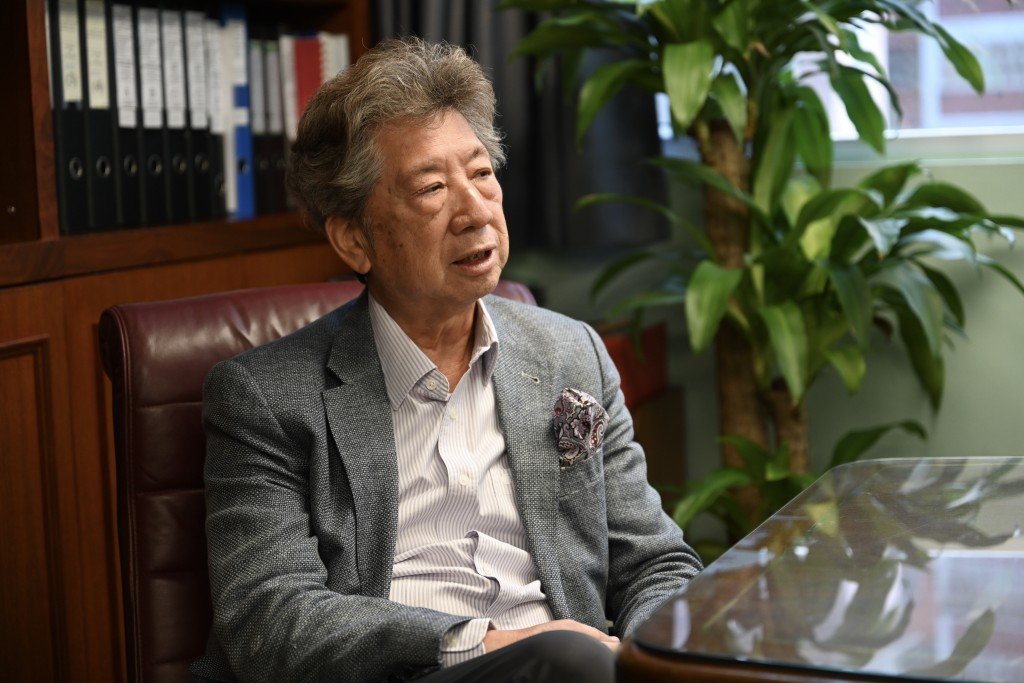
Hong Kong’s Legislative Council Secretariat, the administrative body supporting lawmakers, informed members last week that the English term “Chinese Mainland” (中國內地) must now replace past references to “Mainland China” under orders from China’s Ministry of Foreign Affairs — a clear effort to foreground PRC sovereignty. Pro-Beijing Executive Council member Ronny Tong Ka-wah (湯家驊) voiced support for the move, praising the Foreign Ministry for its “painstaking care” in clarifying proper terminology. He argued that “Mainland China” implies there are multiple Chinas.
Ronny Tong, a fan of new language in Hong Kong’s LEGCO to refer to China. SOURCE: Sing Tao Daily.
Taiwan’s arts sector faces systematic Chinese influence, with publishers changing “Taiwan” to “Taipei” for Hong Kong awards and media companies replacing writers who express political views on China and Taiwan. That, anyway, is the conclusion reached by the independent Taiwanese outlet b.l!nk in a recent pair of reports published on September 5 and 6 (here and here). According to the reports, cultural exchange programs disguise unification messaging as business partnerships. One editor wrote: “Through media exchange programs, they give your company money while spreading unification ideas during activities.”
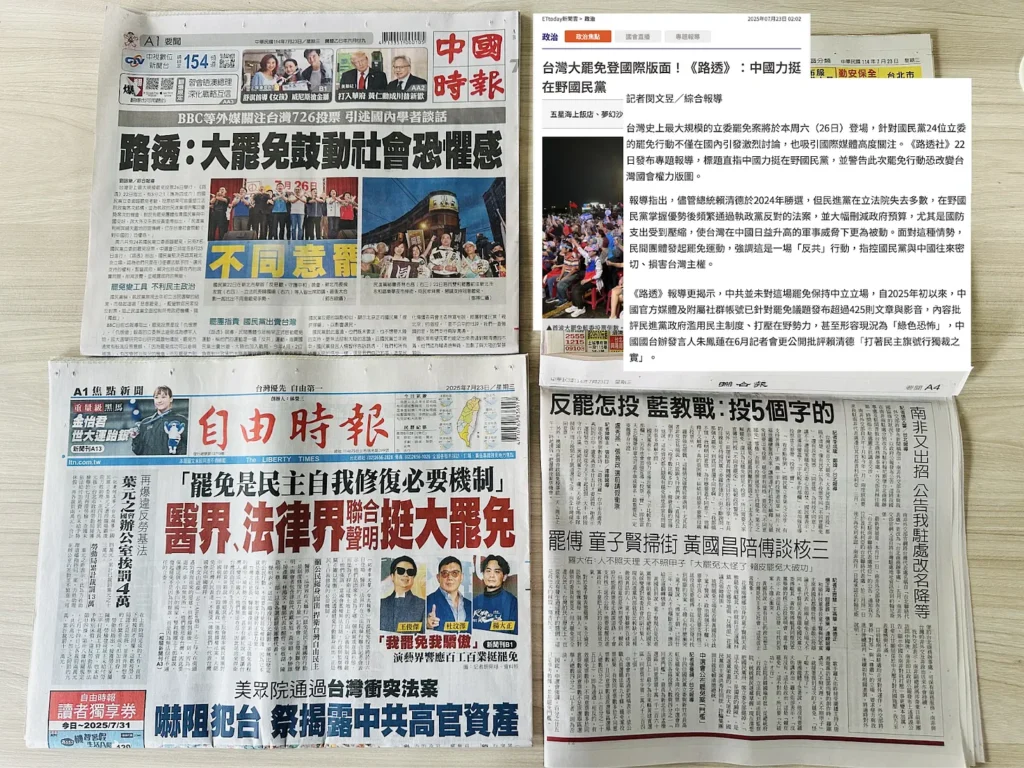
Taiwan’s China Times (中國時報) sparked controversy last month by mistranslating a Reuters report about parliamentary recalls. The paper’s headline claimed “Reuters: Mass Recalls Stoke Social Fear” (路透:大罷免鼓動社會恐懼感). In fact, the quoted assessment came not from Reuters but from National Chengchi University professor Huang Kuei-po (黃奎博).
Reuters reporter Lee Yimou (李憶慕) quickly corrected the misrepresentation on social media, sharing the accurate translation and encouraging readers to practice “media literacy” (媒體識讀). The incident highlights broader concerns about editorial standards and information accuracy amid Taiwan’s contentious recall campaigns, where media outlets across the political spectrum face accusations of bias in their coverage of cross-strait politics.
Taiwan’s recall drama has now entered its second wave. In the trough between these political swells — a moment when observers can pause and take stock — a media issue rose to the surface this past week: neutrality (中立).
The Reporter (報導者), one of the country’s most respected independent outlets, published a video [below] on July 22 by producer Fang Jun-zhu (方君竹) discussing the recalls, featuring interviews with targeted lawmakers and civic group members who initiated the recall campaigns. The video has so far gathered close to a million views, but some users on Threads have criticized the report as an example of “fake neutrality” (假中立). Anti-recall perspectives in the video comprised just 20 percent of the content, they said, questioning whether The Reporter was too closely aligned with the Democratic Progressive Party (DPP).
“I must say, I feel really disappointed,” one YouTube viewer commented. “I originally expected The Reporter to provide a balanced, rational discussion space that would present the viewpoints and context of both sides of the recall issue. Instead, the entire video almost completely adopts the recall side’s narrative, with very little mention of the other side’s viewpoints, completely losing the impartiality that media should have.”
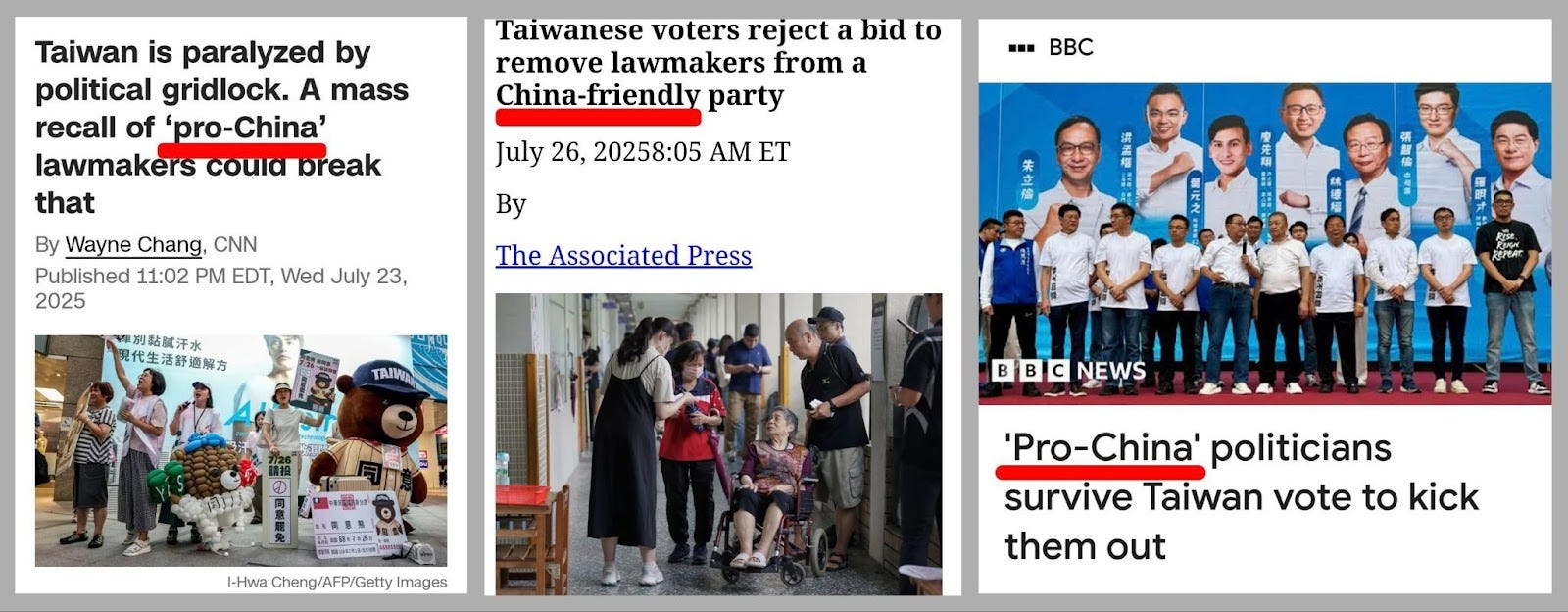
Some criticism on the same grounds also turned to foreign media coverage of the story, with some alleging that international coverage was too strongly influenced by the DPP, including labeling Kuomintang lawmakers as “pro-China” (親中) or “China-friendly” (友中). American lawyer Ross Feingold (方恩格), who lives in Taiwan, posted to Facebook on July 27 that the DPP and recall groups had “convinced foreign media to headline that the KMT is a pro-China party.” In an interview with Storm Media (風傳媒), Feingold argued that the generally “anti-China” stance of the international media, combined with an easy acceptance of DPP narratives, led them to frame recall results through the oversimplified lens of whether or not candidates were “pro-China.” International media coverage of Taiwan, he said, was “mostly not neutral” (大部分不中立).
“She criticizes Taiwan, and this actually resonates with many young media friends in Taiwan.” So, with mendacity, began a June 11 profile of Taiwanese writer Guo Xueyun (郭雪筠) in Shanghai-based outlet The Paper (澎湃), coming two days after she published an essay in Guancha (觀察網), another of the city’s online outlets.
The coverage exemplifies China’s cultivation of sympathetic Taiwanese voices to support unification messaging. Writing under the byline “Taipei Girl Looks at Mainland China” (台北女孩看大陆), Guo has become a recurring fixture in China’s state-run and tightly controlled media, where only one narrative on Taiwan is accepted — that “unification” with China is inevitable, and the deepest desire of the population.
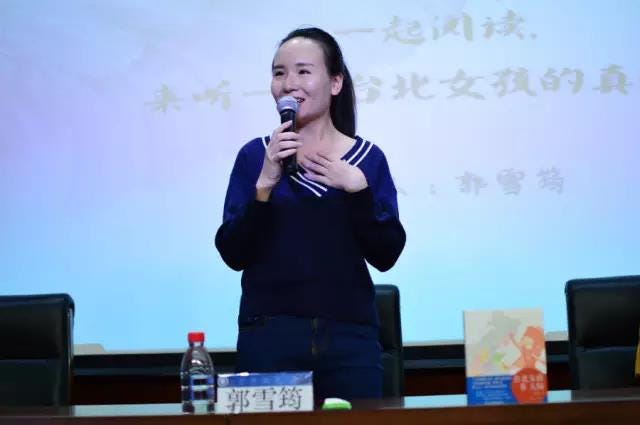
Born around 1990, Guo graduated from the advertising department at Taiwan’s Fu Jen University before moving to Beijing in 2012 for graduate studies at Peking University. Her generational perspective — contrasting Taiwan’s current struggles with China’s (much-mythologized) current prosperity — reinforces the state narrative that Taiwan would benefit from closer ties leading eventually to what China views as “unification,” and many Taiwanese view as annexation. In a 2018 interview with Beijing Youth Daily, she reflected on feeling both amazed and ashamed during her initial Beijing experience to discover that while Chinese typically saw the positive aspects of Taiwan, the reverse was not true.
Guo Xueyun, China’s not-so-secret weapon on Taiwan issues, on the lecture circuit. SOURCE: Tianjin University.
Guo’s transformation from struggling student to prominent author is of course also a story of concerted institutional backing. Her debut book, Taipei Girl Looks at Mainland China (台北女孩看大陸), was published in 2016 by People’s Literature Publishing House (人民文學出版社), controlled by China Publishing Group (中國出版集團有限公司) — a government company under the State Council. Her 2022 novel, I Am in Beijing (我在北京), was released through Jiuzhou Publishing House (九州出版社), a publisher directly controlled by the Taiwan Affairs Office (中共中央台灣工作辦公室), the CCP body that coordinates propaganda and messaging toward Taiwan.