

Manufacturing Dissent
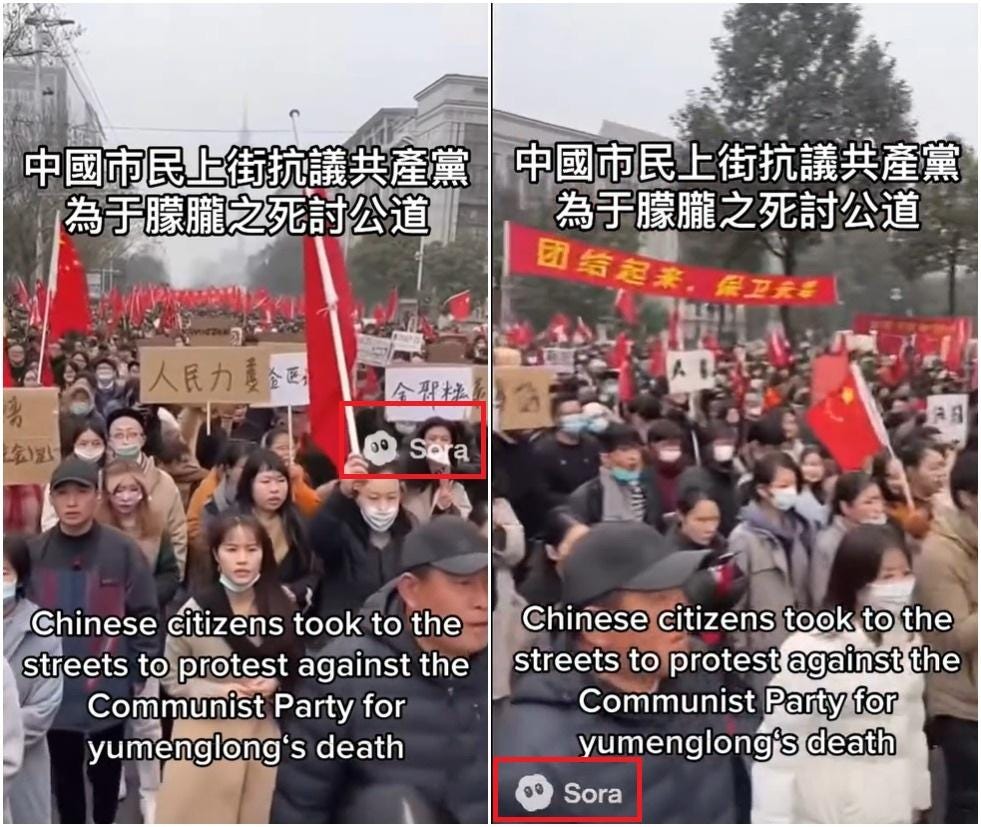
TikTok, often criticized in Western capitals as a vector for Chinese disinformation, has become a platform for distributing fake news about protests within China itself. Following the suspicious death of actor Yu Menglong (于朦朧) and what appeared to be a government cover-up in September, AI-generated videos falsely depicting mass anti-government rallies circulated widely on the platform, according to AFP’s fact-checking service. The terrifyingly realistic clips — betrayed at points only by slightly distorted faces and nonsensical Chinese characters — bore the watermark for Sora, the visual generation software from OpenAI. They originated from an account called “Team Taiwan Value” and garnered hundreds of thousands of views and comments.
Many users believed the fabricated protests were genuine, with commenters expressing solidarity. No evidence exists of actual large-scale rallies in China over Yu’s death, which Beijing police attributed to an accidental fall, prompting widespread questioning from fans, and related reports in Chinese-language outlets globally. The videos, including this one and this one, were taken down Tuesday afternoon.


.jpg)