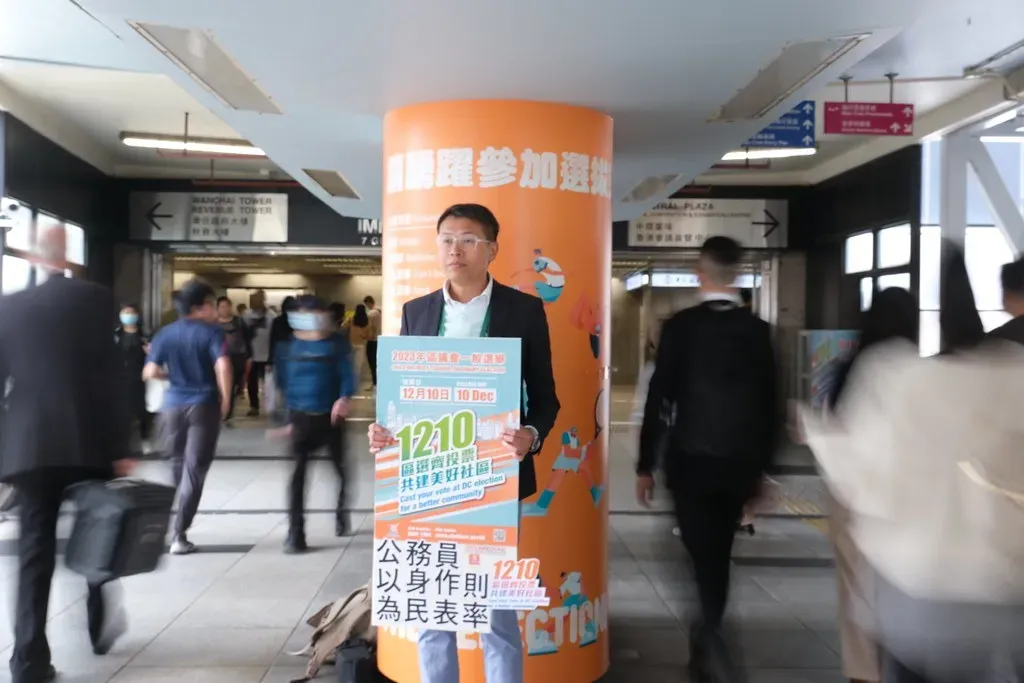
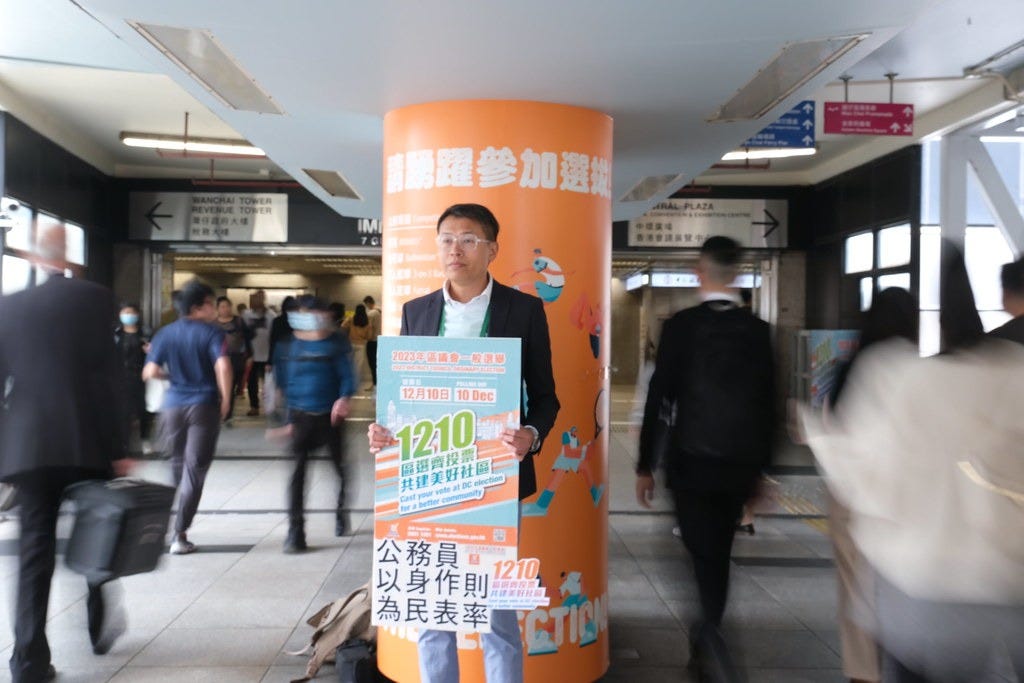
Hong Kong Chief Executive John Lee Ka-chiu (李家超) sent a letter to all civil servants on October 28 urging them to vote in the December 7 Legislative Council election, calling it “a concrete way to demonstrate their oath to uphold the Basic Law.” The pro-governmentTa Kung Pao (大公報), controlled by the Liaison Office, responded with an editorial stating civil servant votes should be “iron votes” (鐵票) — unwavering support for the new electoral system. The case illustrated how civil servants face mounting pressure, including in state-backed media, to demonstrate political loyalty through voting.
The 2025 Hong Kong Legislative Council election will be held on December 7. IMAGE: InMediaHK.
Hong Kong outlet CRNTT (中評社) issued a public apology to Taiwanese director Lo Ging-zim (羅景壬), one of the creators of the recently popular political thriller seriesZero Day Attack (零日攻擊), after it labelled him as a “corruption defendant” in an August news report. Lo filed a defamation lawsuit against CRNTT last month, after which the agency removed the article and issued an apology, admitting to “editorial negligence” (編輯部疏失). The false claim followed a smear campaign led by Taiwan’s opposition Kuomintang (KMT) Party that falsely alleged Lo’s team had received government funds and then failed to fulfill the terms of a contract. Company records in Hong Kong show that CRNTT is linked to the official China News Service, under the CCP’s United Front Work Department. Lo noted in a Facebook post after the apology that misinformation spreads instantly while “justice, no matter how swift, can only arrive late” (哪怕正義再快,也只能遲到).
Hong Kong’s Legislative Council has passed a land registry reform bill that will restrict public access to property records in the territory. Under the new rules, only “designated persons” — lawyers, accountants, surveyors, and former property owners — will be able to access the registry, while journalists will be explicitly excluded. In an op-ed published yesterday by HK01, lawmaker Tik Chi-yuen (狄志遠) warned the restrictions would “severely undermine press freedom and the public’s right to oversight.” Past investigative reports exposing land scandals and official misconduct relied heavily on land registry searches. Tik called on the government to include media workers among designated persons and establish exceptions for public interest inquiries.
Hong Kong lawmaker Tik Chi-yuen has spoken out about new restrictions on the search of property records in the territory. SOURCE: Wikimedia Commons.
Hong Kong’s highest court has rejected a final appeal by the city’s communications regulator, ending a five-year legal battle over a satirical television program that mocked police during the coronavirus pandemic — just months before the national security law was enacted in the Special Administrative Region.
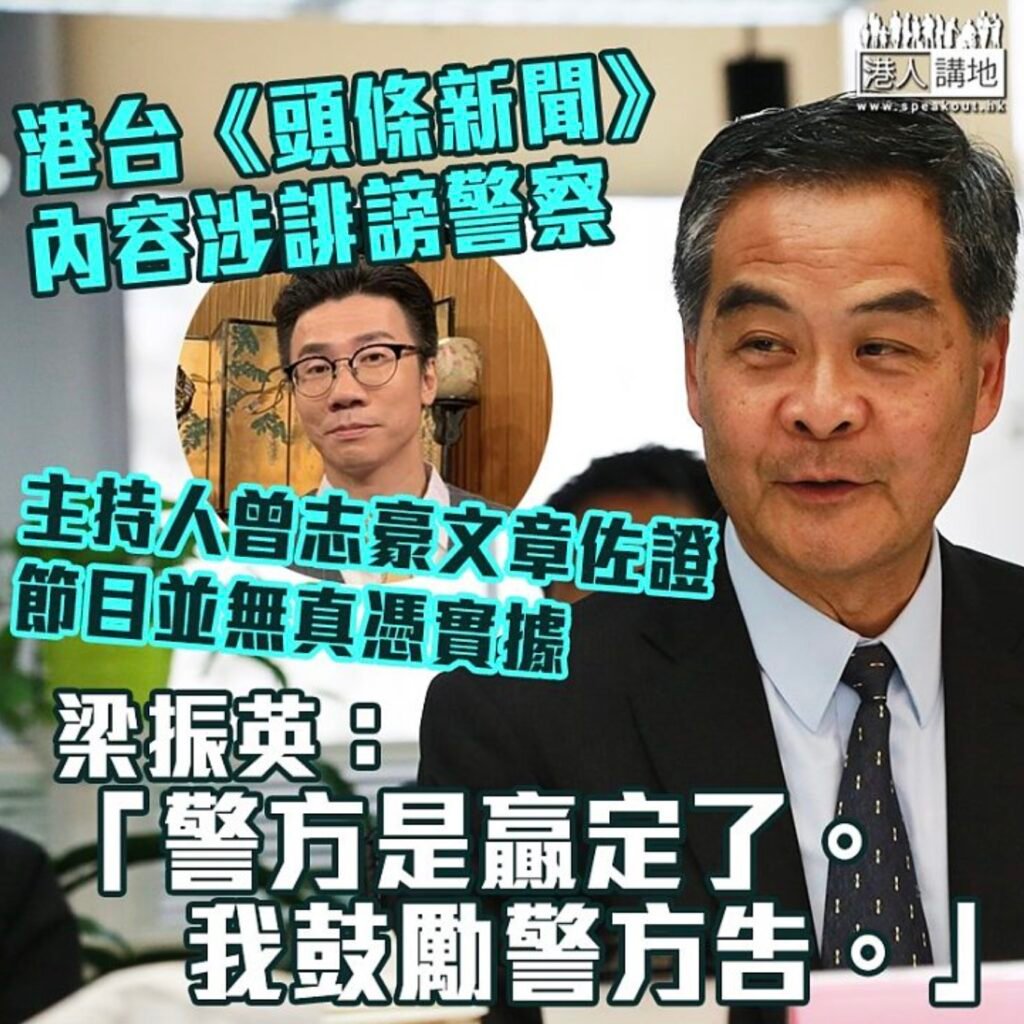
The Communications Authority had issued warnings to the public broadcaster Radio Television Hong Kong in February 2020 over an episode of the program “Headliner” (頭條新聞), which it claimed had derided the Hong Kong police force. Segments of the program made jokes about police officers hoarding masks, and in another skit an actor played a police officer emerging from a garbage bin.
Some critics at the time, including former Hong Kong Chief Executive Leung Chun-ying (梁振英), claimed that the program had libeled the department, and called on police to sue the network.
Shortly after the warning came from the Communications Authority, the staff union at RTHK joined hands with the independent Hong Kong Journalists Association (HKJA) to challenge the decision through judicial review — a process by which the High Court’s Court of First Instance reviews actions taken by administrative bodies to ensure they act within the bounds of the law.
The Court of First Instance initially ruled in 2021 that some complaints were valid while others were not, prompting both sides to appeal. The Court of Appeal later sided with the journalists’ union and association, ordering all warnings to be rescinded.
The Court of Final Appeal’s Appeals Committee ruled on August 7 that the authority had shown no reasonable grounds for appeal, upholding lower court decisions that overturned the warnings. According to a report from InMedia, the court emphasized that regulators must distinguish between content targeting individuals’ or groups’ “status” versus their “behavior,” with the satirical program found to be criticizing police conduct rather than their professional standing. HKJA has called on the Communications Authority to publicly rescind its original ruling and acknowledge publicly that it was wrong.
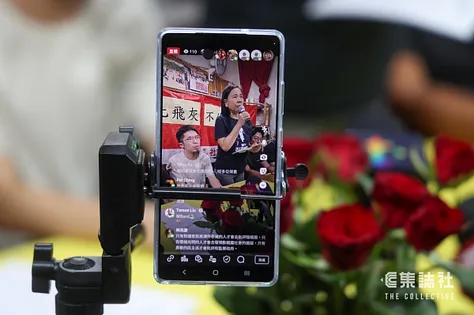
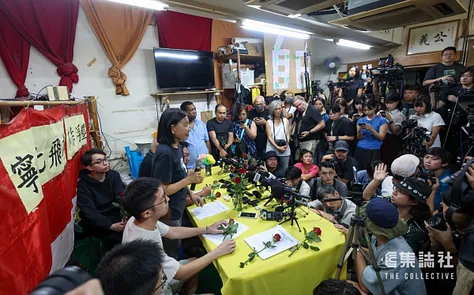
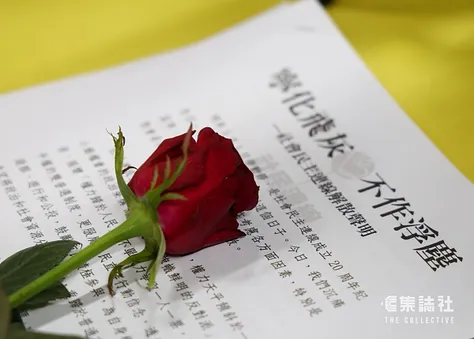
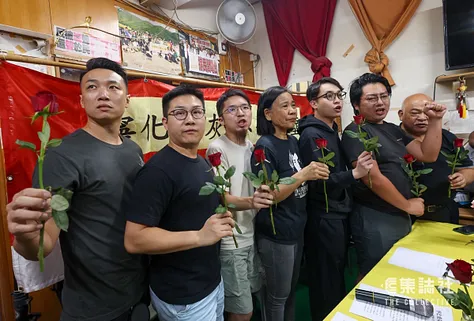
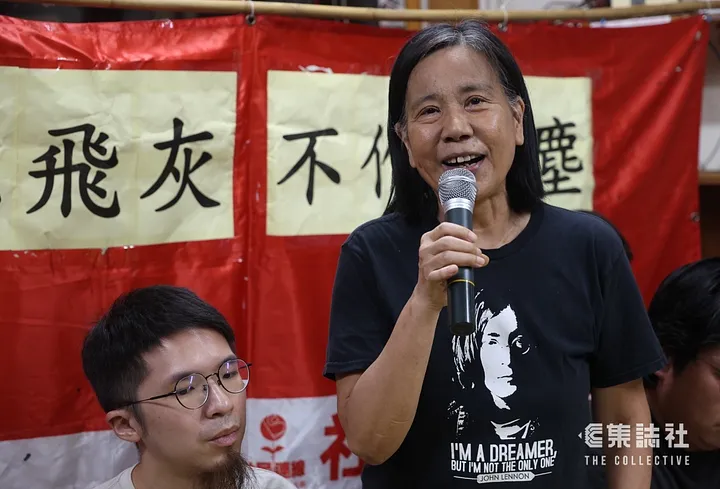
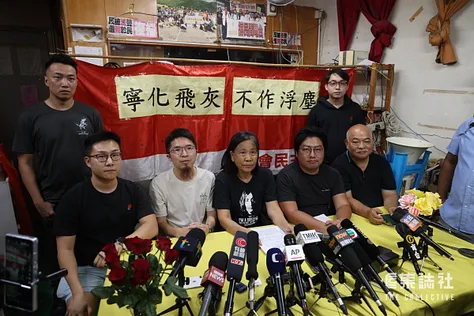
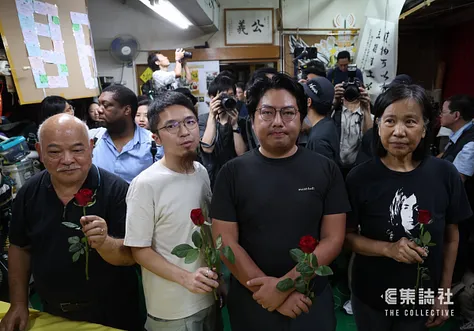
The League of Social Democrats (社會民主連線) announced its dissolution Sunday after nearly two decades of political activism in Hong Kong, with chairwoman Chan Po-ying (陳寶瑩) citing “tremendous political pressure” (強大的政治壓力) and concern for members’ safety. The left-wing party, founded in 2006 by prominent democracy advocates including “Long Hair” Leung Kwok-hung (梁國雄) and Wong Yuk-man (黃毓民), once held three legislative seats and championed street protests with the slogan “resistance within and outside the legislature.” The Collective (集誌社) reserved comment on the story, posting instead an image gallery (below) of the party’s closure. Also reporting the news, Taiwan’s CNA compiled a list of the nine parties disbanded in Hong Kong to date. Pro-Beijing media welcomed the move, with Wen Wei Po describing the organization as having “troubled Hong Kong for 20 years.”
Former Chinese University of Hong Kong assistant professor Simon Shen (沈旭暉), a political scientist who studied at Oxford under Sinologist Rana Mitter and is now a visiting scholar at National Sun Yat-sen University (中山大學) in Taiwan, faces accusations of selling pro-Hong Kong independence materials through his Global Hong Kong Library (國際香港圖書典藏館).
Wen Wei Po (文匯報), a paper controlled by China’s central government in Hong Kong, alleged that Shen’s online platform promoted separatist agendas while displaying and selling items from the 2019 protests — disguised (the paper said snidely) as “precious collections” (珍貴藏品).
Pro-Beijing politician Elizabeth Quat Pei-fan (葛珮帆) warned that sharing such content on social media could violate the National Security Law. Barrister Ronny Tong Ka-wah (湯家驊), a non-official member of Hong Kong’s Executive Council, a formal body of advisors to the chief executive, raised the specter of transnational repression, warning that violators anywhere in the world could face police pursuit. At the Bastille Post (巴士的報), columnist Lai Ting Yiu (黎廷瑤) described Shen as “playing with fire.” The Global Hong Kong Library website states it hopes to preserve Hong Kong collections and ensure “the truth will not be revised.” For more on the crucial role of archives in information freedoms, be on the lookout for today’s edition of our companion publicationTian Jian (田間), or read their recent interview with Ian Johnson.
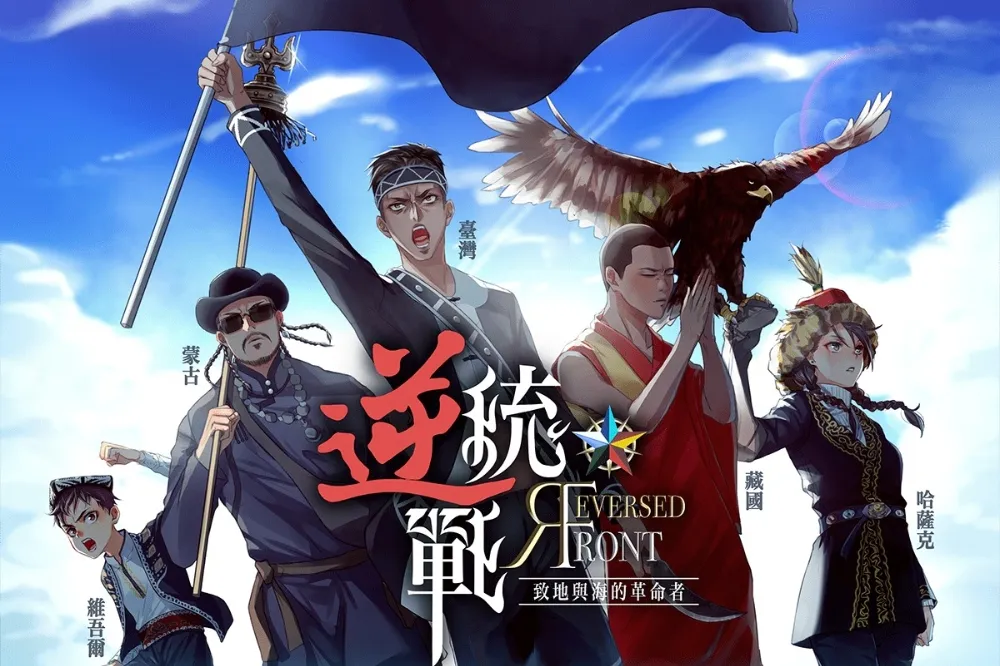
Hong Kong authorities banned the Taiwanese mobile game “Reversed Front: Bonfire” (逆統戰:烽火) on June 10, marking the first time the city has publicly condemned a gaming application under national security laws. The National Security Department warned residents against downloading, sharing, or financially supporting the game, claiming it promoted Hong Kong and Taiwan independence while encouraging armed revolution against China’s government. Hong Kong security chief Chris Tang (鄧炳強) described the game, according to Taiwan’s Central News Agency (CNA), as “quietly poisoning young minds” (悄然荼毒年輕人思想) with “extremely malicious” tactics.
Created by the Taiwan-based development team ESC (台灣境外戰略溝通工作小組), a civilian volunteer group, the strategy game allows players to control various factions, including those representing Taiwan, Hong Kong, and other regions in scenarios involving the overthrow of communist rule. An ESC spokesperson previously told BBC Chinese the group’s main work is to “contact overseas anti-communist organizations, and assist overseas allies in promoting propaganda and organizational work.” Following news of the ban, online searches for the game surged dramatically, according to Taiwan’s Up Media (上報). The app has been removed from local download platforms in Hong Kong.
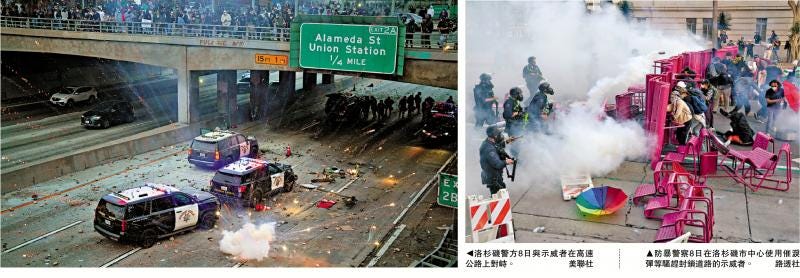
Donald Trump’s use of the National Guard and US Marines to quell protests in Los Angeles against his immigration policies became a major story across Chinese media last week. Op-eds filled with images of turbulence interpreted the news as pointing toward imminent “civil war,” words used in several reports. Pursuing their long-term goal of discrediting the US political system, Chinese state media are now pushing at a door the Trump administration has opened wide.
Scenes of aggressive police action in LA are reported by Hong Kong’s government-run Ta Kung Pao.
China’s state-run Xinhua News Agency reported that its journalists had been injured while covering the protests. The article purported to deliver the will of the protesters, quoting them as saying they were “hard-working local community residents who wanted to express their opinions peacefully.” The report reached second-place on the Baidu search engine’s list of hottest news topics on June 9. The same day, another trending post from a prominent self-media account predicted that the events in California were a “prelude” to deeper conflict. “America’s ‘civil war’ has begun” (美国”内战”开始了), the author declared, calling the unrest “the first large-scale street conflict of the Trump 2.0 era” and comparing downtown Los Angeles to “a Middle Eastern war zone.” The post received close to 1.6 million reads.
In Hong Kong, media similarly mirrored these narratives of American decline. The online news outlet HK01 and state-backed newspaper Ta Kung Pao (大公报) both framed the conflict as a consequence of long-term social divides within the US, with HK01 warning that without resolution, America would “eventually fall into the abyss.”
For more on Chinese media portrayals of protests in the United States, and our perspective at CMP on how Trump administration actions have been a huge assist for China’s external propaganda efforts, read “A Trump Card for China’s Media.”
Media outlets in Hong Kong, including InMedia HK and HK01, have reported that Hong Kong’s Education Bureau has updated itsNational Security Education Curriculum Framework to align with China’s Patriotic Education Law and emphasize “comprehensive security” (大安全). The framework now requires national security concepts in Hong Kong schools in subjects ranging from mathematics to physical education. Primary students must learn about the Hong Kong National Security Law (香港國安法) and the Safeguarding National Security Ordinance (維護國家安全條例), while secondary students will devote more time to the study of China’s political system, including the leadership role of the Chinese Communist Party. Physical education lessons will teach students about traditional Chinese sports like shuttlecock. Mathematics classes, meanwhile, will explore such devices as ancient Chinese sundials in order to build “awareness of protecting cultural security.”