Tag: Press freedom

AI for Human Propaganda

At a media forum over the weekend in Zhengzhou, the capital of Henan province, foreign influencers took the stage to explain how their lives in China had offered a more “authentic” understanding of the country. Indian travel blogger Anayat Ali and Belgian influencer Lucas Deckers said that immersion in local life had given them a more realistic portrait of China than headlines alone could convey — the subtext being that Western media coverage of the country is inherently biased and deeply unfair. Also present was Adam Foster, head of the US-based Helen Foster Snow Foundation, whose mission is to preserve the legacy of Edgar Snow, the journalist and author of Red Star Over China, who today remains for China’s leadership the paragon of the useful foreign journalist.

In a twist that would almost certainly perplex professional journalists elsewhere in the world, this talk about authenticity in portrayals of China unfolded at a forum uncritically proclaiming the virtues of artificial intelligence for media production. Understand the context, however, and this alliance of AI and untruth makes perfect sense, throwing into sharp relief AI’s emerging role in both domestic media control and global propaganda and disinformation.

The theme of this year’s Internet Media Forum, co-organized by the Cyberspace Administration of China (CAC) and held in Henan province on March 28–29, was the “2026 Digital Intelligence Empowerment: Positive Energy Production and Dissemination Conference.” That is a mouthful, but the concept is simple enough: AI has the power to revolutionize the Chinese Communist Party’s demand that journalism and media serve its interests by emphasizing positives and suppressing critical coverage.

CAPTION: A robot stands before the conference backdrop in Zhengzhou. The slogan reads: “2026 Digital Intelligence Empowerment: Positive Energy Production and Dissemination Conference.” Photo: China Daily.

Across much of the world, the rise of artificial intelligence has prompted fierce and often anguished debate about the future of the media, and the role of the journalist. When is AI a “strategic ally” for the truth-seeking journalist? How can we balance the valuable aspects of AI with its myriad dangers? How can we make sure that substantive, relevant and even hard-hitting journalism — so critical for democracy — can be discovered amid the inundation of synthetic text, image and video?

In a recent report adding to a rising tide of output on the subject, the Center for News, Technology and Innovation (CNTI) weighed in earlier this month. “For newsrooms, the use of generative AI tools offers benefits for productivity and innovation,” the report said coolly. “At the same time, it risks inaccuracies, ethical issues and undermining public trust.” At a recent press talk in Vietnam on AI and the “crisis of trust” in news facing media, hosted by the Embassies of Canada, Norway, New Zealand, and Switzerland in collaboration with the United Nations Development Program, UNDP representative Ramla Khalidi returned to basics: “The most important thing in journalism, for me, is trust. When trust is lost, you are no longer a voice that can be relied upon.”

In China, where media are defined as tools to manufacture public trust in the Chinese Communist Party (CCP) and the state, such concerns are not even secondary. If there are journalists in China wringing their hands over the impact of AI on professional reporting or public trust, those conversations are happening privately, and quietly. The whole notion of the public interest as fundamental to journalism has been eclipsed under the leadership of Xi Jinping by the most robust application of press controls seen at any time in the reform era since the late 1970s. The possible exception is the three years immediately following the Tiananmen Massacre, which gave rise to the concept of “public opinion guidance” — a policy that to this day delivers on the firm conviction that the CCP must control news and public discourse to maintain the stability of the regime.

In one of his earliest actions as the country’s top leader, Xi Jinping in 2013 introduced an internal Party directive called “Document 9” that expressly opposed the idea of public interest journalism, which it panned as “the West’s idea of journalism.” “The ultimate goal of advocating the West’s view of the media is to hawk the principle of abstract and absolute freedom of press, oppose the Party’s leadership in the media, and gouge an opening through which to infiltrate our ideology,” the directive said.

Later that same year, as Xi cracked down aggressively on more independent voices on Chinese social media — the now mostly forgotten “Big Vs” — the Party introduced the concept of “transmitting positive energy to society” (传播社会正能量). If the role of the press in China had become more ambiguous through the 2000s, amid a precarious but determined movement of journalistic professionalism, it had now become clear again. Its place was to serve the larger goals of the Party and the nation, not of the public.

i
Positive Energy
传播社会正能量
“Positive energy” (正能量) has been a key phrase in the Xi Jinping era to refer to information controls and official messaging, both domestically and internationally. The term generally refers to the need for uplifting content as opposed to critical or negative coverage — and particularly content that puts the Party and government in a positive light. Although the term began appearing in various contexts in 2012, it was given a much larger profile at the Central Forum on Arts and Literature in October 2013, when Xi Jinping called on cultural creators to produce works that “inspire minds, warm hearts and cultivate taste.” In the context of news control, “positive energy” is closely associated with “guidance of public opinion,” a cornerstone of the CCP’s media control regime since June 1989.

Today, it is virtually impossible to talk about the truth in China in any way other than that bandied about on the stage at the 2026 Internet Media Forum. “Authenticity” is fundamentally about positivity. And this means that discussions in China about the impact of AI in the media revolve almost exclusively around its production-related advantages.

A series of thematic sessions held alongside the main forum in Zhengzhou is a case in point. Discussions treated propaganda and corporate public relations as a seamless continuum, discussing how official and corporate messaging can “go viral” by adding a more human touch to narratives. The session brought together participants including Chang’an Avenue Insider (长安街知事), a public account under the capital’s state-run Beijing Daily, the new media department of the CCP’s People’s Daily, and Weibo’s executive editor-in-chief.
On Monday, a commentary at People’s Daily Online drove the point home, suggesting that AI could be effective in “adding warmth” to positive energy — in other words, that propaganda could be made to feel more human and relatable. The piece, published the day after the forum closed, described AI as having “deeply penetrated the full chain of content planning, newsgathering, editing and distribution” in mainstream media. Once again, there was not the merest frisson of concern. The integration of AI with content meant for public consumption, and of course public opinion guidance, was celebrated as a milestone.

During panel discussions at the forum, the People’s Daily Online commentary noted, keywords like “professionalism,” “staying grounded,” “seizing trends,” and “innovation” were on everyone’s tongues. Even the deeply human concept of “empathy” (同理心), which has entered into sharply different discussions of journalism in the West, made an appearance. All of these are qualities with the potential to ground journalism in the human experience, and form the connective tissue between journalism and the public it is meant to serve. In this context, however, they are production techniques and rhetorical devices to be achieved with helping hand of artificial intelligence.

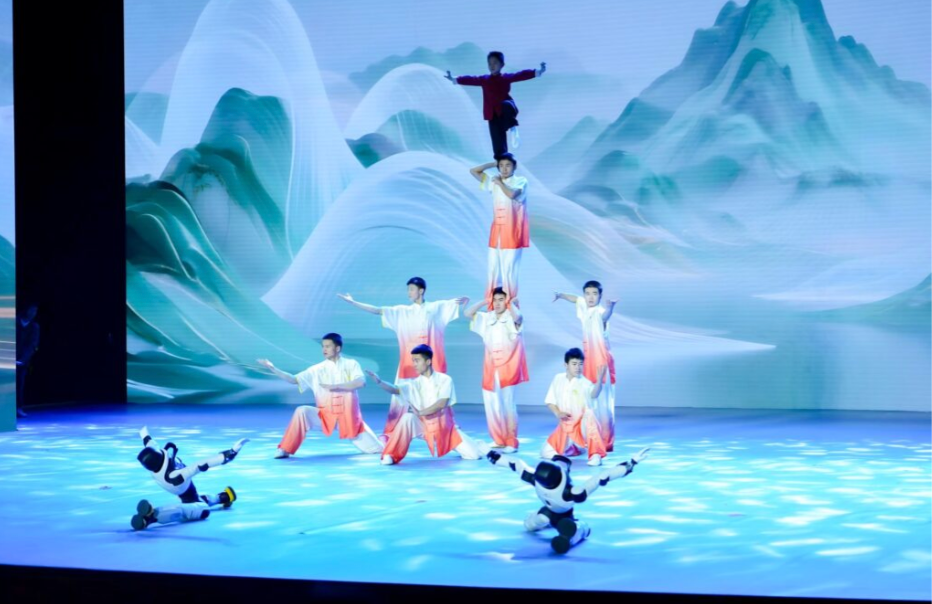
It was no accident that posters and images of the Zhengzhou forum came with the usual heavy dose of robot imagery. AI robots took to the stage alongside dancing child performers, the pairing an oddly dissonant state message about the humanity of AI. China’s dream of an army of compliant Edgar Snows, all reporting empathetically on the elevated humanity of the Party, cannot be far off.

A Record Haul for Hong Kong’s State Media

On March 13, the Newspaper Society of Hong Kong (香港報業公會) — founded in 1954 by the city’s four largest newspapers at the time, including Sing Tao Daily and the English-language South China Morning Post — announced the winners of its 2025 Hong Kong Best Journalism Awards (香港最佳新聞獎). The Hong Kong Ta Kung Wen Wei Media Group (香港大公文匯傳媒集團), run by the PRC government’s Liaison Office in Hong Kong, took home 29 prizes. It was record for the group and the largest haul for any media outlet in this year’s competition. Twelve media outlets reportedly participated, submitting 636 entries across 78 award categories. The result, offering plaudits to a state-run outlet that has been on the front lines in attacks on independent journalists and institutions (including the Hong Kong Journalists Association), would have been unimaginable a decade ago.

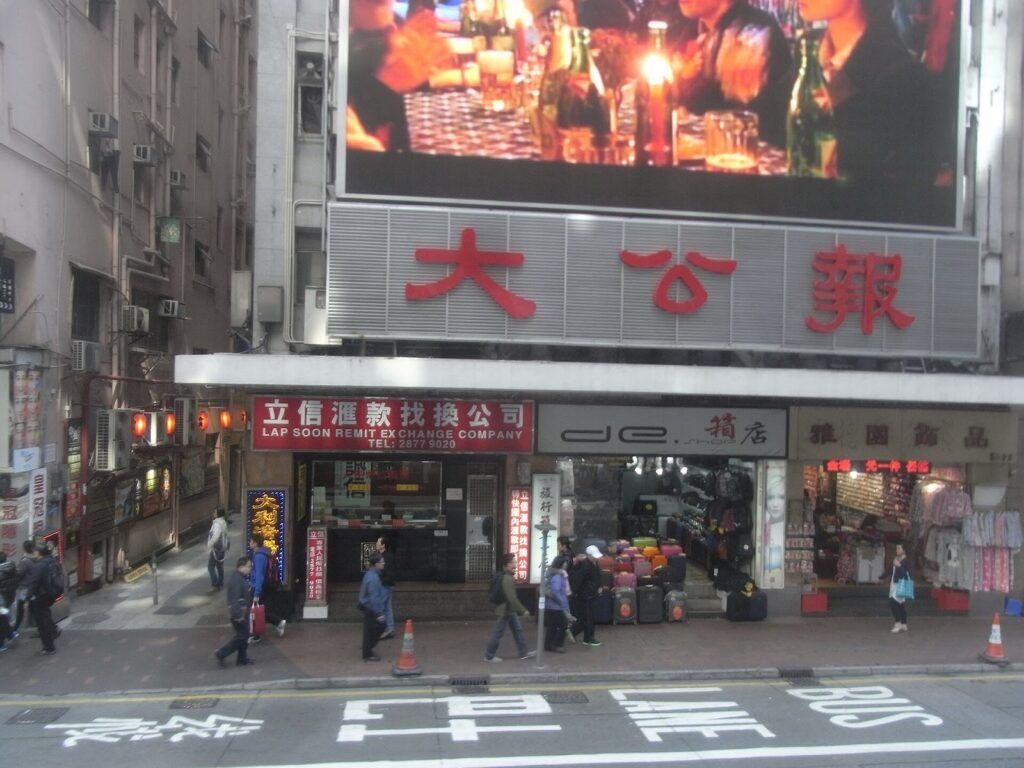
A large billboard for the Wen Wei Po newspaper looms over a street in Hong Kong’s Wan Chai District in 2013. SOURCE: Wikimedia Commons.

As recently as 2016, the awards were made across a relatively diverse field. Ming Pao (明報) took Best News Reporting for its Panama Papers coverage, reporting that would be almost unthinkable in Hong Kong today. Sing Tao Daily (星島日報) won Best Scoop and Best News Photography. The South China Morning Post (南華早報) swept both English-language writing categories. And the Hong Kong Economic Journal (信報財經新聞) won Best Business News Writing. Sure, media like the government-run China Daily and Ta Kung Pao did win a smattering of awards. But never were state media so dominant as seen this month.

This year, participation has narrowed sharply, with entries concentrated among pro-establishment media — those aligned with the Chinese government. Meanwhile, Apple Daily founder Jimmy Lai serves a 20-year prison sentence handed down last month under the territory’s National Security Law, .

That transformation makes the Ta Kung Wen Wei Group’s dominance worth scrutinizing. Established in January 2016 through the merger of Ta Kung Pao and Wen Wei Po, the group is the key voice of the Chinese government in Hong Kong. The group’s chairman and editor-in-chief, Li Dahong (李大宏), is simultaneously a delegate to the National Committee of the Chinese People’s Political Consultative Conference, the CCP-led political advisory body. The group’s own materials state that its newspapers are delivered directly to the central organs of the party, government and military every day — and that the group has ranked first in total awards at the Hong Kong Best Journalism Awards every year since 2019, a streak that hardly seems a coincidence given the political changes in Hong Kong since widespread protests that year.

Far from acting as a professional press organization, the group has been at the forefront of attacks on Hong Kong’s independent journalism community. The charge to smear and discredit the Hong Kong Journalists Association, a longstanding institution representing real news professionals, has been led by the Ta Kung Pao and Wen Wei Po, which have consistently attacked the association and its leadership. Writing in Wen Wei Po back in April, a pro-Beijing lawmaker called the HKJA “a suspected anti-China organization that disrupts Hong Kong,” while Ta Kung Pao published an opinion article titled “dissolution is the only solution for the HKJA.”

The 2025 Hong Kong Best Journalism Awards send a clear message about what type of journalism the Hong Kong government and Liaison Office of China’s central government intend to reward.

Hong Kong Bookshop Raided

On March 24, Hong Kong’s National Security Department, established in July 2020 under a national security law China imposed on Hong Kong, arrested four people connected to Book Punch (一拳書館), an independent bookshop in the Sham Shui Po district, on suspicion of “knowingly selling publications with seditious intent” under Article 24 of the Safeguarding National Security Ordinance. Among those detained were the shop’s founder, Pong Yat-ming (龐一鳴), and three female staff members.

Pong, currently standing trial on charges of running an “unregistered school” — for hosting Spanish classes at the bookshop — has already faced legal pressure. A verdict on that case is due on April 10. He was also charged separately with holding a stand-up comedy graduation show without a public entertainment license. Wen Wei Po (文匯報), which has in recent years been used as a tool to attack press and publishing figures that displease the government, had previously accused Book Punch of engaging in “soft resistance” (軟對抗), a term increasingly used by Chinese and Hong Kong officials to describe perceived threats to national security.

The seized materials included a biography of Apple Daily founder Jimmy Lai, who in February received a 20-year sentence for “colluding with foreign forces.” The biography, The Troublemaker, is written by Mark Clifford, a former director of Lai’s Next Digital and editor of the South China Morning Post. Authorities said the book “whitewashed” Lai’s national security convictions and “smeared” Hong Kong’s judiciary and government.

Reporters visiting the shop on Tuesday this week found it shuttered with a handwritten notice reading: “Emergency situation, closed for the day, apologies for the inconvenience,” Points Media (棱角媒體) reported. Clifford, also chairman of the Committee for Freedom in Hong Kong Foundation, called the sedition charge “ironic,” telling Points that freedom of expression “is in the DNA of Hong Kong people.”

This Book Punch raid is the latest in a string of actions targeting Hong Kong’s shrinking independent publishing and bookselling community, a trend that has accelerated since the national security law was imposed in 2020. The arrests follow years of official harassment of Book Punch, including raids and regulatory inspections by six government agencies. Pong and his staff face up to seven years in prison if convicted.

The Great Broadcasting Retreat

Sometimes “streamlining” is just another name for deep and painful attrition. Over the past two years, this and other euphemisms — like “optimization” and “transformation” — have swept like a wildfire across China’s local broadcast sector. Taken together, they tell a simple story about the rapid contraction of local television and radio under a barrage of cost-cutting directives from the central government. The goal is two-fold: cutting costs, and shifting resources toward newer forms of digital production — part of a broader rebuilding of China’s media infrastructure that the China Media Project has called “Centralization+.”

Announcing the closure of two of its local channels this month, the top state-run broadcasting group in the municipality of Chongqing spoke of “optimizing and integrating media resources” and “adapting to new trends in media convergence.” In practice, this meant shutting down channels the government considers redundant and shifting resources — money, staff, and content — away from traditional broadcast and onto the internet and digital products. The announcement, released by China’s main broadcasting authority, SARFT, makes clear that Chongqing is following directives from the government and national work conferences. This isn’t a local editorial choice but a centrally directed plan.

Chongqing is not an isolated case. It is part of a nationwide wave of broadcast closures that has been accelerating since 2023, when SARFT launched its campaign to “streamline and specialize” China’s radio and television landscape. According to the Chinese industry tracker website Shexiangren Wang (摄像人网), at least 51 TV channels were shut down across China in 2024, and in 2025 that number jumped to at least 75, hitting provincial-level broadcasters in Shanghai, Gansu, Shaanxi, Jiangxi, Xinjiang, and Hunan, among others. Guiyang, the capital of Guizhou province, became the first provincial capital in the country to be reduced to a single television channel in 2025. A separate report from SARFT’s research center confirmed that 79 channels and frequencies were formally eliminated in 2024.

Part of the story is how uncompetitive local channels have become, owing both to technological change and to institutional inertia: CCP-run media tend to be inflexible and formulaic, shaped by the bureaucratic structures that govern them. Shexiangren Wang notes that education channels offered little beyond policy meetings. TV shopping, with its long-duration pitches and infrequent purchases, could not match the speed and scale of e-commerce — what Shexiangren Wang called the “short, fast, and flat” model of online retail. Movie and drama channels, meanwhile, were stuck with aging content and shrinking advertising revenue. The closures have targeted public channels, education channels, shopping channels, and movie and drama channels — categories the government considers redundant or uncompetitive with internet platforms, all outpaced by digital offerings delivering the same content faster and on demand.

The campaign of attrition at local broadcasters does not seem to be slowing down. The Shexiangren Wang report indicates that Guangdong, Sichuan, and Shenzhen are all expected to close or merge additional channels in 2026. The broader pattern is clear: the government is shrinking traditional broadcast — meaning fewer channels and fewer editorial voices — while redirecting money, talent, and content toward digital offerings.

Local Television Channel Closures in 2025
Over the past year, at least 75 channels shut down across 57 cities, as Beijing pushes to consolidate the country’s sprawling state media system and cut costs at the local level.

Rather than a simple retreat from broadcast, the closures reflect a deliberate reorientation. The Chongqing announcement calls on the group to “fortify the main position of internet communication” (筑牢互联网传播主阵地) — language drawn from a broader Party framework that treats media platforms as ideological territory to be held and defended. It also calls for “systematically transforming mainstream media” (推进主流媒体系统性变革) — a phrase that carries specific weight in the Chinese context, where “mainstream media” refers to Party-run outlets tasked with setting the public agenda and shaping opinion.

The imperative is to remake those outlets into something citizens will actually use. That is a hard sell in a media landscape dominated by platforms like Bilibili, a video site built on user-generated entertainment, and Xiaohongshu, known outside China as RedNote, a lifestyle and social commerce platform where hundreds of millions of users go for content that is personal, playful, and not entirely oriented around the ideological goals of the party-state. A 2025 People’s Daily article used the same language to describe Party media’s role as the frontline of ideological control, calling on state outlets to “advance onto the internet main battlefield” (挺进互联网主战场) as a “main force” (主力军).

Rather than a simple retreat from broadcast, the closures reflect a deliberate reorientation.

While real success in the media market will likely remain a challenge, the authorities seem encouraged by the numbers for new state-led digital offerings. Provincial state media app downloads grew by an average of nearly 35 percent in 2024 — 34.9 percent in downloads and 45.2 percent in registered users — according to SARFT’s research center’s annual report. Platforms like Mango TV (芒果TV), a video streaming platform under the state-run Hunan Broadcasting System; Elephant News (大象新闻), an app-based news product from Henan’s provincial broadcaster; and Touch News (触电新闻), the digital product from Guangdong’s provincial broadcaster, each crossed 100 million downloads, with 28 provincial apps surpassing 10 million.

The closures and the digital push are, in the end, two sides of the same coin: a leaner broadcast sector that costs less to maintain, and a rebuilt online presence the Party hopes will keep it not just relevant, but dominant, where the public’s attention has shifted.

One issue conspicuously absent from the official framing of these closures is what happens to the people who worked there. The announcements speak of “optimizing resources,” but say nothing about how employees at Chongqing Economic Radio or the Fashion Shopping Channel — the outlets impacted by the most recent restructuring in Chongqing — might have been affected. Precise figures on job losses across the sector are difficult to come by. Official announcements are silent on the question, and broadcasters do not typically publish staff counts. The data that does exist points in one direction. Beijing’s broadcast sector alone shed more than 2,600 jobs in 2024, according to an annual statistical report from its city-level broadcast authority. The nationwide toll, across more than 125 channels closed in 2024 and 2025, is almost certainly substantial.

_________________________

To learn more about the trend of local “media convergence” in China and the remaking of the infrastructure of “international communication” (国际传播), or “external propaganda” (外宣), download our CENTRALIZATION+ paper below, produced with funding from the Swedish Psychological Defense Agency (MPF).

Journalists and Spies

To read the dispatches of Guangming Daily’s Prague correspondent, Yang Yiming (杨艺明), was to learn little about the Czech Republic or Central Europe — or even about the journalist himself. Always, the central character was his home country: European politicians praising Xi Jinping and China’s development model; Czech students dreaming of study abroad in Beijing; Chinese investment revitalizing struggling factories. Yes, he covered Czech politics — when local lawmakers were critical of Brussels. The stories followed a familiar script: find voices friendly to China; avoid the critics.

Boosterism of this kind invites scorn among professional journalists. But producing such selective, pro-China coverage in Europe, even for a newspaper overseen by the Chinese Communist Party’s Central Propaganda Department, is not a crime.

Yang Yiming’s arrest earlier this month in Prague by Czech counterintelligence (BIS) working with police has no direct link to his lackluster reporting. He has been charged under §318a of the Czech Criminal Code, a statute that took effect in February 2025 and criminalizes “unauthorized activity for a foreign power.”

Nonetheless, his case raises serious questions about how state media from the People’s Republic of China operate in Europe and beyond, and how governments should respond. Where does propaganda end and espionage begin? How should democracies distinguish between correspondents working for authoritarian state outlets — with the access to politicians and privileged sources this can afford — and intelligence operatives using press credentials as cover?

According to Czech investigators, Yang’s case results from two years closely monitoring his gathering of “kompromat” — compromising information — intended for the potential blackmail of Czech politicians and public figures. Sources told the Czech news outlet Seznam Zprávy that Yang seemed especially interested in developments dealing with Taiwan, and that he used his press access to map the contacts of officials and others favorable to the country. So while Yang spurned China’s critics in his reporting, he sought them out, it seems, in social circles.

Yang’s case raises serious questions about how state media from the People’s Republic of China operate in Europe, and how European governments should respond.

As news of Yang’s arrest became public, Taiwanese media pounced. They connected the case prematurely to Vice-president Hsiao Bi-khim’s 2024 visit to Prague, during which her vehicle was nearly rear-ended amid what Czech intelligence later confirmed was a plan by China to “demonstrably confront Ms. Hsiao.” No direct link to Hsiao’s visit has been confirmed, however, and authorities in Prague remain guarded about the specifics, citing the possible “intelligence value” of information surrounding the case. “At this stage of the investigation, the state prosecutor has reserved the right to provide information. For this reason, I cannot comment on the inquiries,” said Ladislav Šticha, a spokesperson for BIS.

“He was very active”

The sense among observers is that the case has wider reach, and has been building for some time, with the 2025 law finally rendering certain conduct actionable that had previously fallen into a legal grey zone. “I think our Security Information Service (BIS) has known about him for years,” says Tobias Lipold, a researcher for the Czech think tank Sinopsis, which specializes in researching Chinese influence activities. “But it was only the new legal framework that gave them the means to act.”

Simona Fantová, a China analyst also with Sinopsis, remembers seeing Yang in the audience at a 2018 Prague concert hosted by local sinologists. “He was very active, showing up at all kinds of events,” she says.

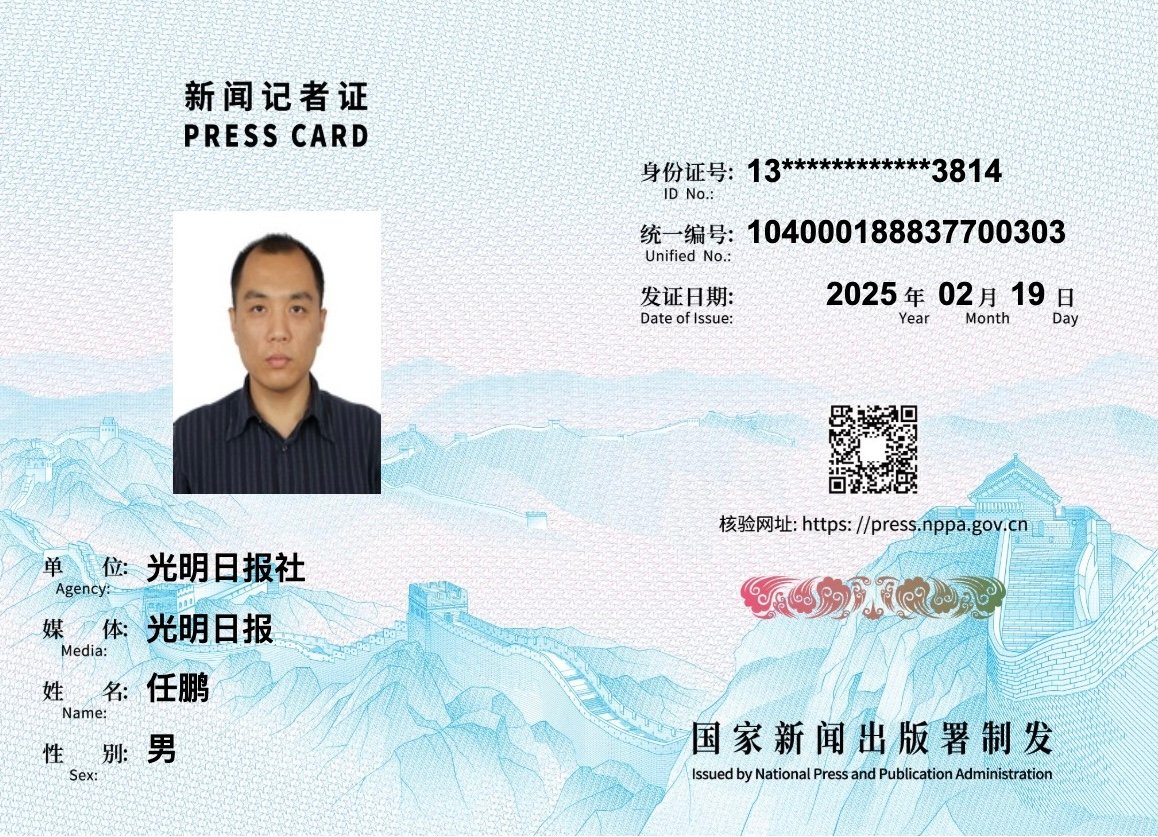
The 2018 concert included Chinese socialist tunes performed with kitsch, ironic flair. Yang’s Guangming Daily reported the event as a faithful testament to the “indissoluble bond” between the performers and China. But that report, in fact, was not filed by Yang Yiming. It was filed by Ren Peng (任鵬). Ren, who also goes by the Czech name “Vojta,” has been posted in Prague since 2014, following a previous assignment in the region from 2004 to 2008 — which raises an odd fact about his supposed colleague, Yang Yiming.

The official NPPA-issued press card for correspondent Ren Peng shows that he was re-licensed as a journalist in February 2025.

According to archived staff listings for the Guangming Daily, Ren Peng is one of just two correspondents posted to the country since 2014. The previous correspondent was Xia Maosheng (夏茂盛), whose reporting goes back to the early 2000s. Yang Yiming has in fact never been listed by the Guangming Daily on its dedicated page for the “Czech-Prague Bureau” (布拉格记者站), even as his byline has appeared consistently on reports like this one as “a reporter for this paper.”  

Stranger still is the question of Yang’s credentials from China.

Seznam Zprávy and other outlets have reported that Yang was accredited for reporting in the Czech Republic by the country’s Ministry of Foreign Affairs, and that his credentials were reissued last year even as he was quietly under investigation. This much is clear. But as a journalist from China, where the licensing of reporters is a critical link in the chain of press control, Yang would likely also have been issued, like Ren Peng (see above), an official press card from the National Press and Publication Administration (NPPA) — the office under the propaganda department in charge of news and publishing management.

No press card for Yang Yiming is on file with the NPPA. And while there are a number of reasons why this might happen — journalists for larger commercial media in China have been known in recent decades to make “unofficial hires” (非编制) outside of formally mandated hires —  this is an odd oversight when one considers that Yang is credentialed in the Czech Republic for a newspaper directly under the very entity that issues those press cards. His is no cub reporter appointment or freelance gig, but a privileged posting to one of Central Europe’s most important cities.

Two Types of Journalist

Chinese News Organization Employment Framework

Formal Status 编制内记者
Press Card: Hold official state-issued Press Cards (记者证).
Identity: Funded via state/institutional budgets; high job security.
Career: Clear pathways via civil service or public-sector systems.
Legal: Governed by public institution personnel regulations.
Informal Status 非编制记者
Identity: Market-based labor contracts; flexible but less predictable.
Career: Performance-based; significantly higher risk of non-renewal.
Legal: Governed primarily by standard Labor Contract Law.

Yang’s lack of Chinese press credentials is not necessarily a smoking gun. But it is a reminder of the ambiguous status of many journalists working for PRC state media around the world.

Doug Young, a former Reuters journalist now teaching at Shanghai’s Fudan University, wrote in a 2012 book that reporters for China’s official Xinhua News Agency routinely perform tasks that in other countries would be the remit of intelligence agencies. A US congressional security review released three years earlier, in 2009, also noted that Xinhua “serves some of the functions of an intelligence agency.” Markos Kounalakis detailed these practices, particularly among Russian and Chinese state media, in his 2018 book for the Hoover Institution, Spin Wars and Spy Games. The same year, a demand from the US that journalists for both Xinhua and CGTN, the global arm of China’s state-run broadcaster, be registered as “foreign agents” infuriated China.

China has repeatedly dismissed such actions and allegations as reflecting “a Cold War mentality and ideological bias.” In 2020, it responded by targeting the China desks of the New York Times, the Wall Street Journal, the Washington Post, Time and Voice of America, in a move that still reverberates in foreign media coverage of China.

But even setting aside questions about Yang Yiming’s identity and credentials as a journalist in the Czech Republic, there is an issue that goes much deeper: that the way China’s leadership defines the role of the journalists working for state-run media places their activities in the grey zone — whether they are working in China or abroad. The case in Prague could be testing this murky terrain.

Eyes, Ears, Throat and Tongue

Media operated by the CCP are commonly described as its “throat and tongue” (喉舌), often translated as “mouthpiece.” Lesser known is the rest of this phrase, that the media under the party’s control are its “ears, eyes, throat and tongue” (耳目喉舌). A state reporter’s public-facing stories are meant to provide the “correct” ideological narrative for the masses, achieving what the party terms “public opinion guidance” (舆论导向). But equally if not more critical is the reporter’s role in information-gathering and surveillance.

Going back to the Yan’an period (1935-1948), the dual role of party journalists as public propagators and covert observers has been institutionalized in the form of the “internal reference” (内部参考) documents issued non-publicly within the party and government system by Xinhua, the People’s Daily, Guangming Daily and other CCP-run outlets. Classified with varying levels of secrecy, and published either regularly or ad hoc — so that a spiked investigative report too sensitive for public eyes can transform into a neican — these documents form an internal information pipeline for the leadership.

The most senior neican can reach the Politburo Standing Committee, where they might receive “written comments” from top leaders. Those comments may convey the official’s “attitude,” or taidu (态度) toward a particular matter, offer approval for a policy or course of action — and even communicate instructions on how to handle it. Focusing on these isolated cases of action, the “eyes and ears” process may seem like institutionalized responsiveness. But within a political culture premised on sensitivity and secrecy, the “internal reference” system does something else too. It blurs the line between journalism and intelligence gathering, erecting a wall of secrecy between the media and the public.

The situation can become even more complicated abroad as state media journalists maintain close relationships with domestic Chinese embassies, one of their key roles being to publicize embassy events and accommodate propaganda priorities. The growing body of “media engagement activities” investigated and documented in the Lingua Sinica database suggests non-transparency is a recurring pattern in China’s outreach on media and information, and in some cases outright concealment is in evidence — blurring the lines between media engagement, public diplomacy, surveillance and espionage.

The “internal reference” system does something else too. It blurs the line between journalism and intelligence gathering, erecting a wall of secrecy between the media and the public.

In one case in point, last October’s “China-Cyprus-Europe Media Forum,” organized by the Chinese Embassy in Nicosia ahead of the Cypriot government’s rotating presidency of the Council of the EU this year, promoted China’s position on Taiwan as it advanced a pre-prepared China-EU consensus declaration saying “the media need to act as active builders of China-Cyprus and China-EU relations,” and that they are “expected to prioritize social responsibility and the public interest by fostering a reasonable and stable public opinion environment.”

Beyond this clearly biased declaration, with its alternative PRC vision of the role of the media, the forum focused on media cooperation. One of the Chinese cooperation partners present was “Home in Cyprus,” a media outlet describing itself as “Cyprus’s most professional Chinese media.”

A deeper investigation found not only that Home in Cyprus is operated through an organization closely linked to the Chinese Embassy, and sharing an e-mail address, but that the user agreement for its WeChat and web-based platform has stringent content and discipline guidelines and weak data protections — making it a potential tool for surveillance of the Chinese population in southern Europe, not to mention raising possible breaches of the EU’s GDPR. “You understand and agree that Home in Cyprus has the right, at the request of government authorities [in China] (including judicial and administrative bodies),” the agreement reads, “to provide them with necessary information such as the registration information you submitted on the Home in Cyprus platform and your posting records.”

Grey on Grey

The Czech amendment on “unauthorized activity for a foreign power” has courted plenty of controversy. It was fiercely debated before its passage under the former government, with critics arguing that its reach is too broad and its provisions too vague. In an article for the Czech legal journal Bulletin Advokacie last year, one scholar voiced the concern that “the elements of the factual basis of this crime are unclear, indefinite, vague and easily abused in application.”

Such criticisms have surfaced again in light of the Yang Yiming case, but from sources that raise questions of their own. Last week, the online Czech outlet Parlamentní listy ran an interview with its deputy editor-in-chief Radim Panenka in which he said that the law “allows for the criminalization of anyone who becomes inconvenient.” Illustrating the murkiness of this terrain, however, Parlamentní listy has been identified in Czech research as a source of both manipulative propaganda and pro- China narratives. The outlet appears in the Lingua Sinica database for an engagement last July, when it ran an op-ed from Feng Biao (冯飚), the Chinese ambassador stressing the benefits of trade.

The current Czech government, which took office in December, has said previously that it would seek to repeal the amendment. It is so far unclear whether the ongoing prosecution of Yang Yiming will change those calculations. But as the European Values Center for Security Policy (EVC) noted last week, Yang Yiming’s arrest “clearly illustrates the type of foreign influence this legal instrument is intended to address.”

At this point, precious little is clear about this case — a fact that also stems, of course, from the judicial proceedings. A major test of the legitimacy of the prosecution will be the extent to which it can remain transparent and open to scrutiny, upholding the rights and principles that make European and democratic society strong — and ultimately safeguard the integrity of journalistic practice. If that can happen, the case could offer lessons in how to address the thorny challenge of grey zone tactics stemming from state-run media engagement.

Dalia Parete and Mark Chiu contributed reporting for this story.

Reporting Under Pressure in Cambodia

Cambodia’s media landscape has transformed dramatically over the past decade. What was once a competitive environment with independent outlets has become increasingly restricted. Beginning in 2017, the government launched a sustained crackdown on independent media ahead of the 2018 elections, forcing major outlets like the Cambodia Daily to close. According to Reporters Without Borders, this campaign has left most news outlets accessible to Cambodians under government control, with many topics now off-limits to journalists.

In this interview, Nop Vy, executive director of the Cambodia Journalists Alliance Association (CamboJA), discusses the state of press freedom since that pivotal 2017 crackdown. Today, only two or three truly independent local media outlets operate inside the country, even as approximately 2,000 registered outlets create an illusion of diversity.

Vy also examines China’s expanding influence over Cambodia’s information environment. Through joint ventures, journalist training programs, and media cooperation agreements, Chinese state narratives have become deeply embedded in Cambodian media, shaping what information ordinary Cambodians can access and limiting balanced reporting on sensitive issues.

Speaking with Dalia Parete, Vy offers an insider’s perspective on the dangers facing journalists who cover corruption, politics, and land conflicts, while highlighting how Cambodian citizens themselves have begun to fill the void left by the disappearing independent media.

Dalia Parete: For people who are not very familiar with Cambodia, what does the media landscape look like, and how has it changed in the past decade?

Nop Vy: The real turning point came in 2017. That’s when the Cambodian government forced several independent outlets to shut down. The Cambodia Daily, an English-language publication, was forced to close over what authorities called “taxation issues” — but this was widely seen as a pretext to silence independent journalism. The Phnom Penh Post is still online today, but the print edition was shut down, and ownership transferred from an Australian to a Malaysian company with close ties to the prime minister’s family.

Around the same time, new outlets emerged that were closely aligned with the ruling party. Khmer Times, an English-language online publication, launched in 2014 and continues to operate today. Its owner has strong ties to the government. According to the Ministry of Information, there are around 2,000 media outlets operating in Cambodia. That sounds like a lot, but there is no real diversity in terms of editorial independence. Most outlets can’t freely cover political issues, social issues, or human rights. If you publish anything critical, you risk being forced to shut down.

DP: What happened to independent outlets?

NV: In 2023, we saw the only remaining local independent outlet, Voice of Democracy (VOD), forced to close its Phnom Penh operation. VOD was run by the Cambodian Center for Independent Media, an NGO, and now the former executive director operates it in exile from the United States.

So yes, there are many media outlets producing entertainment and breaking news. But there is nothing critical, nothing that gives people comprehensive information about what’s really happening.

For more on the press and China’s engagement in Cambodia, visit the Lingua Sinica country profile.

Today, I’d say there are only two or three truly independent local media outlets still operating inside the country. Our association, the Cambodia Journalists Alliance Association (CamboJA), runs one. We operate cambojanews.com, and this year we received the Anthony Lewis Journalism Prize Award from the World Justice Project for our work exposing online scam operations and human trafficking, and for promoting social justice.

Cambojanews focuses on investigative stories, human rights, and freedom of expression — though it has shifted more toward social issues, economics, and technology. That’s partly about survival. Independent media need to generate income somehow, and those topics are less politically risky.

DP: So when you say most newspapers are tied to the government in some way — what does that actually look like?

NV: Many function essentially as government mouthpieces. They simply reproduce and promote whatever the government says and does. They’re not producing stories that serve the public interest or affect people’s daily lives — stories about deforestation, illegal land grabbing, social justice issues, things that actually matter to local communities.

DP: You’ve been working in journalism for more than twenty years — as a reporter, an editor, and now as the executive director of CamboJA. What are your takeaways from these twenty years working in the press?

NV: Press freedom in Cambodia has moved backward compared to where we were before 2017. Back then, Cambodians had access to quality content from both Khmer and English-language newspapers. The media market was competitive — not in the number of outlets, but in the quality of content and investigative reporting. Journalists working for those outlets were deeply committed to the issues they covered and the scope of their stories.

People valued it. Even our former prime minister would read the Cambodia Daily every morning. He’d sometimes respond publicly to what he read. But after 2017, that quality disappeared. We became concerned about how people could access independent information that serves their interests and promotes social justice. What we’ve also learned is that even as independent media declines, citizens themselves have stepped up. They’ve learned how to do citizen reporting from their communities — providing firsthand information from the grassroots to journalists reporting at the national level.

DP: So it’s not just that they’re a source of information. They’ve actually taken on an active role in journalism production. Is that right?

NV: Exactly. As the social and political environment has become more restricted and civic space has shrunk, educated citizens have begun looking for ways to keep voicing their opinions and demand responses from policymakers. With more and more citizens online, they’re using these platforms to speak out. At first, it was just social — posting photos, that kind of thing. But over time, they started highlighting issues from their communities.

In some cases, people have actually influenced their local governments through social media to respond to problems. We have several case studies where citizens successfully influenced policymakers through the content they published online.

DP: You mentioned that most outlets can’t freely cover certain issues. For the journalists who do try to report independently, what are the most dangerous topics to cover?

NV: Last year, one of our partners conducted a study that identified the subjects journalists are most concerned about — topics where covering them puts their safety at risk.

The first is corruption, which is exposed by international media that is deeply connected to some powerful people in the government.

The second is politics. In 2017, the Supreme Court dissolved the main opposition party, the Cambodian National Rescue Party. This created enormous political conflict. More than 100 former politicians now live in exile — in France, the US, Australia, and elsewhere. They continue to challenge the current government, which has made political reporting incredibly sensitive.

The third subject is land conflicts. The government had granted millions of hectares through economic land concessions, affecting hundreds of thousands of families across the country. This has sparked numerous protests against private companies and authorities.

When journalists report on these issues, they face real risks. Even today, environmental journalists reporting from remote areas face legal action from local authorities and private companies.

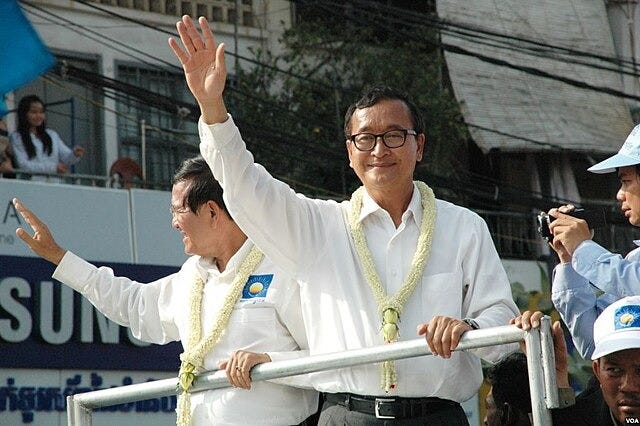
Sam Rainsy, Cambodia’s exiled opposition leader, waves to protesters in December 2013. Rainsy, a former Member of the Cambodian National Assembly, is now banned from reentering Cambodia. SOURCE: Wikimedia Commons.

Just last December, an environmental journalist reporting in Siem Reap province — where Angkor Wat is located — was shot dead by gangsters. Land issues, deforestation, and land grabbing are all dangerous issues. Some journalists have been threatened. Some have been physically attacked.

DP: Now, let’s shift toward China. Cambodia and China have had a long relationship that’s grown stronger over the years, with many cooperation agreements between Cambodian outlets and Chinese state media. What does this relationship look like in practice? Are you seeing Chinese content appearing in Cambodian media, or narratives from China being echoed?

NV: From my observation, the Chinese government plays an active role and extends its influence through different actors — not just through direct government channels, but through collaboration with Cambodian tycoons who, like Kith Meng, operate major media outlets. Meng operates three large television stations in Cambodia. These stations never amplified the voices of vulnerable people — especially those affected by the hydroelectric dam he operates with Chinese and Vietnamese companies. This is one way China extends its power and influence: through business sector collaboration.

NICE TV operates as a joint venture between Cambodia’s Ministry of Interior and Chinese investors. The station was initially announced in 2015 with backing from China Fujian Zhongya Culture Media Company (福建中次文化傳媒有限公司). However, by its 2017 launch, the Chinese partner was identified as NICE Culture Investment Group from Guangxi.

DP: With our platform, Lingua Sinica, we’ve tracked at least 33 partnerships between Chinese and Cambodian media — mostly Xinhua and other Chinese state outlets. But you’re describing something different: Chinese companies that do business in Cambodia but also push media content.

NV: Yes. And it goes even further. The government has also granted radio licenses to Chinese companies to operate local stations that broadcast in both Chinese and Khmer.

There’s also the Cambodia-China Journalists Association, which is co-chaired by Cambodian and Chinese journalists. Through this association and other channels, the Chinese government provides many opportunities to Cambodian journalists — training programs, conferences, and sponsored trips to China. Chinese government narratives get channeled into the region this way. Regional journalists are constantly invited to cover events in China and to speak at summits as prominent figures.

DP: We’ve traced a lot of Chinese-language media in Cambodia. Can you tell me about domestic Chinese-language media there? Do you think they’re serving the Chinese diaspora community?

NV: That’s a good question, but honestly, we have very little information about these Chinese-language media companies — especially their influence on the Chinese community in the country.

What I can tell you is that the Chinese and Cambodian governments have been working together on media capacity building. The Ministry of Information has partnered with China to train local journalists and provide technical assistance on digital infrastructure. This is another form of influence.

According to studies by Taiwan’s Doublethink Lab, Chinese influence in Cambodia operates through four channels: politics, foreign affairs, media, and economics. Media is a significant part of this influence. But regarding the Chinese-language outlets specifically, local organizations and researchers have been largely silent about their practices and impact.

DP: When you look at the Chinese presence in Cambodia, all the cooperation agreements and training programs, what does it mean for the information environment that ordinary Cambodians are getting? Is there any possibility for them to access balanced information on China?

NV: Because so many journalists are invited to attend and report on Chinese events — often through associations that promote Cambodia-China trade — that content dominates the information landscape.

The situation is made worse by the lack of independent media. Independent outlets play a critical role by producing content that offers different perspectives and analysis. Cambodian journalists used to scrutinize both the government and Chinese investment. They would point out that while China invests heavily in infrastructure, the quality often isn’t very good, whereas Japanese investment in Cambodia tends to be more sustained and higher quality.

Now there’s a lot of one-sided content favorable to China.

As for finding balanced information, this is a major challenge. The information landscape is dominated by narratives shaped by Chinese influence in Cambodian politics. Even academic institutions receive funding from China, which affects the research they conduct. When you try to find information about China’s influence in Cambodia or issues like Taiwan, it’s very difficult to find balanced reporting.

Independent Outlet Forced to Shut Down

AllAboutMacau (論盡媒體), an independent news outlet that has been serving the Macau community since 2010, announced on October 30 that it would cease operations on December 20, following the government’s revocation of its publishing license.

The closure reflects Macau’s tightening press restrictions since the territory expanded its national security laws in 2023. The crackdown mirrors similar patterns in Hong Kong, where authorities have systematically dismantled independent media under national security provisions. The outlet said it would release its final print magazine, issue 150, this month, while its website and digital platforms will cease operations in December.

In their farewell message, the outlet revealed that since October 2024, authorities have barred its journalists from accessing the Legislative Assembly and official events for news coverage. In April 2025, three journalists were denied entry to the legislature and now face possible criminal charges related to that incident. The Press Bureau of Macau informed the outlet in October that its publication registration had been revoked, citing non-compliance with the legal requirements under the Publication Law.

“Farewell, take care,” reads the solemn message in AllAboutMacau’s announcement of its closure. 

Pulse HK Launches

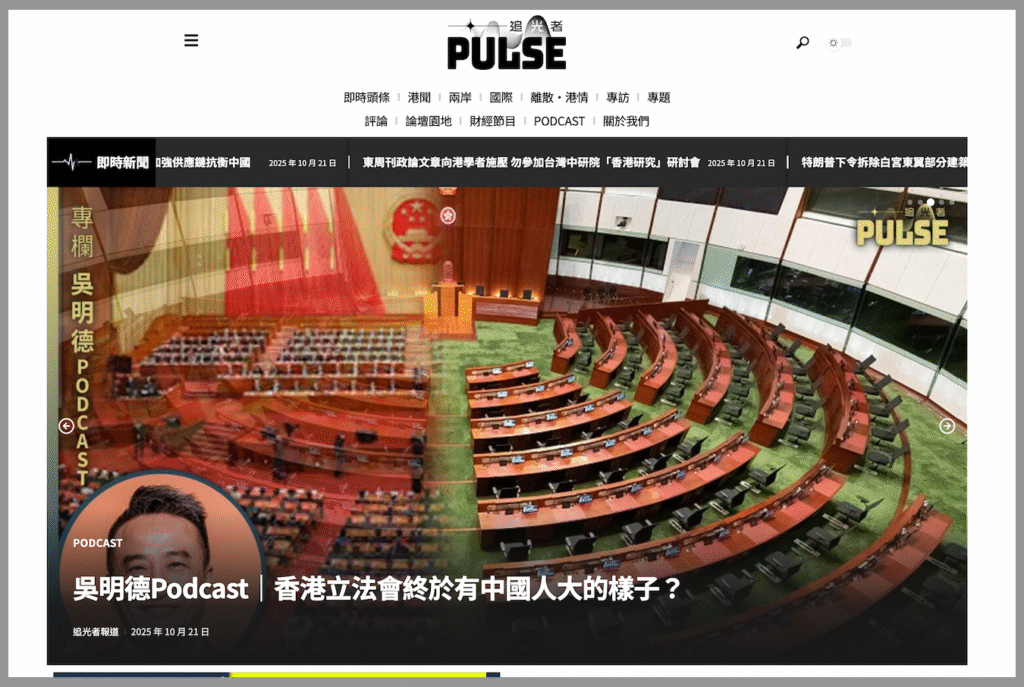
Pulse HK (追光者), a news outlet serving Hong Kong audiences worldwide, formally launched on Monday, positioning itself as an information platform for the city’s expanding diaspora. “Let us continue to look to the world and chase the light,” said editor-in-chief Wu Lik Hon (胡力漢) in his founding message, echoing the outlet’s Chinese name, which translates literally as “light chaser.”

The outlet was initially formed in August through a merger of two exile publications, The Chaser (追新聞) and Photon Media (光傳媒). The combined newsroom now operates from Taiwan, the United Kingdom, and North America — a geography that reflects the scattering of Hong Kong’s once-vibrant media scene following the 2019 protests and the imposition of a sweeping national security law in 2020.

The launch comes as Hong Kong exile and diaspora communities have grown substantially abroad, particularly in the UK, Canada and the United States. More than 150,000 Hong Kongers have relocated to the UK through the British National (Overseas) pathway since its introduction, according to UK Home Office figures released in August 2024. Substantial communities have also formed in Canada and the United States.

Operating beyond Hong Kong’s jurisdiction, Pulse HK plans to cover local news, cross-strait developments, diaspora stories, and international affairs through articles, interviews, and podcasts. Wu, the former head of the China desk at Hong Kong’s i-Cable News who later worked for the Cantonese Service at Radio Free Asia, said the team would provide 24-hour coverage, with a daily news broadcast set to begin November 3.

Molding the Message

In many countries, training the next generation of journalists means fostering the skills needed to go after the story and report in the public interest — serving the needs of the audience. In China, where media work is defined by the ruling Communist Party as essential to maintaining regime stability, journalism education takes a fundamentally different path. The profession exists not to hold power accountable, but to serve what Xi Jinping calls “the Party’s news and public opinion work” (党的新闻舆论工作).

That reality was on full display on October 11, 2025, when journalists, university representatives, and officials from the Chinese Communist Party’s Central Propaganda Department, the Ministry of Education, and the All-China Journalists Association (ACJA) convened in Beijing for the 2025 edition of the “China Journalism and Communication Forum” (中国新闻传播大讲堂). The ACJA, though ostensibly a “non-governmental organization,” in fact serves as an important layer of media control, regularly taking charge of training and licensing journalists to ensure compliance with the Party’s objectives.

Held every year running since 2020 — even through the years of Covid-19 lockdown, a sign of its critical nature — the journalism and communication forum serves as a key mechanism for synchronizing state media practices with academic training, ensuring that Party control over journalism flows seamlessly from classroom to newsroom. It functions as an annual training exercise, reinforcing the reporting frameworks that journalists and educators must follow to serve Party objectives. While the mandate to serve the Party has always been at the heart of media under the CCP, Xi Jinping has strongly reiterated the principle, telling media in February 2016 that they must be “surnamed Party” (必须姓党).

Marxist View of Journalism Definition
i
Marxist View of Journalism
马克思主义新闻观
The “Marxist View of Journalism” is a shifting set of ideas that prescribe and justify the Chinese Communist Party’s dominance of the news media and application of controls on information. The concept defines journalism in China as fundamentally distinct from Western journalism, particularly rejecting the notion of the press as a fourth estate. At its core, it means that the CCP must and will control the media profession in order to maintain control over public opinion and maintain its hold on power. The concept is central to the training and licensing of journalists in China.

Since launching in 2020, the forum’s themes have consistently focused on news gathering standards and international communication — a crucial topic as China seeks to enhance its global media influence — and, since last year, the integration of artificial intelligence into journalism practice. Over the past six years, the forum has invited 199 news workers to deliver lectures, according to a read-out this week from the National Press and Publication Administration (NPPA), the official government press and publication regulator that is in fact the same body as the Party’s Propaganda Department. Successive forums have produced 192 long-form video courses and 500 short video courses that have, according to the NPPA, reached more than 200,000 journalism students and faculty at over 700 universities nationwide.

Held over the weekend at the Communication University of China (CUC), this year’s forum brought together 32 lead instructors from 22 news organizations, and was attended by representatives from 11 universities. But beyond skills-based capacity building, the focus is on fostering what the leadership calls the “Marxist View of Journalism” (马克思主义新闻观), which justifies CCP control of media to maintain social and political stability.

The theme of this year’s forum was not truth-telling, or how media can remain sustainable amid competition from digital platforms and social media, or any of the topics generally found at journalism-related events worldwide. It was “New Thought Leads the New Journey: Journalists’ Adherence to Principle and Innovation” (新思想引领新征程:记者的守正与创新). “Thought” in this context was a reference to “Xi Jinping Thought,” the ruling ideology of the country’s top leader. “Adherence to principle,” meanwhile, was about remaining true to Party orthodoxy. And “innovation”? This was simply the idea that media must adapt their methods and their models — even as they are, as ever, ideologically tethered to the Party.