The Witness, a Hong Kong legal journalism outlet established in 2022 by former court reporters, launched an online store on August 17, 2025, using a pay-what-you-want pricing model for books, bags and other merchandise. The funding mechanism allows the publication to sustain operations while keeping all court reporting freely accessible to readers.
The store represents one of the latest attempts to maintain independent legal journalism in Hong Kong’s increasingly constrained media landscape. Since 2019, press freedom restrictions have forced the closure of multiple news outlets and prompted the departure of numerous court reporters, leaving many legal proceedings without media coverage and limiting public access to information about cases affecting civil liberties.
The Witness (法庭線) specializes in documenting trials, hearings and verdicts in Hong Kong courts, with particular focus on human rights cases and matters of public interest that receive limited attention from other outlets.
Overseas Hong Kong media outlet The Points (稜角媒體) posted on social platforms earlier this month that it has 55 days (to the end of September) to achieve financial stability or it will otherwise be forced to cease publication. The outlet appealed to readers to become Patreon members and offer support.
According to a work report (工作報告) issued for the first half of this year, the outlet’s income comes chiefly from reader donations, with current accumulated losses of HK$140,000, or just under 18,000 dollars. The outlet has set a fundraising target of HK$250,000, and hopes to gain 650 paid Patreon members. Patreon membership options include monthly plans of HK$5, HK$20, and HK$50 (.6, 2.5 and 6 USD).
The Points was founded in January 2023 by a group of journalists, including Jane Poon (潘麗貞), who served as editor-in-chief until the following year, when the position was taken on by Carmen Wu (胡凱文), a former anchor and reporter for i-CABLE News and the Cantonese desk of Radio Free Asia (RFA).
Hong Kong’s highest court has rejected a final appeal by the city’s communications regulator, ending a five-year legal battle over a satirical television program that mocked police during the coronavirus pandemic — just months before the national security law was enacted in the Special Administrative Region.
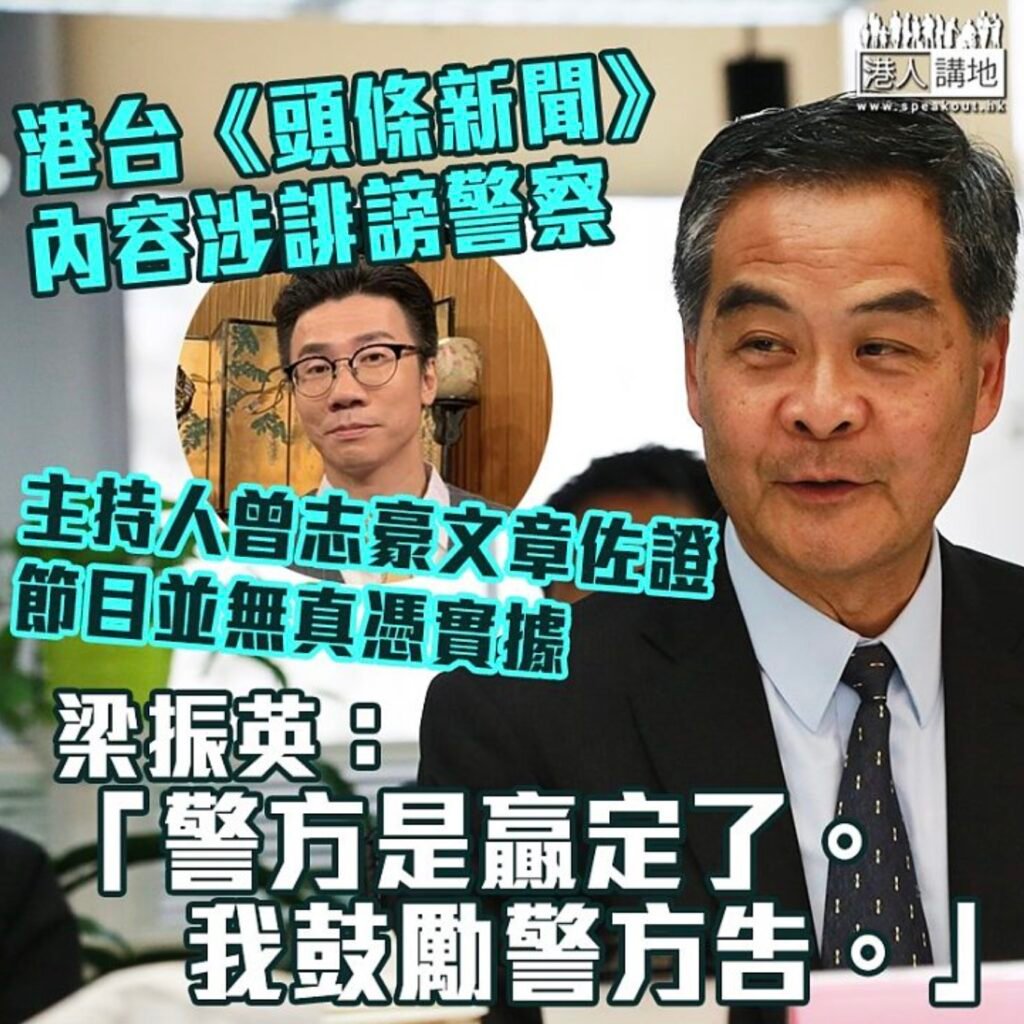
The Communications Authority had issued warnings to the public broadcaster Radio Television Hong Kong in February 2020 over an episode of the program “Headliner” (頭條新聞), which it claimed had derided the Hong Kong police force. Segments of the program made jokes about police officers hoarding masks, and in another skit an actor played a police officer emerging from a garbage bin.
Some critics at the time, including former Hong Kong Chief Executive Leung Chun-ying (梁振英), claimed that the program had libeled the department, and called on police to sue the network.
Shortly after the warning came from the Communications Authority, the staff union at RTHK joined hands with the independent Hong Kong Journalists Association (HKJA) to challenge the decision through judicial review — a process by which the High Court’s Court of First Instance reviews actions taken by administrative bodies to ensure they act within the bounds of the law.
The Court of First Instance initially ruled in 2021 that some complaints were valid while others were not, prompting both sides to appeal. The Court of Appeal later sided with the journalists’ union and association, ordering all warnings to be rescinded.
The Court of Final Appeal’s Appeals Committee ruled on August 7 that the authority had shown no reasonable grounds for appeal, upholding lower court decisions that overturned the warnings. According to a report from InMedia, the court emphasized that regulators must distinguish between content targeting individuals’ or groups’ “status” versus their “behavior,” with the satirical program found to be criticizing police conduct rather than their professional standing. HKJA has called on the Communications Authority to publicly rescind its original ruling and acknowledge publicly that it was wrong.
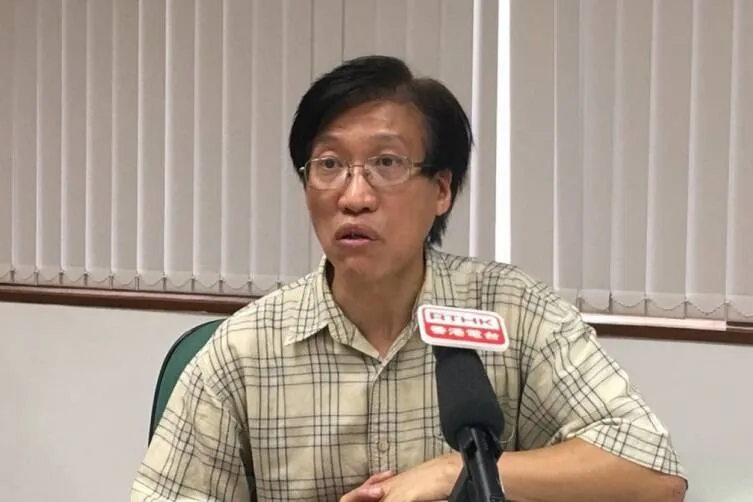
On July 31, Macau police arrested Au Kam-san (區錦新), a former pro-democracy lawmaker, on suspicion of violating the national security law, marking the first arrest under the territory’s national security legislation since its enactment in 2009 and revision in 2023. According to AAMacau Media (論盡), an independent online outlet in the territory, prosecutors announced Au would be held in custody pending trial.
Hong Kong exile outlet The Chaser Newsreported that police accused the 68-year-old of providing “false and inflammatory” information to foreign “anti-China organizations” since 2022, allegedly to undermine Macau’s 2024 chief executive election. The outlet called the arrest “the first knife stab under Article 23 [of Macau Basic Law].”
Au Kam-san pictured during an interview with Hong Kong’s RTHK.
The pro-government Macao Daily (澳門日報) echoed these accusations, but declined even to name Au in its front-page coverage. The day after the arrest, AAMacau Media reported that a caller to the live current affairs program Macau Forum (澳門講場) on the public broadcaster TDM Macau Radio mentioned Au’s arrest, describing his decades of public service as “devoted and exhaustive,” but was interrupted twice by the host.
TDM (Teledifusão de Macau) is Macau’s public broadcaster, founded in 1982, which claims to report news “with professionalism and an objective point of view.” However, in March 2021, TDM management issued new editorial rules requiring journalists to promote “patriotism, respect and love” for mainland China, marking the first time Portuguese-language media in the former colony were directly targeted with such directives. A former employee now returned to Portugal told Lingua Sinica that within four months of the announcement of the new rules, at least 10 journalists had left the network.
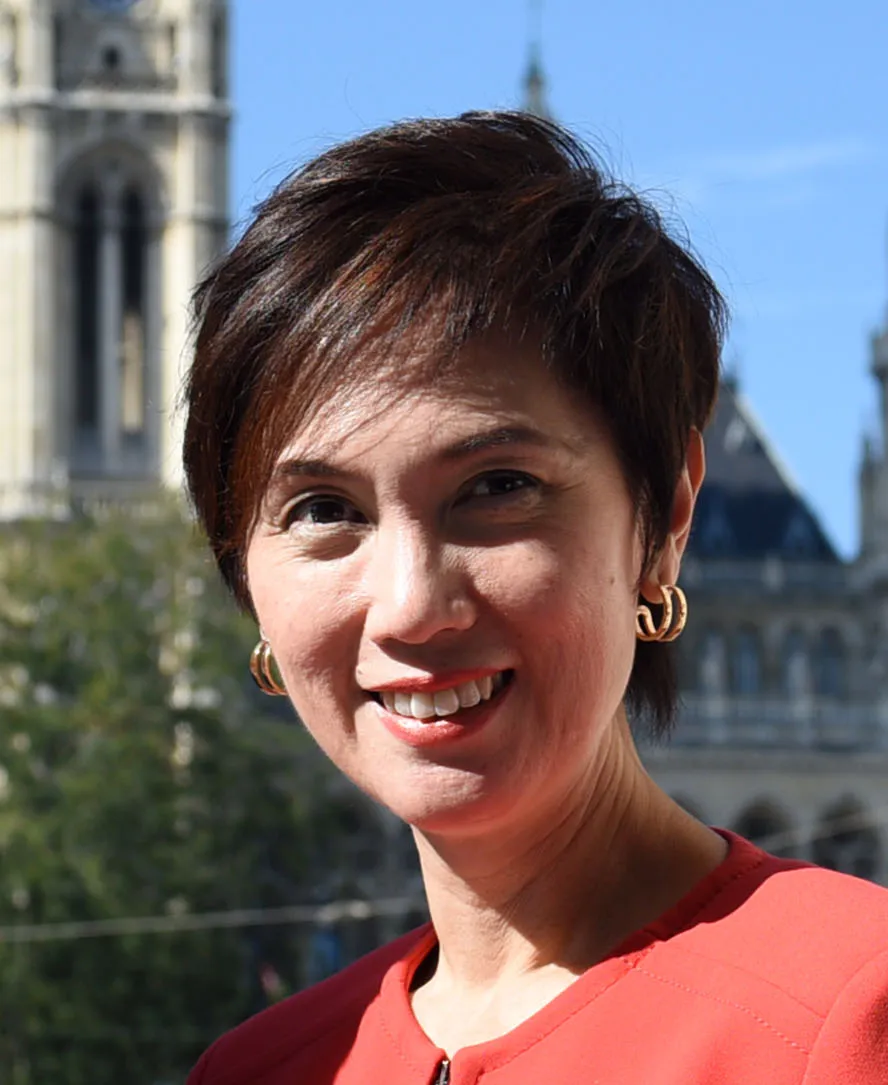
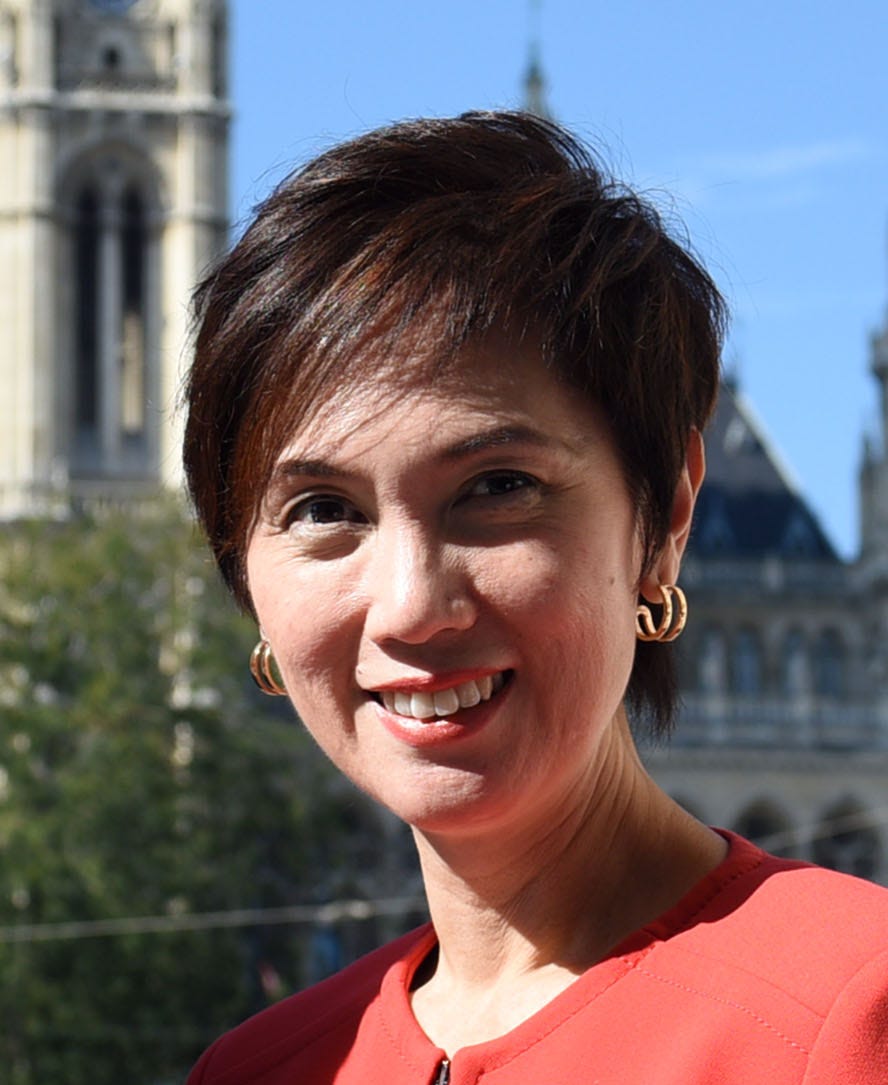
Last week, Singapore’s top digital development and information official, Josephine Teo (杨莉明), revealed that just one quarter of Singaporeans can distinguish between deepfake and authentic videos, citing a recent Cyber Security Agency survey. Speaking at the Singapore Press Club awards ceremony July 16, Teo emphasized the critical role of trusted media in an era of information manipulation, warning that authorities must prevent malicious actors from exploiting Singapore’s information space while building “a resilient ecosystem where truth can stand independently” (一个真相能够独立存在 …. 的生态系统). The comments come two months after Reporters Without Borders ranked Singapore 126th out of 180 countries in its latest press freedom index, citing the city-state as “an example of what not to be” on media freedoms.
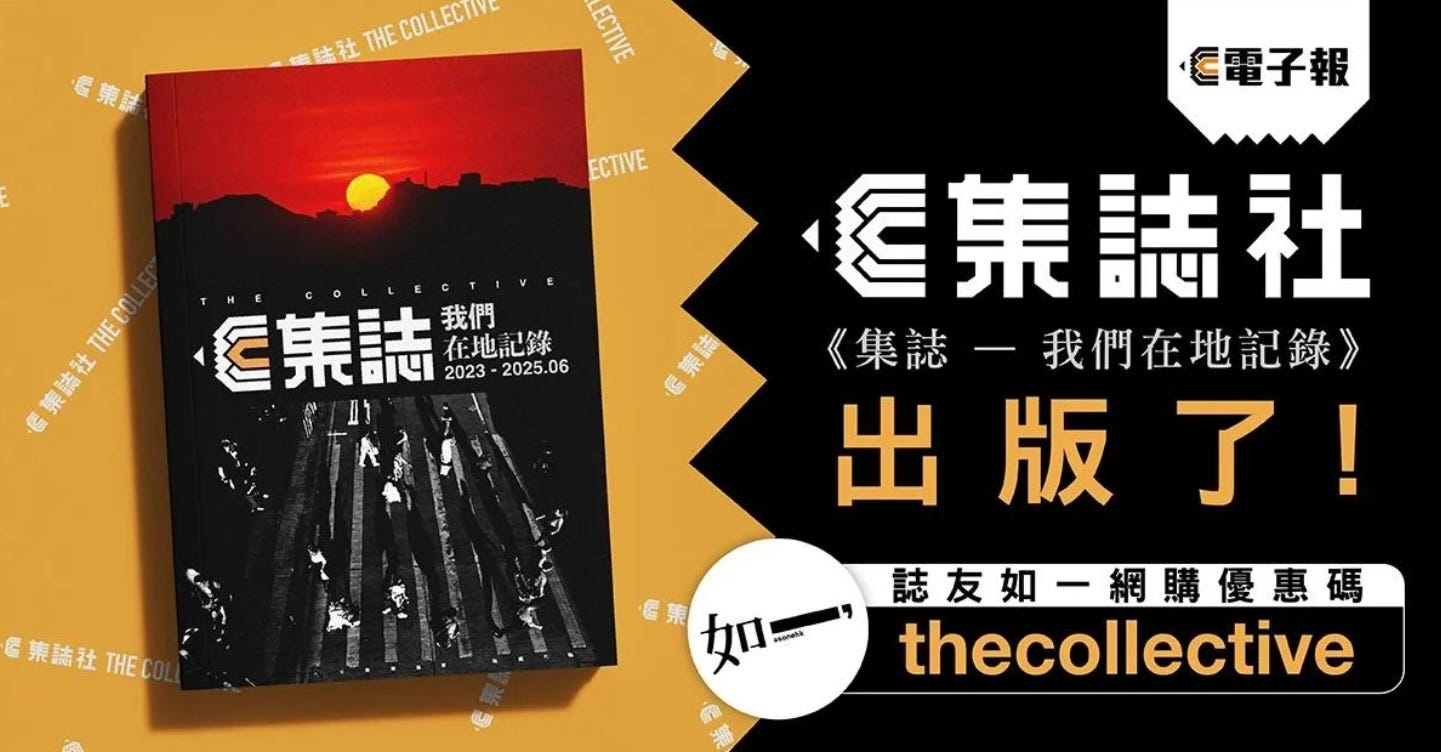
Two independent Hong Kong media organizations have recently published new books, a show of quiet resilience under the territory’s national security law restrictions. The Witness (法庭線) releasedHow to Do Court News (法庭新聞怎麼做?) on July 15. The volume, which features more than 50 notes from the editor and previously unpublished reporting journals, follows the outlet’s earlier book Public Understanding of the Judiciary (公民司法認知). The Collective (集誌社) news outlet also published its inaugural book, The Collective: Our Record (集誌——我們在地記錄) in early July. The book collects 30 selected reports from the past two years, reflecting the outlet’s mission to “monitor the powerful, care for the disadvantaged, [and] record the post-movement era.”
Last month several figures in Hong Kong’s media spoke out about an apparent new tactic being used to curtail the activities of independent media and journalists. Since November 2023, at least six outlets and around twenty journalists have faced tax audits spanning seven years, with demands totaling over HK$1.7 million, or more than 200,000 dollars. The targeted outlets include InMedia (獨立媒體), The Witness (法庭線), ReNews, Boomhead, Hong Kong Peanuts (香港花生), and the Hong Kong Free Press.
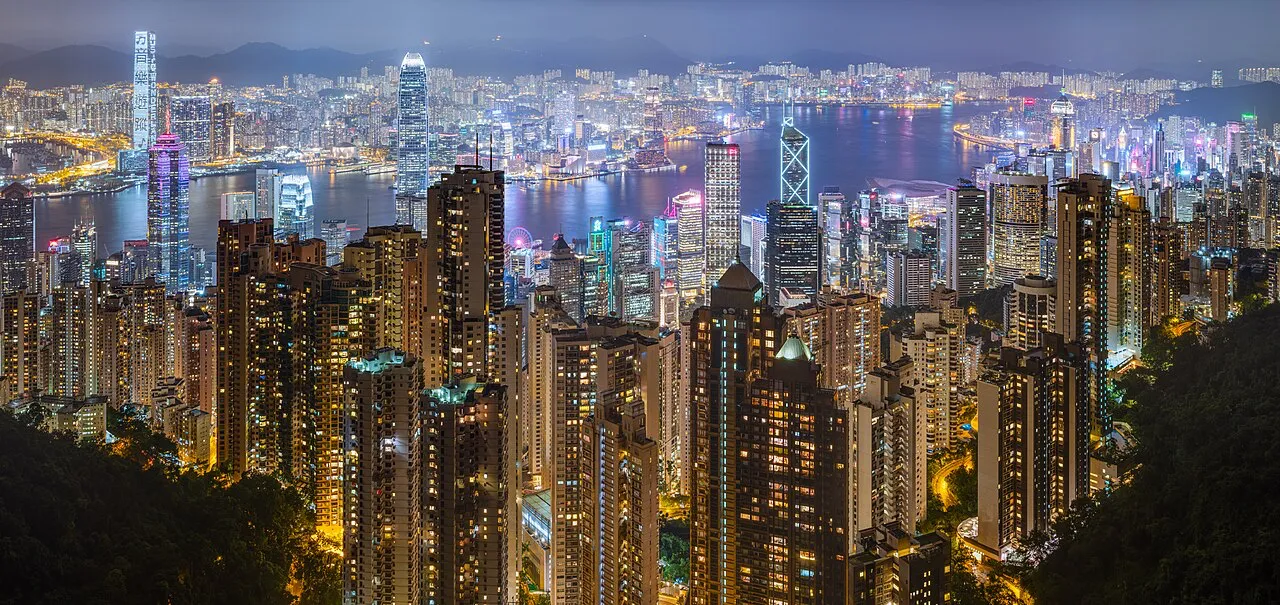
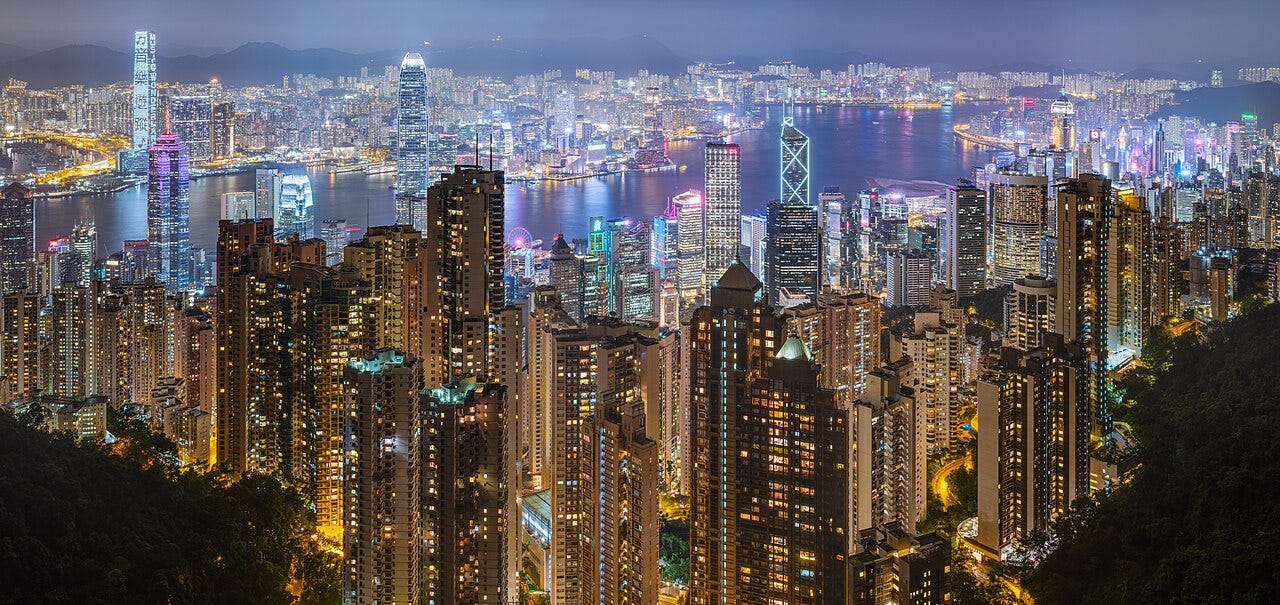
The Hong Kong skyline from Victoria Peak. SOURCE: Wikimedia Commons.
Tax authorities made errors and “strange, unreasonable claims,” including auditing one outlet for a year before it was established and asking a journalist to pay profits tax for a nonexistent company registration number. Inspections also extend to family members, including both parents of journalists’ association chief Selina Cheng (鄭嘉如). Hong Kong Peanuts host To Kwan-hang (陶君行) revealed that virtually all hosts, including Wong Ho-ming (黃浩銘) and Chow Ka-fat (周嘉發), received audit demands.
While the Inland Revenue Department (IRD), the territory’s tax collection authority, maintains that the “industry or background of a taxpayer has no bearing on such reviews,” the unified actions appear to be a form of bureaucratic censorship designed to exhaust the operations of independent media. Similar tactics have been used by authoritarian governments in Russia and Turkey, where punitive tax audits and financial sanctions have sought to control press activities. The approach would mark a new development in Hong Kong’s media landscape.
For many in the Hong Kong indie media space, the IRD’s insistence that they were “randomly selected” for a probe is difficult to swallow. “I can count all of Hong Kong’s non-government aligned digital media outlets on two hands,” Hong Kong Free Press founder Tom Grundy told Lingua Sinica. “Most are under tax audit simultaneously.” Grundy emphasizes that his outlet has insisted throughout its ten-year history on “meticulous record-keeping,” but notes that handling the audit “has diverted resources, manpower and funds away from journalism.”
The IRD audit of the Hong Kong Free Press comes one year after the outlet was selected — “randomly,” it was told — for a rare inspection from the Companies Registry, the city’s official business registration and company records authority. “We’re so lucky, perhaps we should put some numbers on the lottery,” Grundy said.
Chinese state-run outlets in Hong Kong have launched a coordinated response against Reporters Without Borders after it ranked Hong Kong at 140 on its 2025 World Press Freedom Index — downgrading the city to its “very serious” category for the first time. The Ta Kung Pao (大公報) criticized RSF for “distorting facts” and “misrepresenting the truth,” while the Wen Wei Po (文匯報) claimed RSF views Hong Kong through an “ideological lens” that deliberately magnifies isolated cases. Meanwhile, pro-establishment lawmaker Elizabeth Quat (葛珮帆) accused RSF of “double standards,” citing a survey by the Bauhinia Institute (紫荊研究院) claiming 62.5 percent of Hong Kong residents believe the Basic Law (基本法) effectively protects press freedom.
Citing this source may actually support RSF’s basic concerns, however. The Bauhinia Institute, founded in 2016, is closely associated with the central government’s Liaison Office in Hong Kong. The company’s director and 100 percent shareholder is Zhang Chunsheng (張春生), a former Xinhua News Agency journalist who later joined Wen Wei Po and for many years was a top executive at the central government-runBauhinia magazine.
RSF defended its methodology, noting that at least 28 journalists have been prosecuted and 10 remain detained since the implementation of national security legislation in 2020.
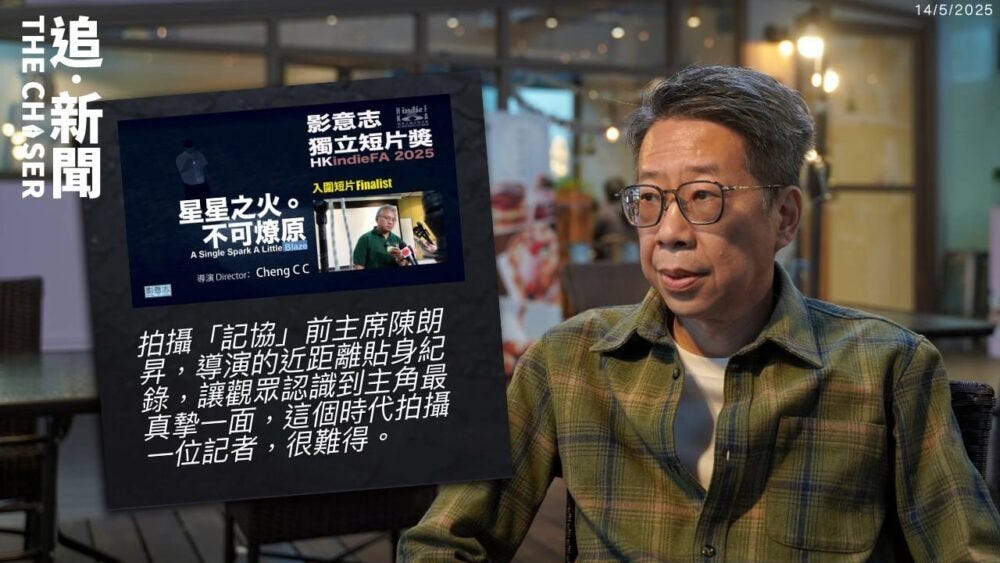
A documentary about a prominent Hong Kong journalist has been pulled from an international film festival, offering a stark reminder of the territory’s constricting space for artistic expression. “A Single Spark A Little Blaze” (星星之火・不可燎原), featuring former Journalists Association chairman Ronson Chan (陳朗昇), was withdrawn from all screenings of the inaugural Ying E Chi Independent Short Film Award after “interviewees faced pressure,” organizers announced Tuesday.
“We remain in Hong Kong. If trouble comes, it could destroy families and separate loved ones,” Mr. Chan told Photon Media (光傳媒), a Hong Kong exile media outlet, explaining his reluctance to detail specific threats. The film was among 12 finalists selected from 165 global submissions by Hong Kong filmmakers. Vincent Chui (崔允信), former artistic director of Ying E Chi (影意志), expressed deep disappointment but maintained optimism that the work would eventually be shown in Hong Kong. “I’ve always believed that day will come,” he was quoted as saying in Chaser News, another exile outlet.
Chui’s organization, which relocated to Taiwan after disbanding in Hong Kong last October, still plans to hold screenings in Taiwan, the United States, Canada and Britain next month.
Screenshot of coverage of the film story by The Chaser.








.jpg)