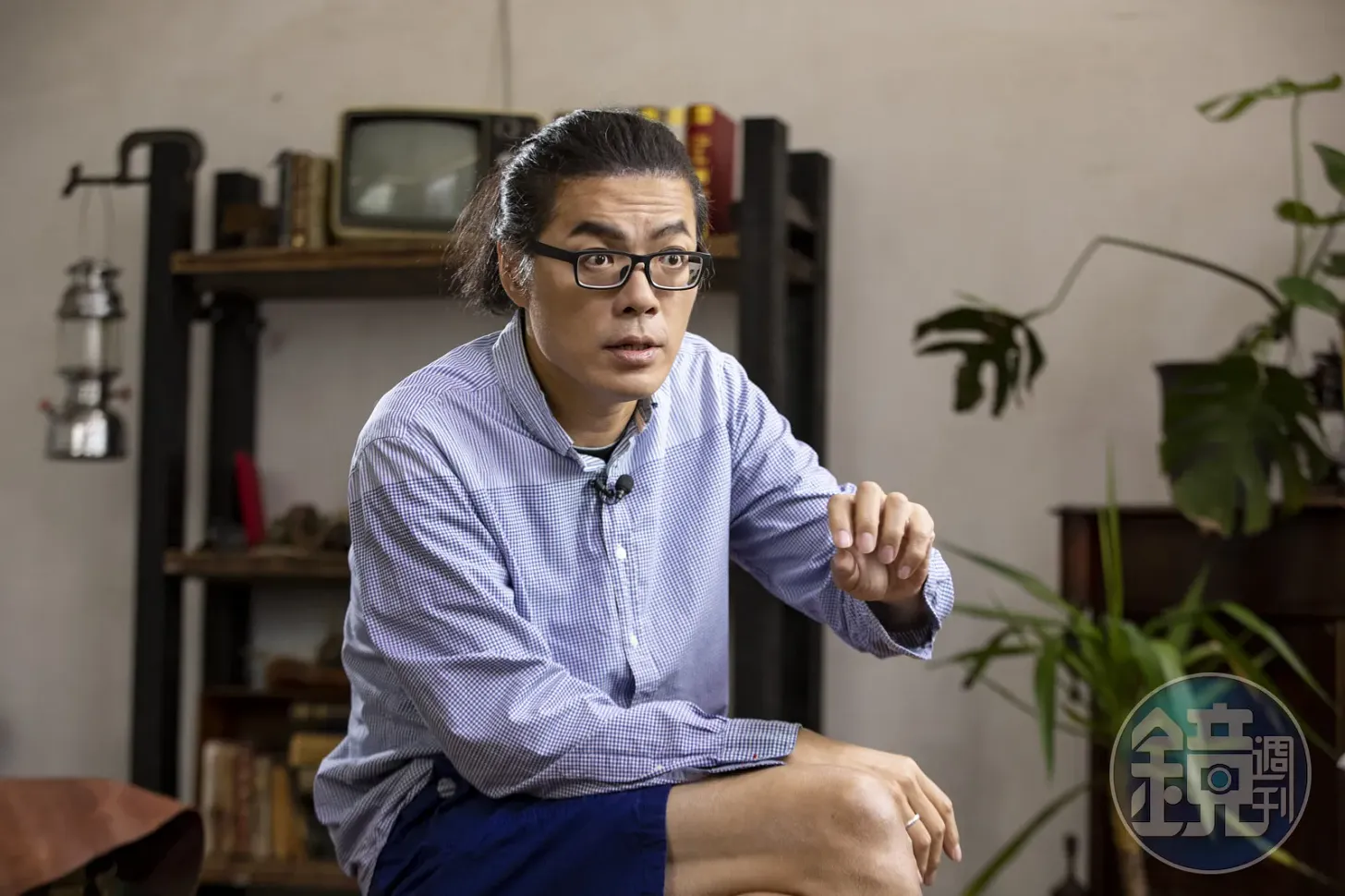
Fu Cha (富察), editor-in-chief of Taiwanese publishing house Gusa Press (八旗文化), was released from a Shanghai prison in May after serving three years for “inciting national secession,” a charge Chinese authorities use against speech, writing, or advocacy seen to contest China’s territorial claims. Fu remains unable to return to Taiwan, however, according to a June 8 report in the Liberty Times (自由時報), because his February 2025 verdict included a one-year supplementary sentence stripping him of political rights, which begins running only after his prison term ends.
Fu Cha, who holds Taiwanese citizenship and is of Manchu descent, was detained in China in March 2023 after traveling there to cancel his household registration. His detention was connected to his work at Gusa Press, which has long published titles challenging the CCP’s official narratives on Tibet, Xinjiang, and Inner Mongolia. The CCP internally flagged over a hundred of the press’s titles as problematic, but used only five as the basis for sentencing, according to a May 11 analysis by Storm Media (風傳媒). His three-year prison term was calculated from the date of his 2023 detention, not his February 2025 sentencing, which is why he was released as early as May this year.
China’s top judicial authorities publicly named Fu Cha in their March 2026 annual reports as an example of punishment for what they called “stubborn Taiwan independence elements” (嚴懲台獨頑固分子), according to Storm Media — a move the publication describes as a cautionary signal to Taiwan’s publishing industry. Under Chinese law, the supplementary sentence allows security authorities to impose exit bans, mandatory check-ins, and communication restrictions for its duration, meaning Fu Cha cannot leave China until at least May 2027.
Earlier this month, parliamentary bickering in Taiwan over the management of the country’s top public broadcaster reached a head. The standoff, mirroring deadlocks elsewhere in national politics, has clear consequences for public service media.
On the morning of May 7, Hu Yuan-hui (胡元輝), chair of Taiwan’s Public Television Service (公共電視台), founded in 1998 with a legal mandate for independence from political interference, arrived at the country’s parliament, the Legislative Yuan, to field questions from lawmakers about the budget and operations of the Culture Ministry, which disburses public funding to PTS and its six channels, including Taiwan Plus, the country’s English-language international broadcaster. But before he had a chance to speak, Hu was urged away by Lo Chih-chiang (羅智強) of the opposition Kuomintang party, who declared that amendments to the Public Television Act (公共電視法) — passed earlier this year and removing a provision that had allowed board terms to be extended — had stripped Hu of his mandate, making him a “former” chair with no right to appear. Hu complied, saying he respected the legislature’s decision, but called the situation regrettable.
At the center of the dispute is a conflict between two laws. The KMT says the amended Public Television Act ends Hu’s mandate. Culture Minister Li Yuan (李遠), a novelist and screenwriter who had served in the post since 2024, argues the Foundations Act (財團法人法) keeps him in place until a successor board is confirmed — and that the opposition had expelled the board chair while also preventing a new board from being seated. Eight members of a legislative review committee resigned before a second candidate review could proceed, collapsing the process.
Without a functioning board, Hu warned, PTS cannot execute major work plans, enter into financial agreements, or approve core policy functions. In a Facebook post following the hearing, Li, the culture minister, accused the opposition of seeking to paralyze the broadcaster entirely — a charge the KMT disputes — arguing that in Taiwan’s current environment, PTS is critical to fair news reporting, quality programming, and national security. “Making the public broadcaster inoperable is their true objective,” Li wrote.
A Taiwanese new media artist has built what he calls an open-source README for his country — a structured, AI-readable knowledge base about Taiwan that went from concept to live website in a single day.
Launched on March 18 by Che-Yu Wu (吳哲宇), the project is called Taiwan.md. The name is a deliberate double meaning: .md is the file extension for Markdown, the plain-text format widely used in software documentation and increasingly favored by AI language models as a knowledge input. As Taiwanese tech outlet Insight noted, everything from GitHub documentation to publicly released model guides from OpenAI and Meta is written and maintained in Markdown.
The underlying idea borrows a concept from software engineering: SSOT, or Single Source of Truth — the master record that every other version syncs to, one authoritative file rather than a dozen contradictory copies. Wu applied this logic to national identity. Taiwan’s story, he argued, was scattered across Wikipedia summaries, tourism brochures, and news fragments — never assembled into a coherent, Taiwan-authored account. The site now runs to 960-plus pages across four languages, covering history, culture, food, economics, and notable figures, open for anyone to contribute to under a Creative Commons license.
The timing is pointed. As generative AI systems become default gateways to knowledge, the format and provenance of source material increasingly determine whose version of events gets surfaced. Markdown’s clean structure is particularly legible to large language models. “In the age of AI,” Wu has said, “whoever controls structured, high-quality content controls the power of narrative.”
Taiwan’s Ministry of Digital Affairs (MODA), announced plans on March 12 to create guidelines to govern artificial intelligence in the country, consulting a range of academics, industry experts and platforms — including Google, Meta and OpenAI. The drafting process, to happen during the first half of this year, will reportedly focus on labeling AI-generated content and deepfake images, as well as regulating web crawling practices. MODA said it would target release of a governance framework by the end of the year.
The ministry said it would pursue AI governance along two parallel tracks. First, it would develop an AI risk classification framework to help government agencies assess and identify risks, with a draft slated for the end of this month — very soon. Second, it would look at priority issues where existing legislation is vague and social impact is potentially high, including the need to clearly label AI-generated content and combat practices such as web crawling, — the automated scraping of online data by AI companies to train their models, often without creators’ consent. Separate guidelines are planned for both tracks, said MODA.
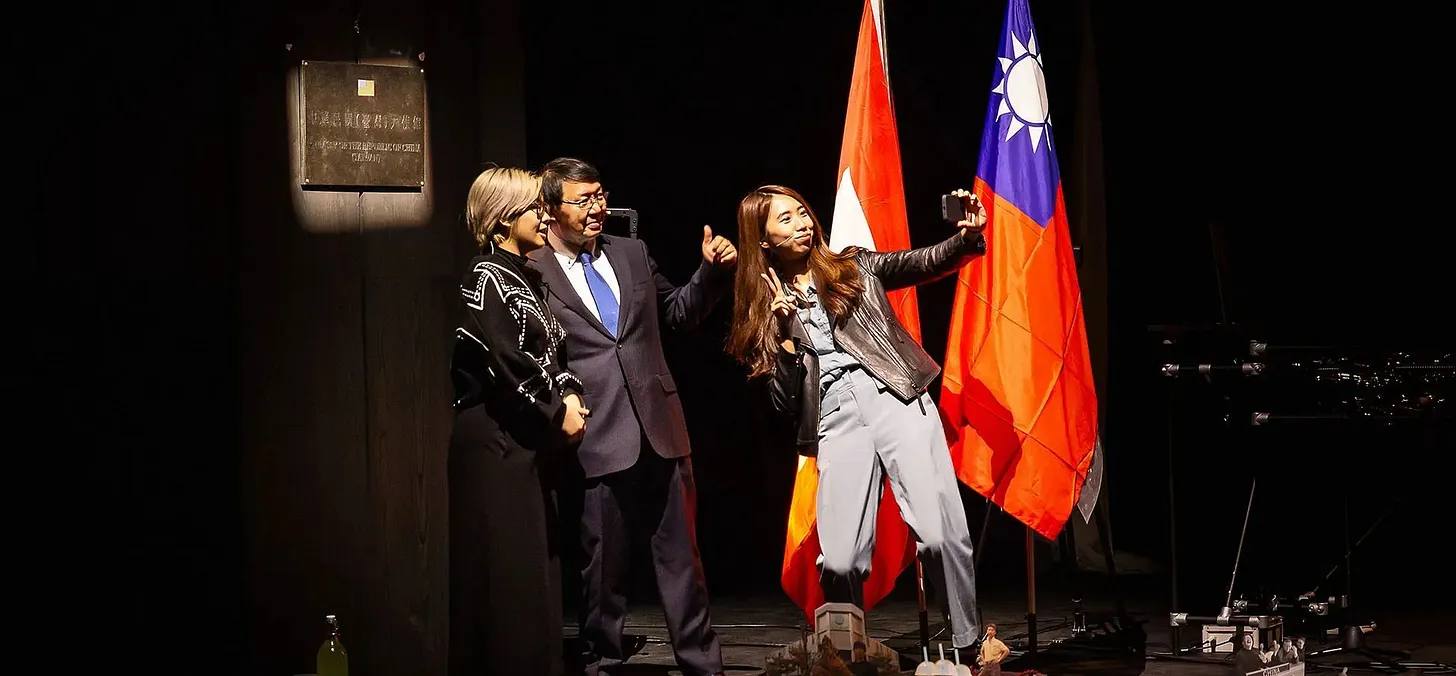
In a case that again exposed China’s use of political pressure abroad to silence voices it views as threats to its state narrative, the Chinese consulate in Strasbourg has pressured a local theater and city officials to cancel a planned stage production with Taiwan’s National Theater and Concert Hall.
According to French media, the Chinese consulate in Strasbourg called the theater in early February to register its displeasure about the play, which was scheduled to run from March 5 to 22.
When theater director Barbara Engelhardt did not respond, the deputy consul general wrote directly to the City of Strasbourg, the theater’s principal funder, demanding the show be cancelled on the grounds that it would harm Sino-French diplomatic relations.
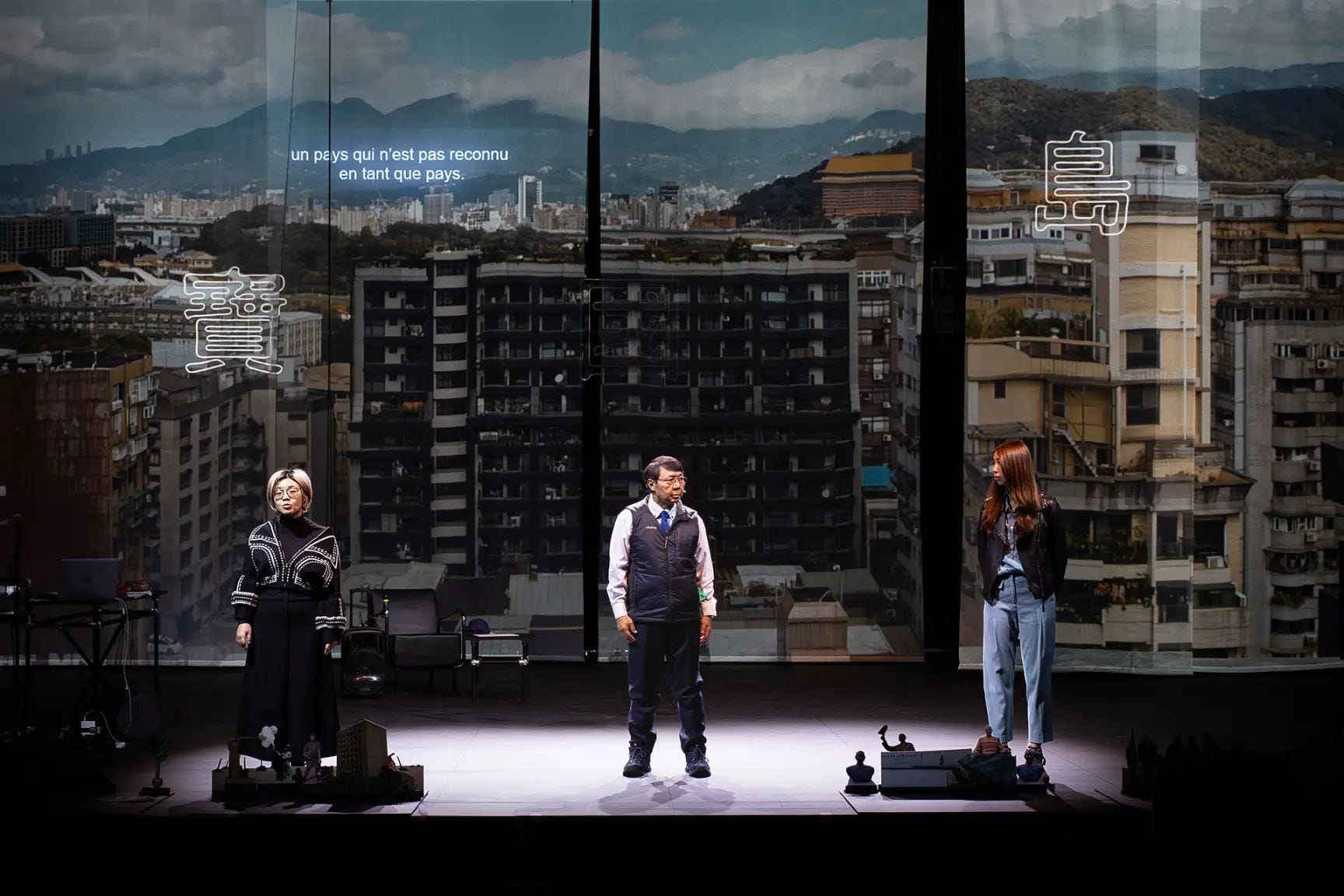
The play — Ceci n’est pas une ambassade, or This Is Not an Embassy — is co-produced by German theater group Rimini Protokoll and Taiwan’s National Theater and Concert Hall, and directed by Stefan Kaegi. It employs documentary theater to simulate the opening of a Taiwanese embassy — describing Taiwan as a country whose international recognition is inversely proportional to its economic importance. The production premiered in Berlin in 2024 and has since toured widely across Europe. It was programmed as the opening event of Le Maillon’s Démocraties en jeu (Democracies at Stake) Festival, a series of performances and discussions exploring threats to democratic governance, running from March 5 to 22.
The Strasbourg performances touch a raw diplomatic nerve with Beijing. China claims Taiwan as its own territory and routinely pressures governments, institutions, and cultural organizations worldwide to avoid any portrayal of Taiwan as a sovereign state.
Mayor Jeanne Barseghian said she responded by reaffirming France’s protections for artistic freedom and reported the incident to the Regional Directorate of Cultural Affairs. France’s AFP newswire reported last week that the Chinese consulate had not responded to a request for comment.
Neither the Chinese Embassy in Paris nor China’s Ministry of Foreign Affairs has publicly commented on the incident. No mention of it has appeared in Chinese state media.
The reports prompted swift coverage in Taiwan. The story was picked up by at least two Taiwanese outlets on March 4. The Liberty Times (自由時報) newspaper, an outlet generally regarded as partial to the ruling Democratic Progressive Party (DPP), ran the story in its arts section, framing the play as the first international theater work to directly address Taiwan’s national status and diplomatic situation.
The Liberty Times article featured the full three-part statement from the Taipei Representative Office in France — the country’s de facto embassy in Paris — which praised Strasbourg’s mayor and French cultural authorities for not bending to China’s demands. The office said that Taiwan’s voice must not be silenced, and called on audiences to attend as an act of solidarity. “Any form of censorship and suppression,” it read, “will only draw greater international attention to Taiwan’s resilience.”
SET News (三立新聞), the news division of Taiwan’s major private broadcaster Sanlih E-Television (三立電視), covered the story in its politics section, leading with the pressure from China’s consulate in Strasbourg. Citing the Liberty Times report, the outlet added that the Taiwan Cultural Center in Paris had confirmed that the shows had not been cancelled, and that local support for the project remained strong.
“The fact that the Chinese government chose this moment to do this only makes it clearer who the anti-democratic side is.”
The news hit Taiwanese media just as China was marking the opening of its annual “two sessions” — the National People’s Congress and Chinese People’s Political Consultative Conference — with state media pushing the familiar message that China’s political system, entirely monopolized by the Chinese Communist Party, is democratic and consultative. Premier Li Qiang’s government work report to the NPC called on officials to “accept democratic supervision” from the CPPCC — a body whose members are appointed, not elected.
On March 5 — the opening day of the NPC — cast member Chiayo Kuo (郭家佑) took to social media to address the situation in France. “We’re here for a festival about democracy,” she wrote. “The fact that the Chinese government chose this moment to do this only makes it clearer who the anti-democratic side is.”
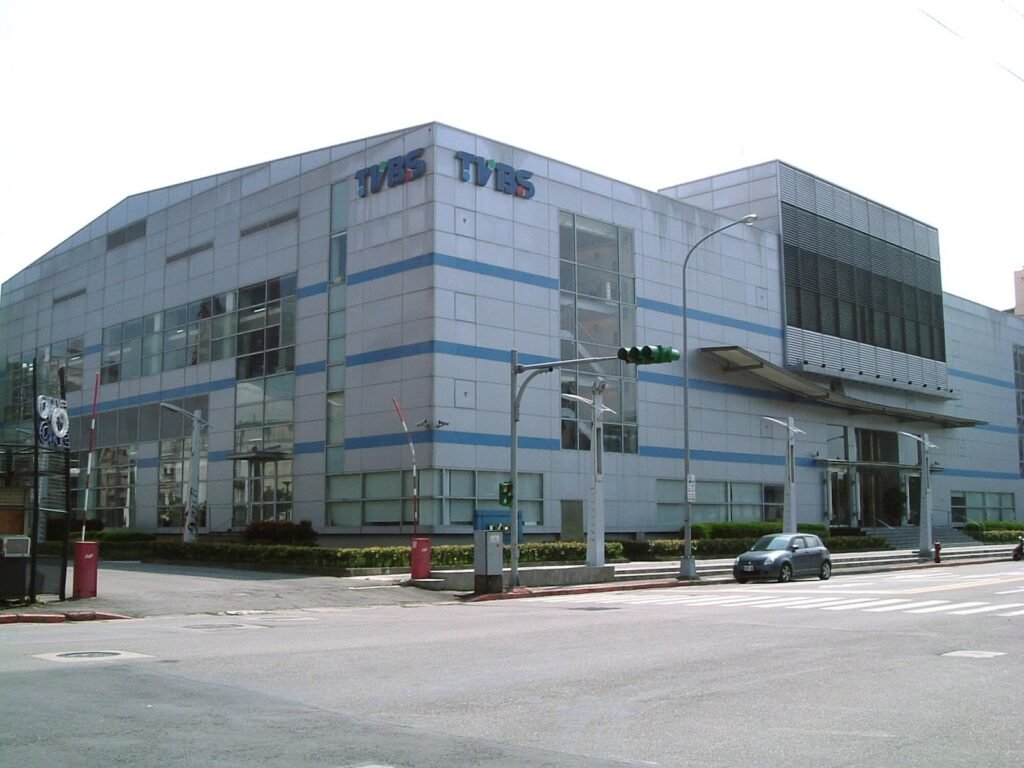
One of Taiwan’s top television networks unexpectedly laid off 45 employees late last month, including veteran regional reporters and journalists who had won some of Taiwan’s most prestigious journalism awards. The move has sparked fresh concerns about the continued decline of the country’s media sector.
Adding to the alarm was the network’s failure to publicly signal the layoffs, which instead surfaced on social media.
On February 28, veteran media figure Yeh Feng-ta (葉奉達) shared a screenshot of a LINE messaging group on his personal social media accounts, revealing that he had been laid off from his position as TVBS’s Pingtung-based correspondent and would be withdrawing from the Pingtung County Government press group — a LINE channel used by journalists to coordinate coverage with local authorities.
He also disclosed details reportedly from TVBS’s human resources department, stating that the network has suffered severe profit declines for several consecutive years and is projected to post a loss for the first time in its history in 2026. In response to mounting financial pressure, the company launched a layoff plan affecting approximately 45 employees across frontline positions, including photojournalists, regional correspondents, and SNG (satellite news gathering) technical staff. One commenter noted that Taipei’s SNG engineering team had been cut to just eight people — down from 32 at its peak.
The TVBS story has been picked up by several media outlets in Taiwan this week. As of publication, however, the network had not issued any public statement about the decision.
One of Taiwan’s most established television networks, TVBS was the first commercial television station to launch after the lifting of martial law. It currently runs five channels.
For most viewers, TVBS is best known for its news channel, which features not only general news coverage but also influential political talk shows. Its affiliated polling company is also a closely watched source during election seasons. In viewership surveys for Q4 2024 and Q1 2025, TVBS News ranked first among the country’s news channels.
The TVBS case reflects a broader shift in how Taiwan’s media industry values — and compensates — different kinds of journalism.
Reporting is becoming less valued in Taiwan’s media landscape. Every news outlet now has a web content center, employing large numbers of staff and part-time workers to copy content from social media, redistribute press releases, and repurpose dashcam footage posted by the public. In the current wave of TVBS layoffs, the fact that employees without web center roles were among those let go has itself become a topic of discussion. This phenomenon has been going on for years and has sparked considerable debate. Even journalists who genuinely go out to report in the field are tarred by association — caught in the same sweeping criticism directed at the web editors whose job is to churn out copy lifted from other sources.
Other industry voices lamented that journalism had become a sunset sector, and predicted that the rise of AI would render many media workers jobless. The challenges posed by technology to journalism have become a widespread global phenomenon, and Taiwan has seen a series of such cutbacks — from the closure of the China Times evening edition in 2011 to Sanlih E-Television’s restructuring in 2016 — with industry observers noting a wider wave of consolidation and downsizing in recent years, and rumors of further cutbacks continuing to circulate.
Regardless of the circumstances, a layoff of this scale is far from normal in Taiwan’s media landscape — and for some, it is an ominous sign of colder days ahead.
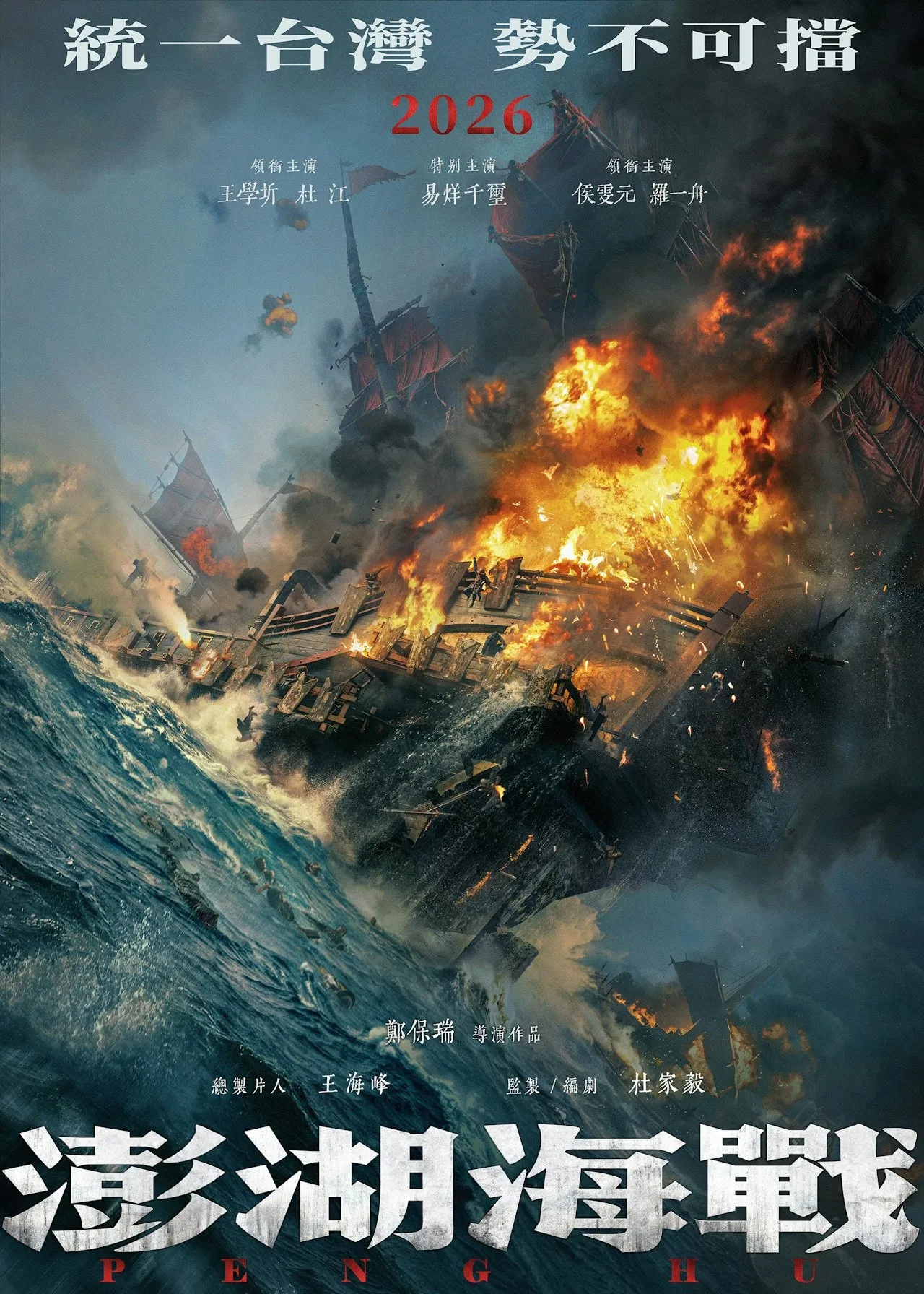
China’s state-backed film The Battle of Penghu (澎湖海戰), set for 2026 release, depicts the Qing dynasty’s 1683 defeat of Ming loyalists in Taiwan under the slogan “Unifying Taiwan is unstoppable.” But the reception of the promotional trailer, released on October 25, reminded authorities that history is never so simple. Some Chinese online criticized the film for celebrating the Qing’s conquest while sympathizing with Ming loyalists, according to Taiwan’s Central News Agency. One commenter sarcastically suggested Beijing might also make a film about Wu Sangui (吳三桂), the Ming general who infamously opened the gates for Qing forces. Authorities have since blocked negative comments on social media.
The overflow of a barrier lake in Hualien County on Taiwan’s central east coast amid heavy rain last month left at least 18 dead and six missing. In the wake of the disaster, cable news outlets TVBS and EBC edited the remarks of some local residents to make it seem they were attacking Taiwan’s vice president, Hsiao Bi-khim (蕭美琴). This prompted affected families to issue online statements expressing frustration over the misleading coverage. “We are a simple family impacted by the disaster,“ read a statement on Threads from the daughter of one woman appearing in the reports. “We have not taken any political position, and even more do not wish to be exploited as tools for political manipulation.”
Hong Kong outlet CRNTT (中評社) issued a public apology to Taiwanese director Lo Ging-zim (羅景壬), one of the creators of the recently popular political thriller seriesZero Day Attack (零日攻擊), after it labelled him as a “corruption defendant” in an August news report. Lo filed a defamation lawsuit against CRNTT last month, after which the agency removed the article and issued an apology, admitting to “editorial negligence” (編輯部疏失). The false claim followed a smear campaign led by Taiwan’s opposition Kuomintang (KMT) Party that falsely alleged Lo’s team had received government funds and then failed to fulfill the terms of a contract. Company records in Hong Kong show that CRNTT is linked to the official China News Service, under the CCP’s United Front Work Department. Lo noted in a Facebook post after the apology that misinformation spreads instantly while “justice, no matter how swift, can only arrive late” (哪怕正義再快,也只能遲到).