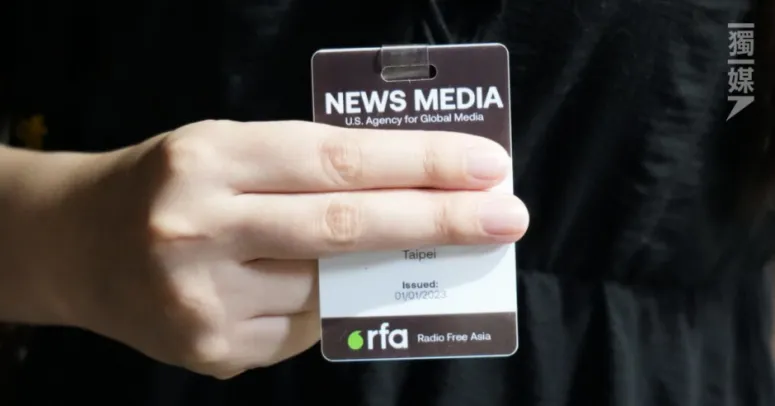
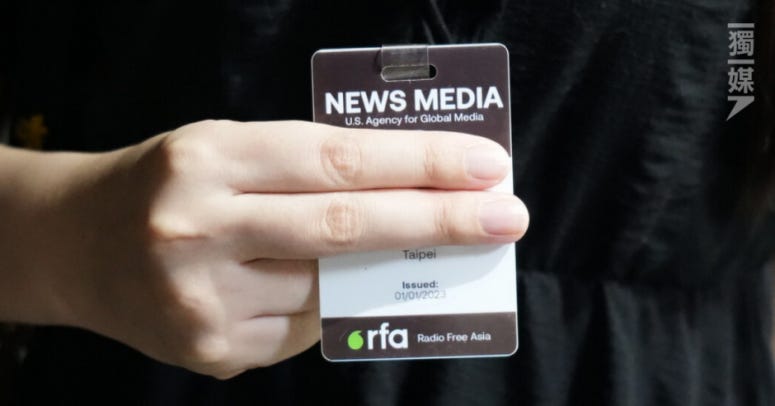
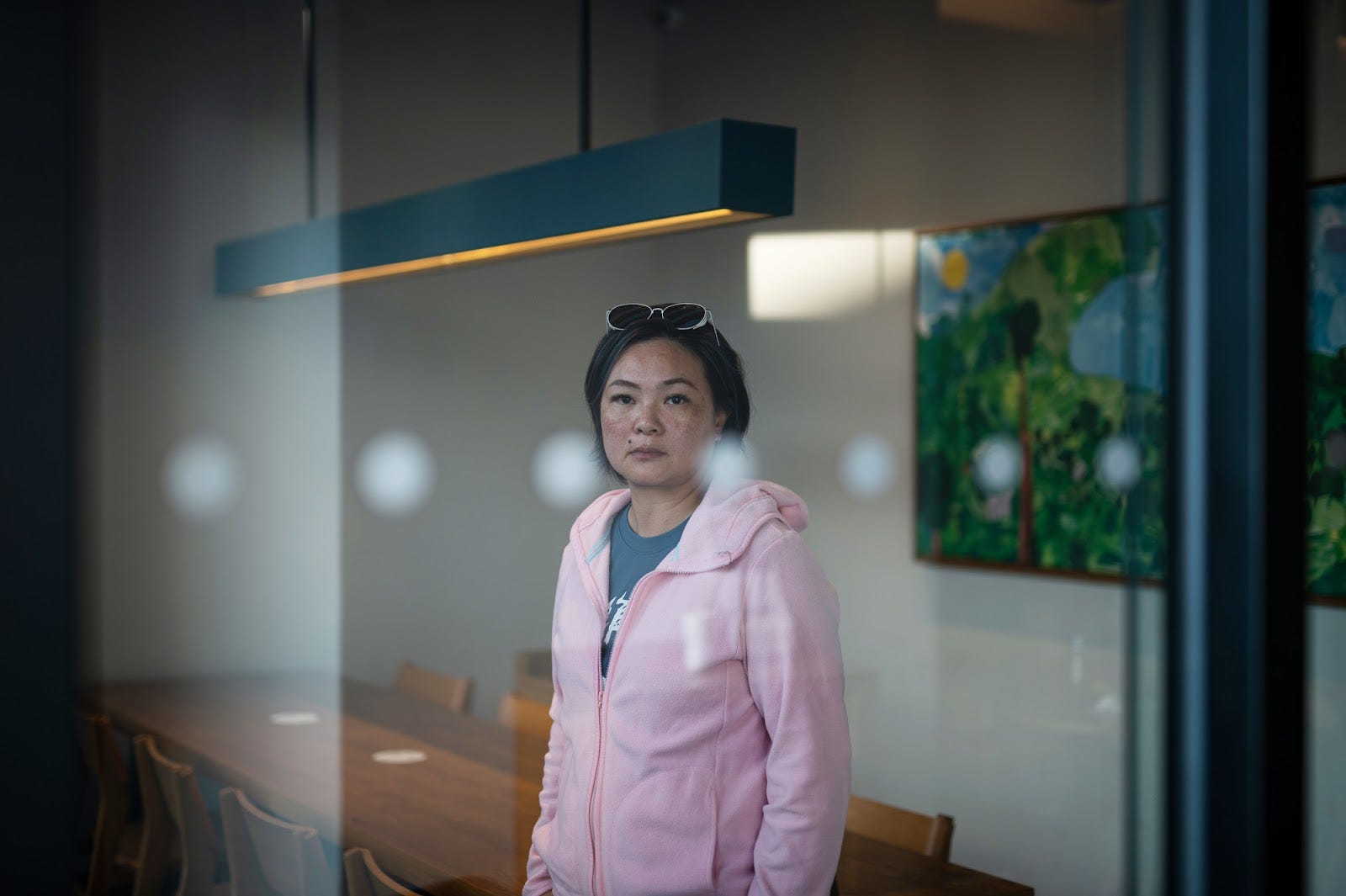
In an interview last Friday with the independent Hong Kong media outlet InMediaHK, a former journalist for the Cantonese language service of the American broadcaster Radio Free Asia (RFA) reflected on three years in Taiwan after Hong Kong’s media crackdown forced her relocation. Despite RFA’s closure this year due to sharp funding cuts by the Trump administration, she views dispersing Hong Kong journalists globally as beneficial for covering diaspora communities. The journalist, who used a pseudonym for the interview, was the first RFA Cantonese reporter stationed in Taiwan and witnessed the closure of major Hong Kong outlets like Apple Daily and Stand News. In mid-2025, she submitted an application for Taiwan residency, but told the outlet she did not know whether she would continue working as a journalist or continue writing news about Hong Kong.
Image from the InMediaHK story on a former RFA Cantonese reporter now living in Taiwan.
Taiwan’s arts sector faces systematic Chinese influence, with publishers changing “Taiwan” to “Taipei” for Hong Kong awards and media companies replacing writers who express political views on China and Taiwan. That, anyway, is the conclusion reached by the independent Taiwanese outlet b.l!nk in a recent pair of reports published on September 5 and 6 (here and here). According to the reports, cultural exchange programs disguise unification messaging as business partnerships. One editor wrote: “Through media exchange programs, they give your company money while spreading unification ideas during activities.”
Chinese propaganda broadcasts from Fujian People’s Broadcasting Station (福建人民廣播電台) — a station under the state-run Fujian Radio Film and TV Group — have infiltrated Taiwan’s airwaves with unprecedented clarity, according to recent reports in the Liberty Times (自由時報). PRC programming has managed to reach even remote mountain areas, including the 2,000-meter-high Daxueshan Forest Recreation Area (大雪山森林遊樂區). The FM 96.7 frequency, normally reserved for Taiwan’s Uni Radio (環宇廣播), which reaches audiences in the Taoyuan, Hsinchu and Miaoli areas, now carries Beijing-directed content throughout the eastern districts of Taichung, the country’s second-largest city.
Due to distance, it’s generally difficult to receive a clear signal from Uni Radio in the Taichung area, and frequencies without broadcasts from a major station can be considered open channels that smaller local stations can occupy to air their programming. Lawmakers in Taiwan have demanded a swift investigation into possible domestic collaboration with actors from China, as well as enhanced countermeasures against what officials describe as an escalating cognitive warfare campaign targeting Taiwan’s airwaves.
More information on China’s infiltration of Taiwan radio frequencies can be found in this April 2023 report from the Mainland Affairs Council (MAC).
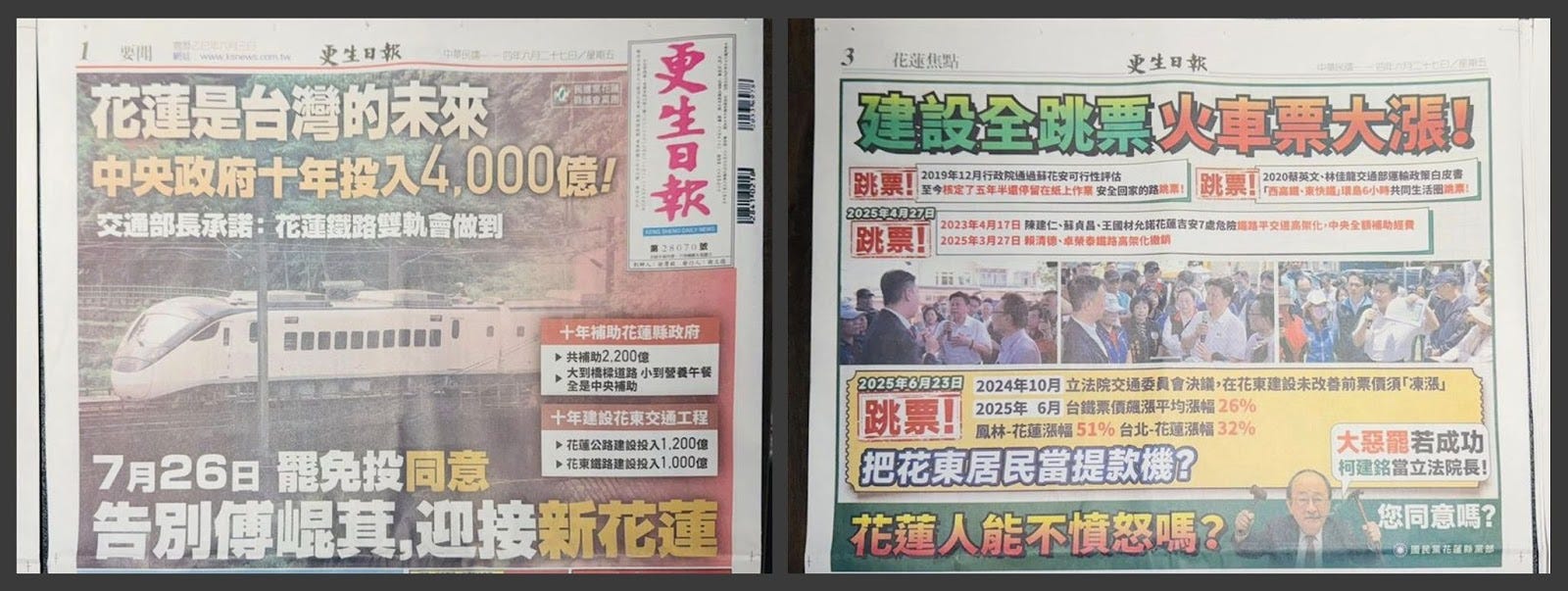
Keng Sheng Daily News (更生日報), the largest newspaper in the eastern coastal Taiwanese city of Hualien, found itself at the center of political theater late last week when it published advertisements from both sides of an upcoming recall election in the same daily edition. Taiwan is presently in the midst of an intensifying recall campaign that could mean early ejection from office for 24 directly elected lawmakers from the opposition Kuomintang (KMT) party. The recall votes are scheduled for July 26. (Read this English explainer from Taiwan’s Commonwealth magazine.)
The Keng Sheng Daily News front page featured a Democratic Progressive Party (DPP) ad targeting a local KMT legislator and urging voters to “Say goodbye to Fu Kun-chi, [and to] welcome a new Hualien.” Inside pages carried a starkly different message from the KMT county office, criticizing the DPP with headlines like, “Construction promises broken, train fares soaring.” Radio and TV host Lin Yu-hui (林育卉), who shared photos of the newspaper on social media, declared: “Hualien’s Keng Sheng battle officially begins” (花蓮更生大戰正式開打). The unusual juxtaposition drew widespread online commentary, with readers calling it “spectacular” and “worth collecting”.
Historically aligned with the opposition KMT, the newspaper appears to be taking paid advertisements from both parties as Taiwan prepares for multiple recall elections. Inter-party politics can be bitter — but so is the battle for media survival.
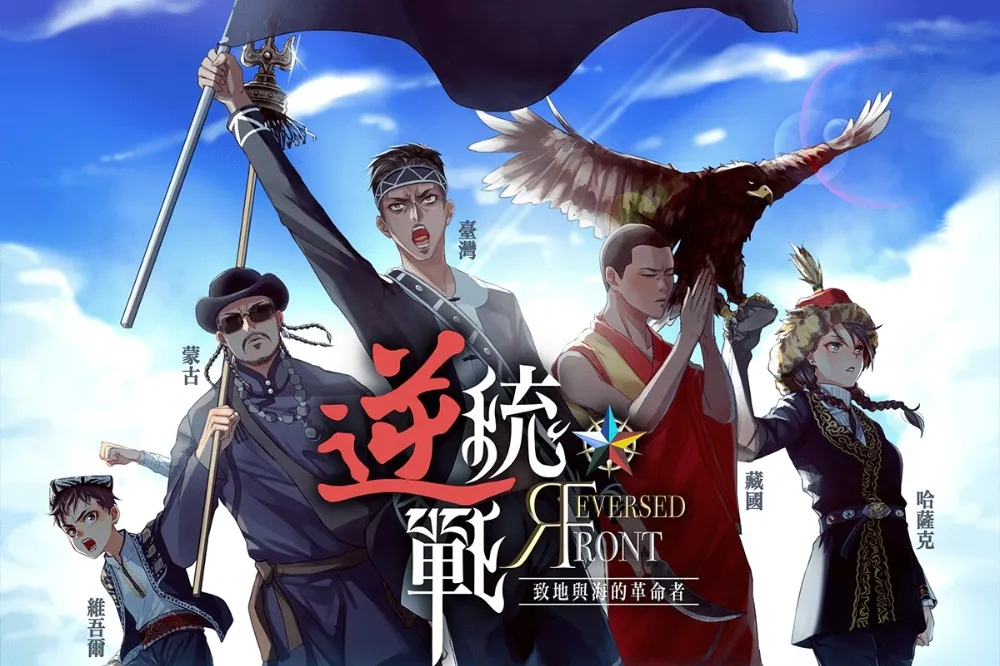
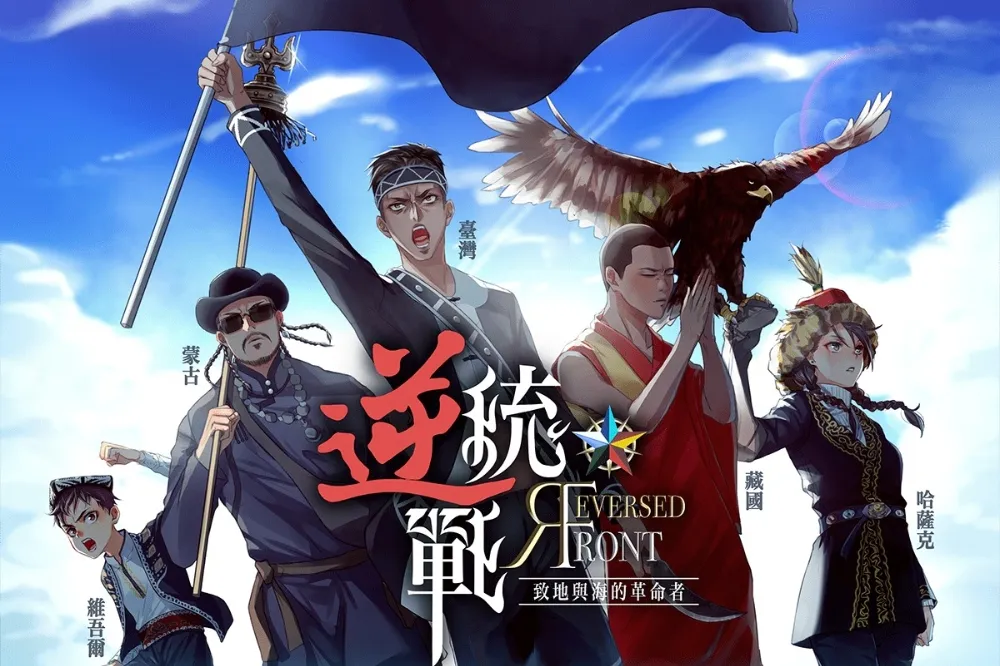
Hong Kong authorities banned the Taiwanese mobile game “Reversed Front: Bonfire” (逆統戰:烽火) on June 10, marking the first time the city has publicly condemned a gaming application under national security laws. The National Security Department warned residents against downloading, sharing, or financially supporting the game, claiming it promoted Hong Kong and Taiwan independence while encouraging armed revolution against China’s government. Hong Kong security chief Chris Tang (鄧炳強) described the game, according to Taiwan’s Central News Agency (CNA), as “quietly poisoning young minds” (悄然荼毒年輕人思想) with “extremely malicious” tactics.
Created by the Taiwan-based development team ESC (台灣境外戰略溝通工作小組), a civilian volunteer group, the strategy game allows players to control various factions, including those representing Taiwan, Hong Kong, and other regions in scenarios involving the overthrow of communist rule. An ESC spokesperson previously told BBC Chinese the group’s main work is to “contact overseas anti-communist organizations, and assist overseas allies in promoting propaganda and organizational work.” Following news of the ban, online searches for the game surged dramatically, according to Taiwan’s Up Media (上報). The app has been removed from local download platforms in Hong Kong.
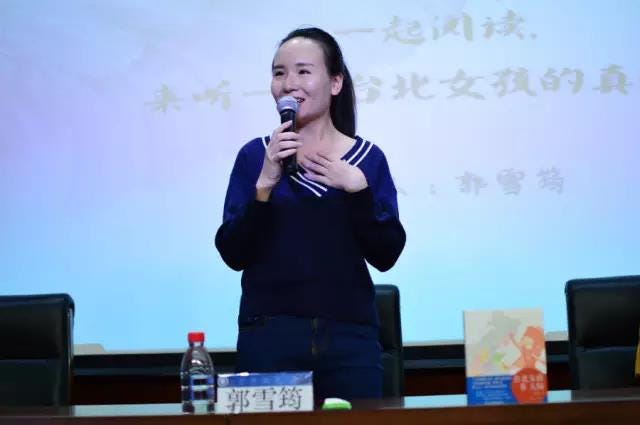
“She criticizes Taiwan, and this actually resonates with many young media friends in Taiwan.” So, with mendacity, began a June 11 profile of Taiwanese writer Guo Xueyun (郭雪筠) in Shanghai-based outlet The Paper (澎湃), coming two days after she published an essay in Guancha (觀察網), another of the city’s online outlets.
The coverage exemplifies China’s cultivation of sympathetic Taiwanese voices to support unification messaging. Writing under the byline “Taipei Girl Looks at Mainland China” (台北女孩看大陆), Guo has become a recurring fixture in China’s state-run and tightly controlled media, where only one narrative on Taiwan is accepted — that “unification” with China is inevitable, and the deepest desire of the population.
Born around 1990, Guo graduated from the advertising department at Taiwan’s Fu Jen University before moving to Beijing in 2012 for graduate studies at Peking University. Her generational perspective — contrasting Taiwan’s current struggles with China’s (much-mythologized) current prosperity — reinforces the state narrative that Taiwan would benefit from closer ties leading eventually to what China views as “unification,” and many Taiwanese view as annexation. In a 2018 interview with Beijing Youth Daily, she reflected on feeling both amazed and ashamed during her initial Beijing experience to discover that while Chinese typically saw the positive aspects of Taiwan, the reverse was not true.
Guo Xueyun, China’s not-so-secret weapon on Taiwan issues, on the lecture circuit. SOURCE: Tianjin University.
Guo’s transformation from struggling student to prominent author is of course also a story of concerted institutional backing. Her debut book, Taipei Girl Looks at Mainland China (台北女孩看大陸), was published in 2016 by People’s Literature Publishing House (人民文學出版社), controlled by China Publishing Group (中國出版集團有限公司) — a government company under the State Council. Her 2022 novel, I Am in Beijing (我在北京), was released through Jiuzhou Publishing House (九州出版社), a publisher directly controlled by the Taiwan Affairs Office (中共中央台灣工作辦公室), the CCP body that coordinates propaganda and messaging toward Taiwan.
The Reporter, one of Taiwan’s leading independent news outlets, broke new ground with its investigation into decades of concealed sexual abuse in Taiwan’s elementary schools, revealing how victims themselves — not officials or advocacy groups — finally brought a serial predator to justice.
The investigation centers on Liu Yu-cheng (劉育成), a former elementary school principal in Nantou County who sexually abused students across four schools over three decades. Unlike previous scandals exposed by NGOs or politicians, Liu’s crimes came to light when adult survivors connected online in 2023, conducting their own evidence-gathering campaign.
Chuang Chun-ching (莊純青) Photo: Lin Yan Ting (林彥廷), The Reporter (報導者).
Chuang Chun-ching (莊純青), abused by Liu in sixth grade, led the grassroots investigation. “Confronting these cases is also a way for me to heal my wounds,” she told The Reporter. Using Facebook and graduation yearbooks, the survivors identified 36 victims and witnesses, creating detailed files and chronologies that enabled authorities to launch their first comprehensive investigation.
The case exposes systemic failures in the past to protect children in Taiwan’s schools. When two girls reported Liu in 2003, school officials buried their complaints. Liu cultivated relationships with local politicians who shielded him from consequences, allowing the abuse to continue unchecked. The Reporter‘s investigation revealed similar patterns nationwide, including the case of Chang Po-Sheng (張博勝), a Tainan teacher who abused 30 students but received only a four-year sentence. The 2023 Gender Equity Education Act introduced reforms requiring thorough investigations, but statutes of limitations still prevent prosecution of many cases where victims speak out decades later.
Of 29 identified victims in Liu’s case, only four could pursue legal action due to time limits. Liu received a 15-year sentence, currently under appeal.
Taiwan’s Mainland Affairs Council (MAC) condemned Want Want China Times Media Group (旺旺中時媒體集團) for making comments at the Cross-Strait Chinese Culture Summit in Beijing that it said damaged Taiwan’s sovereignty, adding that it would investigate if the group had colluded with China and contravened cross-strait regulations. “We are Chinese,” Want Want Holdings general manager Tsai Wang-ting (蔡旺庭) said at the May 28 summit, referring to China as the “motherland” and Taiwan as “China Taiwan.”
The MAC said the media group, which frequently conveys what critics in Taiwan regard as pro-China positions, had become “a pawn in the CCP’s united front work against Taiwan.” It said it would examine whether Want Want’s actions violated regulations prohibiting cooperation with China’s party, government, or military apparatus. Tsai Wang-ting is the third son of firm founder Tsai Eng-meng (蔡衍明), who succeeded his father as chairman of the snack food company Want Want China in 1987.
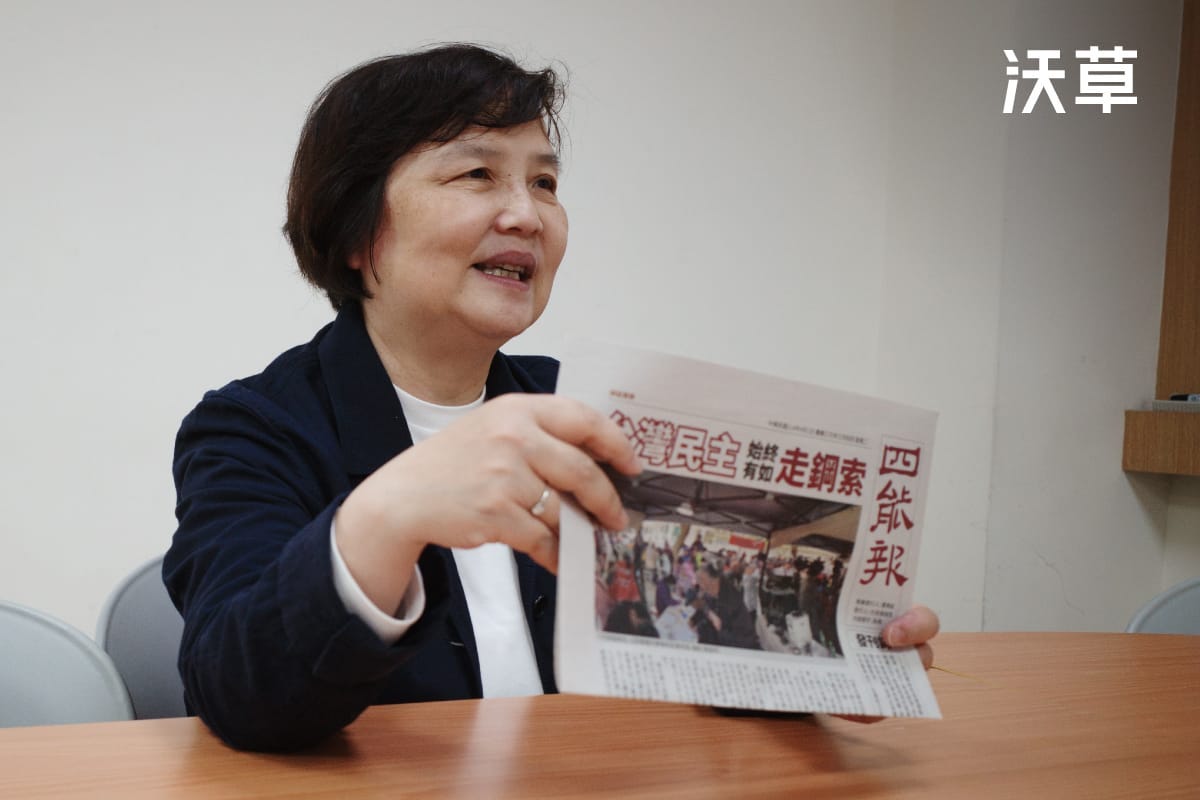
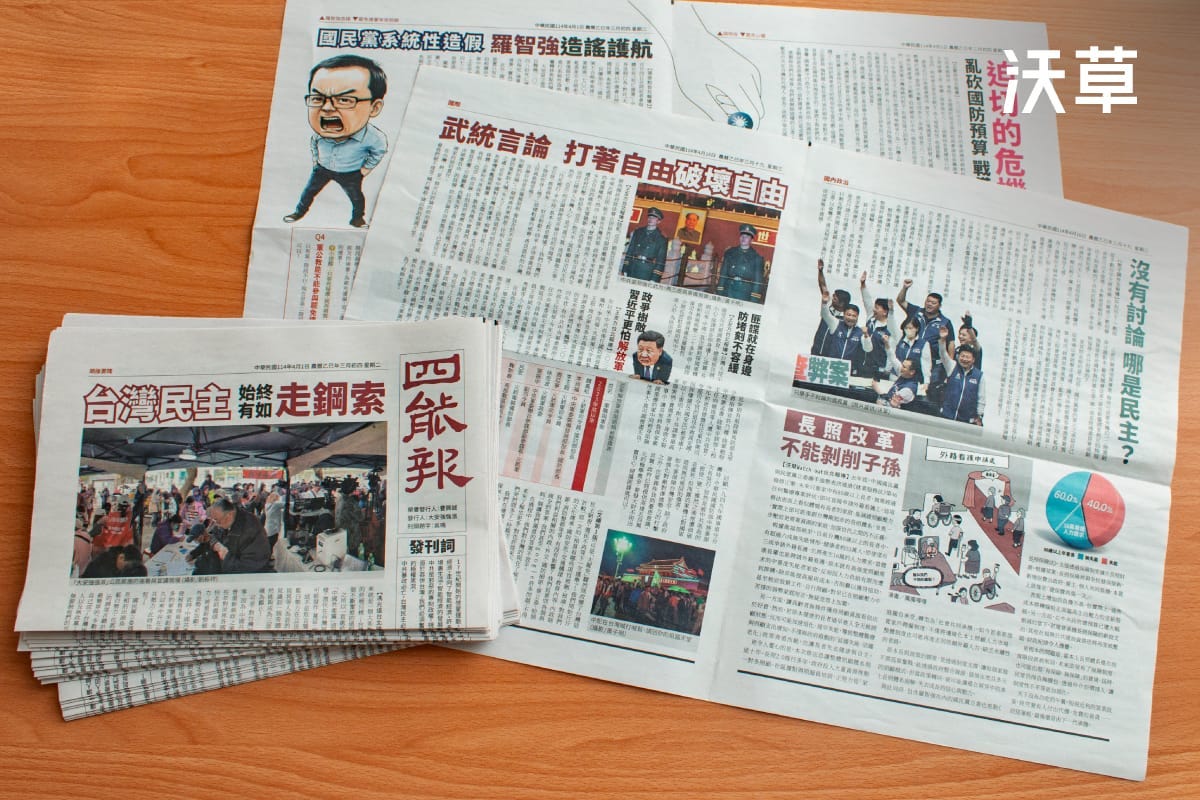
You might call it an ink insurgency. As Taiwan’s so-called“Great Recall” (大罷免) movement, a wave of campaigns to remove newly elected legislators through citizen petitions, has taken the country by storm, creative print media initiatives have emerged to reach voters in traditional strongholds for the Kuomintang (國民黨) party, whose members tend to be older and more politically conservative — and much less digital savvy — than their counterparts in the ruling Democratic Progressive Party (DPP). According to a fascinating report by the watchdog organizationWatchout (沃草), these print strategies aim to connect with digitally-disconnected constituencies as campaigners face a 60-day window to gather a sufficient number of signatures to push recall actions.
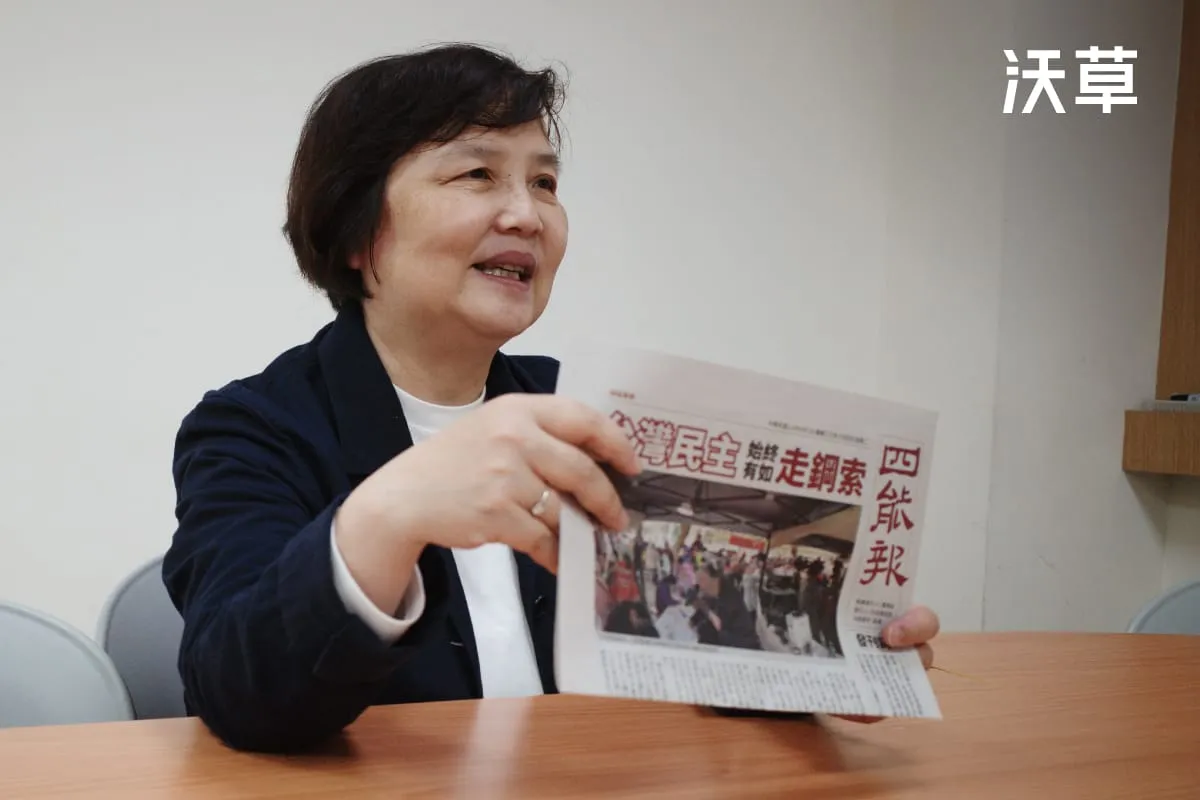
Veteran journalist Gu Bi-Ling (古碧玲) invited several friends from the media and cultural sectors to publish the physical newspaper Four Able News amid the recall push. SOURCE: WatchOut.
Media veterans in Taipei’s Da’an district have launched “Four Able News” (四能報), a biweekly publication promoting the recall of KMT legislator Lo Chih-chiang (羅智強), while activists in Xizhi, an inner city district in eastern New Taipei City, have created “Shrimp News” (蝦報) to campaign against KMT legislator Liao Hsien-hsiang (廖先翔), referencing his “shrimp diplomacy” controversy (He proposed resuming cut-off diplomatic relations with Honduras back in January as shrimp exports to the country from Taiwan dropped sharply). In Hualien, DPP-aligned recall campaigners have placed advertisements in the traditionally pro-KMT Update Daily (更生日報), featuring painter Chen Cheng-po’s (陳澄波) artwork to appeal to local sentiment.
These diverse print campaigns share a common strategy: bypassing digital barriers to reach older, more conservative voters. In north Songshan district, recall groups have even leveraged imagery of former KMT dictator Chiang Kai-shek (蔣介石), the architect of the country’s White Terror, to connect with traditional KMT supporters, demonstrating how the movement is adapting traditional media for modern political activism.