
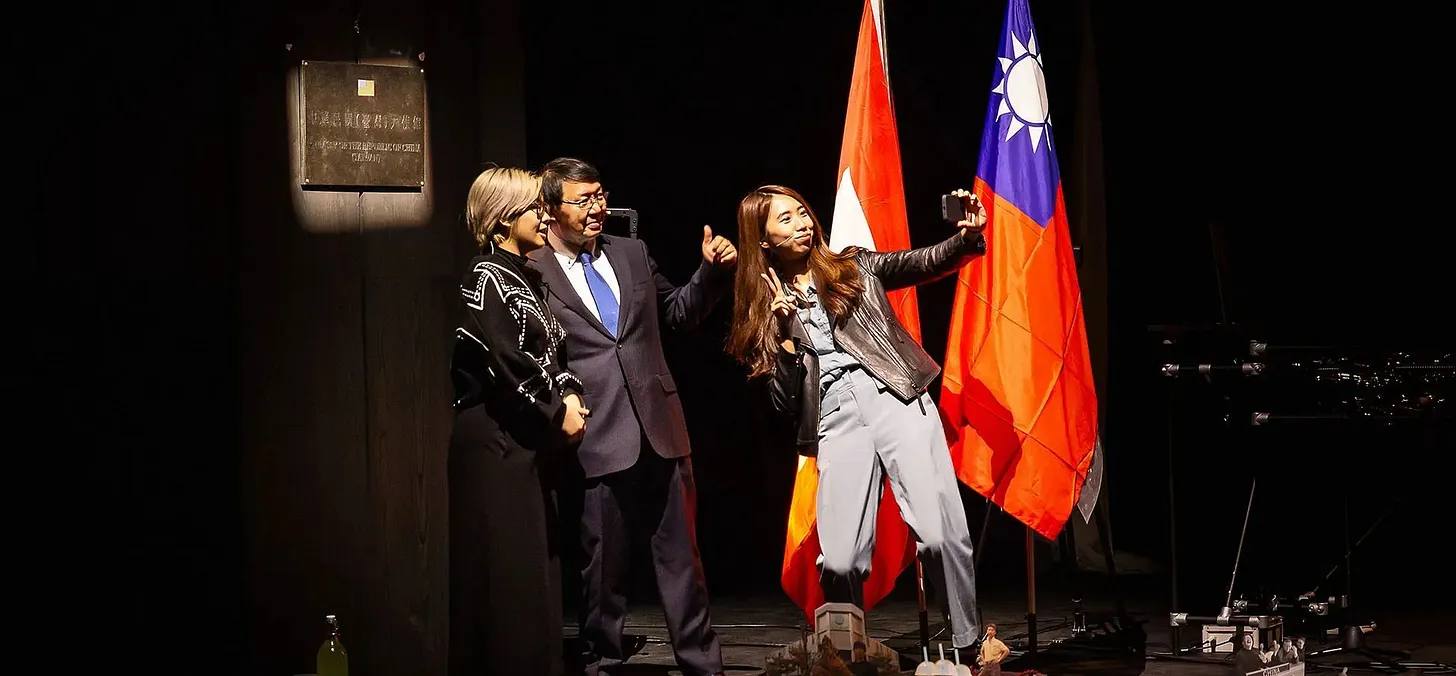
The Play China Didn’t Want Strasbourg to See
When China’s consulate pressured a French theater to cancel the Taiwanese production “This Is Not an Embassy,” it proved the play’s point more vividly than any performance could.


The United Nations Educational, Scientific and Cultural Organization (UNESCO) is a specialized agency of the United Nations established on November 16, 1945, in London, with its Constitution grounded in the conviction that “peace must therefore be founded, if it is not to fail, upon the intellectual and moral solidarity of mankind.” Headquartered in Paris, UNESCO works across 194 member states to strengthen international cooperation in education, science, culture, and information. The organization sets standards, produces tools, and develops knowledge to address global challenges — from protecting biodiversity and safeguarding heritage to ensuring access to reliable information and advancing quality education. In recent years, UNESCO has taken an active role in global AI governance, including through its 2021 Recommendation on the Ethics of Artificial Intelligence, the first global normative instrument in this domain, as well as practical tools such as its AI Readiness Assessment Methodology and AI Ethical Impact Assessment Toolkit. In the context of China’s expanding AI engagement, UNESCO has participated in forums including the 2025 China-SCO Artificial Intelligence Cooperation Forum in Tianjin, where it contributed to high-level panels on AI governance and security risks.
