

For decades since Xinhua opened its first African bureau in Addis Ababa, Ethiopia, in 1950, China’s state news agency maintained a modest presence on the continent, part of the PRC’s broader international newswire infrastructure. But over the past two decades — and especially since the launch of Xi Jinping’s signature Belt and Road Initiative in 2013 — Beijing’s footprint in the African media space has expanded into something of a different order altogether. Xinhua now operates 37 bureaus across the continent, dwarfing any other news agency, African or foreign. Chinese digital television giant StarTimes has become the second-largest pay-TV operator in Africa. As Western news organizations have lost staff correspondents across Africa, China has moved to fill the media gap — not only through its own outlets and ventures, but through a sophisticated web of partnerships with local media and governments, and training programs for journalists.
Yet for all the outside analysis, one perspective has been consistently missing from this debate: that of African journalists themselves. How do the reporters at the center of this story actually experience China’s media push? And what do they make of it?
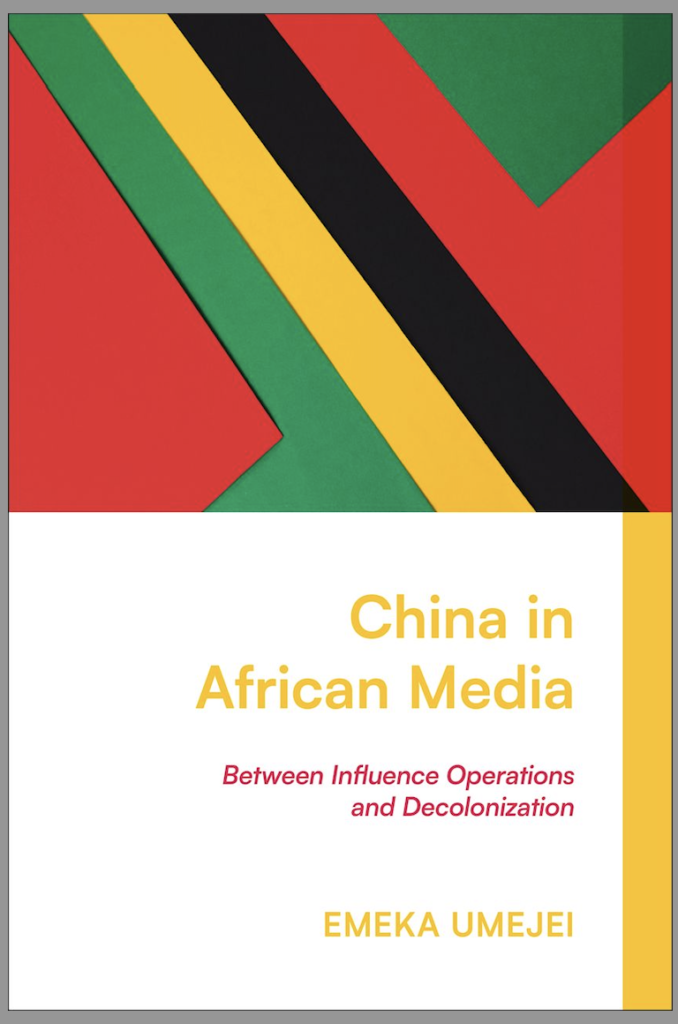
This is exactly what Emeka Umejei, a Nigerian-born media scholar who spent over a decade as a journalist himself, set out to understand. In his new book, China in African Media: Between Influence Operations and Decolonization, published by Bloomsbury, he draws on interviews with journalists across 14 African countries to offer what has been lacking: an account of China’s media strategy told from the journalist’s point of view.
Dalia Parete: You’ve just published China in African Media: Between Influence Operations and Decolonization.What drew you to this topic, and why did you feel this book needed to be written now?
Emeka Umejei: If you are from Africa or from the Global South, you would have noticed that anything people from the Global North do with African countries is framed as a continuation of colonial ideology. The PRC has been smart. They know that. So they say: Our engagement in Africa is win-win. We were also colonized. So every one of our engagements is part of decolonization. They play on that delicate balance to win many battles in Africa.
At the Third Plenum of the 20th CCP Central Committee in July 2024, the CCP proposed to establish a more effective international communication system. And when they say that, the PRC is talking about decolonization. Then, in September 2025, the Xinhua Institute published a policy paper titled Colonization of the Mind: The Means, Roots and Global Policies of US Cognitive Warfare. So what the PRC is trying to say is that the US system is colonial, but its own system is decolonial — fed from the ground by what local people want, not imposed.
So I decided to investigate the PRC’s multimodal engagements in African media, whether it advances decolonization or Chinese propaganda. Does it actually advance decolonization in African journalism, or Chinese propaganda in African media? The answer is obviously no. China is not doing anything different from the US or the UK.
The problem is that African political actors have yet to realize this. And if China gains the kind of hegemony in Africa that the US had, it’s going to be much, much worse. Nobody is thinking about the next twenty, thirty or fifty years. When China achieves that level of hegemony economically, in the media, in every part of the African continent — how will that affect democracy in Africa? Nobody is talking about this. These are the critical issues nobody is paying attention to. That’s what motivated my research.
DP: For those not familiar with the topic, can you give us a brief overview of how Chinese media have expanded across Africa over the past decade or so, and what types of engagements between Chinese media and their African counterparts can be seen across the continent? I’m guessing there are a lot of regional differences.
Umejei: Over time, while Western media organizations were pulling out of Africa, Chinese media organizations such as Xinhua, China Daily, CGTN Africa and the People’s Daily have expanded in Africa.
There are several engagements between Chinese and African media. I can list them for you. You have the China-Africa media exchanges for African journalists. You have media partnership and content-sharing agreements. You have African media having membership in the Belt and Road News Network (一带一路新闻合作联盟), a Beijing-headquartered media alliance chaired by the People’s Daily, the Chinese Communist Party’s official newspaper. And you have what they call opinion writers in Africa, where African journalists, scholars and columnists publish op-eds in mainstream African newspapers, with the aim of spreading Chinese narratives on specific topics. There’s also the digital space — a digital satellite television service was launched across Africa [with China’s involvement].
In terms of approach, they basically have the same objective. There could be regional differences, but the goals and objectives are actually the same. It’s all about, so to speak, influence operations. The recruitment process is very, very different across the regions. The way they recruit journalists to attend media exchanges in Nigeria differs from the way they recruit in Sierra Leone or Egypt. These are different methods of recruitment. But in terms of the objective, which is to influence, it’s the same.
DP: Your book argues that the PRC’s most effective work in African media is done through partnerships with local outlets. How did that strategy come about, and why is it effective?
Umejei: I think what happened was that the Party realized that there’s no trust for Chinese media in Africa. People are just skeptical of Chinese media organizations, saying: Okay, if the Chinese media organizations cannot critically engage with the political leaders in China, how do we trust them to engage critically with us in Africa? So, having realized that, they said: Okay, the best thing we should do is to have a partnership. So instead of just coming to Africa to engage directly, they now have engagement with local media.
There are these media exchanges where they take journalists to China; those journalists come back to Africa and become advocates for the PRC in newsrooms across Africa. Then you have the media partnership and content-sharing agreements, which let them disseminate their own messaging through content they share with African media organizations without it being censored. Most of this content is free of charge. It is not paid for. You also have the Belt and Road News Network, which incorporates African media organizations and journalists, and the Belt and Road Journalist Network, a network comprising African journalists.
In the long run, it gives them a multifaceted influence across African media and Africa generally. Because you have the Chinese media, which is not doing well in Africa even though it’s there, but these other engagements are more profound than Chinese media operations. That’s the essence.
DP: The title of your book frames a tension between “influence operations” and “decolonization.” Many African journalists and scholars argue that Western media have imposed their own editorial values and agendas. Does China’s media expansion genuinely offer an alternative to that dominance, or are African journalists simply being asked to swap one outside power for another?
Umejei: If you ask me, I would say that Chinese media engagement in Africa does not offer an alternative to the West. I’ll give an example. When I was doing fieldwork for my PhD in Kenya, I spoke to [African] journalists who were working for CGTN, Xinhua andChina Daily. They will tell you that it’s the same thing. The Chinese media cover Africa the same way that the West covers Africa, except when Chinese economic and political interests are involved. For instance, if it involves Chinese economic and political interests, they’re going to be very, very positive about it. But if it has nothing to do with China and no Chinese company is involved, they’ll just report it the way the Western media will.
People want to learn, but it just isn’t there, because the real purpose of the training isn’t journalistic. It’s an influence operation.
So they’re not offering any alternative. It’s just that they want to make African journalists think: Oh, the West impose their own agenda. So this is the truth of the matter. It’s not as if [China] offers any genuine alternative. Africans generally are not switching sides. Instead, they will have to contend with both sides. It will be a coexistence. So you have both Chinese ideology and Western ideology coexisting in Africa.
DP: China often presents itself as a partner of the Global South as a whole, but, as you said in your book, the Global South is not monolithic. Do you think China’s media strategy is actually adapting to different local contexts, or is it essentially a one-size-fits-all approach?
Umejei: What they have done, and they’ve done well, is the partnership. For instance, with their partnership in Zimbabwe, when you listen to this news, this CCP-sanctioned narrative, it comes from a Zimbabwean media organization. As a Zimbabwean, you are more likely to believe it. So you could say yes, it’s through local organizations, and that makes it easier for them, it makes it easier for the message to be sent.
Take Nigeria as an example: people do not read CGTN or China Daily. Instead, you are going to see national newspaper This Day and daily newspaper Daily Trust pushing Chinese narratives in their articles and the readers do not know it is coming from China. So it makes it very, very effective. The locals don’t see China. They don’t see the PRC. But they see this content being disseminated in local media. That’s the advantage.
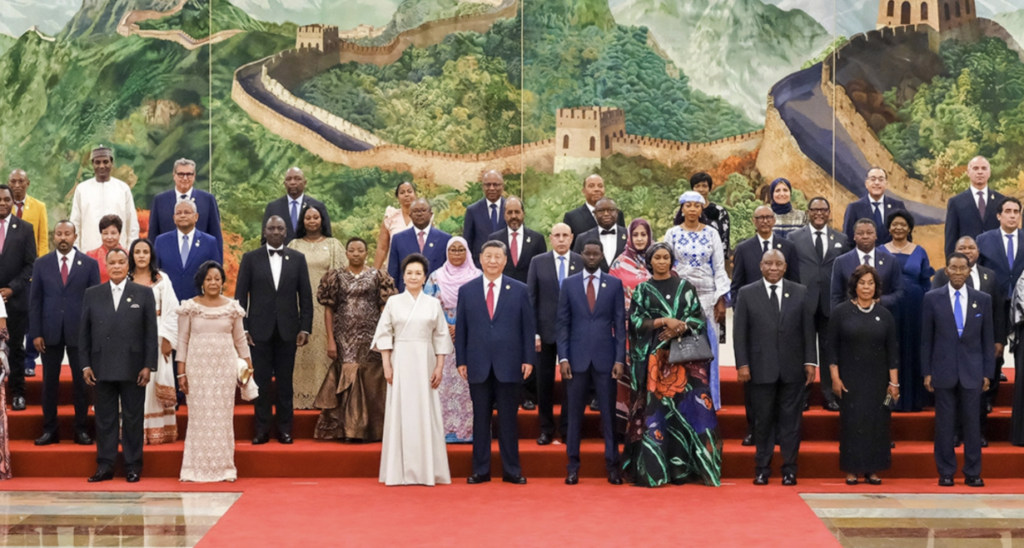
Chinese media engagement in Africa does not offer an alternative to the West.
DP: You were also talking about how journalists from different countries have a different view of China. You were saying, for example, that South African journalists might have a different understanding of China than Zambian journalists. So it also depends not only on China but also on the local context, I guess.
Umejei: Right. You see, where a country has an established democracy, that itself pushes back against the whole PRC propaganda effort. Take South Africa. The democracy there is established, and the media is solid. The South African media is different from the media in other parts of Africa. So it’s difficult to influence what happens there. You’d get serious pushback. Unlike in Nigeria, where even if you just give journalists some stipends, they’ll do your dirty work. But you won’t get that in South Africa, because if you try it, other media organizations will come after you, and you don’t want that. So those are some of the contextual realities that mediate the influence. It really only holds where you have a very, very dominant, established democracy like South Africa. Nowhere else in Africa. I’d say it’s only in South Africa you find that. Not Nigeria, not even Ghana.
DP: It’s always important to consider the agency of local journalists, and not assume they simply accept what China and other powers offer. Your research is based on interviews with journalists across 14 African countries. In their own words, how do African journalists describe the experience of Chinese training programs — from how they were selected to what they actually took away from it?
Umejei: I want you to understand something about Africa. I was a journalist for more than a decade. In Nigeria, there were times when I didn’t receive a salary for more than 15 months. So I wasn’t getting my monthly salary. Now, China comes to train you. You have the opportunity to go to China. They’ll pay for your ticket and everything. You come back and you’re able to save maybe two million or three million [in local currency]. With the money you save, you can build a house or buy a car. Everyone is happy. So journalists are happy that they can go to China. It’s mostly about the economic benefits. If I go there then I come back, I can build my house in the village. I can buy a new car, or I can repair my car. If I don’t go, how can I do that? So I should be grateful to them. That comes before anything.
That indebtedness is what the Chinese also play on. Most African journalists become indebted and advocates for the PRC. These are critical issues. Nobody is talking about the economic aspects of it. Because of the economic aspect, they don’t really bother about what happens, whether the training is good or bad. It doesn’t concern them. But among them, there are some people who say: Okay, even though we went there, when we were going, we thought we were going to learn about journalism. But we didn’t learn much about journalism. We went there, it was just hospitality.
DP: In the book, some journalists mentioned the training courses are mostly about how beautiful China is, but that the technical training falls flat, can you expand on that?
Umejei: Yes, there’s very little actual journalism in these programs. People want to learn, but it just isn’t there, because the real purpose of the training isn’t journalistic. It’s an influence operation. The aim is to have a positive outlook on China, so you’ll advance its interests in Africa. That’s the whole point of it. It’s not about you: you’re not part of the equation.
And that’s what makes it so hard for participants to grasp. It’s not about you. You go to China, come back, and you’ve learned nothing about journalism. You feel cheated. They hand you the equipment but never teach you how to use it, which is painful, because you could easily have learned it and put it to use back home. But that was never the purpose. The purpose was simply for you to get to know China, see what they’ve built, and go home and tell people about it. That’s all they want.
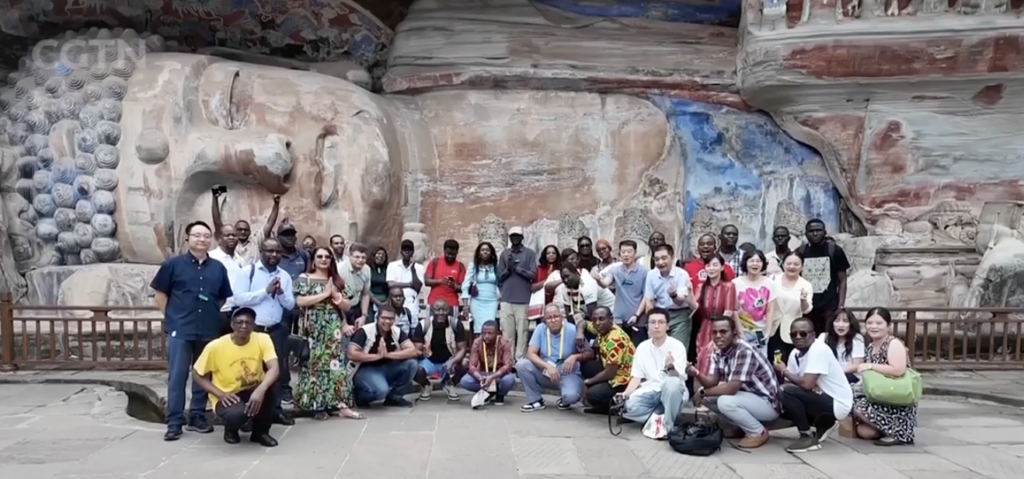
Most African journalists become indebted and advocates for the PRC.
DP: You also document cases of self-censorship among African journalists who engage with Chinese media partnerships. How widespread is that and is it self-imposed, or are there more explicit pressures, like the role of local embassies?
Umejei: When journalists return from training in China, they’re added to a WhatsApp group. Most of the people who have gone for training in China are part of it, and the Chinese embassy uses that group to disseminate information and talking points.
If you’re in that group, it works like a leash. You won’t write anything negative about China, because you’re always thinking about the next training trip. They keep a pool of journalists. Once you’ve gone, someone else gets added to the pool and sent next. That rotation keeps everyone in line. You don’t want to write something critical and risk being excluded from the group, because exclusion means no more training opportunities and no more money from them. Nobody wants to end up in that bad group.
A few people do come back and say, “I don’t want to do this anymore.” But only a few.
DP: After all those conversations, is there one thing a journalist said to you that you feel really captures the essence of what is happening between China and African media today?
Umejei: One of them told me: We don’t feel our engagement, our training in China, is unethical. Why? Because our countries are also engaging with China. So why should we not engage with them? Why should we not go there for training? People are going there to borrow money, to collect money for infrastructure development. What is wrong if a journalist is going to get training there?
That kind of captures what it is. It means that Chinese engagement with African countries is indirectly influencing the media space too, because journalists are involved in that. The government is also playing with China. So why should you, as a journalist, not play with China? That’s what it is for me.
DP: Could you talk about responses that African countries and journalism communities should have? How can they maintain their independence in the face of outside media pressures?
Umejei: One of the things Africa should do first is that African political actors and policymakers should fund their own journalism. If you continue to wait for external actors to fund journalism training, this will continue. African governments decide to fund training opportunities for journalists themselves, and what we’re saying will continue, unfortunately. So there’s no better response than to say, “Okay, if we have the media, let’s look for a way to develop the journalists themselves.” If you get opportunities, even if it’s for two weeks, make it a mandatory professional training program for journalists, funded by the government, a government agency, or someone locally. It must not stand alone, not dependent on outsiders. Until that is done, we’re just joking, actually.
The way to maintain independence is sustainability — to be self-sustaining. It means you have to fund yourself. If you can’t fund yourself, if you can’t sustain yourself, you won’t be able to be independent, because you’ll be depending on people to sustain you. Once you depend on foreign organizations to sustain you, that’s a problem.
There is also a need to have an African-grown global media, which is not there. I don’t think there’s any global media from Africa. There’s no global media that tells the true African story on the global stage. There is none. That’s where the problem is. That’s actually the first problem. Because if there were an African-grown global media corporation that would tell the true African story on the global stage, it would be very, very difficult for other global media — from the West or from China or from wherever — to tell a different story of the African reality on the global stage.