

A decade ago, Poles thought of China as a kind of Santa Claus: a power that would arrive bearing the gift of investment, with the hope that it could help diversify the Polish market in the aftermath of the 2008 economic crash. Media engagement was part of the deal: Poland’s national press agency signed a deal with a Xinhua subsidiary, and the country’s public broadcaster, TVP, signed content exchange agreements with regional Party broadcasters in Chengdu and Hubei.
But the gifts never came. Poland’s trade deficit with China only grew over time, and the 2019 arrest of a Huawei manager in Warsaw shifted the conversation from economic to security issues, while China’s alignment with Moscow after Russia’s full-scale invasion of Ukraine furthered domestic skepticism. Today, most media arrangements survive only on paper.
China has adapted to this new era, too. It now works through outlets on the political sidelines and through influencers. Lingua Sinica sat down with Alicja Bachulska, a policy fellow at the European Council on Foreign Relations in Warsaw, to understand more about how China’s media strategy has evolved in Poland.
Dalia Parete: For readers who are not familiar with Poland, what is the general media landscape?
Alicja Bachulska: As an EU member state, Poland has a democratic media landscape that comes with both advantages and disadvantages, especially under the current economic conditions. This means that there is quite a large variety of outlets. But they all face the same challenges as most media outlets in the world, meaning that there is a huge journalism crisis, with media being very much oriented towards profit-making and there being a shrinking space for journalists to do investigative work.
That does not mean that there is no interest in that kind of work. There is, and it has found a space outside traditional media. Poland is, in fact, seeing a real renaissance of podcasting. If you are interested in international relations, politics, or Asia, there are creators that produce high-quality work.
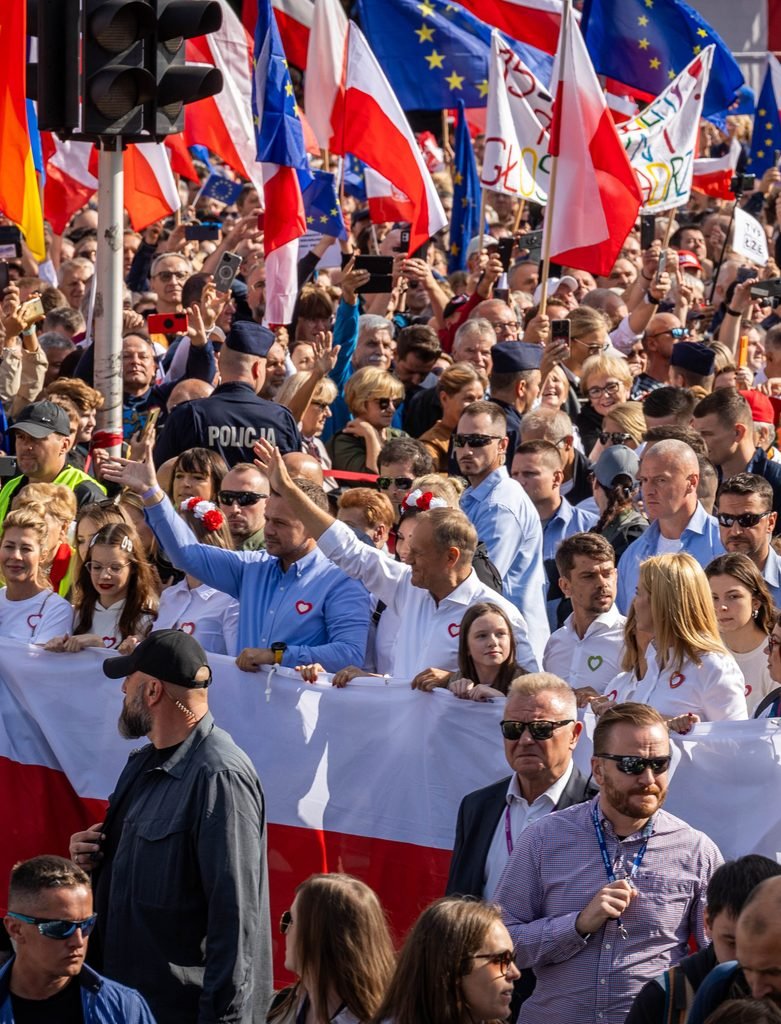
DP: From 2015 to 2023, the Law and Justice party (PiS), a right-wing populist party, governed Poland. In this period, the government took direct control of public TV [and radio], and state companies bought up private media outlets. In 2023, the centrist Civic Coalition formed a coalition government to achieve a majority. How has Polish media changed since then?
AB: This is a very politicized topic in Poland, so the answer depends on who you ask. If you ask me, it has changed for the better.
For example, TVP [Telewizja Polska S.A.], the biggest TV broadcaster, became extremely politicized under the PiS government. The new coalition had real difficulties depoliticizing it with legal tools that the whole population would accept as legitimate. Even some more liberal-minded legal scholars questioned whether the process was fully in line with legal practice. There were a lot of ad hoc decisions that were not very transparent, although I also understand that, from a political perspective, the situation was so bad that it needed drastic action.
So now, PiS voters would say that the national broadcaster has become politicized. This reflects a growing polarization and the fact that the media is increasingly viewed through the lens of domestic politics.
DP: What are the main challenges for journalists in Poland today?
AB: First, the commercialization of media. Journalists’ situation is generally very precarious. There is little job stability, and most journalists are freelancers who work for several outlets to make a living.
Second, because media companies are so commercially driven, there is huge pressure to produce content that generates clicks and online traffic, which leads to more sensational headlines. That’s a global phenomenon, a result of how media has changed over the past couple of decades. But together, these two issues make it very hard for journalists to produce work that takes a lot of time and effort.
Legal issues are also a problem. If you cover politically sensitive topics, you can be sued, and not every outlet will back you if you face a legal battle against a powerful opponent. Whether it is a big business worried about its image or a political issue, these lawsuits are generally used to silence journalists across the whole spectrum of topics.
DP: How has Poland’s relationship with China evolved, and how has it been reflected in the media?
AB: After the 2008 financial crisis, which Poland weathered better than any other European country, Polish elites concluded that the country needed to diversify beyond its Western European partners. China, fresh off the Beijing 2008 Olympics, looked like an obvious source of investment. There was a lot of, I think, wishful thinking surrounding China, with people in Poland hoping that China would play an important role in diversifying Poland’s economic relations. People often used the metaphor of Santa Claus: China would arrive bearing gifts, and everyone would be happy. The Belt and Road Initiative and 16+1, a now outdated economic cooperation mechanism for China and 16 Central and Eastern European countries, were seen as vehicles for that.
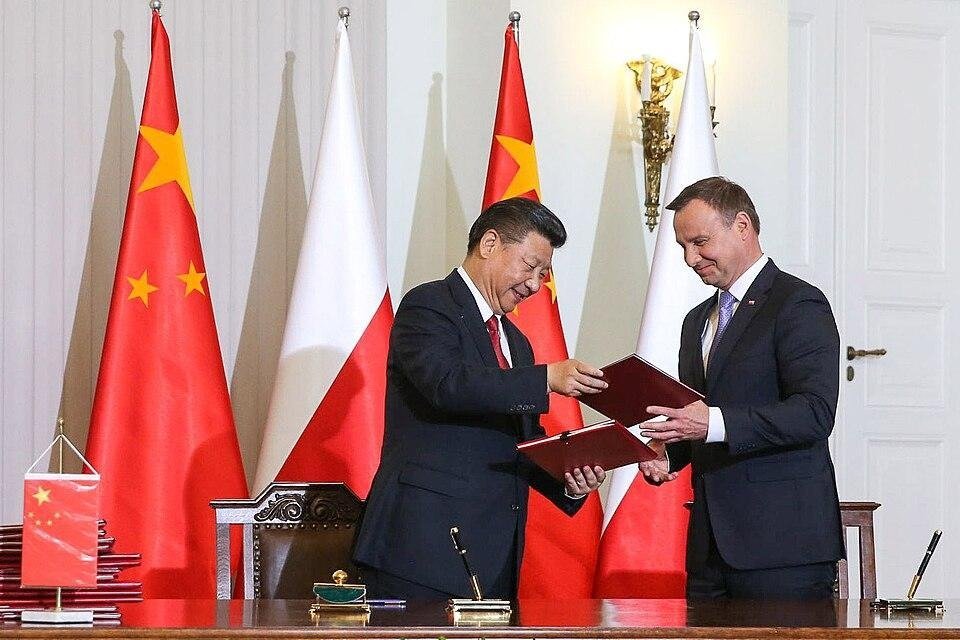
Relations peaked around 2014 to 2016. In 2016, Xi Jinping visited Poland, and part of former president Andrzej Duda’s international image was built on the perceived good relations with China.
But we can say that it was a story of unmet expectations. China wanted to replicate in Central and Eastern Europe what it had done in the Global South: bring Chinese capital but also Chinese workers and Chinese materials. It did not understand that an EU member like Poland has access to far better investment terms within the European market, so that did not work. At the same time came the first Trump presidency, the COVID pandemic, and Russia’s full-scale invasion of Ukraine.
Across all of these, Polish elites realized two things. First, China had not delivered economically; even if Poland joined the Belt and Road Initiative and the 16+1 group, the only thing that grew was Poland’s trade deficit. Second, in areas crucial to Poland’s security, China was acting against Poland’s key strategic interests. This is particularly evident in Beijing’s position on the war in Ukraine and in China’s consistent role over the past couple of years as Russia’s decisive enabler.
Media coverage followed the same arc. When we studied Polish coverage for the MapInfluenCE project around 2019, there were two main lines that we saw. One stressed the economic benefits, with Poland as China’s bridge to Western Europe, though every country in the region wanted to be that bridge, and China did not need one. The other criticized China’s political system, drawing on Poland’s human rights tradition rooted in the Solidarity movement, with coverage of Tibet and later the Uyghurs.
Over time, the conversation about China shifted from economy to security. The turning point was January 2019, when Huawei’s regional manager in Warsaw, a Chinese national, was arrested under espionage charges, a month after Huawei’s chief financial officer, Meng Wanzhou, was arrested in Canada. That sparked a big debate about 5G and, coinciding with the US push for clean 5G networks, a ridiculous war of op-eds between the Chinese and American embassies.
DP: What does the cooperation between Polish and Chinese media look like in practice?
AB: If I remember correctly, 2017 was the official year of media cooperation between China and Central and Eastern Europe, announced during the 16+1 summit in Riga and run largely by Chinese state media. When we researched this topic in 2019, that was the year with the largest number of memorandums and agreements signed.
At the top level, the state-owned Polish Press Agency (PAP) signed a content sharing agreement with China Economic Information Service, an information provider directly under China’s official news agency, Xinhua, and the public broadcaster TVP also signed agreements with Chinese regional broadcasters. There were also agreements with smaller entities, mostly state-owned at the time: local radio and TV stations, and regional branches of TVP. Chinese TV crews also came to co-produce documentaries with TVP about the potential of Poland-China cooperation, again very much like what they did in the Global South.
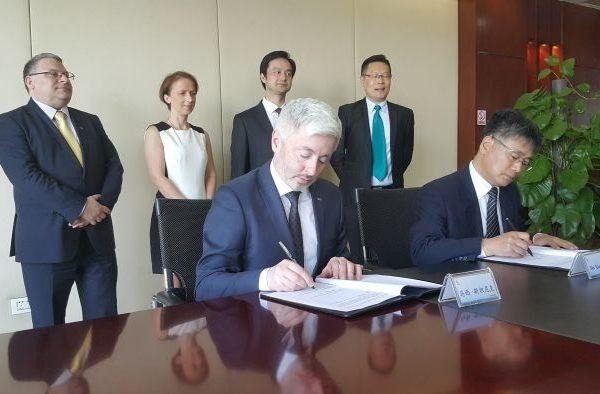
This period also saw the first wave of trips to China for Polish journalists. When the Huawei incident happened, the Chinese embassy and Huawei launched a huge campaign to reach out to people in the tech industry with sponsored trips. It was difficult to say who they were targeting in the community, but the aim was clearly to build a positive perception of Chinese companies. Then the pandemic froze physical contacts, and China focused much more on its online presence.
One of the main channels for that online push was China Radio International Poland. This is a peculiar case. If you asked people on the street whether they had heard of it, I bet 99 percent would have no idea what it was. Yet, its Facebook page has almost a million followers. I do not think these are real followers, but CRI was certainly pushing specific topics, especially regarding the pandemic and the full-scale invasion of Ukraine. But many of these efforts backfired because it was a very old-school Chinese playbook of “discourse power.” Even if it was in Polish, it was very similar to the language people here still remember from the pre-1989 communist era, because there is this lived memory of communist language. So people are still very sensitive.
DP: On this last point you made, many of the Central and Eastern European countries share a certain history with communism. Do you think it is a little bit easier for you guys to distinguish certain political messages?
AB: I think so, but it also depends on the age group. People in Poland have a kind of radar for political discourse that is artificially manufactured. China does things a little bit differently than what we are used to, but its top-down party-state discourse is similar. The picture is getting more complicated, though, because China has been learning. The Party understood quickly that it works better to have local people translate China’s strategic narratives into local sensibilities. “Borrowed mouths” work very well here because they de-politicize what is clearly political, and what, given the Polish history, many people would otherwise easily detect.
DP: According to the Pew Research Center, 41 percent of Poles have a negative view of China, yet Polish media outlets keep cooperating with China. Why does that cooperation continue, and what does China want to achieve?
AB: I want to make one disclaimer. I think that a lot of this cooperation with Chinese outlets these days is purely on paper. If you look, for example, at big outlets like the state-owned Polish Press Agency, I know they removed their Xinhua subpage. The logic is that Poland, unlike the Baltic states, does not want to rock the boat too hard. We have not formally left the 16+1, we are not breaking ties or shutting down Confucius Institutes. But that does not mean the substance of the media cooperation keeps going; in most cases, the agreements are frozen.
Fringe outlets are where cooperation continues. One interesting case is Trybuna. It was a real communist-era paper that survived the transition. Nobody reads it, probably only some old-school communists in their nineties. But it has an official partnership with Xinhua, which provides plenty of content, and the Chinese ambassador often writes for it.
There was also a big public debate around Rzeczpospolita, one of Poland’s most popular daily newspapers. The paper published numerous interviews and op-eds by the ambassador, which made it probably the highest-visibility platform the Chinese side had. In at least one identified case, the print edition carried a paid, Xinhua-style insert, a whole page about China’s successes under Xi Jinping. That drew a lot of criticism, and those op-eds are now very rare.
But just recently, a young journalist interviewed the Chinese ambassador for the outlet Puls Biznesu, which is quite popular in business circles, and promoted it heavily. The public backlash was considerable. My intuition is that the average Polish social media user now tends to be cautious about China-related narratives rather than embrace them.
DP: Beyond formal media deals, what other channels does Chinese media use to reach Poles?
AB: Definitely influencers, and I see three kinds.
The most important ones are economic and tech people. The critical focus of the Polish and European debate on China is now the second China shock, the flood of cheap, subsidized Chinese goods that is hurting the European market. So China reaches out to people connected to strategic industries like tech and innovation, who push back with the story that China is the future, that we have already lost, and that we must find the best way to cooperate with China to get ahead of other EU countries.
Then there are the lifestyle influencers, showing the “fun parts” of China. The best example is Piotr Chodak, who is probably the closest to the embassy and is not shy about admitting it. He recently went to Xinjiang and proudly posted about it. He now presents himself as running a geopolitical consultancy.
And the third strand is related to “Chinamaxxing,” the social media trend of Westerners adopting what they see as Chinese habits and lifestyles. There is a lot of this in Poland, but I see no link to what the embassy or diplomats are doing. It connects more to IShowSpeed’s China streams and the fact that China granted Poles visa-free travel. For example, Jakub Patecki, one of the most popular influencers, went to China in January and said explicitly that he was inspired by IShowSpeed. His videos were fun, but he also added nuance: he was showing only a snapshot; life there would be very different; he knows about surveillance and didn’t want to endanger people. I saw no sign that he was cooperating with any authorities.
DP: In general, how does Russia factor into the equation? Does it shape Polish skepticism toward Chinese media and messaging?
AB: There is a big overlap in what China and Russia want to achieve through their activities in Poland. But China initially underestimated Polish anti-Russian sentiment. After the full-scale invasion, CRI Poland posted cartoons blaming the US and NATO for the war. People were furious, and the posts drew a wave of criticism and mockery.
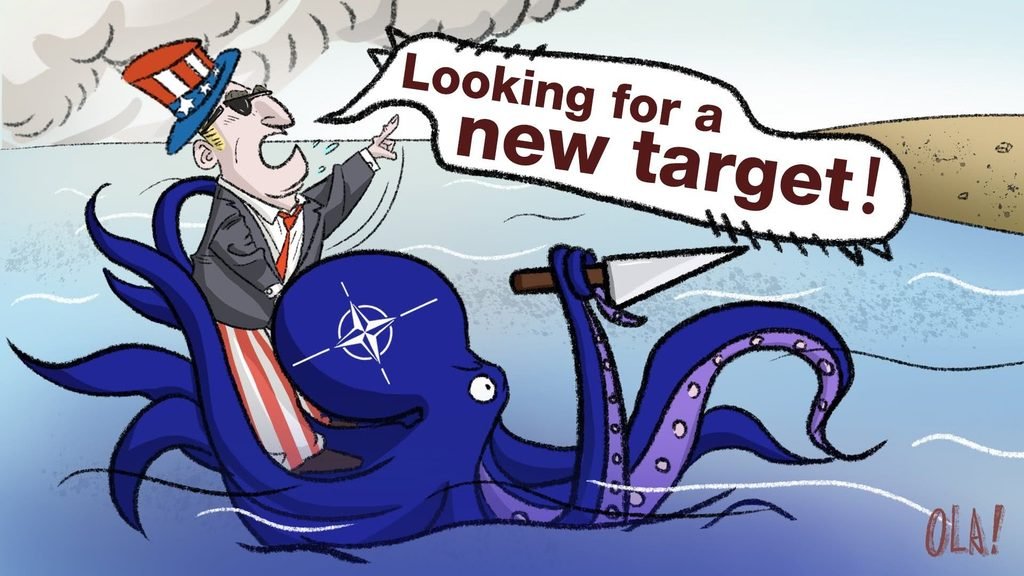
China learned from this mistake. In Poland, it now presents itself only as a peaceful power and potential negotiator for the war, because Poles are clear that Russia is the aggressor and anything more explicit backfires. At the same time, it quietly feeds skepticism towards NATO and the EU on the fringes. Analysts at NASK, a state research institute, have documented anti-Ukraine and anti-EU accounts that suddenly start adding lines like “China is the future.”
Lastly, the war has mainly shifted views of China among the Polish political elites. Among the public, there is still a narrative that China is different from Russia, and it is rooted in the memory of 1956. That year, while protests swept Poland, there was concern that the Soviet Union would invade. Mao allegedly intervened behind the scenes, saying that China opposed the use of force against Poland. He did it for his own political reasoning, as the Sino-Soviet split was already brewing, but in the memory of the older generation, China “saved” Poland. That still supports the idea that the China-Russia relationship is merely a marriage of convenience and that China might be the “good guy”.
Alicja Bachulska is a policy fellow at the European Council on Foreign Relations in Warsaw.


