Archives: Dispatches

All Lingua Sinica Dispatches

Thmey Thmey

Thmeythmey, launched in 2012, is a Cambodian digital media platform founded by a group of journalists who were working at the time for RFI and Cambodge Soir. The outlet was initially established as part of Mengly J Quach Holdings under the ownership of Mengly J. Quach (គួច ម៉េងលី). However, in May 2017, Mengly J. Quach resigned from the advisory board of Thmey Thmey, stating that he had sold his shares and had no further connection with Thmey Thmey. Based in Phnom Penh, Thmeythmey covers politics, economics, society, and culture through various journalistic formats. The platform operates sister sites, including Cambodianess (English-language version) and Thmey Thmey 25 (focused on agriculture and SMEs). According to CFI, Thmeythmey.com has around 500,000 daily visitors and maintains a Facebook page with more than 1 million followers. 

Government of India

The Government of India, established in its current form on January 26, 1950, is the national authority of the Republic of India. Led by President Droupadi Murmu (de jure) and Prime Minister Narendra Modi (de facto), it comprises 54 ministries and 93 subordinate departments. The government has three primary branches: legislative (bicameral Parliament), executive (Union Council of Ministers), and judiciary (Supreme Court of India). Modeled after the Westminster system, it functions as a parliamentary democracy where the Council of Ministers is responsible to the Lok Sabha (lower house). The government operates under the Constitution of India, which replaced the colonial Government of India Act when India became a republic, transitioning from its previous status as a dominion of the Commonwealth.

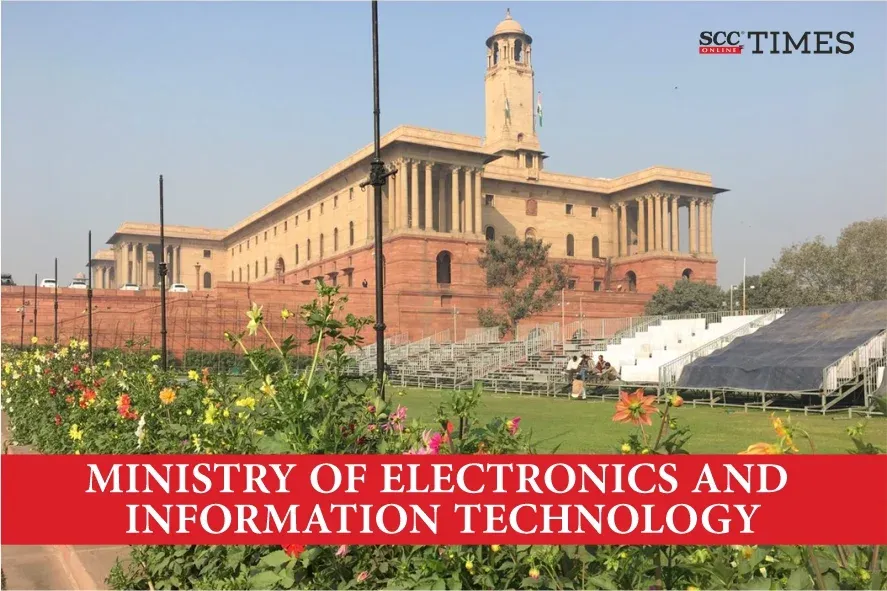
Government of India Ministry of Electronics and Information Technology (MeitY)

The Ministry of Electronics and Information Technology (MeitY) is a standalone Indian government agency responsible for developing and implementing policies for the electronics and IT sectors. Its mission focuses on promoting digital governance, inclusive growth of electronics and IT industries, enhancing India’s role in internet governance, developing human resources, promoting R&D, and ensuring cybersecurity. MeitY’s objectives include providing e-government infrastructure, promoting electronics manufacturing, implementing R&D frameworks, supporting e-learning, securing cyberspace, promoting inclusive growth through ICT, advancing India Stack, and strengthening India’s position in global internet governance. Its functions encompass IT policy matters, digital transaction promotion, e-governance assistance, IT education, cyber laws administration, semiconductor manufacturing, international IT cooperation, bridging the digital divide, standardization, and overseeing organizations like NIC and UIDAI.

Sichuan Daily Press Group

Sichuan Daily Newspaper Group was officially established on September 12, 2000, as Western China’s first party newspaper group, built upon the foundation of Sichuan Daily newspaper, which had been founded on September 1, 1952. The Group operates as a public institution under the management delegation of the Sichuan Provincial Party Committee Propaganda Department, implementing corporate-style management as a modern media conglomerate. According to the Group’s current structure, it now encompasses 13 newspapers, 12 magazines, 9 mobile applications, 20 websites, 2 mobile newspapers, and over 200 third-party media accounts, with total circulation reaching approximately 1.6 million copies and new media coverage exceeding 340 million users. In October 2021, the Sichuan Party Building Periodical Group was merged into the broader Sichuan Daily Newspaper Group structure, expanding its reach in party-focused publications.

Central Committee of the Chinese Communist Party

The Central Committee of the Chinese Communist Party (中國共產黨中央委員會) was established on July 16, 1922, at the 2nd National Congress of the Chinese Communist Party. Currently composed of 205 full members and 171 alternate members, it serves as China’s highest party decision-making body when the National Congress is not in session. The Central Committee is tasked with carrying out congress resolutions, directing all party work, and representing the Chinese Communist Party externally. Meeting annually at plenums typically held in Beijing, the Central Committee formally elects the General Secretary and Politburo, though in practice these selections are determined through private consultations by the current leadership. The body’s authority stems from its role as the institutional bridge between the broader National Congress and the party’s executive organs.

Jiangxi Liu’s Industry Co. Ltd.

Jiangxi Liu Industry Co., Ltd., formerly located in Nanchang’s Honggutan New District, was a private company that has now been deregistered. According to its 2022 annual report, published in June 2023, the company reported no employee social insurance registrations and chose not to disclose its financial information. The company’s registration number was 91360125074279761H, and it had not transferred any shares or made investments in other companies during the reporting period. Jiangxi Liu Industry Co., Ltd. is mentioned online as being connected to the Argentina Chinese Network, based in Buenos Aires.

Bureau of International Exchange and Cooperation of the Ministry of Culture and Tourism of the PRC

The Bureau of International Exchange and Cooperation, also known as the Hong Kong, Macao and Taiwan Affairs Office, is a department within China’s Ministry of Culture and Tourism (文化和旅遊部). The Ministry of Culture and Tourism was established in April 2018 through government restructuring that merged the former Ministry of Culture and National Tourism Administration. Headquartered at 10 Chaoyangmen North Street in Beijing’s Dongcheng District, the bureau oversees cultural and tourism exchanges with foreign countries, Hong Kong, Macao, and Taiwan. The bureau maintains 19 internal divisions including regional offices, multilateral affairs, overseas institutions, and protocol services. Current leadership includes Director Gao Zheng (高政), Party Secretary and First-Level Inspector Xu Rong (許蓉), First-Level Inspectors Zheng Hao (鄭浩), and Deputy Directors Liu Quan (劉全), Shi Zeyi (石澤毅), and Kong Lun (孔倫). The bureau manages China’s overseas cultural institutions and coordinates international cultural agreements and major exchange activities.

Italy Overseas Chinese Network

The Italy Chinese Network is a news portal, founded in 2011 by Chinese media professionals and entrepreneurs in Italy, and is headquartered in Rome with correspondents across Europe and China. The organization states it “serves the motherland, serves overseas Chinese, and promotes Chinese culture” while providing news about Italian society and the Chinese diaspora. The website maintains partnerships with Chinese-language and mainstream Chinese media outlets and features research on overseas Chinese businesses. The organization claims it will “expand Europe-China trade relations, guide overseas Chinese investment in China, assist Chinese government and enterprises with overseas investment promotion, and help develop overseas markets.”

Sistema Brasileiro de Televisão (SBT)

Sistema Brasileiro de Televisão or SBT, owned by Brazilian TV host Silvio Santos, began its broadcasts on August 19, 1981, by airing its own license signing ceremony from the Ministry of Communications in Brasília. Operating as Brazil’s third-largest commercial television network according to recent audience data, SBT stepped into the place of the defunct Tupi network, which operated from 1950 until bankruptcy in 1980. Santos gained licenses to former Tupi channels in São Paulo, Porto Alegre, Rio de Janeiro, and Belém, having already owned TVS Rio de Janeiro channel 11 since 1976. The network broadcasts entertainment programming, including Mexican telenovelas from Televisa, children’s shows through a Disney partnership that ended in August 2018, and news programs. While historically second in Brazilian ratings, SBT now ranks third behind Globo and Record TV, operating eight owned stations and over 90 affiliates nationwide.