

To read the dispatches of Guangming Daily’s Prague correspondent, Yang Yiming (杨艺明), was to learn little about the Czech Republic or Central Europe — or even about the journalist himself. Always, the central character was his home country: European politicians praising Xi Jinping and China’s development model; Czech students dreaming of study abroad in Beijing; Chinese investment revitalizing struggling factories. Yes, he covered Czech politics — when local lawmakers were critical of Brussels. The stories followed a familiar script: find voices friendly to China; avoid the critics.
Boosterism of this kind invites scorn among professional journalists. But producing such selective, pro-China coverage in Europe, even for a newspaper overseen by the Chinese Communist Party’s Central Propaganda Department, is not a crime.
Yang Yiming’s arrest earlier this month in Prague by Czech counterintelligence (BIS) working with police has no direct link to his lackluster reporting. He has been charged under §318a of the Czech Criminal Code, a statute that took effect in February 2025 and criminalizes “unauthorized activity for a foreign power.”
Nonetheless, his case raises serious questions about how state media from the People’s Republic of China operate in Europe and beyond, and how governments should respond. Where does propaganda end and espionage begin? How should democracies distinguish between correspondents working for authoritarian state outlets — with the access to politicians and privileged sources this can afford — and intelligence operatives using press credentials as cover?
According to Czech investigators, Yang’s case results from two years closely monitoring his gathering of “kompromat” — compromising information — intended for the potential blackmail of Czech politicians and public figures. Sources told the Czech news outlet Seznam Zprávy that Yang seemed especially interested in developments dealing with Taiwan, and that he used his press access to map the contacts of officials and others favorable to the country. So while Yang spurned China’s critics in his reporting, he sought them out, it seems, in social circles.
Yang’s case raises serious questions about how state media from the People’s Republic of China operate in Europe, and how European governments should respond.
As news of Yang’s arrest became public, Taiwanese media pounced. They connected the case prematurely to Vice-president Hsiao Bi-khim’s 2024 visit to Prague, during which her vehicle was nearly rear-ended amid what Czech intelligence later confirmed was a plan by China to “demonstrably confront Ms. Hsiao.” No direct link to Hsiao’s visit has been confirmed, however, and authorities in Prague remain guarded about the specifics, citing the possible “intelligence value” of information surrounding the case. “At this stage of the investigation, the state prosecutor has reserved the right to provide information. For this reason, I cannot comment on the inquiries,” said Ladislav Šticha, a spokesperson for BIS.
“He was very active”
The sense among observers is that the case has wider reach, and has been building for some time, with the 2025 law finally rendering certain conduct actionable that had previously fallen into a legal grey zone. “I think our Security Information Service (BIS) has known about him for years,” says Tobias Lipold, a researcher for the Czech think tank Sinopsis, which specializes in researching Chinese influence activities. “But it was only the new legal framework that gave them the means to act.”
Simona Fantová, a China analyst also with Sinopsis, remembers seeing Yang in the audience at a 2018 Prague concert hosted by local sinologists. “He was very active, showing up at all kinds of events,” she says.
The 2018 concert included Chinese socialist tunes performed with kitsch, ironic flair. Yang’s Guangming Daily reported the event as a faithful testament to the “indissoluble bond” between the performers and China. But that report, in fact, was not filed by Yang Yiming. It was filed by Ren Peng (任鵬). Ren, who also goes by the Czech name “Vojta,” has been posted in Prague since 2014, following a previous assignment in the region from 2004 to 2008 — which raises an odd fact about his supposed colleague, Yang Yiming.
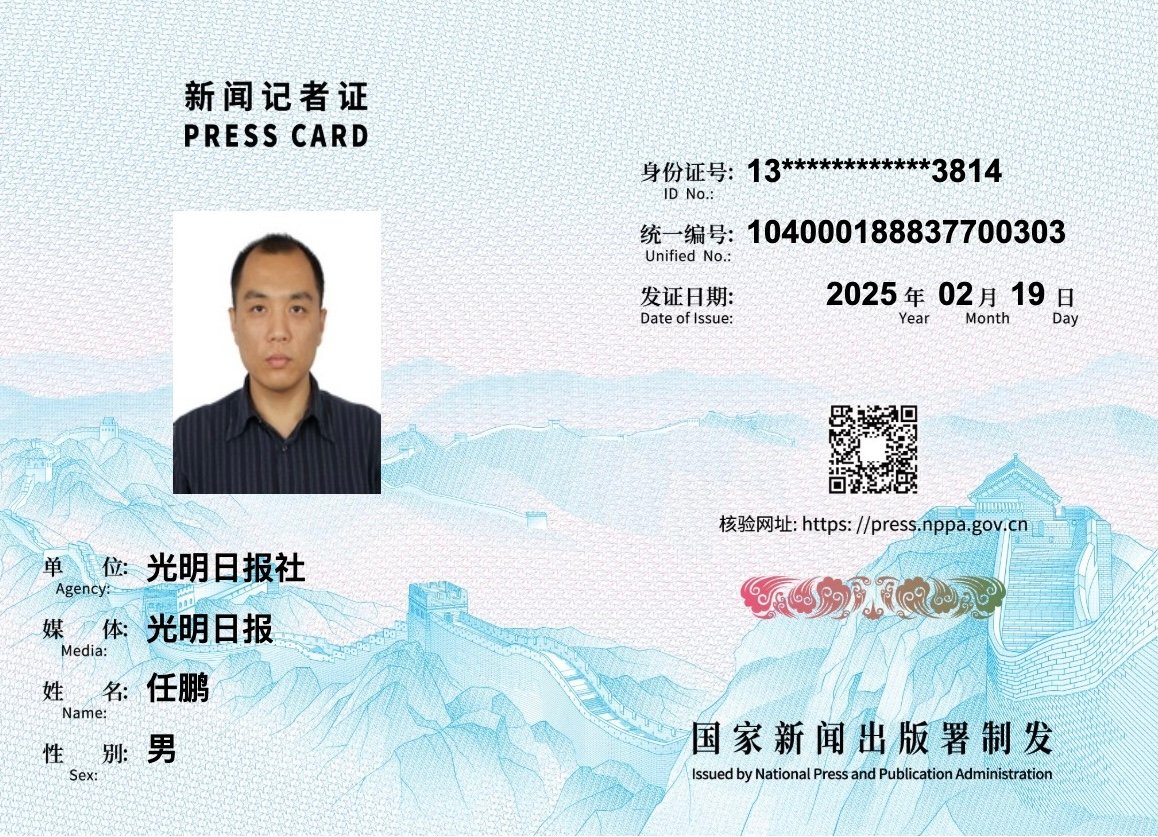
According to archived staff listings for the Guangming Daily, Ren Peng is one of just two correspondents posted to the country since 2014. The previous correspondent was Xia Maosheng (夏茂盛), whose reporting goes back to the early 2000s. Yang Yiming has in fact never been listed by the Guangming Daily on its dedicated page for the “Czech-Prague Bureau” (布拉格记者站), even as his byline has appeared consistently on reports like this one as “a reporter for this paper.”
Stranger still is the question of Yang’s credentials from China.
Seznam Zprávy and other outlets have reported that Yang was accredited for reporting in the Czech Republic by the country’s Ministry of Foreign Affairs, and that his credentials were reissued last year even as he was quietly under investigation. This much is clear. But as a journalist from China, where the licensing of reporters is a critical link in the chain of press control, Yang would likely also have been issued, like Ren Peng (see above), an official press card from the National Press and Publication Administration (NPPA) — the office under the propaganda department in charge of news and publishing management.
No press card for Yang Yiming is on file with the NPPA. And while there are a number of reasons why this might happen — journalists for larger commercial media in China have been known in recent decades to make “unofficial hires” (非编制) outside of formally mandated hires — this is an odd oversight when one considers that Yang is credentialed in the Czech Republic for a newspaper directly under the very entity that issues those press cards. His is no cub reporter appointment or freelance gig, but a privileged posting to one of Central Europe’s most important cities.
Two Types of Journalist
Chinese News Organization Employment Framework
Yang’s lack of Chinese press credentials is not necessarily a smoking gun. But it is a reminder of the ambiguous status of many journalists working for PRC state media around the world.
Doug Young, a former Reuters journalist now teaching at Shanghai’s Fudan University, wrote in a 2012 book that reporters for China’s official Xinhua News Agency routinely perform tasks that in other countries would be the remit of intelligence agencies. A US congressional security review released three years earlier, in 2009, also noted that Xinhua “serves some of the functions of an intelligence agency.” Markos Kounalakis detailed these practices, particularly among Russian and Chinese state media, in his 2018 book for the Hoover Institution, Spin Wars and Spy Games. The same year, a demand from the US that journalists for both Xinhua and CGTN, the global arm of China’s state-run broadcaster, be registered as “foreign agents” infuriated China.
China has repeatedly dismissed such actions and allegations as reflecting “a Cold War mentality and ideological bias.” In 2020, it responded by targeting the China desks of the New York Times, the Wall Street Journal, the Washington Post, Time and Voice of America, in a move that still reverberates in foreign media coverage of China.
But even setting aside questions about Yang Yiming’s identity and credentials as a journalist in the Czech Republic, there is an issue that goes much deeper: that the way China’s leadership defines the role of the journalists working for state-run media places their activities in the grey zone — whether they are working in China or abroad. The case in Prague could be testing this murky terrain.
Eyes, Ears, Throat and Tongue
Media operated by the CCP are commonly described as its “throat and tongue” (喉舌), often translated as “mouthpiece.” Lesser known is the rest of this phrase, that the media under the party’s control are its “ears, eyes, throat and tongue” (耳目喉舌). A state reporter’s public-facing stories are meant to provide the “correct” ideological narrative for the masses, achieving what the party terms “public opinion guidance” (舆论导向). But equally if not more critical is the reporter’s role in information-gathering and surveillance.
Going back to the Yan’an period (1935-1948), the dual role of party journalists as public propagators and covert observers has been institutionalized in the form of the “internal reference” (内部参考) documents issued non-publicly within the party and government system by Xinhua, the People’s Daily, Guangming Daily and other CCP-run outlets. Classified with varying levels of secrecy, and published either regularly or ad hoc — so that a spiked investigative report too sensitive for public eyes can transform into a neican — these documents form an internal information pipeline for the leadership.
The most senior neican can reach the Politburo Standing Committee, where they might receive “written comments” from top leaders. Those comments may convey the official’s “attitude,” or taidu (态度) toward a particular matter, offer approval for a policy or course of action — and even communicate instructions on how to handle it. Focusing on these isolated cases of action, the “eyes and ears” process may seem like institutionalized responsiveness. But within a political culture premised on sensitivity and secrecy, the “internal reference” system does something else too. It blurs the line between journalism and intelligence gathering, erecting a wall of secrecy between the media and the public.
The situation can become even more complicated abroad as state media journalists maintain close relationships with domestic Chinese embassies, one of their key roles being to publicize embassy events and accommodate propaganda priorities. The growing body of “media engagement activities” investigated and documented in the Lingua Sinica database suggests non-transparency is a recurring pattern in China’s outreach on media and information, and in some cases outright concealment is in evidence — blurring the lines between media engagement, public diplomacy, surveillance and espionage.
The “internal reference” system does something else too. It blurs the line between journalism and intelligence gathering, erecting a wall of secrecy between the media and the public.
In one case in point, last October’s “China-Cyprus-Europe Media Forum,” organized by the Chinese Embassy in Nicosia ahead of the Cypriot government’s rotating presidency of the Council of the EU this year, promoted China’s position on Taiwan as it advanced a pre-prepared China-EU consensus declaration saying “the media need to act as active builders of China-Cyprus and China-EU relations,” and that they are “expected to prioritize social responsibility and the public interest by fostering a reasonable and stable public opinion environment.”
Beyond this clearly biased declaration, with its alternative PRC vision of the role of the media, the forum focused on media cooperation. One of the Chinese cooperation partners present was “Home in Cyprus,” a media outlet describing itself as “Cyprus’s most professional Chinese media.”
A deeper investigation found not only that Home in Cyprus is operated through an organization closely linked to the Chinese Embassy, and sharing an e-mail address, but that the user agreement for its WeChat and web-based platform has stringent content and discipline guidelines and weak data protections — making it a potential tool for surveillance of the Chinese population in southern Europe, not to mention raising possible breaches of the EU’s GDPR. “You understand and agree that Home in Cyprus has the right, at the request of government authorities [in China] (including judicial and administrative bodies),” the agreement reads, “to provide them with necessary information such as the registration information you submitted on the Home in Cyprus platform and your posting records.”
Grey on Grey
The Czech amendment on “unauthorized activity for a foreign power” has courted plenty of controversy. It was fiercely debated before its passage under the former government, with critics arguing that its reach is too broad and its provisions too vague. In an article for the Czech legal journal Bulletin Advokacie last year, one scholar voiced the concern that “the elements of the factual basis of this crime are unclear, indefinite, vague and easily abused in application.”
Such criticisms have surfaced again in light of the Yang Yiming case, but from sources that raise questions of their own. Last week, the online Czech outlet Parlamentní listy ran an interview with its deputy editor-in-chief Radim Panenka in which he said that the law “allows for the criminalization of anyone who becomes inconvenient.” Illustrating the murkiness of this terrain, however, Parlamentní listy has been identified in Czech research as a source of both manipulative propaganda and pro- China narratives. The outlet appears in the Lingua Sinica database for an engagement last July, when it ran an op-ed from Feng Biao (冯飚), the Chinese ambassador stressing the benefits of trade.
The current Czech government, which took office in December, has said previously that it would seek to repeal the amendment. It is so far unclear whether the ongoing prosecution of Yang Yiming will change those calculations. But as the European Values Center for Security Policy (EVC) noted last week, Yang Yiming’s arrest “clearly illustrates the type of foreign influence this legal instrument is intended to address.”
At this point, precious little is clear about this case — a fact that also stems, of course, from the judicial proceedings. A major test of the legitimacy of the prosecution will be the extent to which it can remain transparent and open to scrutiny, upholding the rights and principles that make European and democratic society strong — and ultimately safeguard the integrity of journalistic practice. If that can happen, the case could offer lessons in how to address the thorny challenge of grey zone tactics stemming from state-run media engagement.
Dalia Parete and Mark Chiu contributed reporting for this story.


