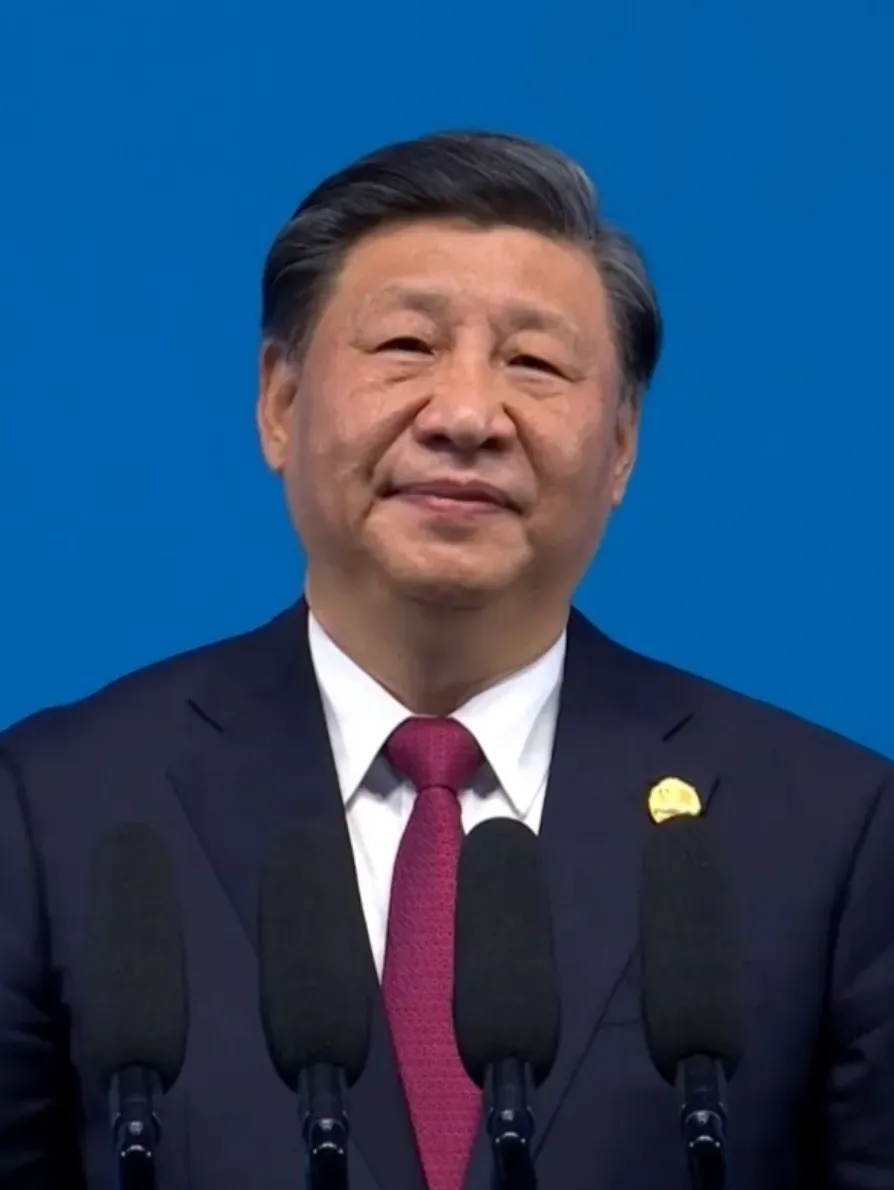
Xi Jinping: A Year in the Headlines
Last year, an apparent drop in the frequency of appearances by President Xi Jinping in the state media — alongside cancelled participation in international gatherings such as the BRICS summit — invited speculation that China’s strongman was losing his grip on power. Closely observing the Chinese Communist Party’s flagship People’s Daily newspaper, we argued last July that these shifts were overstated. It was just too early to tell.
The headline results for 2025 are now in. So what observations can we now make about the standing of China’s top leader?
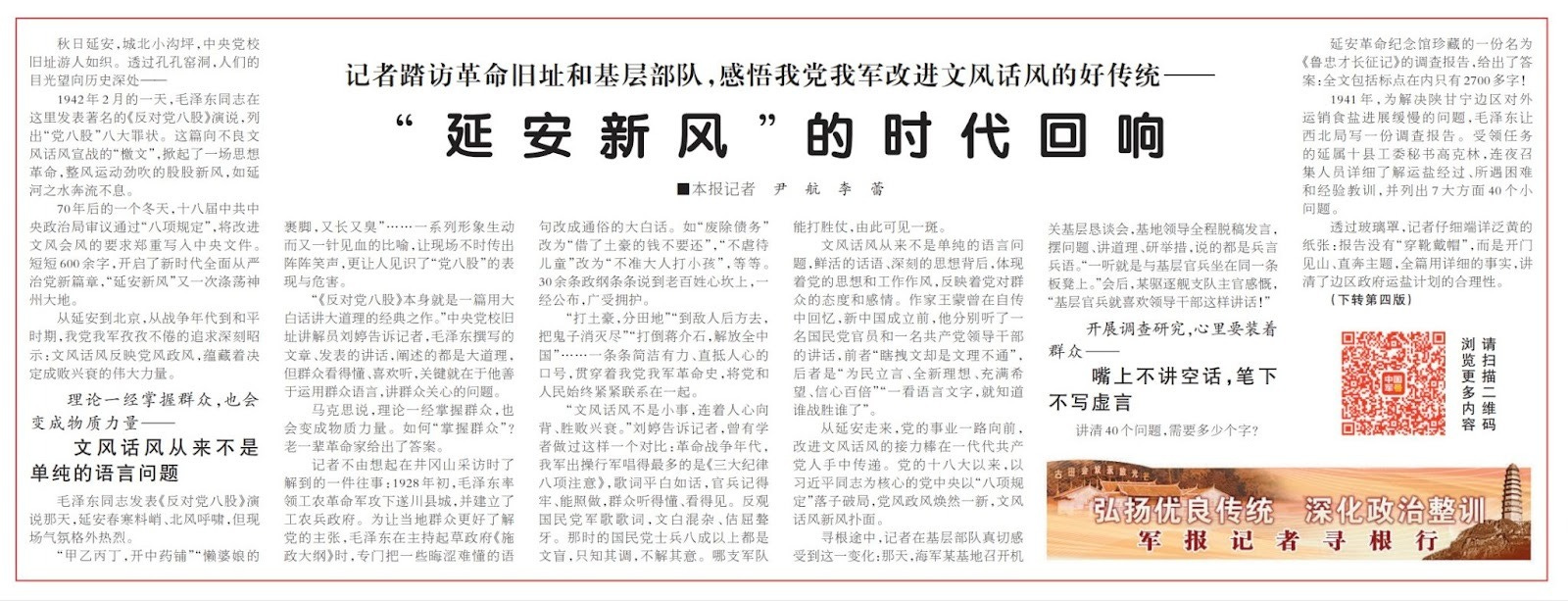
Before we jump into the analysis, it’s important to note again for those less familiar with CCP-run media that the People’s Daily is a constrained and consensus-based Party flagship paper with a high level of consistency in terms of pages and text density over its history — with highly formalized and repetitive language (more on that below). This is a key reason why the paper, a political signalling platform rather than a space for news or discussion, lends itself to frequency analysis.
The Center Holds
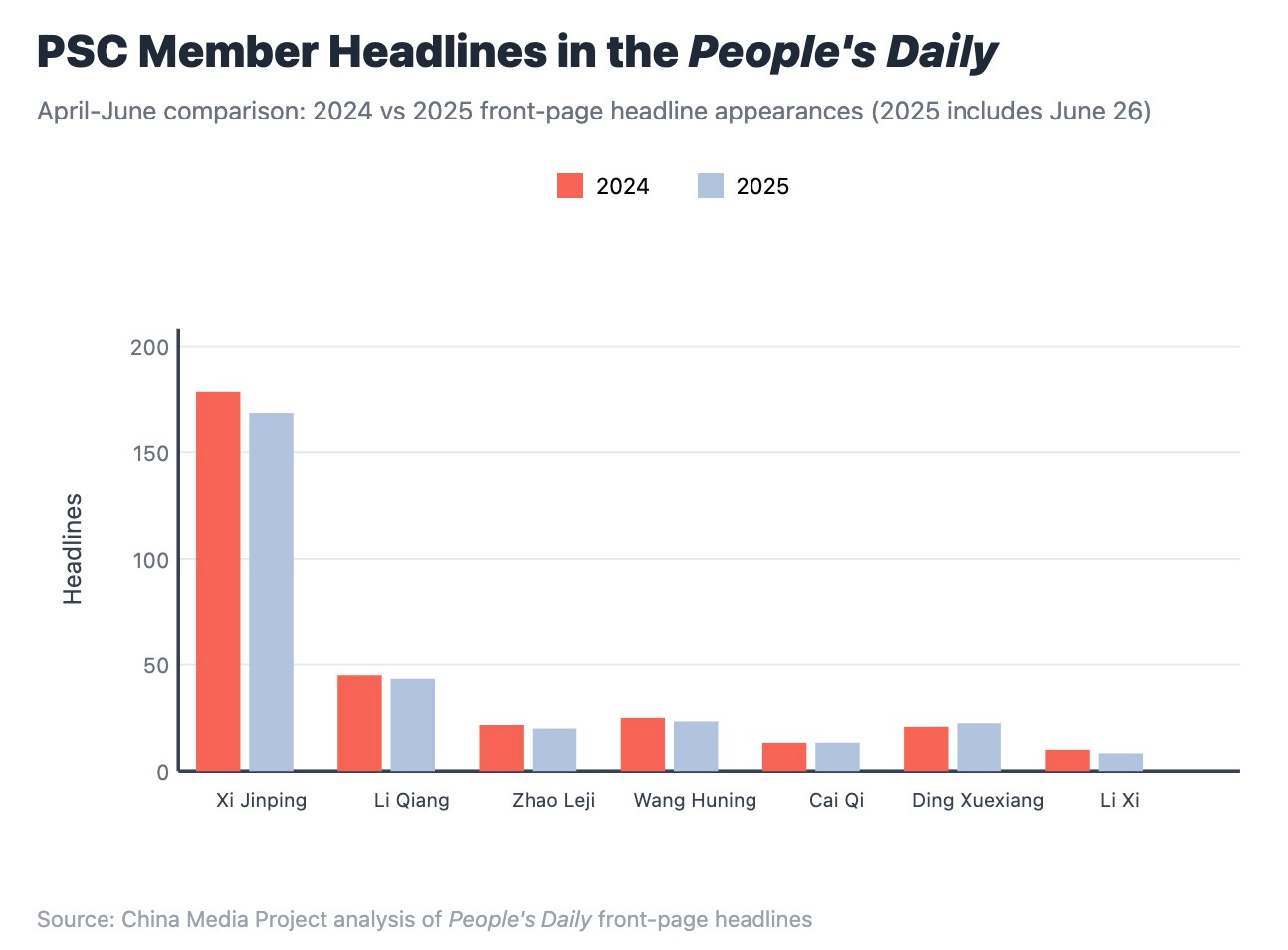
First off, we saw no change in the decisiveness of Xi-centric discourse, nor did we see any rising challenges from other members of the Politburo Standing Committee (PSC) — an important indicator of shifts at the top. In the full year 2025, Xi Jinping appeared in close to 600 headlines in the People’s Daily, more than three times the number of headlines logged by China’s premier, Li Qiang (李强), the country’s second ranking party official.
At no point during the past year did this performance gap narrow in the flagship paper. Xi’s lead remained commanding, as it has done throughout his tenure. As readers can see from the graph below, the performance of all PSC members remained steady in 2025, with moderate declines for both Li Qiang and Zhao Leji (as well as Li Xi) against 2024 levels.
You may notice that above we referred to Xi-centric discourse rather than Xi-centric “coverage.” This is an important distinction, and critical to understanding how CCP media operate within China’s political and media systems. The articles in the People’s Daily do not just “cover” events on the political calendar in the same way that media elsewhere in the world do.
While coverage in a Western newspaper of a political leader’s attendance of a major diplomatic summit would warrant perhaps one report around key issues and points of relevance — with perhaps separate op-eds that reflect independent viewpoints — in China’s system of power signalling it results in a separate article for each diplomatic exchange that resulted. Consequently, a front page during a busy period for Chinese diplomacy can sometimes feel like a Xi Jinping identity parade.
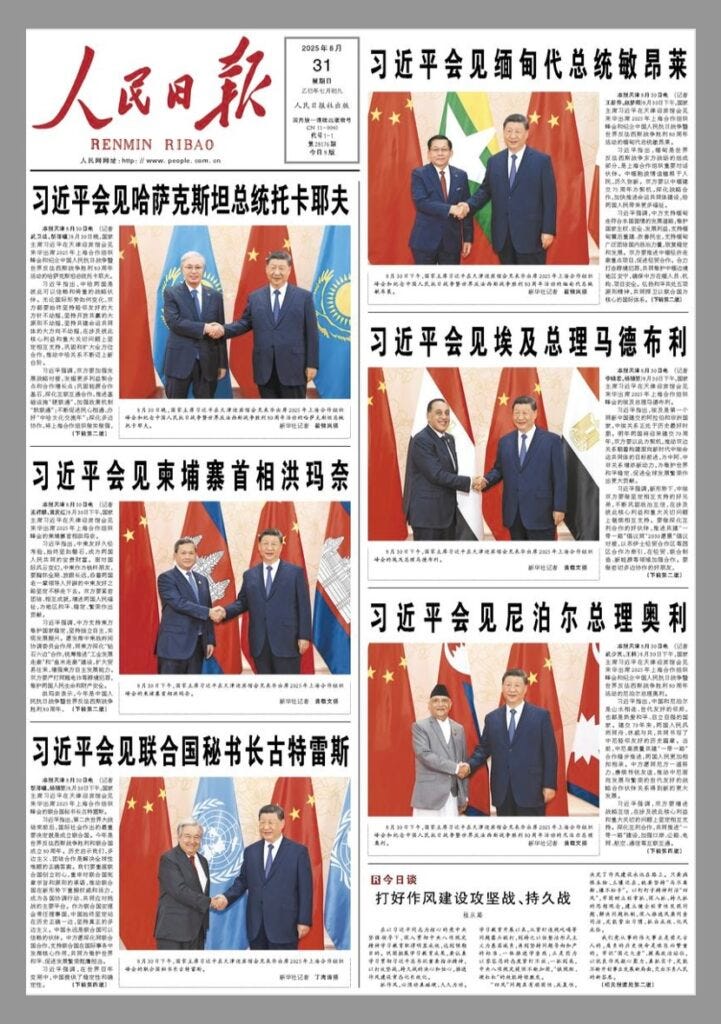
Why is this ridiculousness necessary?
The Politics of Repetition
In the political system operated by the CCP, repetition is a crucial form of signaling and demonstrating power. This is an absolutely essential part of the People’s Daily’s role. Repetition is a basic way to instill the “main line” (主线) and ensure that the CCP media, as “mouthpieces” (喉舌) of the Party, are the “weathervanes” (风向标) pointing the political direction. This is why six handshakes at a single diplomatic summit become six distinct reports on the paper’s front page.
Understanding the political role of repetition also helps us contextualize another important observation from our 2025 numbers — the fact that headline mentions of Xi Jinping, while decisively in the lead, are also notably down.
When we look at headline appearances for members of the PSC (above), as well as front-page image counts (below), we can see that Xi had seen a notable decrease in appearances on both counts.
What does this mean?
In our analysis back in July last year, we noted that headline counts and images closely follow calendar events, and that over time the total counts can balance out. In other words, Xi’s counts may seem down in July, but then surge in August or October with a busy calendar or a concerted campaign of messaging around events such as Party plenums. Now, with all the data for 2025 accounted for, we can see that this downward trend was no error.
Headline mentions of Xi Jinping, while decisively in the lead, are also notably down.
It is true that Xi made fewer headline appearances this past year in the People’s Daily than in the two years previous. How dramatic was the shift? Xi’s appearances saw an overall drop of 21 percent in 2025. It was a similar story in image counts, where there was a 19 percent drop from the preceding two years. That is not negligible. And yet, as we said at the outset, name checks in front-page headlines for other PSC members remained uniform across all of these years — and far below the soaring heights enjoyed by Xi.
Does this quantitative drop signal a power drain?
While there is always room for error in the perilous business of CCP gazing, the broader context of People’s Daily signaling cautions against over-interpreting this decrease in frequency. First of all, we see continued wall-to-wall “coverage” — again, this is repetition and signalling — of Xi in People’s Daily, combined with a lack of any real challenger. This indicates that he is decisively in control of the narrative, and certainly that he remains the “core” (核心).
Secondly, there are other ways, beyond imperiled leadership, to understand these numbers. One possibility is a general drop in the number of global trips Xi made in 2025. As reporters and analysts have noted, Xi has delegated appearances at major international summits to his premier, Li Qiang. Skipping some of these summits naturally lessened Xi’s 2025 tally — which is to say that it lessened instances not just of “coverage,” but of repetition.
For those tempted to read too much into those absences, it’s important to note that Li’s attendance of these summits in particular did not drive a corresponding increase in article and image numbers for the premier. This is not because those events were not covered, but because they were not repeated like incessant drum beats to promote the leadership core.
The repetition that to most of us appears senseless, and even ridiculous, is a privilege enjoyed only by the man at the apex.
As we enter 2026 and Xi Jinping edges another year closer to the next Party Congress (2027), China’s repetition complex is something to carefully observe. Will the downward trend in his numbers continue? Only time will tell if there is real strength in Xi’s numbers.