Tag: China-US relations

Schedule Shift

When the United States and China reached a temporary agreement to lower tariffs by 115 percentage points this week, China’s state broadcaster CCTV appeared ready to mark the diplomatic thaw. The network’s film channel CCTV-6 (nicknamed “Princess Six” (六公主) by Chinese viewers) had originally scheduled the anthology film New York, I Love You for Monday evening, according to screenshots of the program guide shared by the official Weibo account of “Changjiang Cloud” (長江雲), an outlet under the state-run Hubei Television.
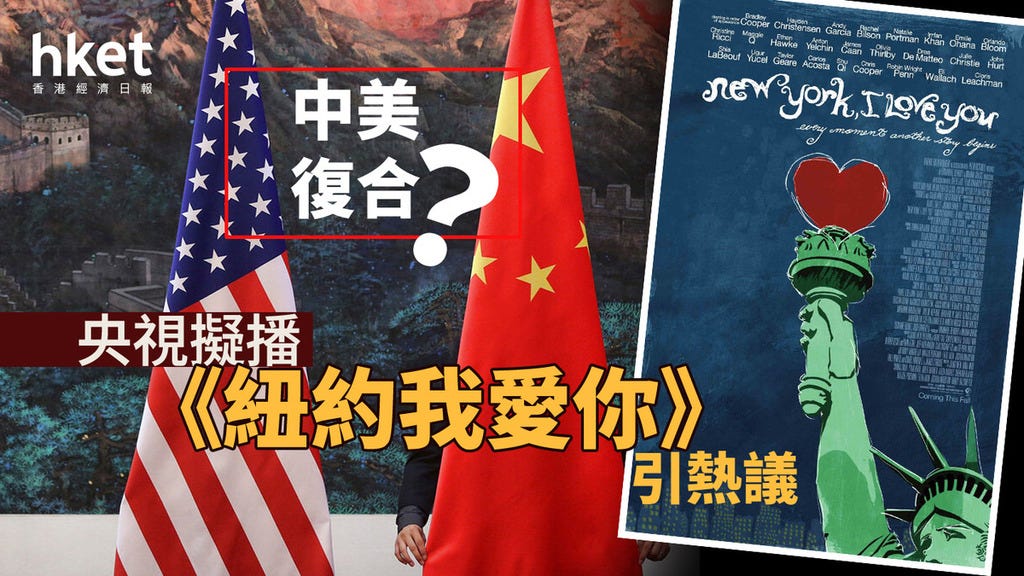
Hong Kong Economic Times coverage of the television schedule switch in China, with inset poster of “New York, I Love You.”

The scheduling choice quickly sparked a trending topic on Weibo, with some commenters noting the contrast to 2019, when the channel aired films like Battle of Triangle Hill, a nationalistic 1956 propaganda classic on volunteer Chinese soldiers fighting the US during the Korean War, in the midst of heightened trade tensions. “I thought we’d be watching Shangganling for a while, didn’t expect we’d already be watching New York, I Love You,” one internet user remarked. CCTV-6 has a well-documented history of using film selections as political signals.

The celebration of warming relations was short-lived, however. By noon, the Hubei Daily (湖北日報), a provincial-level CCP-run newspaper, reported that the channel had revised its schedule, replacing the New York-themed film with the Italian comedy Welcome to the South (later reports indicated it was changed to Camille). The Weibo hashtag “Six Princess schedules New York, I Love You” (六公主排片紐約我愛你) was subsequently censored, disappearing from the platform’s trending topics. While some entertainment-related individual posts using the hashtag could be located on Weibo, clicking on the hashtag for the main related page yielded the message: “Sorry, the content of this topic is not displayed, below are search word results” (抱歉,该话题内容未予显示,以下为搜索词结果). Ironically, as UDN (聯合報) noted, New York, I Love You actually opens with a short film directed by renowned Chinese filmmaker Jiang Wen and starring American actress Natalie Portman—a perfect symbol of “China-US cooperation.”
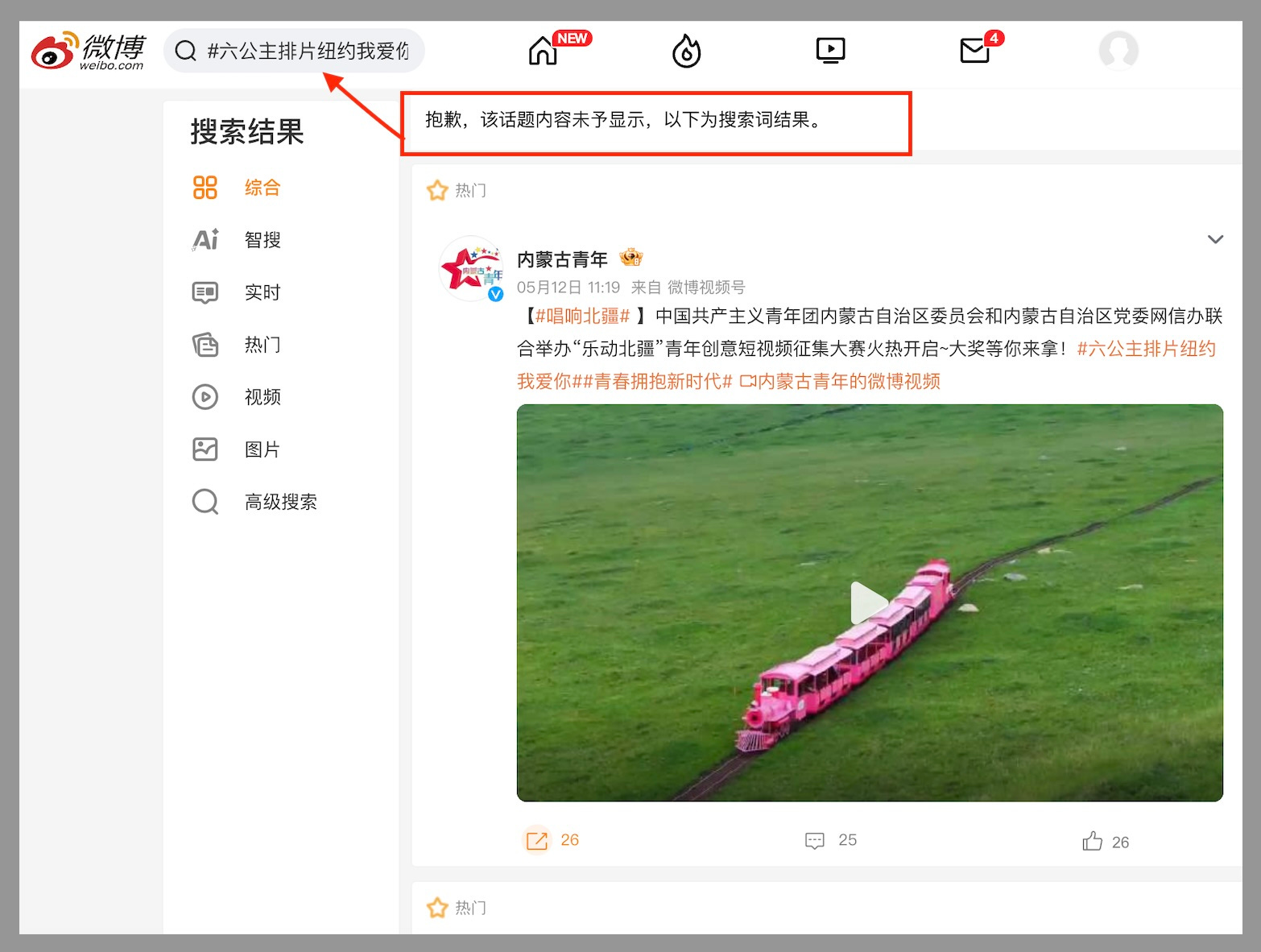
A hashtag related to “New York, I Love You” yields a message that the topic cannot be displayed.

America Unhinged

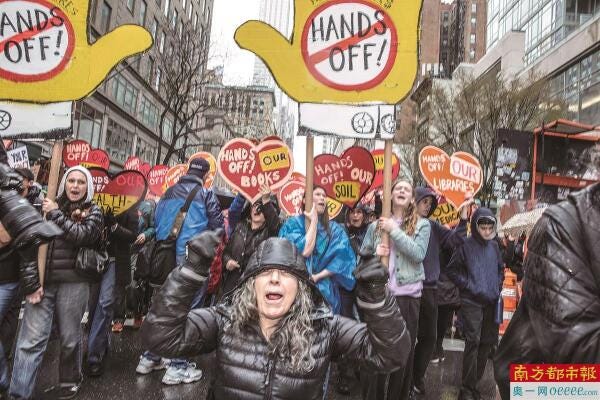
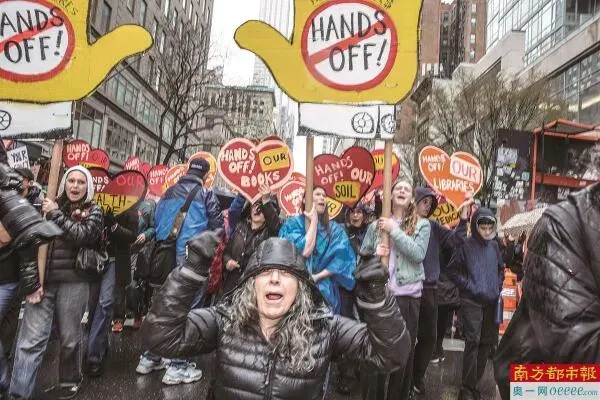
Talk about selective reporting. While protest activity in China remains largely invisible in domestic media, American demonstrations receive front-page treatment. This narrative, emphasizing the apparent disorder of democratic and populist politics in America, is the message that media consumers across China are presumably meant to take away from the wave of protests happening in cities across the country last week.

Chinese coverage of American demonstrations was extensive in its reach, though the official Xinhua News Agency and China Central Television served as the sole sources for most reports, with nearly identical phrasing across outlets. Guangzhou’s Southern Metropolis Daily (南方都市報) reported on April 7 that “more than 500,000 people participated in 1,300 protest events across America” against the Trump administration. The article noted that “even ‘red counties’” — those generally supportive of Republican Party candidates and policies — had seen sizable protest crowds waving banners with messages like “King of Corruption” and “Make Lying Wrong Again.” The Paper (澎湃), a Shanghai-based online outlet, published an extensive gallery of photos showing demonstrations across major US cities on April 5, describing the events as “the largest collective protest since Trump took office.”

While providing comprehensive coverage of American unrest, Chinese media outlets remain silent on domestic protests — even in the once relatively free environment of Hong Kong. The city’s police commissioner, Chow Yat-ming (周一鳴) stressed earlier this month when discussing national security that citizens should consider it their “personal duty” to report violations. The contrast could hardly be clearer. American protests merit detailed coverage, while Chinese ones warrant police scrutiny. If only the Trump administration hadn’t frozen funding for one of the only projects actually monitoring dissent in China.