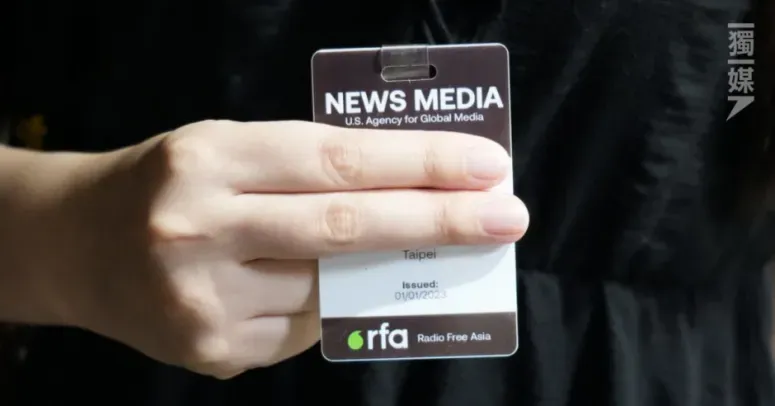
In an interview last Friday with the independent Hong Kong media outlet InMediaHK, a former journalist for the Cantonese language service of the American broadcaster Radio Free Asia (RFA) reflected on three years in Taiwan after Hong Kong’s media crackdown forced her relocation. Despite RFA’s closure this year due to sharp funding cuts by the Trump administration, she views dispersing Hong Kong journalists globally as beneficial for covering diaspora communities. The journalist, who used a pseudonym for the interview, was the first RFA Cantonese reporter stationed in Taiwan and witnessed the closure of major Hong Kong outlets like Apple Daily and Stand News. In mid-2025, she submitted an application for Taiwan residency, but told the outlet she did not know whether she would continue working as a journalist or continue writing news about Hong Kong.
Image from the InMediaHK story on a former RFA Cantonese reporter now living in Taiwan.
The Witness, a Hong Kong legal journalism outlet established in 2022 by former court reporters, launched an online store on August 17, 2025, using a pay-what-you-want pricing model for books, bags and other merchandise. The funding mechanism allows the publication to sustain operations while keeping all court reporting freely accessible to readers.
The store represents one of the latest attempts to maintain independent legal journalism in Hong Kong’s increasingly constrained media landscape. Since 2019, press freedom restrictions have forced the closure of multiple news outlets and prompted the departure of numerous court reporters, leaving many legal proceedings without media coverage and limiting public access to information about cases affecting civil liberties.
The Witness (法庭線) specializes in documenting trials, hearings and verdicts in Hong Kong courts, with particular focus on human rights cases and matters of public interest that receive limited attention from other outlets.
Overseas Hong Kong media outlet The Points (稜角媒體) posted on social platforms earlier this month that it has 55 days (to the end of September) to achieve financial stability or it will otherwise be forced to cease publication. The outlet appealed to readers to become Patreon members and offer support.
According to a work report (工作報告) issued for the first half of this year, the outlet’s income comes chiefly from reader donations, with current accumulated losses of HK$140,000, or just under 18,000 dollars. The outlet has set a fundraising target of HK$250,000, and hopes to gain 650 paid Patreon members. Patreon membership options include monthly plans of HK$5, HK$20, and HK$50 (.6, 2.5 and 6 USD).
The Points was founded in January 2023 by a group of journalists, including Jane Poon (潘麗貞), who served as editor-in-chief until the following year, when the position was taken on by Carmen Wu (胡凱文), a former anchor and reporter for i-CABLE News and the Cantonese desk of Radio Free Asia (RFA).
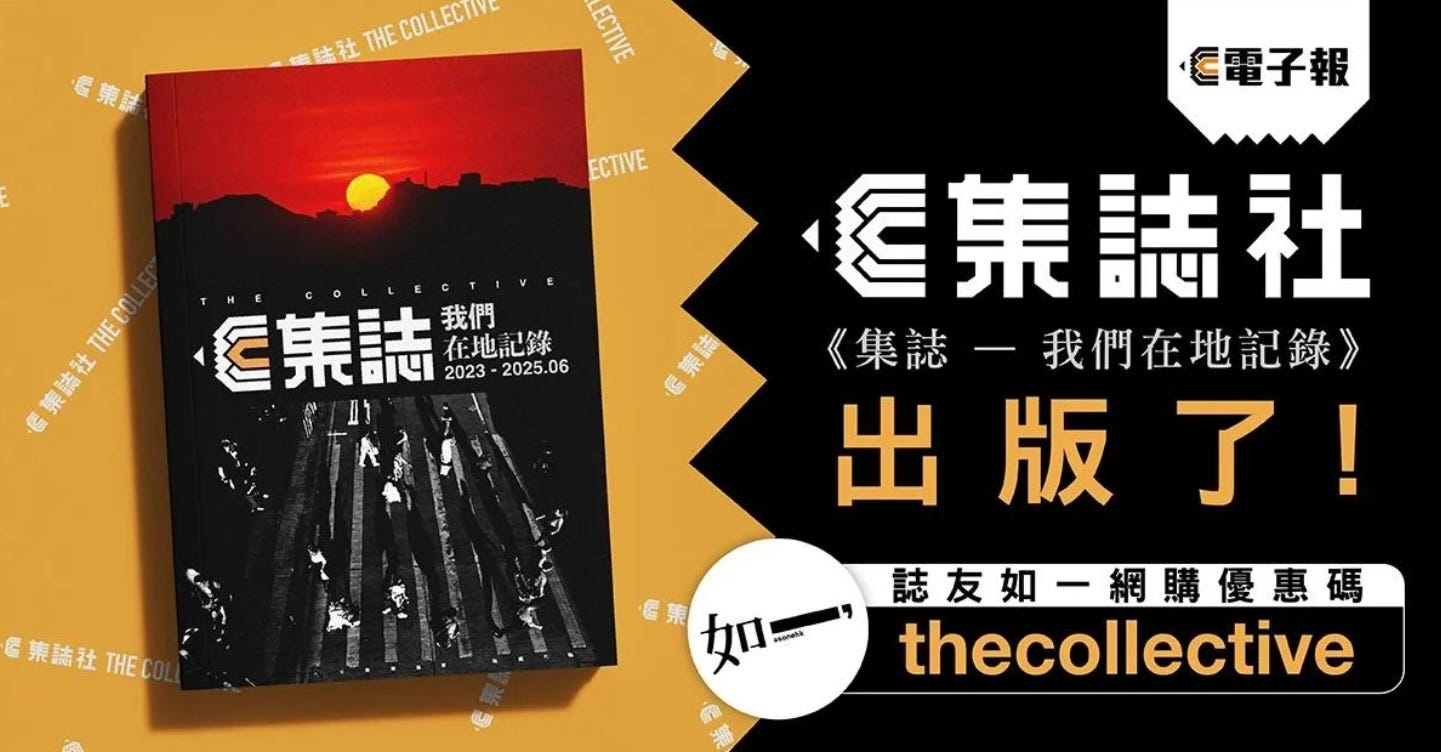
Two independent Hong Kong media organizations have recently published new books, a show of quiet resilience under the territory’s national security law restrictions. The Witness (法庭線) releasedHow to Do Court News (法庭新聞怎麼做?) on July 15. The volume, which features more than 50 notes from the editor and previously unpublished reporting journals, follows the outlet’s earlier book Public Understanding of the Judiciary (公民司法認知). The Collective (集誌社) news outlet also published its inaugural book, The Collective: Our Record (集誌——我們在地記錄) in early July. The book collects 30 selected reports from the past two years, reflecting the outlet’s mission to “monitor the powerful, care for the disadvantaged, [and] record the post-movement era.”
Last month several figures in Hong Kong’s media spoke out about an apparent new tactic being used to curtail the activities of independent media and journalists. Since November 2023, at least six outlets and around twenty journalists have faced tax audits spanning seven years, with demands totaling over HK$1.7 million, or more than 200,000 dollars. The targeted outlets include InMedia (獨立媒體), The Witness (法庭線), ReNews, Boomhead, Hong Kong Peanuts (香港花生), and the Hong Kong Free Press.
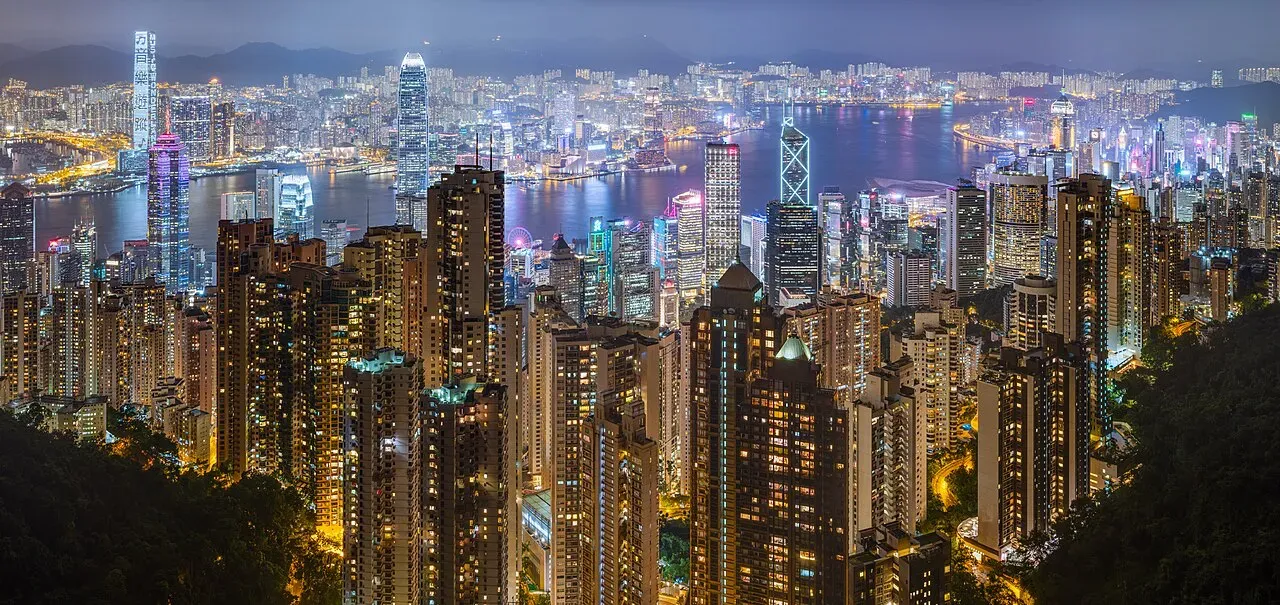
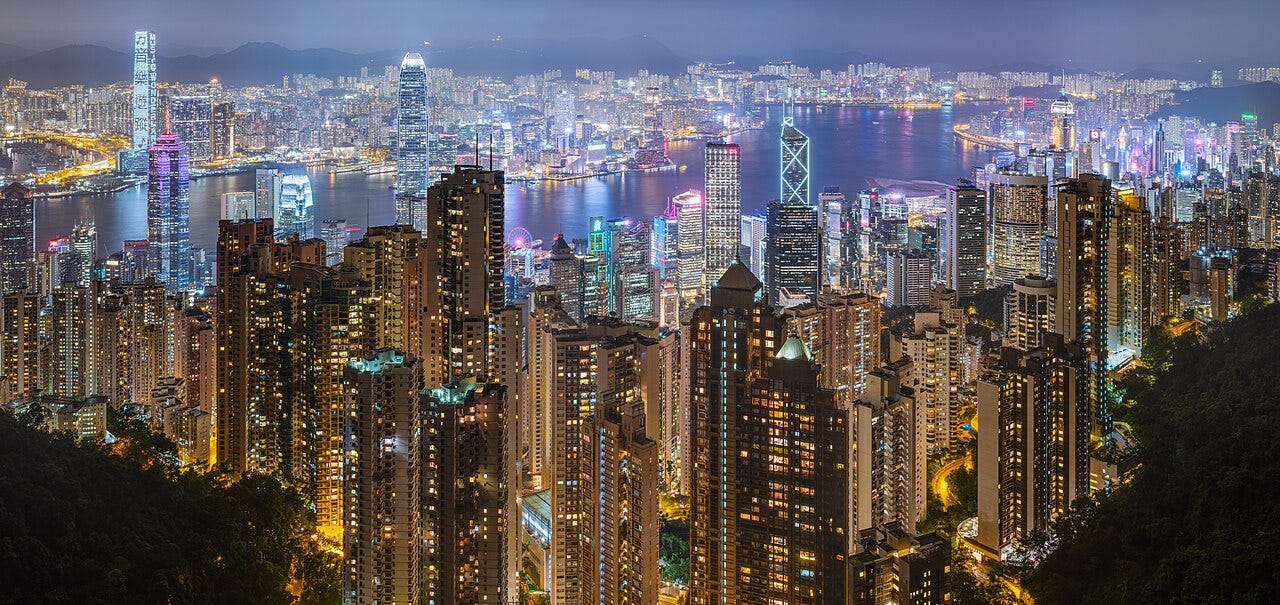
The Hong Kong skyline from Victoria Peak. SOURCE: Wikimedia Commons.
Tax authorities made errors and “strange, unreasonable claims,” including auditing one outlet for a year before it was established and asking a journalist to pay profits tax for a nonexistent company registration number. Inspections also extend to family members, including both parents of journalists’ association chief Selina Cheng (鄭嘉如). Hong Kong Peanuts host To Kwan-hang (陶君行) revealed that virtually all hosts, including Wong Ho-ming (黃浩銘) and Chow Ka-fat (周嘉發), received audit demands.
While the Inland Revenue Department (IRD), the territory’s tax collection authority, maintains that the “industry or background of a taxpayer has no bearing on such reviews,” the unified actions appear to be a form of bureaucratic censorship designed to exhaust the operations of independent media. Similar tactics have been used by authoritarian governments in Russia and Turkey, where punitive tax audits and financial sanctions have sought to control press activities. The approach would mark a new development in Hong Kong’s media landscape.
For many in the Hong Kong indie media space, the IRD’s insistence that they were “randomly selected” for a probe is difficult to swallow. “I can count all of Hong Kong’s non-government aligned digital media outlets on two hands,” Hong Kong Free Press founder Tom Grundy told Lingua Sinica. “Most are under tax audit simultaneously.” Grundy emphasizes that his outlet has insisted throughout its ten-year history on “meticulous record-keeping,” but notes that handling the audit “has diverted resources, manpower and funds away from journalism.”
The IRD audit of the Hong Kong Free Press comes one year after the outlet was selected — “randomly,” it was told — for a rare inspection from the Companies Registry, the city’s official business registration and company records authority. “We’re so lucky, perhaps we should put some numbers on the lottery,” Grundy said.
Hong Kong online media outlet Channel C, an independent site founded in July 2021 by former journalists from Apple Daily (蘋果日報), ceased online updates more than a week ago, on April 23, as its 29 editorial staff halted work over unpaid wages and benefits. Channel C’s troubles deepened in mid-April after owner Chen Zhixing (陳智行) was arrested for allegedly defrauding a government loan program of HK$12 million.
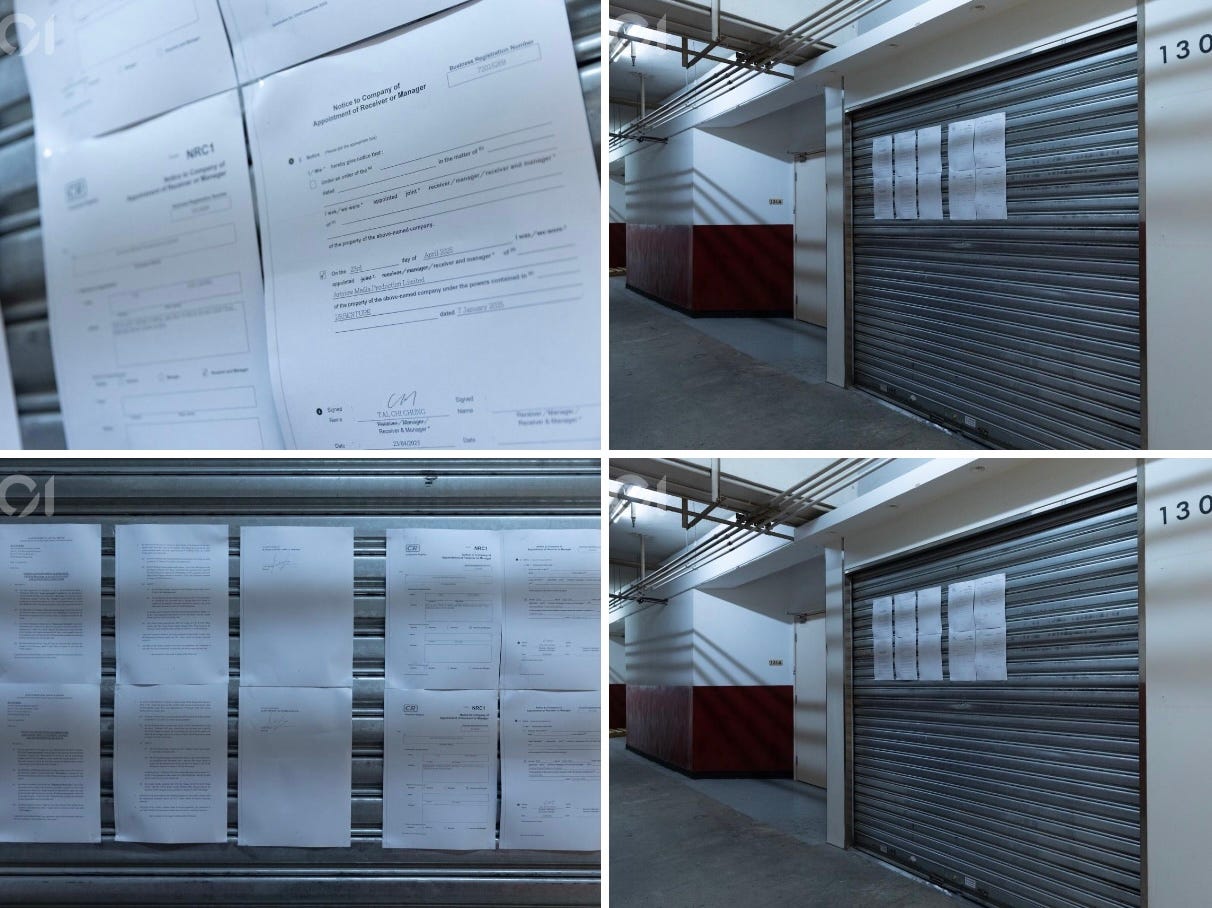
Reporting on the story, the news outlet HK01 included images of a takeover notice posted by a creditor, JL Investment Capital Limited, outside Channel C’s shuttered Kwai Hing office on April 25. According to HK01, the debt holder had offered HK$100,000 monthly, or just under 13,000 US dollars, to allow Channel C to maintain operations. But this fell far short of the estimated HK$470,000 required monthly to sustain full staffing, and the outlet’s staff reportedly rejected this proposal, which they said showed no sincere long-term commitment to quality journalism. Channel C’s parent company, Artview Production Limited, has had its accounts frozen since mid-April.
Takeover notices posted outside the offices of online media outlet Channel C last month.
The controversy surrounding Li Ka-shing’s proposed 23 billion dollar Panama ports deal, which has angered China, reveals a fundamental shift in Hong Kong’s political media landscape, according to Chris Yeung, former Ming Pao editor and now head of Green Bean Media (綠豆). Yeung wrote thatTa Kung Pao (大公報) and Wen Wei Po (文匯報) — both papers controlled by the central government’s Liaison Office in the city — have replaced the South China Morning Post as the city’s most politically influential publications, becoming “first-to-read” newspapers for government officials and business leaders alike.
When Ta Kung Pao condemned CK Hutchison’s ports sale as “groveling” and “betrayal,” it demonstrated the direct line between these publications and official policy positions. “Pro-democracy activists read looking for signs of imminent trouble,” Yeung wrote, highlighting the papers’ role as Beijing’s political barometer. In an update on that story this week, China’s Caixin Mediareports that Pacific Century Group, the Hong Kong conglomerate run by Li Ka-shing’s son, Richard Li, has openly distanced itself from CK Hutchison and the now politically toxic deal.
Changing media dynamics in Hong Kong were further illustrated late last month when Security Secretary Chris Tang (鄧炳強) publicly criticized Ming Pao for “misleading” reporting. After a Ming Pao journalist questioned why Tang hadn’t announced his Thailand trip, Tang accused the paper of trying to “undermine public trust.” When the paper’s deputy chief editor defended the question, Tang responded with a letter condemning the “biased” coverage (See “Short Stories” below for more on Tang).
For a rundown of the Li Ka-shing story in Chinese, see Fang Ming’s (方明) take at Initium Media (端傳媒), which notes “more and more discussions are focusing on the risks of U.S.-China competition.”