Tag: Independent Journalism

Reporting Under Pressure in Cambodia

Cambodia’s media landscape has transformed dramatically over the past decade. What was once a competitive environment with independent outlets has become increasingly restricted. Beginning in 2017, the government launched a sustained crackdown on independent media ahead of the 2018 elections, forcing major outlets like the Cambodia Daily to close. According to Reporters Without Borders, this campaign has left most news outlets accessible to Cambodians under government control, with many topics now off-limits to journalists.

In this interview, Nop Vy, executive director of the Cambodia Journalists Alliance Association (CamboJA), discusses the state of press freedom since that pivotal 2017 crackdown. Today, only two or three truly independent local media outlets operate inside the country, even as approximately 2,000 registered outlets create an illusion of diversity.

Vy also examines China’s expanding influence over Cambodia’s information environment. Through joint ventures, journalist training programs, and media cooperation agreements, Chinese state narratives have become deeply embedded in Cambodian media, shaping what information ordinary Cambodians can access and limiting balanced reporting on sensitive issues.

Speaking with Dalia Parete, Vy offers an insider’s perspective on the dangers facing journalists who cover corruption, politics, and land conflicts, while highlighting how Cambodian citizens themselves have begun to fill the void left by the disappearing independent media.

Dalia Parete: For people who are not very familiar with Cambodia, what does the media landscape look like, and how has it changed in the past decade?

Nop Vy: The real turning point came in 2017. That’s when the Cambodian government forced several independent outlets to shut down. The Cambodia Daily, an English-language publication, was forced to close over what authorities called “taxation issues” — but this was widely seen as a pretext to silence independent journalism. The Phnom Penh Post is still online today, but the print edition was shut down, and ownership transferred from an Australian to a Malaysian company with close ties to the prime minister’s family.

Around the same time, new outlets emerged that were closely aligned with the ruling party. Khmer Times, an English-language online publication, launched in 2014 and continues to operate today. Its owner has strong ties to the government. According to the Ministry of Information, there are around 2,000 media outlets operating in Cambodia. That sounds like a lot, but there is no real diversity in terms of editorial independence. Most outlets can’t freely cover political issues, social issues, or human rights. If you publish anything critical, you risk being forced to shut down.

DP: What happened to independent outlets?

NV: In 2023, we saw the only remaining local independent outlet, Voice of Democracy (VOD), forced to close its Phnom Penh operation. VOD was run by the Cambodian Center for Independent Media, an NGO, and now the former executive director operates it in exile from the United States.

So yes, there are many media outlets producing entertainment and breaking news. But there is nothing critical, nothing that gives people comprehensive information about what’s really happening.

For more on the press and China’s engagement in Cambodia, visit the Lingua Sinica country profile.

Today, I’d say there are only two or three truly independent local media outlets still operating inside the country. Our association, the Cambodia Journalists Alliance Association (CamboJA), runs one. We operate cambojanews.com, and this year we received the Anthony Lewis Journalism Prize Award from the World Justice Project for our work exposing online scam operations and human trafficking, and for promoting social justice.

Cambojanews focuses on investigative stories, human rights, and freedom of expression — though it has shifted more toward social issues, economics, and technology. That’s partly about survival. Independent media need to generate income somehow, and those topics are less politically risky.

DP: So when you say most newspapers are tied to the government in some way — what does that actually look like?

NV: Many function essentially as government mouthpieces. They simply reproduce and promote whatever the government says and does. They’re not producing stories that serve the public interest or affect people’s daily lives — stories about deforestation, illegal land grabbing, social justice issues, things that actually matter to local communities.

DP: You’ve been working in journalism for more than twenty years — as a reporter, an editor, and now as the executive director of CamboJA. What are your takeaways from these twenty years working in the press?

NV: Press freedom in Cambodia has moved backward compared to where we were before 2017. Back then, Cambodians had access to quality content from both Khmer and English-language newspapers. The media market was competitive — not in the number of outlets, but in the quality of content and investigative reporting. Journalists working for those outlets were deeply committed to the issues they covered and the scope of their stories.

People valued it. Even our former prime minister would read the Cambodia Daily every morning. He’d sometimes respond publicly to what he read. But after 2017, that quality disappeared. We became concerned about how people could access independent information that serves their interests and promotes social justice. What we’ve also learned is that even as independent media declines, citizens themselves have stepped up. They’ve learned how to do citizen reporting from their communities — providing firsthand information from the grassroots to journalists reporting at the national level.

DP: So it’s not just that they’re a source of information. They’ve actually taken on an active role in journalism production. Is that right?

NV: Exactly. As the social and political environment has become more restricted and civic space has shrunk, educated citizens have begun looking for ways to keep voicing their opinions and demand responses from policymakers. With more and more citizens online, they’re using these platforms to speak out. At first, it was just social — posting photos, that kind of thing. But over time, they started highlighting issues from their communities.

In some cases, people have actually influenced their local governments through social media to respond to problems. We have several case studies where citizens successfully influenced policymakers through the content they published online.

DP: You mentioned that most outlets can’t freely cover certain issues. For the journalists who do try to report independently, what are the most dangerous topics to cover?

NV: Last year, one of our partners conducted a study that identified the subjects journalists are most concerned about — topics where covering them puts their safety at risk.

The first is corruption, which is exposed by international media that is deeply connected to some powerful people in the government.

The second is politics. In 2017, the Supreme Court dissolved the main opposition party, the Cambodian National Rescue Party. This created enormous political conflict. More than 100 former politicians now live in exile — in France, the US, Australia, and elsewhere. They continue to challenge the current government, which has made political reporting incredibly sensitive.

The third subject is land conflicts. The government had granted millions of hectares through economic land concessions, affecting hundreds of thousands of families across the country. This has sparked numerous protests against private companies and authorities.

When journalists report on these issues, they face real risks. Even today, environmental journalists reporting from remote areas face legal action from local authorities and private companies.
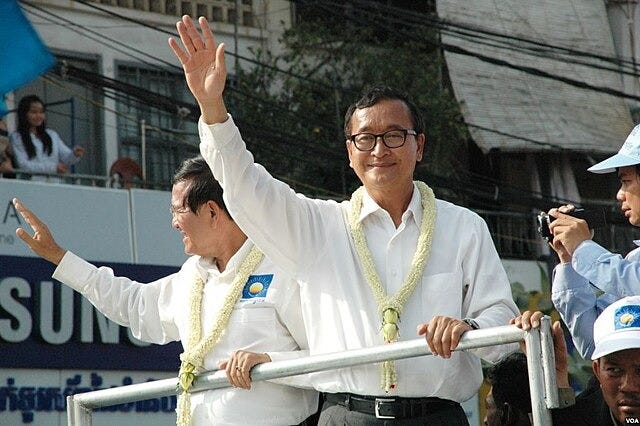
Sam Rainsy, Cambodia’s exiled opposition leader, waves to protesters in December 2013. Rainsy, a former Member of the Cambodian National Assembly, is now banned from reentering Cambodia. SOURCE: Wikimedia Commons.

Just last December, an environmental journalist reporting in Siem Reap province — where Angkor Wat is located — was shot dead by gangsters. Land issues, deforestation, and land grabbing are all dangerous issues. Some journalists have been threatened. Some have been physically attacked.

DP: Now, let’s shift toward China. Cambodia and China have had a long relationship that’s grown stronger over the years, with many cooperation agreements between Cambodian outlets and Chinese state media. What does this relationship look like in practice? Are you seeing Chinese content appearing in Cambodian media, or narratives from China being echoed?

NV: From my observation, the Chinese government plays an active role and extends its influence through different actors — not just through direct government channels, but through collaboration with Cambodian tycoons who, like Kith Meng, operate major media outlets. Meng operates three large television stations in Cambodia. These stations never amplified the voices of vulnerable people — especially those affected by the hydroelectric dam he operates with Chinese and Vietnamese companies. This is one way China extends its power and influence: through business sector collaboration.

NICE TV operates as a joint venture between Cambodia’s Ministry of Interior and Chinese investors. The station was initially announced in 2015 with backing from China Fujian Zhongya Culture Media Company (福建中次文化傳媒有限公司). However, by its 2017 launch, the Chinese partner was identified as NICE Culture Investment Group from Guangxi.

DP: With our platform, Lingua Sinica, we’ve tracked at least 33 partnerships between Chinese and Cambodian media — mostly Xinhua and other Chinese state outlets. But you’re describing something different: Chinese companies that do business in Cambodia but also push media content.

NV: Yes. And it goes even further. The government has also granted radio licenses to Chinese companies to operate local stations that broadcast in both Chinese and Khmer.

There’s also the Cambodia-China Journalists Association, which is co-chaired by Cambodian and Chinese journalists. Through this association and other channels, the Chinese government provides many opportunities to Cambodian journalists — training programs, conferences, and sponsored trips to China. Chinese government narratives get channeled into the region this way. Regional journalists are constantly invited to cover events in China and to speak at summits as prominent figures.

DP: We’ve traced a lot of Chinese-language media in Cambodia. Can you tell me about domestic Chinese-language media there? Do you think they’re serving the Chinese diaspora community?

NV: That’s a good question, but honestly, we have very little information about these Chinese-language media companies — especially their influence on the Chinese community in the country.

What I can tell you is that the Chinese and Cambodian governments have been working together on media capacity building. The Ministry of Information has partnered with China to train local journalists and provide technical assistance on digital infrastructure. This is another form of influence.

According to studies by Taiwan’s Doublethink Lab, Chinese influence in Cambodia operates through four channels: politics, foreign affairs, media, and economics. Media is a significant part of this influence. But regarding the Chinese-language outlets specifically, local organizations and researchers have been largely silent about their practices and impact.

DP: When you look at the Chinese presence in Cambodia, all the cooperation agreements and training programs, what does it mean for the information environment that ordinary Cambodians are getting? Is there any possibility for them to access balanced information on China?

NV: Because so many journalists are invited to attend and report on Chinese events — often through associations that promote Cambodia-China trade — that content dominates the information landscape.

The situation is made worse by the lack of independent media. Independent outlets play a critical role by producing content that offers different perspectives and analysis. Cambodian journalists used to scrutinize both the government and Chinese investment. They would point out that while China invests heavily in infrastructure, the quality often isn’t very good, whereas Japanese investment in Cambodia tends to be more sustained and higher quality.

Now there’s a lot of one-sided content favorable to China.

As for finding balanced information, this is a major challenge. The information landscape is dominated by narratives shaped by Chinese influence in Cambodian politics. Even academic institutions receive funding from China, which affects the research they conduct. When you try to find information about China’s influence in Cambodia or issues like Taiwan, it’s very difficult to find balanced reporting.

Independent Outlet Forced to Shut Down

AllAboutMacau (論盡媒體), an independent news outlet that has been serving the Macau community since 2010, announced on October 30 that it would cease operations on December 20, following the government’s revocation of its publishing license.

The closure reflects Macau’s tightening press restrictions since the territory expanded its national security laws in 2023. The crackdown mirrors similar patterns in Hong Kong, where authorities have systematically dismantled independent media under national security provisions. The outlet said it would release its final print magazine, issue 150, this month, while its website and digital platforms will cease operations in December.

In their farewell message, the outlet revealed that since October 2024, authorities have barred its journalists from accessing the Legislative Assembly and official events for news coverage. In April 2025, three journalists were denied entry to the legislature and now face possible criminal charges related to that incident. The Press Bureau of Macau informed the outlet in October that its publication registration had been revoked, citing non-compliance with the legal requirements under the Publication Law.

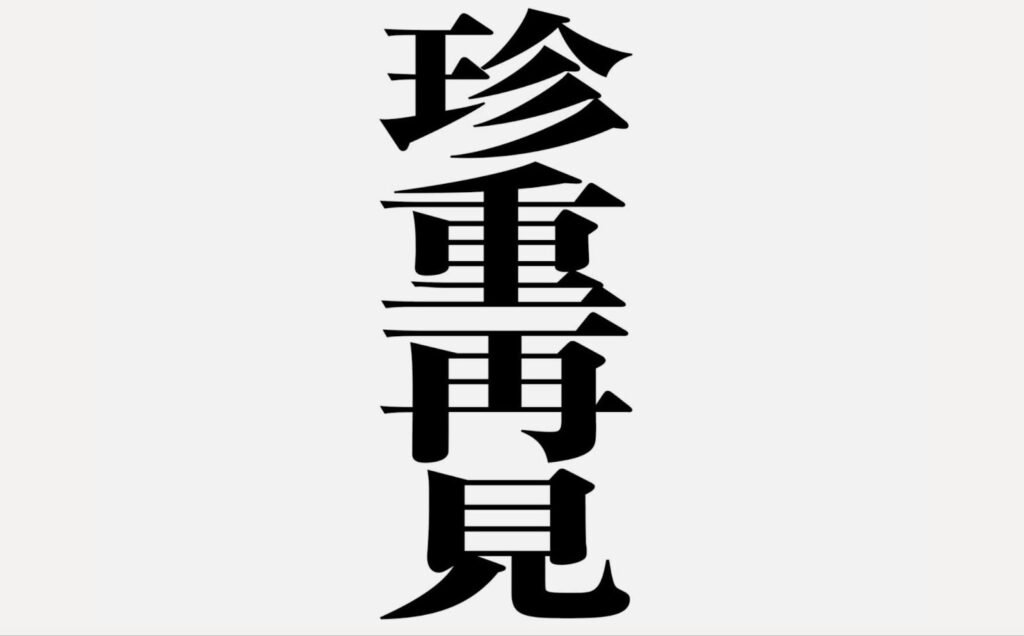
“Farewell, take care,” reads the solemn message in AllAboutMacau’s announcement of its closure. 

After the Layoffs

By Hsu Chia-Chi | Edited by Jordyn Haime

Liu I-lo remained buried in journalism work, even on the eve of being informed of the layoffs at WHYNOT, or Wainao (歪脑), the Chinese-language platform launched in 2017 under the US-run Radio Free Asia (RFA) news service.

“In our final breath, we rushed to get a lot of articles out, publishing what we could. In the last two weeks, we hurried to process all contributor payments, kept phone numbers active so writers could continue receiving payments — and we made our best effort to ensure we compensated for unpublished pieces,” he recalls. “We self-funded our SOPA submissions to completion,” he added, referring to the prizes for journalism excellence given each year by the Society of Publishers in Asia.”Even in the worst-case scenario that we were completely destroyed in the end, there were awards to win. What’s more, we did our job well, whether keeping pace or speeding things along.”

Liu was not alone. For many journalists at RFA and Voice of America (VOA), the last few months have been particularly difficult. It hasn’t just been about losing journalism jobs, but about the journalistic values they were able to practice at these outlets — and facing the possibility of having no real place to exercise those values again, or even lacking the capacity altogether.

Beginning in March 2025, the funding for multiple media outlets under the US Agency for Global Media (USAGM) – the independent U.S. agency that has funded media broadcasters like RFA and Voice of America (VOA) — was abruptly frozen. VOA, which primarily broadcast to East Asia, laid off nearly 100 people, while RFA underwent massive layoffs, with most staff placed on unpaid leave without work authorization. As of August, only 81 employees worldwide remained employed, with most programs suspended.

For this article, we spoke with multiple journalists who worked in various departments and positions at RFA. They discussed how they faced the sudden news of dismissal and how they have contemplated concerns about the future since, from the perspective of their personal lives as well as their journalistic values. Given ongoing professional considerations, the three sources agreed with Tian Jian to speak anonymously. They are identified here as Chen Mai, Jhou Sin, and Liu I-lo.

Project Layoff

In late November 2024, just after Donald Trump was elected to the presidency, USAGM internal staff were all discussing “Project 2025,” a policy blueprint prepared by the Heritage Foundation, a conservative American think tank. An entire chapter in this 900-plus-page document discussed the “reform” of public media, including USAGM’s overseas broadcasting.

Jhou Sin, a former employee of RFA’s Cantonese service, said in an interview that employees knew as early as late 2024 that there would be personnel reform after the election. No one expected mass layoffs.

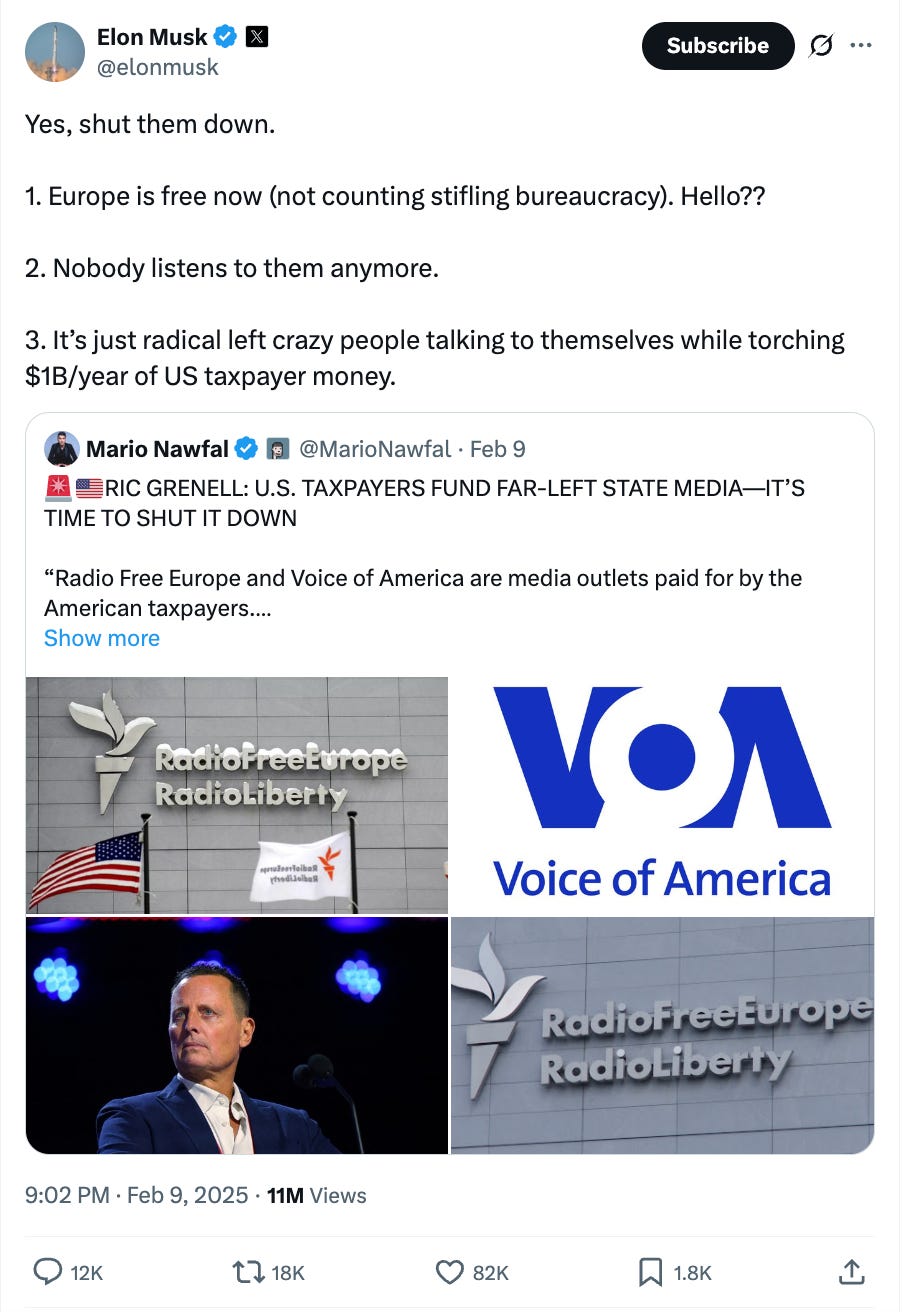
“We vaguely knew Trump would ‘reform’ us after taking office, but we didn’t know what methods would be used. Everyone could only guess, thinking that VOA and RFA might merge, or that the Mandarin and Cantonese services might combine,” said Jhou. But soon after, Elon Musk, then head of the Department of Government Efficiency (DOGE), criticized USAGM on X. Shortly after, DOGE took over USAGM, and waves of budget freezes, unpaid leave, and batch layoffs followed.

Layoffs at USAGM organizations came days after Elon Musk, then head of DOGE, criticized RFA and VOA on X.

Liu I-lo’s recollection is similar to Jhou Sin’s. At the time, the company made employee retention decisions based on various labor laws and visa statuses in different locations and bureaus, trying to maximize protection of employee interests. Each individual’s situation was different, but with operating funds shrinking by the day, there was no other choice but to make increasingly poor decisions.

“Most DC colleagues were furloughed, overseas staff at the time didn’t know what would happen, contractors had their contracts immediately terminated, our part-time colleagues were suspended one after another, colleagues in the UK and Canada were also laid off, followed by major layoffs at the Taipei office,” Liu recalls.

“This is what being a journalist is. Even if the sky falls, you have to do reporting.”

During those months, Liu said, although RFA was still operating, management became increasingly sensitive about certain types of content.

“When we saw news about USAID being heavily targeted, everyone already knew we shared the same vulnerabilities,” said Liu. “Those non-profits funded by USAID — we initially tried to report on them. But these pitches were rejected by upper management. Because you knew you would be next. So actually many ideas in the editorial department were rejected by upper management.”

Other topics of concern to target audiences, including human rights, gender, and geopolitics, were also often softly rejected by senior management. As ideological lines became clear, many articles and videos already published were “temporarily removed,” as management explained. For other topics in planning or already in progress the phrase was “publication postponed.” Liu recalls that during that time almost every weekly editorial meeting involved trying different approaches to softly resist — this being a tactic generally associated with more repressive environments like that in Hong Kong.

“You have to think, USAID has humanitarian crisis-level funding under it. If [the U.S. government] doesn’t even care about that, why would it care about small-scale matters like ours?” Liu said.

Subsequently, waves of unpaid leave and batch layoffs began. Liu I-lo recalls that after colleagues were informed of layoffs, they were constantly busy with various forms of administrative cleanup. “This is also what being a journalist is,” he said. “Even if the sky falls, you still have to do reporting. Suppose the Earth is going to explode tomorrow, would you do a report today?”

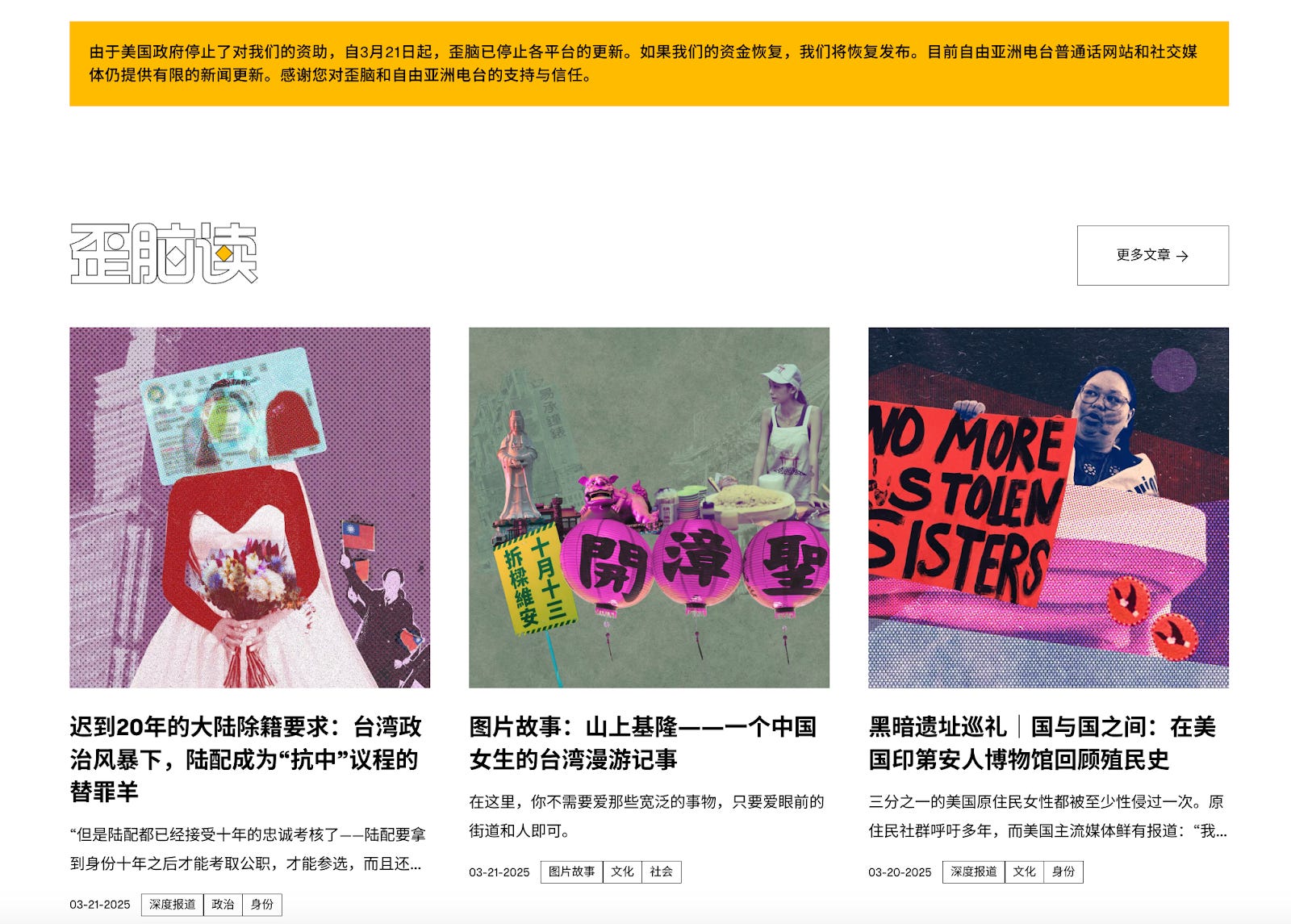
On March 22, WHYNOT was the first outlet within the agency to shut down. On social media, they published a farewell message: “WHYNOT’s website and social media will stop updating on March 22 and 24, respectively; the website and social media can continue to be viewed normally until further notice. We look forward to reuniting with all WHYNOT readers when the skies clear after the rain.”

A message on WHYNOT’s website states that it has “stopped updating on all platforms due to the suspension of US government funding.”

The Cantonese service, where Jhou worked, announced its closure on June 30 and stopped updating on July 1.

“I feel I have already earned three months more than others, not earning money, but earning time,” Jhou said. “Being pessimistic, I knew I would definitely be laid off; it was just a matter of time. At first, I felt confused, but later I gradually adjusted to doing whatever I could. We wanted to be the last group to close the door, and if it really had to end, then we wanted to end it decently.”

RFA was formally established in March 1996, its mission to “broadcast news and information to listeners in Asia who are otherwise denied access to full and free information.” This was nearly seven years after the Tiananmen Square massacre, which had ushered in a period of renewed press control in China — even as the economy was expanding and the Internet revolution just around the corner.

The Cantonese service of RFA was established two years later, in 1998, soon after the transfer of Hong Kong’s sovereignty to the PRC under the “one country, two systems” formula. Protections for press freedom in the territory continued to make it an ideal space for local language journalism that could be broadcast across the region, even reaching audiences across the border in Guangdong.

The situation changed dramatically with the passage of Hong Kong’s National Security Law in 2020. As many local journalists from such media as Apple Daily and Ming Pao were purged by the Hong Kong authorities, RFA’s Cantonese service became an increasingly popular source of news for Hong Kong people.

“With the anti-extradition movement, the National Security Law, and the departure of [journalism] colleagues from Hong Kong, the Cantonese service has experienced a lot of turbulence in recent years,” said Jhou. “But even under so much turbulence, everyone still produced strong reports.”

Yielding to China

Chen Mai worked as a designer at RFA and was also laid off in May 2025. Born in Hong Kong and currently living in Washington, D.C., he has already started looking for a new job.

Chen joined RFA in 2019 and contributed to many major digital feature productions, including several award-winning reports.

“Coming to RFA was quite important for me at the time. The feeling then was, ‘we can make something important,’ which somewhat alleviated my political depression,” said Chen, referring to his emotions around the direction of Hong Kong.

Having come to America just a few years ago and now facing layoffs, he still believes he ultimately had to leave Hong Kong. What is more difficult is seeing other colleagues who are stuck due to issues with their immigration status.

Chen added that RFA has multiple language services, including Cantonese, Tibetan, and Uyghur services, and that “those in the most difficult situations are employees who have worked for years in these small language services.” Not only do they face issues with their visa status, but it is also difficult for them to find new jobs in the short term, with some still hoping the outlet might restart operations.

There has been no sign that will happen — even as many argue that the loss of the services is to the detriment of press freedom globally.

After RFA stopped receiving funding in March, CEO Bay Fang said: “The termination of RFA’s grant is a reward to dictators and despots, including the Chinese Communist Party, who would like nothing better than to have their influence go unchecked in the information space.”

Former US Ambassador to Russia Michael McFaul, a former MSNBC commentator and Washington Post columnist, similarly described the cuts as “giant gifts to China,” with people in Hong Kong, Tibet, Xinjiang, and elsewhere now receiving a diminishing volume of information about human rights from outside sources.

Jhou Sin believes the US government certainly has its own considerations in terms of RFA and VOA content and its goals, but at the very least, USAGM regulations guaranteed editorial independence and editorial oversight, which meant substantial resources going to media that had a duty to professional reporting. “In comparison, other diaspora media don’t have such resources,” said Jhou. “Thirty minutes of daily programming, lots of features and commentary, and a high-frequency of updates on social media.” These had an appreciable impact on the news environment in Hong Kong, he believes, and he said he could foresee that after the end of RFA, the flow of news in Hong Kong could decrease significantly.

“Bay [Fang] was right, this is the biggest gift to the CCP. With the end of the Cantonese service, I also believe Hong Kong’s pro-government media may increase their propaganda efforts,” Jhou said.

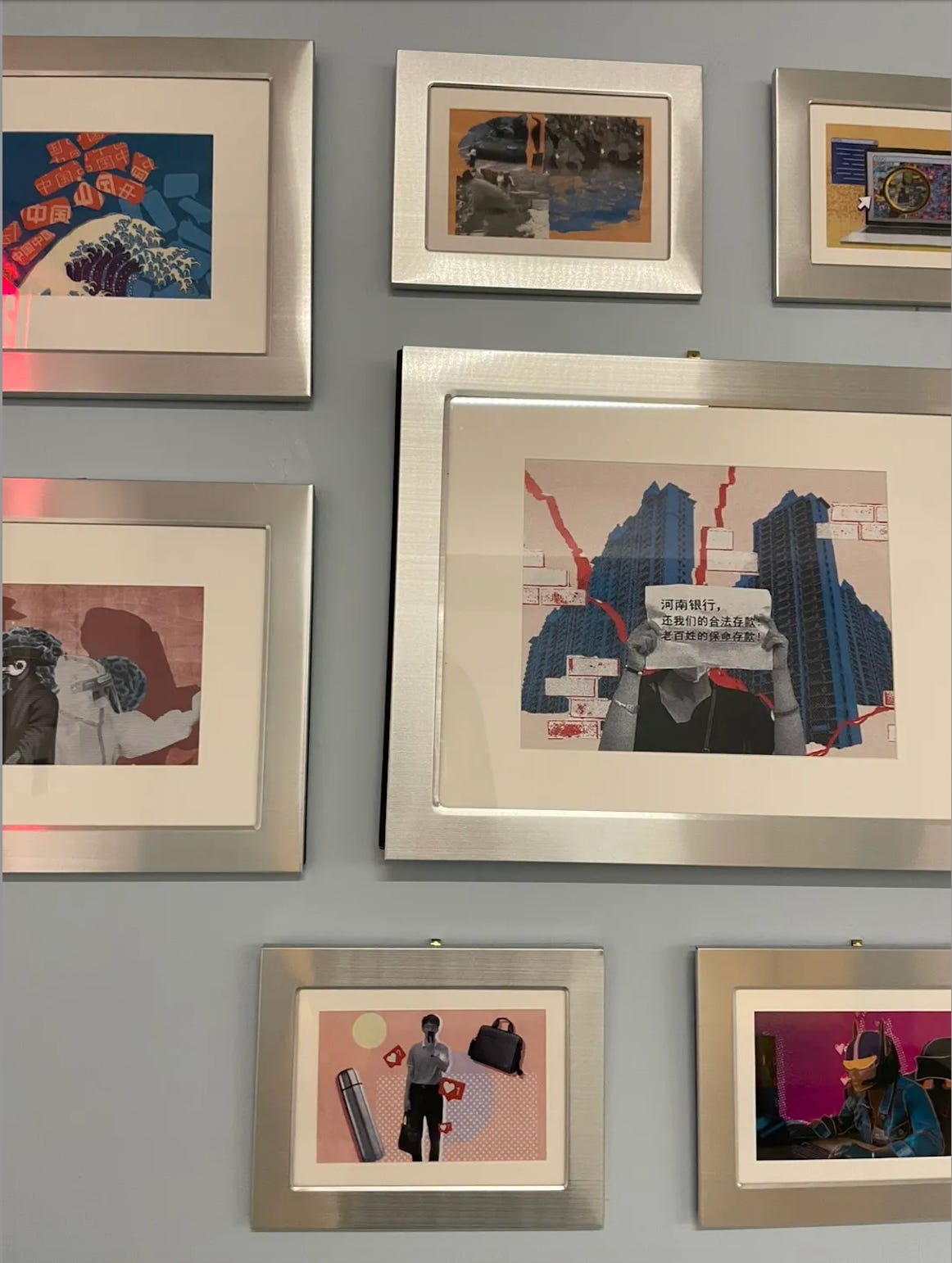
The WHYNOT office contains several framed images from past stories. Photo by Xu Jiaqi.

Of course, many in the region have also criticized journalists working at RFA and VOA for taking US government money and producing what they deem to be propaganda for “foreign hostile forces” — a phrase China has long used to broadbrush critics as conspirators.

“This matter itself is quite strange,” Liu said in response to those criticisms. “If I could write my reports without constraint in China and Hong Kong today, would I still need to go [to RFA]?”

“Critics will say that everyone is just issuing American meal tickets, thinking they’re doing good deeds, but under the entire world system as led to date by America, these articles are nothing more than cups of water trying to put out a burning cart of firewood,” said Liu, referring to efforts by Western-funded Chinese-language media organizations to fill the void left by the collapse of independent journalism in China. “For me, there’s nothing particularly special about this so-called [criticism]. It’s just whether a piece of reporting can be done well, whether there’s sufficient space to do it. Because Chinese-language media is now in a state of collapse, but if it can stir up even a small ripple, then it’s worth doing.”

Continuing Resistance

After his work at RFA ended, Liu interviewed everywhere — mainly for visa reasons. He didn’t limit himself to journalism, applying for jobs at convenience stores, sushi restaurants, and retail shops, and for restaurant server and sales representative positions.

No more journalism? He admitted that a senior Chinese-language journalist and editor’s resume is completely useless where he currently lives.

“I was targeted by the government before; now I’m being targeted by the government again.”

“When I looked for work, asking where they needed servers, saying I could speak Chinese and English, and Cantonese too, they said ‘very good, very good,’ but they didn’t have time to train me and needed someone with experience. This is a vicious cycle — how can I gain experience if I need it to land a job in the first place?”

He started by calling a local Chinese-owned sushi restaurant. “The boss was from Fuzhou and immediately said a lot of discouraging things — babbling on about how the hours here are long, no one will teach you — and then had me start helping in the kitchen. The boss was indeed willing to teach me: cutting avocados, cutting mangoes, peeling the thin skin off imitation crab. I worked this job for a few days. Then one day, I got the time wrong and was fired immediately.”

Following this experience, Liu edited his resume, removing the content about his past roles as a “senior journalist” and replacing it with restaurant kitchen experience.

“The funniest thing was, I used my previous journalist resume to apply for a staff position at a store, asking if it could be passed to the manager. There was no reply. Later, after editing a new resume, I saw that store again, applied again, and this time got an immediate reply.”

For now, Jhou Sin doesn’t need to worry about visa issues. But his life has descended into a state of confusion — as he finds it difficult to engage with issues around him.

Jhou Sin has felt uncertain about the future since his layoff from RFA. Photo by Jhou Sin.

“Before, I spent so much time every day desperately thinking of story ideas, proactively reading different news sources,” he said. “Now I have no motivation left. I wake up and barely read the news, just casually browse, because there’s no goal to aspire to. Why come up with story ideas anymore? So instead I feel somewhat empty.”

This is not the first time Jhou has experienced unemployment. The first time was when he was working for local media in Hong Kong.

“I was targeted by the government before; now I’m being targeted by the government again,” Jhou said. “The first time I lost my job, I thought I didn’t want to work in this profession anymore. That sense of powerlessness was strong. But at that time, my current supervisor used his silver tongue to convince me to come work here [at RFA]. It wasn’t easy then to pick up my enthusiasm for journalism again, and now once again it has to end. That old sense of powerlessness has returned.”

Chen Mai is job hunting now, too. Compared to other American cities, Washington, D.C. has more severe unemployment issues due to massive layoffs across government agencies. He is contemplating whether he should change fields or continue to work in the media.

The experience has served as a reminder not to self-censor due to political pressure.

“My point is that we absolutely cannot censor ourselves, cannot modify content according to readers’ preferences or interviewees’ partiality, and cannot self-censor because of pressure from above,” Chen said. “I experienced all of this at RFA, but even if you are subject to political censorship, you cannot rationalize this. You need to resist. You need at least to debate.”

“Once we become submissive, thinking that [accomodation] can protect us, we still get targeted in the end,” Chen added. “And being targeted has nothing to do with content actually having an issue. All these compromises are irrational and will only make you less like a news organization.”

Regarding journalism work, Liu I-lo stands by his professional record. “I’m confident that everything that came from my hands was professional work. I never considered RFA to be American propaganda. Even if that was the goal, we would make an effort to resist.”

At the Society of Publishers in Asia (SOPA) awards ceremony in June, WHYNOT won two awards, adding to its count. A report about detained Chinese journalists Wang Jianbing (王建兵) and Huang Xueqin (黃雪琴) won the award for excellence in human rights reporting, while a series on the 35th anniversary of the June 4th Incident won first prize in news innovation. Because the editorial department had long since ceased operations, however, no one appeared that day to accept the awards in person.

Hsu Chia-Chi is a journalist focusing on political, cultural, and human rights issues in Taiwan, Hong Kong, and China. She previously worked for WHYNOT.

The Chinese-language version of this article was first published at Tian Jian.

The Witness Launches Funding Drive

The Witness, a Hong Kong legal journalism outlet established in 2022 by former court reporters, launched an online store on August 17, 2025, using a pay-what-you-want pricing model for books, bags and other merchandise. The funding mechanism allows the publication to sustain operations while keeping all court reporting freely accessible to readers.

The store represents one of the latest attempts to maintain independent legal journalism in Hong Kong’s increasingly constrained media landscape. Since 2019, press freedom restrictions have forced the closure of multiple news outlets and prompted the departure of numerous court reporters, leaving many legal proceedings without media coverage and limiting public access to information about cases affecting civil liberties.

The Witness (法庭線) specializes in documenting trials, hearings and verdicts in Hong Kong courts, with particular focus on human rights cases and matters of public interest that receive limited attention from other outlets.

The Points Media Appeals for Support

Overseas Hong Kong media outlet The Points (稜角媒體) posted on social platforms earlier this month that it has 55 days (to the end of September) to achieve financial stability or it will otherwise be forced to cease publication. The outlet appealed to readers to become Patreon members and offer support.

According to a work report (工作報告) issued for the first half of this year, the outlet’s income comes chiefly from reader donations, with current accumulated losses of HK$140,000, or just under 18,000 dollars. The outlet has set a fundraising target of HK$250,000, and hopes to gain 650 paid Patreon members. Patreon membership options include monthly plans of HK$5, HK$20, and HK$50 (.6, 2.5 and 6 USD).

The Points was founded in January 2023 by a group of journalists, including Jane Poon (潘麗貞), who served as editor-in-chief until the following year, when the position was taken on by Carmen Wu (胡凱文), a former anchor and reporter for i-CABLE News and the Cantonese desk of Radio Free Asia (RFA).

Persisting in Print

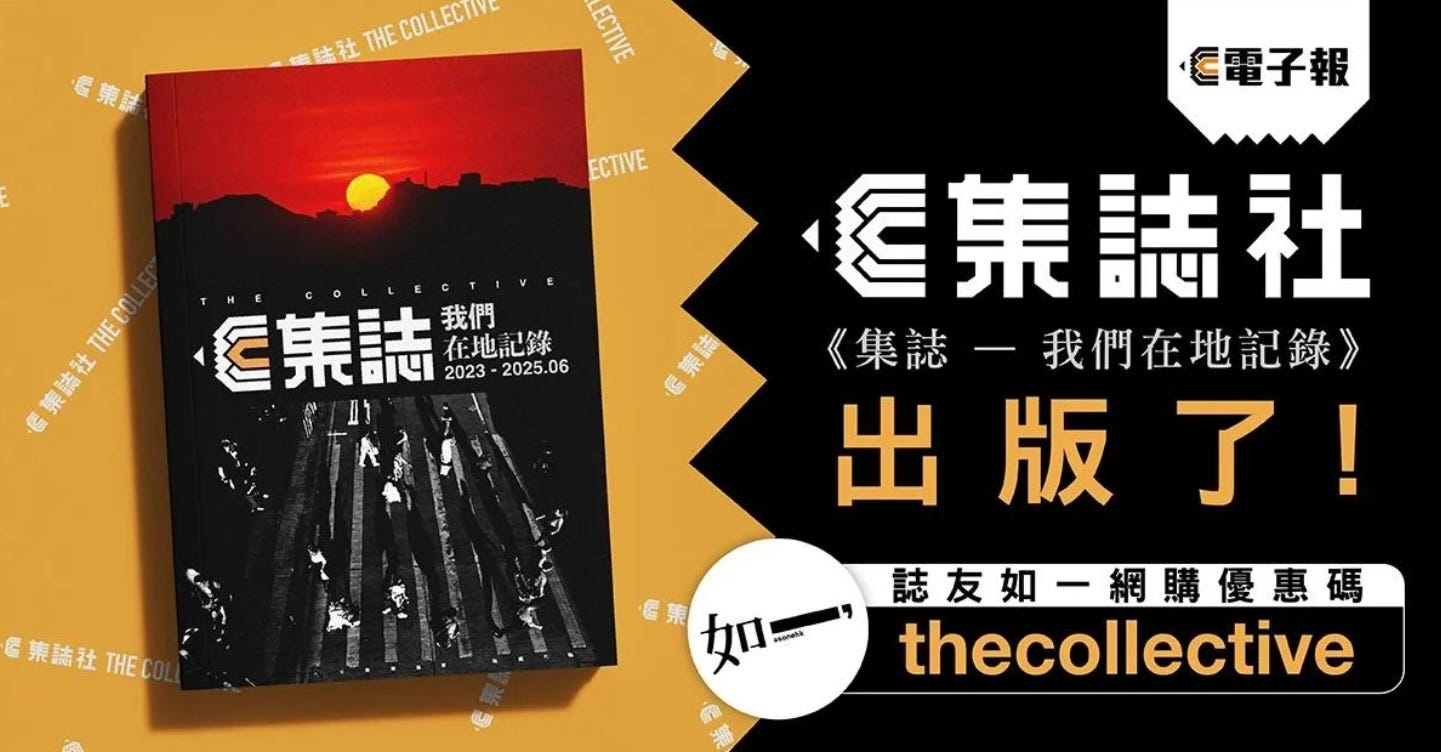
Two independent Hong Kong media organizations have recently published new books, a show of quiet resilience under the territory’s national security law restrictions. The Witness (法庭線) released How to Do Court News (法庭新聞怎麼做?) on July 15. The volume, which features more than 50 notes from the editor and previously unpublished reporting journals, follows the outlet’s earlier book Public Understanding of the Judiciary (公民司法認知). The Collective (集誌社) news outlet also published its inaugural book, The Collective: Our Record (集誌——我們在地記錄) in early July. The book collects 30 selected reports from the past two years, reflecting the outlet’s mission to “monitor the powerful, care for the disadvantaged, [and] record the post-movement era.”

Weaponizing Audits

Last month several figures in Hong Kong’s media spoke out about an apparent new tactic being used to curtail the activities of independent media and journalists. Since November 2023, at least six outlets and around twenty journalists have faced tax audits spanning seven years, with demands totaling over HK$1.7 million, or more than 200,000 dollars. The targeted outlets include InMedia (獨立媒體), The Witness (法庭線), ReNews, Boomhead, Hong Kong Peanuts (香港花生), and the Hong Kong Free Press.

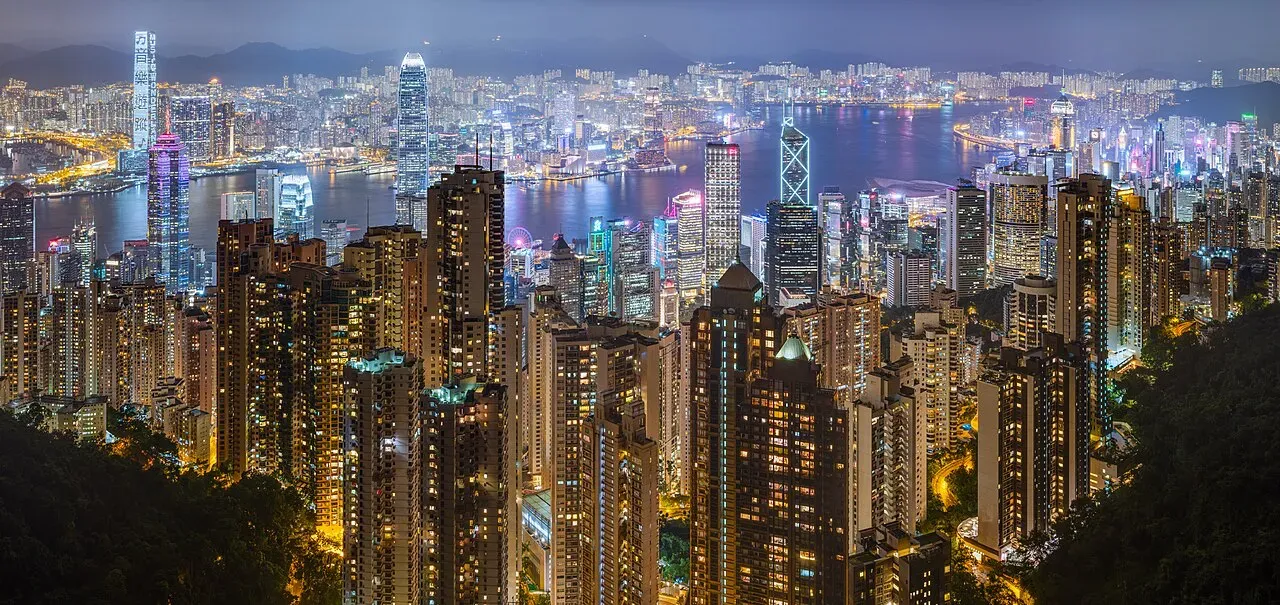
The Hong Kong skyline from Victoria Peak. SOURCE: Wikimedia Commons.

Tax authorities made errors and “strange, unreasonable claims,” including auditing one outlet for a year before it was established and asking a journalist to pay profits tax for a nonexistent company registration number. Inspections also extend to family members, including both parents of journalists’ association chief Selina Cheng (鄭嘉如). Hong Kong Peanuts host To Kwan-hang (陶君行) revealed that virtually all hosts, including Wong Ho-ming (黃浩銘) and Chow Ka-fat (周嘉發), received audit demands.

While the Inland Revenue Department (IRD), the territory’s tax collection authority, maintains that the “industry or background of a taxpayer has no bearing on such reviews,” the unified actions appear to be a form of bureaucratic censorship designed to exhaust the operations of independent media. Similar tactics have been used by authoritarian governments in Russia and Turkey, where punitive tax audits and financial sanctions have sought to control press activities. The approach would mark a new development in Hong Kong’s media landscape.

For many in the Hong Kong indie media space, the IRD’s insistence that they were “randomly selected” for a probe is difficult to swallow. “I can count all of Hong Kong’s non-government aligned digital media outlets on two hands,” Hong Kong Free Press founder Tom Grundy told Lingua Sinica. “Most are under tax audit simultaneously.” Grundy emphasizes that his outlet has insisted throughout its ten-year history on “meticulous record-keeping,” but notes that handling the audit “has diverted resources, manpower and funds away from journalism.”

The IRD audit of the Hong Kong Free Press comes one year after the outlet was selected — “randomly,” it was told — for a rare inspection from the Companies Registry, the city’s official business registration and company records authority. “We’re so lucky, perhaps we should put some numbers on the lottery,” Grundy said.

“C” is for Closure

Hong Kong online media outlet Channel C, an independent site founded in July 2021 by former journalists from Apple Daily (蘋果日報), ceased online updates more than a week ago, on April 23, as its 29 editorial staff halted work over unpaid wages and benefits. Channel C’s troubles deepened in mid-April after owner Chen Zhixing (陳智行) was arrested for allegedly defrauding a government loan program of HK$12 million.

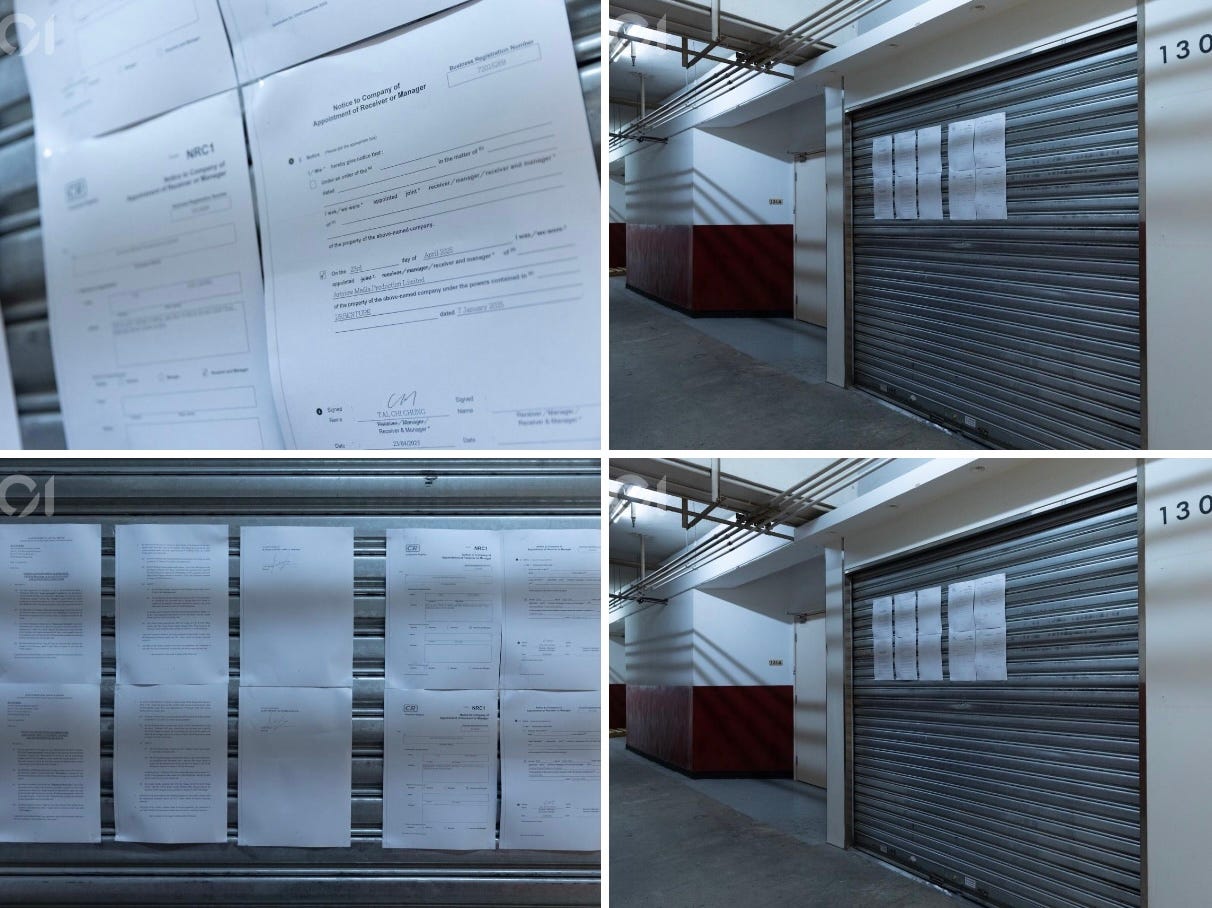
Reporting on the story, the news outlet HK01 included images of a takeover notice posted by a creditor, JL Investment Capital Limited, outside Channel C’s shuttered Kwai Hing office on April 25. According to HK01, the debt holder had offered HK$100,000 monthly, or just under 13,000 US dollars, to allow Channel C to maintain operations. But this fell far short of the estimated HK$470,000 required monthly to sustain full staffing, and the outlet’s staff reportedly rejected this proposal, which they said showed no sincere long-term commitment to quality journalism. Channel C’s parent company, Artview Production Limited, has had its accounts frozen since mid-April.

Takeover notices posted outside the offices of online media outlet Channel C last month.