Tag: Misinformation

Attention Hogs

News&Market (上下游新聞), a niche Taiwan media outlet focusing on agriculture and environmental issues since 2011, found itself embroiled in controversy over social media framing after posts on Facebook promoting its relatively balanced coverage of Taiwan’s first African swine fever outbreak in seven years triggered allegations of bias in favor of the opposition Kuomintang (KMT) party — and escalated into questions about its financial backing.

The controversy began when News&Market’s social media posts framed its outbreak coverage in ways critics saw as deflecting blame from KMT officials currently leading the local government in Taichung, where the outbreak was confirmed on October 21. One Facebook post asked: “Is Taichung really the outbreak’s source? The answer isn’t that simple.” While the underlying reporting examined systemic failures across both local and national governments — ranging from inadequate enforcement of food waste sterilization to gaps in veterinary care — the social media packaging triggered allegations of bias as it seemed to give Taichung officials a pass and lay blame instead on the national government, currently run by the Democratic Progressive Party (DPP). As skepticism grew online, users questioning the perceived slant began probing the outlet’s funding sources. In Taiwan’s divisive political environment, KMT alignment can often be perceived by “pan-green” DPP supporters as simply pro-China.

The outlet denied allegations of Chinese funding on October 30, saying its operations are supported by “small donations and market product sales.” Risking further speculation, however, it has so far not provided financial data or verifiable documentation of these revenue sources.

The case is a sobering illustration of how intentionally viral social media posts about the news — regardless of its actual reporting quality — can lead to an outbreak of questions about credibility, especially against a backdrop of political divisiveness.
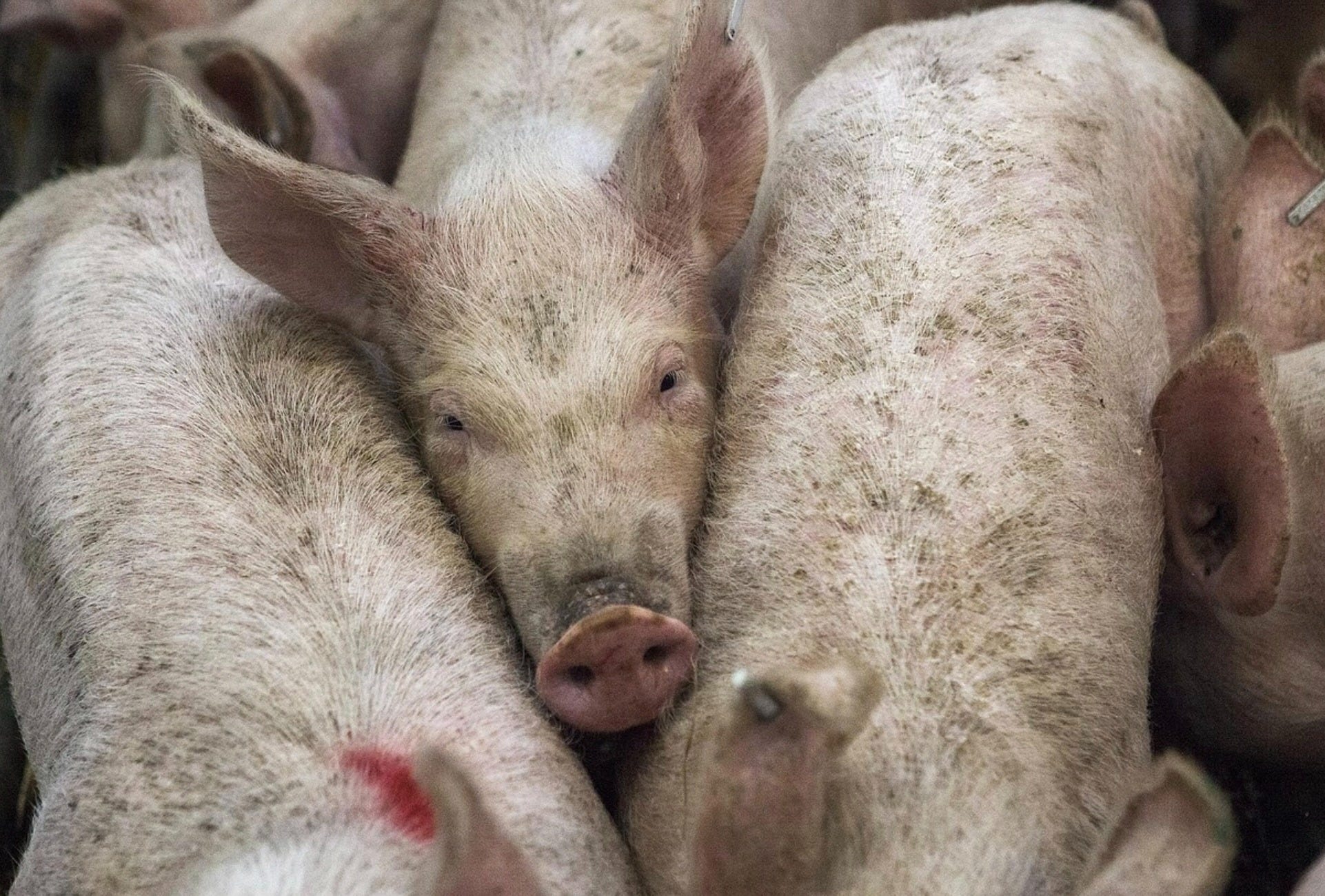
Taiwan’s first African swine fever outbreak in seven years in late October sparked controversy over coverage by News&Market, a niche outlet focusing on agriculture. For illustrative purposes only. SOURCE: Pixabay.

Talking Heads in Taiwan

A Japanese scholar accused the China Times (中國時報) of fabricating his analysis of the results of the leadership election for Taiwan’s opposition Kuomintang (KMT) party. Yoshiyuki Ogasawara (小笠原欣幸), a political scientist and honorary chair professor at National Tsing Hua University who specializes in Taiwan politics, posted his analysis on Facebook on October 22 after Cheng Li-wen (鄭麗文) won the KMT chairmanship with just over 50 percent of the vote. Multiple media outlets in Taiwan reported Ogasawara’s commentary, but the scholar singled out the China Times for distorting his remarks.

Ogasawara publicly detailed the discrepancies on October 23, noting that the China Times had transformed his characterization of Cheng’s clearly pro-China line (明確的親中路線) into language instead emphasizing “historical-cultural continuity” (歷史文化的延續). He alleged that the newspaper had fabricated entire quotes that he never wrote, including claims about the party “rebuilding confidence” (重建自信). Ogasawara demanded that the matter be addressed as a matter of professionalism. “If the China Times still has media self-respect,” he said, “please make corrections.” The China Times subsequently deleted the article, but to date has not issued a correction.

Japanese political scientist Yoshiyuki Ogasawara. SOURCE: UpMedia

Disaster Distorted

The overflow of a barrier lake in Hualien County on Taiwan’s central east coast amid heavy rain last month left at least 18 dead and six missing. In the wake of the disaster, cable news outlets TVBS and EBC edited the remarks of some local residents to make it seem they were attacking Taiwan’s vice president, Hsiao Bi-khim (蕭美琴). This prompted affected families to issue online statements expressing frustration over the misleading coverage. “We are a simple family impacted by the disaster,“ read a statement on Threads from the daughter of one woman appearing in the reports. “We have not taken any political position, and even more do not wish to be exploited as tools for political manipulation.”

Justice Arrives Late

Hong Kong outlet CRNTT (中評社) issued a public apology to Taiwanese director Lo Ging-zim (羅景壬), one of the creators of the recently popular political thriller series Zero Day Attack (零日攻擊), after it labelled him as a “corruption defendant” in an August news report. Lo filed a defamation lawsuit against CRNTT last month, after which the agency removed the article and issued an apology, admitting to “editorial negligence” (編輯部疏失). The false claim followed a smear campaign led by Taiwan’s opposition Kuomintang (KMT) Party that falsely alleged Lo’s team had received government funds and then failed to fulfill the terms of a contract. Company records in Hong Kong show that CRNTT is linked to the official China News Service, under the CCP’s United Front Work Department. Lo noted in a Facebook post after the apology that misinformation spreads instantly while “justice, no matter how swift, can only arrive late” (哪怕正義再快,也只能遲到).

Lo is interviewed by Taiwan’s Mirror Media in 2020.

Alibaba’s AI Bias Problem

Are Chinese-made AI models more likely to censor Chinese-language queries? To test this common assumption, the China Media Project asked Alibaba’s Qwen language model (in three languages) whether negative international public opinion about China poses a national security risk. Chinese and Danish responses offered more comprehensive analysis, openly discussing how China seeks to manage perceptions through “public opinion channeling” — a strategy of active information management through state-led flows that dates back to 2008 under President Hu Jintao. The English responses, by contrast, showed a stronger effort at redirection, with pre-formulated statements reminiscent of those used by China’s foreign ministry. “Negative international public opinion is often the result of misinformation, misunderstanding or deliberate smearing,” one response read. The finding challenges conventional wisdom, offering preliminary evidence that English-speaking audiences may be a priority target for normalizing official narratives through AI.

Read the full story at the China Media Project.

eatured image created by the China Media Project using ChatGPT. This is a fictional image, and does not show real AI chat results from Alibaba’s Qwen LLM.