

More than seven years have passed, but Thomas Boutonnet can hardly forget how things unfolded on January 24, 2019, the day he co-organized a discussion panel at the University of Strasbourg on China’s policies toward the ethnic Uyghur population in its northwestern Xinjiang region.
By then, it had been more than half a year since reports emerged of Uyghurs being detained by the thousands in re-education camps. The topic was drawing unprecedented attention from global leaders, and emollient efforts from China. That there were claims and counterclaims over this important story spoke to the timeliness of the panel — which included four European scholars, of which two were also ethnic Uyghurs.
Surely, a frank discussion could emerge in the heart of Europe, just miles from the European Court of Human Rights, on the western bank of the Rhine, at a centuries-old French university that prided itself on defending academic freedom.
But as the panel entered its audience discussion portion, the event grew tense. Given opportunities to engage, two Chinese participants in the audience instead monopolized the time, allowing the academic speakers no opportunity to respond. Boutonnet, himself an associate professor in the Department of Chinese Studies, let the exchange run for several minutes before finally stepping in. “We need to let others speak,” he said. “We have to let the discussion flow. Otherwise, it’s simply not possible.”
The two individuals — whom Boutonnet and other colleagues later identified as visitors from China’s consulate general in Strasbourg — even came with propaganda pamphlets, which they placed at the entrance to the conference room, with claims that the people of Xinjiang were prospering. “They were small booklets published by Beijing publishers,” Boutonnet said. “So they clearly came from the Chinese authorities.”
In fact, their interruptions were just the culmination of a campaign Chinese diplomats had waged for several days with the university.
First, the faculty learned, a Chinese student had come to the office of the Dean of the Faculty of Letters saying the Xinjiang event must not take place, and threatening to report the dean to the Chinese Consulate. Next came lobbying directly from the consulate to the university’s top official. “We learned afterward that the Chinese consulate had formally asked the university president to ban the academic exchange,” says Boutonnet. “The president refused.”
That refusal, academics say, is an example of the forces that should come into play to resist external pressure on academic freedom. In this particular case, the university’s president even expressed solidarity through a general email to academic colleagues. The Chinese Consulate did not respond to requests from Lingua Sinica for comment on its contacts with the University of Strasbourg.
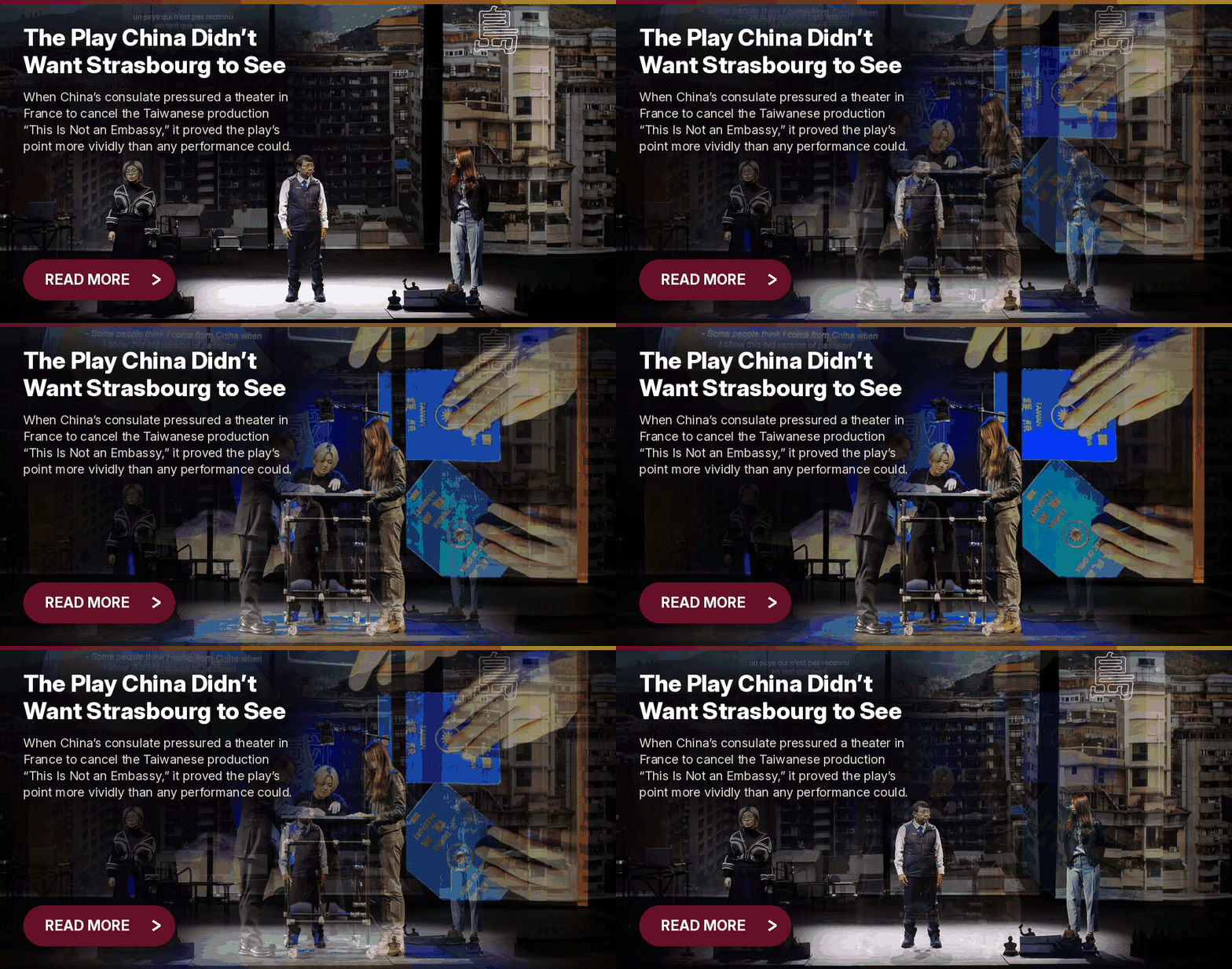
But for Boutonnet, the 2019 incident was a wake-up call. That level of direct interference in academic discussion from the diplomatic mission of another country was “something entirely new” for Strasbourg, and for France more broadly, he said. It came months before the term “wolf warrior diplomacy” (战狼外交) would be popularized to describe the more confrontational mode of engagement emerging from China’s foreign ministry, which had been taking shape through the previous year.
“So, for me, what happened was both surprising and shocking,” said Boutonnet. “Today, it would no longer surprise me, and I would probably be better prepared.”
More than seven years on, such tactics are no longer so surprising. And as the world’s second-largest economy has become an ever more important source of research funding, business partnerships, and tuition-paying international students for European universities, China has developed a growing number of levers to press its interests on campuses across the continent — from formal diplomatic complaints and legal action to the funding of academic centers and conferences.
As the panel entered its audience discussion portion, the event grew tense.
Boutonnet and many of his fellow sinologists and China specialists in Europe say they have witnessed both direct and indirect pressures growing more frequent, including a quieter set of incentives that can lead scholars to self-censor or avoid sensitive topics altogether. Across a continent that has long championed freedom of thought, expression, and scholarly inquiry, these pressures can limit discussion in ways that have the potential to seriously undermine academic freedom.
Boutonnet spoke of being “better prepared.” But what exactly are these challenges, and how can scholars, and universities, be ready to uphold their core values in the face of rising pressure? For this article, Lingua Sinica spoke with more than 30 sinologists and China specialists from across Europe, including ten early-career PRC and Hongkong scholars, to help answer these questions.
Turning Justice on Its Head
Boutonnet’s event in Strasbourg dealt with one of the core red-line issues that has provoked China’s fury on the international stage in recent years — the question of human rights and security in Xinjiang, which for China’s government is a matter of internal affairs on which all outside comment amounts to “interference.” When the European Union issued a Human Rights Day statement in December 2025 raising concerns over China’s record in Xinjiang, Foreign Ministry spokesperson Guo Jiakun called it a “gross interference in China’s internal affairs and judicial sovereignty,” and said China had lodged formal protests with the EU over the matter.
China likewise regards discussion in the academic space on this and other core issues — including Tibet, Taiwan, Hong Kong, and the Tiananmen Massacre — as a violation of the country’s sovereignty. In France and elsewhere, China’s government has tried to defend these red lines not just through diplomatic protest, but through the courts and other institutions, including universities. This has had a direct impact on scholars like Dilnur Reyhan, a sociologist born in Ghulja, not far from the border with Kazakhstan, and one of the participants in the panel organized by Thomas Boutonnet in Strasbourg.
Reyhan has taught Uyghur language and civilization for more than a decade at the National Institute of Oriental Languages and Civilizations (INALCO) in Paris, France’s leading institution for Asian and Middle Eastern studies. She is also a senior researcher at the Oriental Institute of the Czech Academy of Sciences, where her research focuses on migration, diaspora, and gender within Uyghur communities. Her published work includes a 2022 book on the erosion of Uyghur intellectual life under Chinese rule.
The crackdown on Xinjiang’s Uyghur population that began in 2017 drew Reyhan more deeply into activism. In 2019, the same year she took part in the Strasbourg panel, she founded the European Uyghur Institute, a Paris-based Uyghur research, cultural, and advocacy organization that grew out of a Uyghur student association she had led since 2009. Reyhan says the pressure she witnessed at the 2019 panel was not an isolated case. Academic events about the Uyghurs in Europe have repeatedly come under internal or external pressure to be cancelled.
Reyhan, however, has faced pressure and intimidation on a more direct and personal level too, and her experience shows how China’s government is ready to use the legal and other institutions of open societies against those who speak out.
On September 11, 2022, Reyhan took part in a protest against Chinese government policies at a Paris-area music festival. She was accused of throwing red paint on a banner held by several people from the Chinese embassy, who were staging official counter activities to a Uyghur community action on human rights violations in Xinjiang. One of the three embassy employees later alleged that it had cost him EUR 25 to have his shoes cleaned, along with the others he filed a criminal complaint against Reyhan for “degradation of property belonging to others.” Chinese officials also accused her of a “racist attack,” a charge that was later dropped.

Through a process still unclear to Reyhan, the case was reopened on appeal in June 2024, weeks after Chinese President Xi Jinping’s state visit to France, during which hundreds of Uyghurs, Tibetans, and other demonstrators had taken to the streets of Paris in protest. A hearing set for March 2025 was thrown into disarray when the Chinese embassy’s lawyer did not appear. The court rescheduled the case for October that year, when a court in Evry, outside Paris, convicted Reyhan of the property degradation charge, fined her EUR 150, and ordered her to pay one Euro in damages and interest as well as reimbursing legal fees.
Reyhan is filing an appeal of her case, but the process, she says, has already worked in China’s favor, allowing the embassy to preoccupy a vocal critic through the French legal system. “This precedent will undoubtedly open doors not only for China, but for other dictatorial regimes to do the same,” said Reyhan. “To use the justice systems of democratic countries to attack researchers and human-rights activists, further weakening democracy that is already in crisis.”
Beyond her perception that the French justice system buckled to political pressure from the PRC in her case, Reyhan is concerned about the apparent reluctance of universities to protect and speak up for academics facing various forms of intimidation. “I have worked directly or in collaboration with different French universities for more than ten years,” she said. “But when I am targeted by covert methods from a state that is almost unanimously recognized as authoritarian and that has committed genocide, these institutions have not shown courage.”
Reyhan says some colleagues at her former academic institution brushed aside her requests for support in the face of pressure, while colleagues at her current institution have told her frankly that they fear they could lose their Chinese visas and therefore access to China if they speak up too loudly in support.
Value Orientations
The reluctance to stand up for scholars that Reyhan has experienced personally is not confined to her case, but runs more broadly through university partnerships with China that are deepening across Europe.
Much of this hesitance arises from a combination of self-interest and unfamiliarity on the part of universities, rather than from any single dramatic confrontation, like the tense exchange in Strasbourg. Universities often weigh the benefits of engagement with China, the risks of jeopardizing existing relationships, the promise of international student enrollment, research partnerships and so on in the context of limited understanding of how the Chinese political system actually operates.
The incentive to engage with Chinese universities can be strong. In the QS World University Rankings, a widely cited annual ranking based on measures like research citations, faculty reputation, and international collaboration, five mainland Chinese universities now place in the global top 50, led by Peking University at 14th and Tsinghua University at 17th (right behind Cornell). Those rankings largely reflect research output and academic reputation, not the climate for open inquiry on campus.
On the Academic Freedom Index, maintained by researchers at Friedrich-Alexander-Universität Erlangen-Nürnberg and the V-Dem Institute at the University of Gothenburg, China ranks among the bottom 10 percent of all countries assessed. The index, which draws on assessments from more than 2,300 country experts, rates 179 countries and territories across five measures: freedom to research and teach, freedom of academic exchange, institutional autonomy, campus integrity, and freedom of academic and cultural expression. On the index’s most recent update, China sits alongside Iran, Myanmar, and North Korea among the world’s most restrictive countries for academic freedom.
These findings should concern universities exploring partnerships and exchanges. But studies by the Slovakia-based think tank Central European Institute of Asian Studies, which maintains an Academic Engagement Tracker, found that most European higher education institutions do not conduct adequate risk assessments when working with Chinese partners. Adding to the challenge, the latter can be diverse in nature, ranging from Confucius Institutes, Chinese government-funded language and culture centers hosted on campuses, to teaching universities, technical schools, think tanks, and private technology companies — many of which have definite, but publicly undefined, links to the state.
Generally, experts say, there needs to be greater awareness at the university level in Europe about the challenges facing academic freedom inside China, which have worsened particularly under Xi Jinping. At the Chinese Communist Party’s major congress in 2017, Xi revived a Mao-era formulation expanding control over all spheres of Chinese life, including education. “Party, government, military, society, and education — east, west, south, north, and center,” said Xi, “the Party leads everything.” The line, which was written into the Party’s charter, has been read by China scholars in Europe as emblematic of a broader effort under Xi to reassert Communist Party authority over Chinese institutions, including universities.
The incentive to engage with Chinese universities can be strong.
“Not all academic cooperation with China is problematic, but Greek universities often underestimate the political and institutional control that the Chinese Communist Party exercises over Chinese higher education,” says Konstantinos Tsimonis, an assistant professor in Chinese politics at Panteion University in Greece. “Unlike universities in liberal democracies, Chinese universities operate under direct Party oversight, affecting governance, staff appointments, curricula, and access to research.”
According to Tsimonis, this creates two principal risks that Greek scholars have already experienced. The first is to research security. Collaboration in sensitive fields can enable the transfer of knowledge, data, or dual-use technologies within a system closely aligned with state priorities. The second is the risk to academic freedom itself, which can take shape either through self-censorship by Greek academics seeking to preserve institutional partnerships, or through direct pressure from Chinese diplomatic representatives and affiliated actors.
The latter pressure, the drive to preserve institutional partnerships, can in fact be cultivated by China through the close intersection of diplomatic and ostensibly academic activities. One recent example in the case of Greece is the formation in 2023, at China’s urging, of the Center for Chinese and Greek Civilizations (中希文明互鉴中心), a cooperative consortium bringing four Greek universities together with Southwest University in Chongqing at the urging of the Chinese Embassy in Greece, and high-level CCP support.
While presented as an educational collaboration, the center is framed in diplomatic terms, its name a reference to the civilizational politics introduced in 2021 by Xi Jinping as part of the ideological framework for his third term. The center has since been used to urge deeper bilateral academic cooperation alongside unambiguous state framing that raises questions about academic integrity.
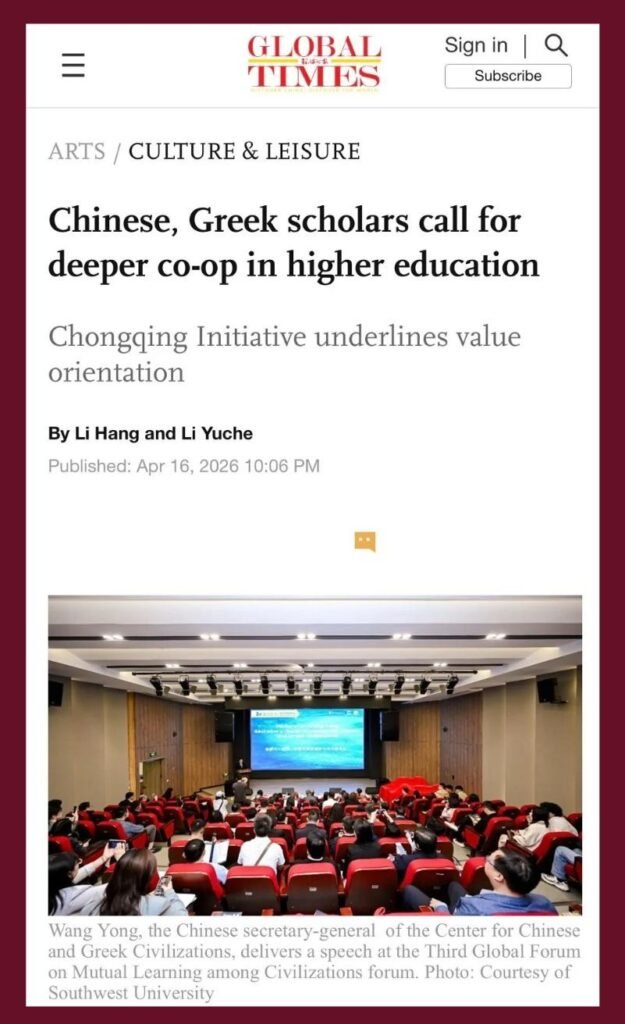
In April this year it hosted a forum in Chongqing to “discuss the future of higher education,” according to China’s official Global Times. The forum proposed a new Sino-Hellenic University Alliance for Mutual Learning Among Civilizations in order, according to the center’s Chinese secretary-general, to “foster closer ties between universities in China and Greece and promote greater integration of higher education resources between the two countries.”
Attendees reportedly approved a closing declaration called the “Chongqing Initiative,” an eight-point framework emphasizing that “education must place greater importance on value orientation and the humanities.” The text of the initiative is not public, but states, according to the Global Times, that “universities are not only centers of knowledge production, but also play a key role in shaping values and fostering mutual understanding among peoples.” Clearly, for China, the necessary shift in “value orientation” is about the need for universities to pursue a broader diplomatic role in the midst of academic exchange — a duty to improve bilateral relations.
Three of the four Greek universities in the consortium are original 1988 signatories of the Magna Charta Universitatum, a foundational declaration committing universities to independence “of all political influence and economic interests.” A framework built around a foreign government’s “value orientation” sits uneasily with that pledge.
China is engaged in countless forms of academic exchange in Europe, and it can often be difficult for European universities to ascertain how the hand of the Chinese state may be involved. In 2022, Vrije Universiteit Amsterdam closed a human rights research center after reporting from Dutch media revealed that it had been solely funded by the Human Rights Research Institute at Southwest University of Political Science and Law (西南政法大学人权研究院) in Chongqing, which states openly in Chinese that it serves the country’s national human rights strategy. Partners in the Dutch center had publicly defended China’s policies in Xinjiang and disregarded abuses in the region. As of August 2026, they are still mentioned as partners at Vrije Universiteit Amsterdam on the center’s website.
The Elephant in the Classroom
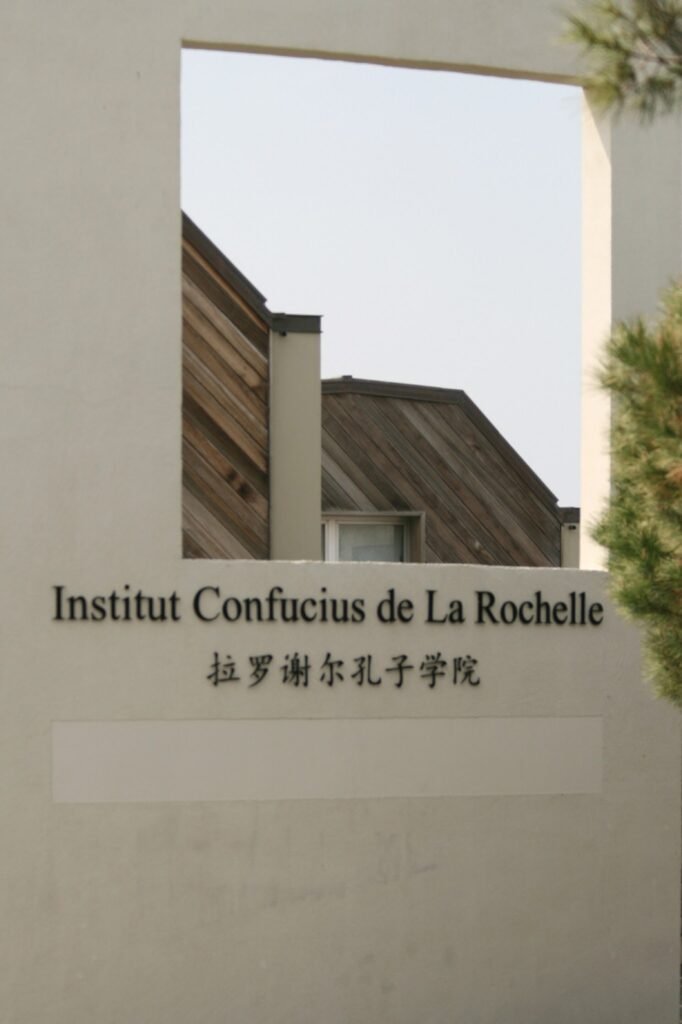
Concerns about the potential of such impacts on academic integrity and independence have driven the debate in the past decade in Europe, and elsewhere in the world, over the role of China’s Confucius Institutes, government-funded language and culture centers first established worldwide in 2004. Many universities have valued them as a source of funding for Chinese language instruction and cultural programming that would otherwise be difficult to sustain. But there have been lingering concerns about how China might, and often clearly does, use the institutes to advance narrower political agendas.
The first such center in Germany opened at Berlin’s Freie Universität Berlin in 2006, and the university even celebrated its designation the next year by the government-run Hanban, the Chinese agency that at the time administered Confucius Institutes worldwide, as “Confucius Institute of the Year.”In 2020, the university faced backlash after its Confucius Institute contract became public and seemed to bind it to Chinese law, allowing Hanban to reduce or halt funding if any element of the program contravened Chinese law. The following year, another institute in Germany cancelled an online book event on Chinese leader Xi Jinping, reportedly after protests from Chinese diplomats and the institute’s Chinese partners. This incident prompted open criticism from Germany’s education minister, who then called for universities to “re-evaluate the role of Confucius Institutes in the German higher education landscape.”
Confucius Institutes have closed at a rapid pace worldwide in recent years as concerns have gained some momentum. In the United States, where scrutiny has been sharpest, the number operating on college campuses fell from 96 in 2019 to fewer than five by 2023, according to a report from the Government Accountability Office. In Europe, meanwhile, the pace of closures has been slower and more uneven. Researchers tracking the trend note that Poland closed two of its six institutes between 2022 and 2024, and the Czech Republic shut one of its two in 2023, even as Beijing has shifted new investment toward more receptive regions in Latin America, Africa, and the Middle East.
But Confucius Institutes remain a key outreach and influence strategy for China, which rebranded the program’s administering body from Hanban to the Chinese International Education Foundation in 2020, largely, observers say, to soften its image as a direct arm of the state. Academics who speak out against the risks the institutes can pose sometimes find themselves isolated, as their own universities have come to regard partnership on Confucius Institutes as a sign of goodwill that can open doors to funding, student exchange, and other forms of cooperation.
.JPG)
On April 8, 2024, during the opening ceremony of the Confucius Institute at the University of Seville, in Spain, Mar Llera, an associate professor of journalism, decided to protest, along with another colleague, after months of futile attempts to talk the university’s leaders out of the decision, which she believed would severely damage academic freedom.
As rector Miguel Ángel Castro welcomed attendees to the ceremony, including China’s ambassador to Spain, Llera and research team member Santiago Ramírez climbed onto the dais, lifting up protest banners. When security guards tried to remove Llera, she held her ground, refusing to budge. She remained on stage for several minutes, ensuring her protest was captured by local media outlets before finally agreeing to go.
Llera sees her university’s decision as part of a broader pattern across higher education in which academic incentives outweigh institutional caution. “This situation reflects a broader, structural conflict,” she said. “Beijing’s strategy is highly sophisticated. They offer academic prestige, economic funding, an influx of international students, research collaboration networks, and high-level political interaction.”
These incentives stack up against conscientious academic voices who are standing on principle and warning of risks that perhaps have not yet materialized. “Critical academics like myself can only offer arguments and ethical warnings that provide no money, no immediate prestige, and only short-term and mid-term professional trouble,” Llera said. “We are not playing in the same league, nor do we share the same resources.”
The backlash to her protest was swift. Immediately afterward, Llera says, an official from the university administration spent nearly two hours “harassing, humiliating, and guilt-tripping” her in what she says she understood as an attempt to intimidate her. The security guards tasked with removing her from the stage, however, later thanked her in private, she says, insisting that someone needs to raise their voice against the Chinese dictatorship. “This stark contrast perfectly illustrates the disconnect between defensive institutional elites and the common sense of frontline workers,” Llera says.
Confucius Institutes have closed at a rapid pace worldwide in recent years as concerns have gained some momentum.
Castro, the rector, said afterward that he “regretted the attempt to hinder the event,” and insisted that conduct like Llera’s protest “does not fit into our most dignified spaces.” University officials did not respond to a request for comment for this article.
Citing mental exhaustion, Llera says she has no plans for further public protest. “The well-founded fear of subtle professional repercussions, combined with an exhausting teaching workload,” she says, “led me to focus strictly on my research, keeping me away from further active protests within my university.”
Llera’s frustrations speak to a larger issue with China-related exchanges in Europe’s universities — the fact that sinologists and other academics are often not consulted and have little leverage over a university’s decision to collaborate with Chinese partners. When it comes to Confucius Institutes in particular, says Julia Schneider, a professor of sinology at the University of Hamburg, the risks in terms of lost autonomy outweigh the supposed rewards. “It’s always problematic if, as a university, you just hand over your autonomy in choosing lecturers to another institution financed by a government that does not believe in academic freedom,” she says.
She adds emphatically: “Partnerships between universities and Confucius Institutes should be abandoned altogether.”
As of 2026, 205 are operating in 39 countries across the continent, including all but two of the EU27 nations (Sweden and Finland) and fourteen non-EU states, including Russia and the United Kingdom, according to the official Confucius Institute website. The greatest concentrations of institutes at present are in Russia (24), the United Kingdom (28), Germany (21), and Italy (16).
Civilizations Divided
While Confucius Institutes have received relatively widespread coverage in recent years, they are just one facet of a larger engagement push through universities, academic centers, official think-tanks, ostensible non-profits (often with cloaked state associations) and even private companies. In many cases, given lack of transparency, China’s involvement is not apparent until protest, controversy or media coverage results — as in the German and Dutch cases noted above.
But one key issue to take note of is how the same official framing China uses to encourage dialogue and collaboration is operationalized to define the political and intellectual terms of engagement. When universities hear buzzwords like “civilization” — at the heart of the Greek consortium — or “friendship,” they need to understand what these mean in practice.
Raigirdas Boruta, an associate expert at the Vilnius-based Geopolitics and Security Studies Center, knows from personal experience what lines are imposed on the notion of civilizational dialogue. In 2024, he was due to present a paper on Taiwan at an academic conference convened under the banner of the Baltic Alliance for Asian Studies (BAAS), a consortium founded a decade earlier by Asian studies departments and centers at five universities in Estonia, Latvia, and Lithuania.
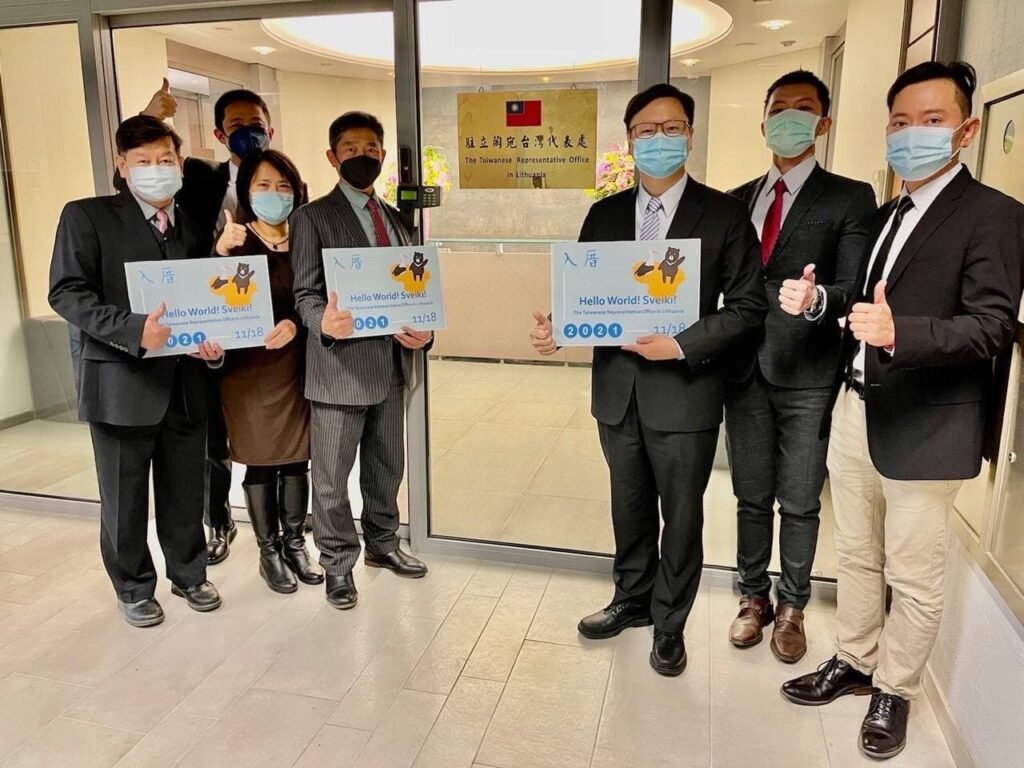
The conference, hosted by the University of Latvia, was to be Boruta’s first real chance in years to engage directly with Chinese scholars. Three years earlier, following what Boruta said had been several years of rising academic engagement between China and Lithuania, nearly all cooperation had been frozen amid a deep diplomatic rift with China, following the latter’s decision to downgrade relations with Lithuania after Vilnius allowed a “Taiwanese,” rather than “Taipei,” representative office to open in the capital, the first in the European Union to use that name.
Boruta’s paper had already been accepted, but less than two weeks before the conference, he and several other confirmed participants received an email informing them that they were no longer welcome to take part and present their work. “The common element among the rejected participants was that our papers were related to Taiwan, in my case, or other themes that are normally sensitive to Beijing,” says Boruta.
It later emerged that the conference had been funded by the Chinese Embassy in Riga.
When the organizers at the University of Latvia explained the decision, there was an oblique but unmistakable reference to the same civilizational discourse, related to Xi Jinping’s own political power formation, that has undergirded China’s engagement since 2021. “We regret to inform you that we have been forced to reject your report due to the fact that the selected topic is beyond the scope of the conference,” the email to the rejected participants read. “The subject of our current conference is the dialogue of Asian civilizations, without an emphasis on encouraging confrontation, whether based on past or present material.”
It later emerged that the conference had been funded by the Chinese Embassy in Riga. China’s ambassador was scheduled to deliver the welcome address, and a prominent Chinese scholar had been invited to give the keynote.
The episode prompted backlash within the region’s small community of Asian studies scholars. The Centre for Asian Studies at Vytautas Magnus University (VDU), one of BAAS’s five founding members, formally withdrew from the conference, saying it was standing behind a “unified position” of BAAS institutions shaped by what it called a lack of transparency in the organizing committee’s decisions and bias in the resulting program. The center said it had “always upheld, and will continue to uphold, the principles of academic freedom, impartiality, and open discussion” that the conference organizers had failed, in its view, to follow. All six of the VDU’s scheduled speakers withdrew from the program in solidarity, and the center went further, publicly objecting to the organizers’ use of the Baltic Alliance for Asian Studies name in connection with the conference at all.
Drawing Lines Around Oneself
Even as political, legal, institutional, and financial pressures exert an impact on academic freedom from the outside, sources interviewed for this story point to a quieter and more corrosive threat — internalized red lines as scholars consider the possible implications of research topics.
For decades, Professor Mette Halskov Hansen of the University of Oslo, in Norway, has reviewed PhD applications from scholars from China, Europe, and beyond. She says she has noticed a clear rise in recent years in what she calls “self-censorship.” “If you look, over some years, at many hundreds of applications for PhD projects where you have to define and describe your project,” she says, “and you see what choice, and what topics, people choose, and especially which topics they avoid — then to me there is no doubt that there is either very conscious, but it can also be quite unconscious, self-censorship.”
“The thing about censorship and sensitivity in China is that, precisely because it’s not an easy list of things to avoid, it creates a kind of insecurity,” says Hansen. “Because you actually don’t really know what it is.”
The University of Hamburg’s Schneider points to last year’s annual conference of the German Association of Chinese Studies (DVCS) as evidence of growing reticence to pursue topics on sensitive regions. The event, held in Hamburg in November 2025, brought together more than 100 participants and about half as many paper presentations, but none focused on Xinjiang or Tibet. A review by Lingua Sinica of the programs from that conference and the previous year’s, held in Münster, found that among 103 papers presented across the two events, none addressed Taiwan, Hong Kong, Xinjiang, or the 1989 Tiananmen Square crackdown as contemporary political issues. The sole paper to engage a human rights theme at all was a 2024 presentation by Astrid Lipinsky, of the University of Vienna, on a graphic novel depicting young women imprisoned as political prisoners on Taiwan’s Green Island during the island’s decades-long martial law period.
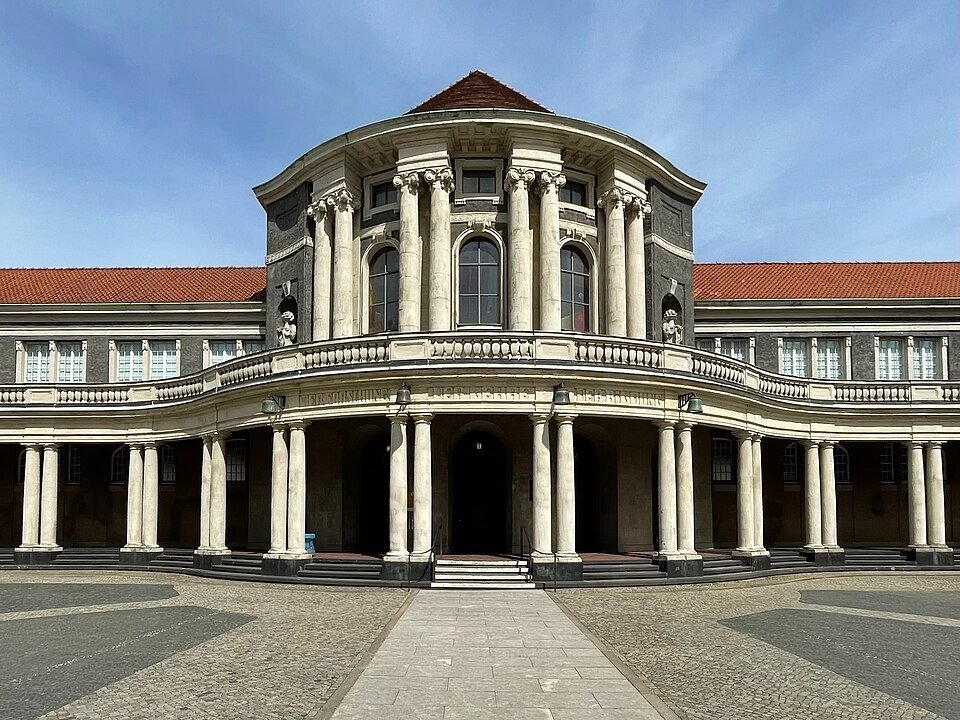
At international conferences, Schneider notes that the number of scholars working on such broader interest areas that could touch on Chinese sensitivities remains limited. And that participation, she says, is consistently confined to a small group of citizens of European countries — meaning that researchers who are Chinese nationals tend to shy away altogether.
“I think this creates a huge problem in European Chinese Studies,” says Schneider, “because who is going to study these topics if not graduate students?”
For Maurizio Scarpari, former vice-rector of Ca’ Foscari University in Venice, self-censorship has been the most obvious pressure on China studies. “What is certain is that I have never personally experienced direct censorship from the Chinese authorities,” he says. “The only people who exercised, or attempted to exercise, any form of censorship against me were Italian colleagues.”
Scarpari taught classical Chinese at Ca’ Foscari for more than three decades and during that time authored several books and scores of academic articles. He retired from teaching in 2011 in order to continue his research with more “peace of mind,” he says.
Though his own research centers on pre-imperial Chinese philosophy and philology, Scarpari has not shied away from speaking out directly on more contemporary controversies. In a 2021 essay, he publicly criticized what he called the “fierce repression” of the Uyghur minority in Xinjiang and of Hong Kong’s democracy movement, and in a separate 2021 article titled “Hong Kong: A Warning for the Future,” he examined the crackdown on Hong Kong’s 2019 protest movement.
Scarpari, in fact, was one of the first among Italian sinologists to break the silence on the Hong Kong protests and the government’s response to them. His decision to speak up came with personal and professional costs.
“It was the most brutal moment of tension between me and a large part of Italian Sinology, and it had serious consequences on several levels,” he says. “The conflict became so personalized that it led to the sudden break of friendships, personal and academic, that had lasted for decades. I withdrew from the Italian Association of Chinese Studies, of which I was one of only two honorary members. And I was effectively isolated by much of the Italian Sinology community, including colleagues from my own university.”
In his 2023 book La Cina al centro (China at the Center), Scarpari also reflects on what he sees as more subtle forms of self-censorship at work among many Italian sinologists, including in choices of language. “For example, when referring to the Tiananmen Square crackdown, we may be tempted to use less contentious, or simply euphemistic, expressions such as ‘the Tiananmen crisis,’ ‘the Tiananmen events,’ or ‘the Spring of 1989,’ without offering any further explanation,” says Scarpari.
His decision to speak up came with personal and professional costs.
Scarpari sees a clear parallel here to how the Chinese state itself handles politically sensitive episodes. “This mirrors the practice of the Chinese authorities,” he says. “The less the massacre is mentioned, the fewer difficulties they face with their counterparts. But if the episode must be mentioned at all, it is better to remain superficial and evasive.”
The book has been publicly presented at several Italian universities since its release, including Bologna and Perugia. But Scarpari says he senses a more subtle sidelining, describing a reluctance among some university programs and researchers with active China ties to engage with the book’s arguments.
This form of self-censorship is not limited to scholars taking public positions on China-related issues. It can also arrive quietly, through the everyday pressure of colleagues who have drawn their own lines. Elżbieta Proń, an assistant professor at the University of Silesia in Katowice, Poland, says she was asked by colleagues on several occasions to self-censor both spoken and written commentaries on Chinese policies.
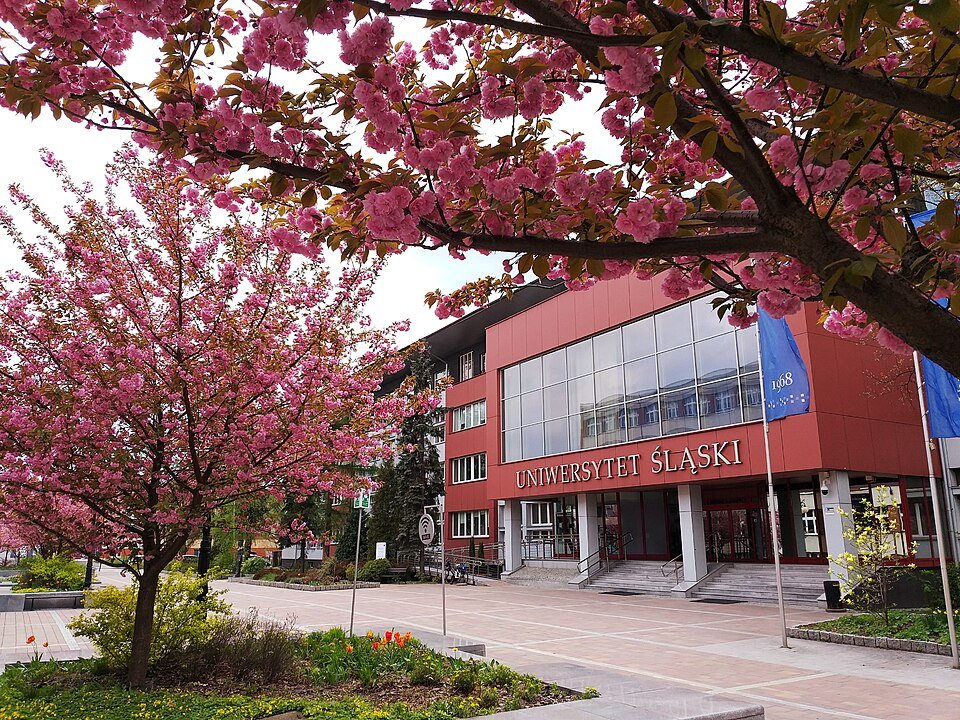

One such request came in 2019, when she was invited to speak on Chinese Language Day at her former institution, which depended financially on China. Given that the event fell close to the 30th anniversary of the 1989 Tiananmen crackdown, she suggested she could address the topic in her presentation. Her colleagues, however, appeared ill at ease with the idea. The lead organizer, she says, asked whether she could just focus on “more cultural stuff” rather than political issues. Proń understood the request as being motivated by concerns over the institution’s financial ties to China.
“I’ve never really considered myself as somebody who is that much academically into human rights,” says Proń. “It was just a thing that I perceived as something that an honest and reliable academic from Poland or Europe should say about China. It’s a part of Chinese reality.”
Proń encountered more direct pressure on her research when she was invited to contribute a chapter to a volume published by one of the UK’s leading academic publishing houses. The editor, who was not Chinese, worked at an institution that had received substantial funding from China. Her chapter examined China–Poland relations and included two sentences on Xinjiang as an example of a controversial Chinese policy that has made Warsaw more hesitant to deepen cooperation with China.
“I didn’t really use very strong or emotional language,” says Proń. “It was academic. I added a footnote referring to the ‘Strike Hard, Maximum Pressure’ campaign in Xinjiang and cited one of my own papers.”
The editor nevertheless asked her to remove the reference, she says. They argued that these facts were “unconfirmed.”
“I told him, ‘Listen, this isn’t unconfirmed. People have known about it for several years. The Western academic community knows about it.'” Proń ultimately relented, but the episode ended the relationship. “I also knew that if I didn’t remove that one sentence, he would basically exclude the entire chapter from the book. I think it was the only time I actually did it — I crossed it out. But it was also the last time I worked with that person.”
The editor nevertheless asked her to remove the reference.
A similar pattern played out in 2018 for Tan, a Hong Kong research fellow based in Germany, whose name has been changed in this article to protect his identity. Tan was finalizing a peer-reviewed article in English on the translation of Chinese political terms. The tentative title he proposed included the word “democracy,” but his German supervisor, he says, frowned at the title and asked him to change it before submitting it to editors for the final round.
“The reason given was that it might make Chinese colleagues ill at ease,” says Tan. He yielded to the suggestion, because the content of the article remained unchanged.
Caution Across Continents
For scholars who are Chinese nationals, the calculation can be much more directly about long-term personal risk. It is not about words changed out, chapters cut, or a potentially strained collegial relationship. Consequences can literally follow them home.
For Huihui, a Beijing-based graduate who returned to China after completing a master’s degree in the humanities in Belgium, peer surveillance on overseas campuses — which has received much attention from media and human rights groups — was something she had heard about but never personally experienced. In most of her classes, she said, there were very few Chinese students, which she felt allowed her to speak freely during discussions and interact openly with her non-Chinese classmates.
A member of the Chinese Communist Party since the age of 18, something actually relatively common among Chinese university students, Huihui said she was not required to attend any Party meetings while studying abroad.
Even without such direct pressure, however, she made her own calculations about what she could safely research. She deliberately avoided writing her thesis on any topic considered politically sensitive by the Chinese government, because the thesis title would appear on her European academic transcript. That, she feared, could cause problems upon her return.
“When you return from overseas, your degree has to go through a verification process in China,” Huihui said. “The administrators might know what I worked on.”
Those fears could become even more pronounced for overseas Chinese students following a new Chinese law that took effect in July 2026, which criminalizes “undermining ethnic unity” by anyone, anywhere in the world.
For some European scholars, the trade-off runs the other way. Rather than limit what they study, they have simply stopped going to China at all. Vanessa Frangville, a professor in China studies at the Université libre de Bruxelles, in Belgium, says her last trip to China was in 2018, when, she says, she was followed and her laptop was searched.
“I see no real benefit in going to China if doing so puts my colleagues at risk or prevents me from carrying out my research in a calm and secure environment,” says Frangville. “I no longer collaborate with colleagues in China, in order to protect them.”
Jan Švec, a researcher on digital authoritarianism at the Institute of International Relations Prague, made the same calculation. His last visit to China was in 2019, and he says he does not expect to return.
“The risk of being subjected to some additional scrutiny is, in my view, high enough that I do not consider it worth taking,” says Švec. “I regret that, not only because it limits my research and understanding of China, but also because I genuinely like the country, have friends there, and still have a long list of places I would like to visit. At the same time, I have come to accept that this is a price I am willing to pay in order to work on topics that I consider important.”
Christian Göbel, a professor of China studies at the University of Vienna whose work focuses on Chinese protests and local governance, has not visited China since 2017. He believes sensitive topics are, at this point, often better studied from a distance.
“Field research on these topics has become nearly impossible,” Göbel says.
Not every scholar, however, accepts that trade-off as the price of doing serious work. Chiara Olivieri, a lecturer in contemporary history at the University of Granada, in Spain, who has published on Xinjiang, argues that scholars who pull back risk losing sight of how much less they personally have on the line, compared with the communities they study.
“As scholars, we often have the privilege of conducting research, publishing, teaching, and participating in public debates in ways that are not available to many of the communities with whom we work,” she says. “The potential consequences we may face — whether professional criticism, restricted access, visa complications, or other forms of pressure — are often far less severe than those experienced by the people directly affected by the issues we study.”
Ways Forward
These trade-offs — between access and independence, caution and engagement — can ultimately hinge on individual calculations. But many of the scholars interviewed for this piece argue that the more durable response has to be collective and institutional, not just personal.
Public pressure can be of help to halting large-scale attempts to infiltrate academic space in Europe.
Fudan University, one of China’s leading universities, had sought to open a campus in Budapest — positioned as the first Chinese campus in Europe. But mounting domestic pressure proved decisive, and the project was effectively stalled in 2021.
The key concerns centered on a lack of transparency around the deal, and questions over whether it offered genuine academic benefit to Hungary or functioned mainly as a platform for China’s global influence. “After internal Hungarian government documents were leaked, suggesting that almost all the costs and risks of the project would have been borne by the Hungarian side, while the Chinese side would essentially have gained an opportunity for expansion at little or no cost, the issue became highly controversial,” says Gergely Salát, associate professor and head of the Department of Chinese Studies at Pázmány Péter Catholic University in Budapest.
Salát points to domestic political dynamics as decisive in the project’s collapse. “The project was opposed not only by the political opposition, but also divided parts of the governing party’s own voter base,” he says. “This was seen as politically risky before the 2022 parliamentary election, and the issue was therefore taken off the agenda… It should also be added that, from the Chinese side, the project was never a top-priority issue, so Beijing did not push it strongly.”
One of the most crucial steps when collaborating with Chinese partners is to have clear and informed guidance at an institutional level, which is about more than just responding in an ad hoc manner to censorship attempts from China and other dictatorships or authoritarian systems.
Despite these risks, few of the scholars interviewed argue for disengagement altogether.
Hansen, of the University of Oslo, says that advocating for academic freedom and staying engaged with China are not contradictory, so long as researchers remain clear-eyed about the conditions their collaborators face. “It’s very important that all staff members, or all researchers in a university, who have some kind of collaboration, for instance, with China, need to have a minimum of understanding about what the Chinese political system looks like and what the Chinese approach to academic freedom is,” says Hansen.
Researchers, she added, should always be mindful of the context in which their partners operate. “You always need, as a researcher, certainly if you do social science research in relationships with other people, to be sensitive to the context they are working in,” says Hansen. That, she adds, also means sensitivity to differences, while being mindful not to accept unwanted compromises. “And there is no point in thinking that the way I’m used to framing things here in my context is the best, and that’s what I have to impose on everybody else. That doesn’t make sense if you really want to do collaborative research,” she says.
Successful collaboration, Hansen says, begins with identifying shared interests. “You start to find common ground. Where can we approach this topic and find interesting data and analysis, both of us, apart and also somehow together?” she says. “And how can we then frame it in a way that is acceptable for both of us and for the situations that we are in?”
For Scarpari, staying engaged means never losing sight of the risks, or abandoning a principled posture, both as intellectuals and as professionals in the field.
Proń, in Poland, urges scholars who plan to publish work about China to look for publishers that do not depend financially on Chinese funders or whose editorial boards are not dominated by scholars from mainland China. “It is important to underline that many Chinese scholars might be, and are, critical of China, but for personal and professional safety purposes they cannot express their views officially or support publications openly undermining Chinese policies,” she says.
Given how careful Chinese citizens and academics have become about expressing their views, Proń also encourages China watchers to rely more on digitally available, verifiable data than on personal stories and interviews, which can put sources at risk of exposure. China’s own 2025 white paper on national security elevates what it calls “political security,” and explicitly defines “ideological security” as maintaining control over public discourse. This atmosphere invites risk and creates much greater uncertainty.
“This is a result of Xi Jinping’s policies, but also a result of rampant expansion of modern technologies which potentially follow and record wherever Chinese go and whatever they do or say,” says Proń.
The same surveillance apparatus, however, leaves behind an unusually large digital trail that researchers can mine. “The other facet of this technological era is that there is much more data in the Chinese internet and opportunities to find leaks and gaps to fill in, research, and debunk,” Proń says. “Of course, this data would be biased and will miss benefits of fieldwork in China, but will allow for a potentially thorough insight in Chinese policies and plans.”
Vanessa Frangville, the Brussels professor who stopped traveling to China, has built this awareness directly into how she teaches, trying to prepare her students for the risks of studying and researching China without discouraging them from the subject altogether. “For more sensitive subjects, students generally do not go to China and instead prefer Taiwan,” she says.
For Greek sinologist Tsimonis, it is indispensable for scholars to “speak truth to power, not speak the ‘truth’ of power.” “This means refusing to internalize the red lines imposed by authoritarian states, while also being realistic about the pressures that may follow.”
In addition, EU-based students and scholars should proactively advocate for academic freedom. “Where these protections are weak or unclear, they should raise awareness, document incidents of pressure or censorship, and work collectively through colleagues, unions and local politicians to push for stronger safeguards,” says Tsimonis.
It is just as critical, says Zvonimir Stopić, a Croatian researcher who lectures at Zagreb School of Economics and Management and also holds a position at Capital Normal University in Beijing, that citizens remain vigilant about domestic threats to academic freedom, including creeping authoritarianism closer to home. In his own country of Croatia, he says, those threats can include political alignments and the influence of the Catholic Church. “They are a much bigger danger to these freedoms than China could probably ever be,” he says.
Others, including Stopić, argue the more fundamental fix, another domestic and EU issue, lies not with individual scholars but with how universities are funded. Sufficient public financing, they say, is key to protecting European institutions from Chinese influence.
“Academic freedom in Europe would be upheld if higher education institutions are properly funded,” says Stopić. “If the money comes from China, then probably some influence can be exercised.”