
The River Runs Black

| LS Staff |

Wu Qiang (吴强), a citizen from the city of Lianyungang in northeastern Jiangsu province, was detained by police on April 11, just two days after posting on Weibo about “black, oil-like pollution” in the local Xinghai River (兴海河) as it passes through the Ganyu High-Tech Zone, home to a number of major manufacturing firms, including Roche Energy, headquartered in Shanghai. Wu was arrested on charges of “picking quarrels and provoking trouble” (寻衅滋事) — a charge often levelled at those carrying out acts of civil disobedience — and remains in custody. The river pollution case, not reported inside China, emerged last week on several social media accounts, including the Substack account Aquarius Era (水瓶纪元).
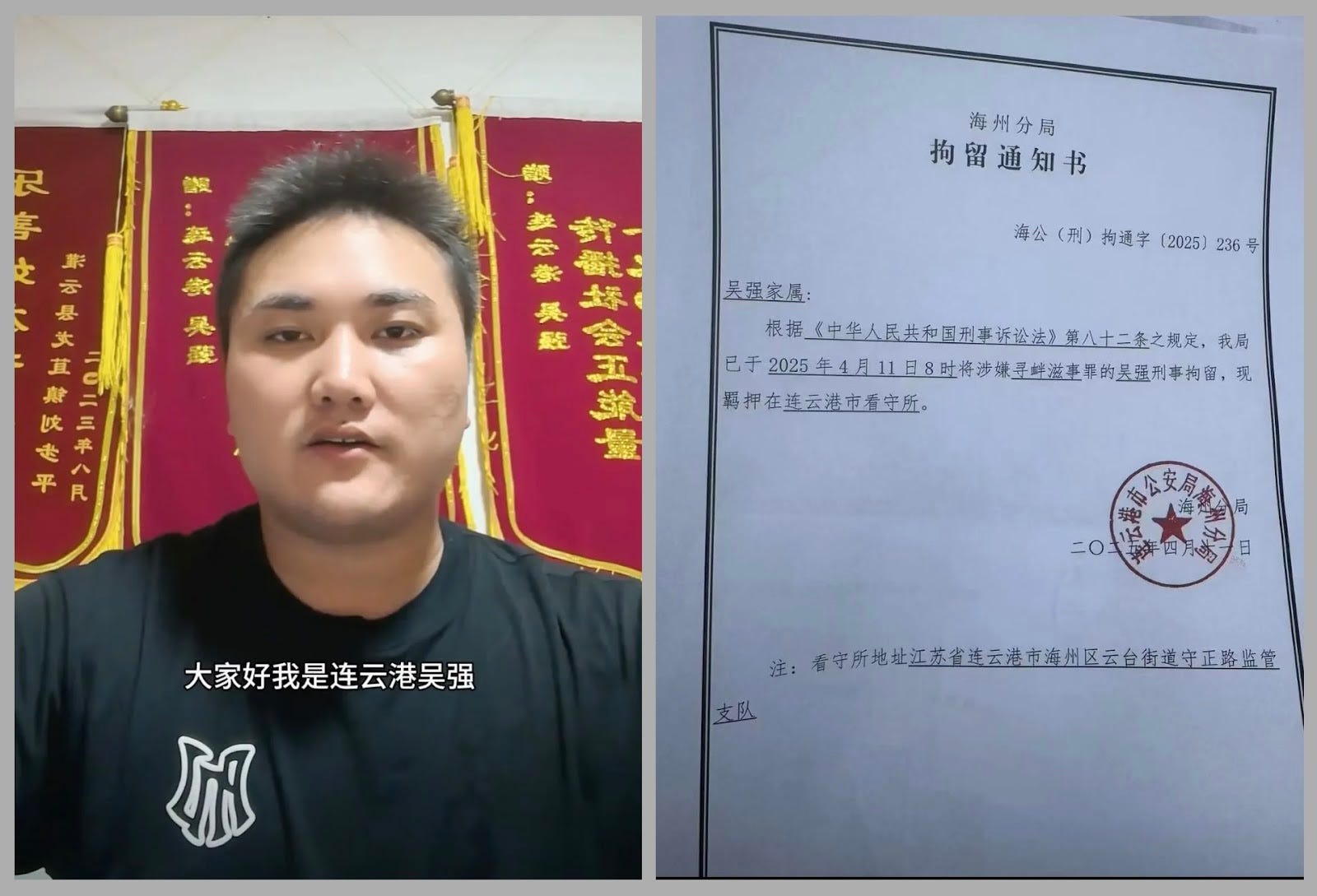
At left, Wu Qiang. At right, the detention letter issued by police in Jiangsu. SOURCE: Aquarius Era.


More Stories from this Region

As China pushes a national reading initiative and AI reshapes information, one Shanghai shop offering 1,000 publications represents a vanishing era of relative editorial…
A daily check-in app sparks debate over sensitivities around death in China while grappling with the country’s growing crisis of solo-living and related safety concerns.
The closure of dozens more newspapers signals the final fizzling of China’s once-vibrant metropolitan print media sector at the outset in 2026.
As international communication centers proliferate across China down to the county level, Xi Jinping’s grand vision for global “discourse power” meets absurd local reali…
“There’s Still Tomorrow,” about domestic abuse and women’s emancipation, wins Best Foreign Film after a strong performance at the Chinese box office.
Beijing’s film celebrating the 1683 conquest of Taiwan backfires,prompting authorities to censor criticism.