

On September 1 this year, Kyrgyzstan will assume the chairmanship of the Shanghai Cooperation Organization (SCO), the economic and security alliance formed in 2001 by China and Russia together with several Central Asian countries, and will host a summit marking the SCO’s 25th anniversary. The summit comes amid a deepening relationship between China and Kyrgyzstan. Over the past two years, construction has begun on a new railway line branded as part of the Belt and Road Initiative linking China, Kyrgyzstan, and Uzbekistan, with China providing more than half the financing. In that period, the country’s president has met with Chinese leader Xi Jinping on three separate occasions, including signing a joint statement in September 2025 on deepening the bilateral partnership.
But China’s engagement with Kyrgyzstan in terms of media and strategic narratives goes back at least two decades. Since 2004, Xinjiang Radio and Television Station has produced a Kyrgyz-language TV program broadcast daily by satellite on Kyrgyzstan’s national television, pairing short segments on Chinese culture, agriculture, and current affairs with dubbed Chinese TV dramas. A 2023 study by researcher Niva Yau for the OSCE Academy in Bishkek examined two similarly structured programs, Zhungogo Sapar and Kytai Terezesi, likewise produced by the Kyrgyz-language team at Xinjiang Television and fronted by an ethnic Kyrgyz presenter from Xinjiang. The report describes them as “an active part of China’s soft power strategy in the region,” built around stories of purported, state-narrated governance successes in Xinjiang.
Lingua Sinica spoke with Adina Masalbekova, a researcher on China’s engagement with the region, about how Chinese state media have gained a foothold in Kyrgyzstan — and how Russia’s parallel media strategy reinforces many of the same messages.
Dalia Parete: How would you describe the media landscape in Kyrgyzstan, for people unfamiliar with it?
Adina Masalbekova: Kyrgyzstan’s media landscape was shaped largely by the collapse of the Soviet Union and its aftermath. The country took a deliberate step toward decentralizing its institutions, including the media, as the Soviet Union itself had already begun to open up. The first president sought help from humanitarian and international organizations, and that’s how the country built the media infrastructure it still largely runs on today. Outlets received significant support from international donors, alongside broader development projects. That funding relationship is foundational to how the landscape looks now, and it’s a big part of why Kyrgyzstan’s media environment ended up freer and more pluralistic than its neighbors’.
In fact, Uzbekistan under its first administration maintained absolute authoritarian control over the media, enforcing regional media exchange to secure total domestic control. Kazakhstan has remained largely authoritarian, with brief windows of openness that closed again after the 2022 protests and the subsequent crackdown. Tajikistan and Turkmenistan are more restrictive still. Turkmenistan’s independent media exists only in exile. With that in mind, Kyrgyzstan is the outlier, the first in the region to see a state-scale protest toppling the government and regime change and the one place where that political opening also became a media opening with donor-funded independent outlets, a relatively freer press,and for a long time, an active, vocal civil society.
DP: Would you say that Kyrgyzstan, compared to the other Central Asian countries, has a slightly more open environment?
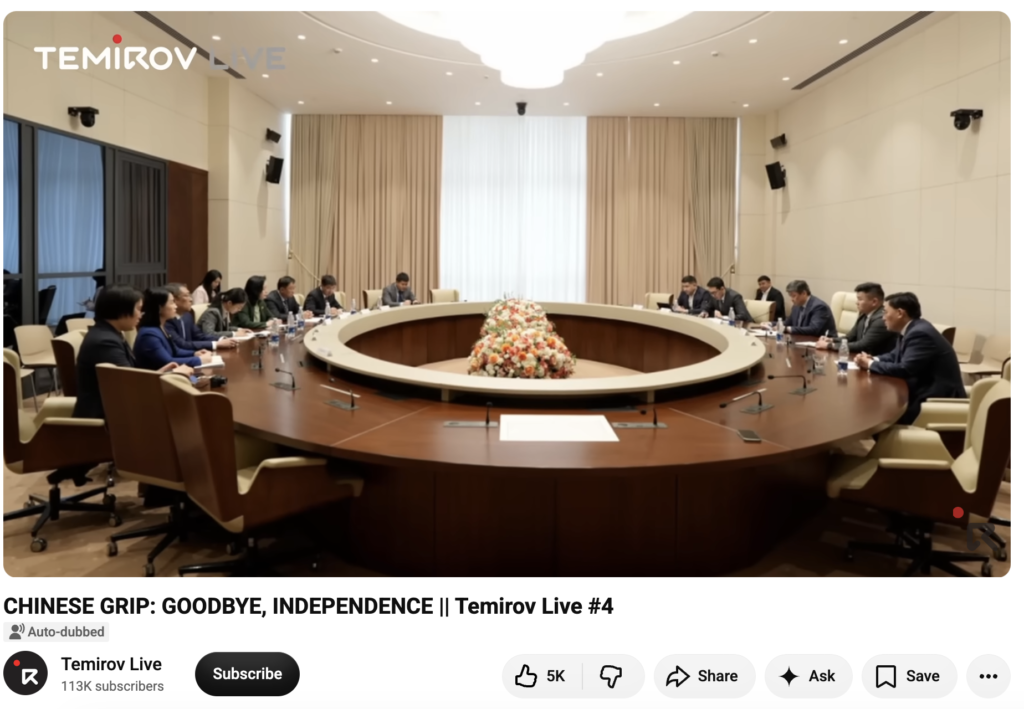
AM: Yes, even if it’s a relative kind of openness and one that’s been narrowing since 2022. Compared to Uzbekistan, Kazakhstan, Tajikistan, and Turkmenistan, Kyrgyzstan still has independent outlets that investigate and publish. These journalists are widely trusted and widely read, and their reporting reaches well beyond a small activist audience. Investigative outlets like Temirov Live and Kloop are the widely known examples, each with over a hundred thousand subscribers on YouTube alone. Both continue to operate and draw large audiences, with Temirov’s most recent investigation getting over 100,000 views, even after years of legal pressure and being classified as extremist organizations.
Temirov Live doesn’t legally exist anymore in the country. Investigative journalist Bolot Temirov, the founder of Temirov Live, was deported and stripped of citizenship after authorities accused him of drug possession and forging documents. He now runs the outlet from exile. Several of his colleagues were later prosecuted too and his wife, Makhabat Tazhibek kyzy, also a journalist on his team, received the most severe sentence of anyone charged in the case.
Kloop’s website has been banned by the government in 2023, and people now need to use a VPN to read it, and that’s just become normal. So calling it more open is true only in a comparative sense, but it’s an openness that’s been pushed underground and abroad, not one that operates freely inside the country.
DP: What does that pressure actually look like day to day for journalists, and how has it evolved over time?
AM: As I was saying before, on the ground, it looks like outlets are surviving by relocating, adapting, and absorbing constant pressure. A former Kloop journalist shared with me that government pressure is not a new challenge for the outlet, stating that multiple previous regimes have attempted to obstruct their work and block their platforms. She added that other media outlets have felt this recent shifting political climate more sharply.
The pressure we’re seeing didn’t begin with the press, and it didn’t begin just with the current regime. There were always attempts to suppress critical voices under previous ones. Tracing it through the current regime, the administration’s broader pushback started around 2022, primarily targeting the political opposition and activists, particularly during the mass arrests following the Kempir-Abad water reservoir protests. By mid-2023, that focus shifted toward independent journalists and bloggers, several of whom faced imprisonment for their commentary. A stark example from that period was the arrest of Yryskeldi Jekshenaliev, a 19-year-old blogger who was detained and released a year later, facing a potential six-year prison sentence on charges of publicly calling for mass riots and violence. By early 2024, these restrictive measures had directly impacted established investigative outlets such as Kloop and Temirov Lab. Since then, the environment has expanded even further, affecting broader civic spaces.
It looks like outlets are surviving by relocating, adapting, and absorbing constant pressure
We’ve seen independent polling research institutes like the Central Asia Barometer forced restrict their operations. Even some selective independent academic gatherings were banned, including the cancellation of the historical forum dedicated to the Urkun centenary in December last year.
One case outside journalism shows just how far the chilling effect reached. In Tajikistan, a woman working for an independent Kyrgyz NGO running a regional survey on attitudes toward China. She wasn’t a journalist, but because the survey touched on China, she was detained and sentenced to roughly ten years on a charge that translates to “betraying the motherland.” At the same time, academic freedom took a hit. Now, many scholars and independent institutions have adopted a degree of self-censorship on topics critical of the government or of state relations with China and Russia; this trend aligns with heightened regional discussions of Russian colonialism following the war in Ukraine, alongside the further tightening of partnerships with China in recent years. The legal architecture has also hardened: last year, a constitutional amendment gave the government grounds to shut down media on the basis of extremism.
It’s not just legal pressure, either. Funding has collapsed, too. USAID (the US government’s foreign aid agency, which has funded independent media projects worldwide) pulled out, and the EU has been shifting its budget toward Ukraine and defense. Together, that’s cut off a lot of the money independent media used to rely on. To make up for it, journalists are taking on second jobs, like bartending or DJing. For younger generations, this means turning to influencer-style income sources like reader donations, ad deals rather than just reporting.
DP: How did Chinese media first establish a presence in Kyrgyzstan? What were the entry points and conditions?
AM: The first Chinese presence in Kyrgyzstan’s media landscape was through cooperation with the National Television and Radio Broadcasting Corporation, the state broadcaster. This was in the early 2000s. They started airing TV shows and documentaries about China and East Turkestan, covering different provinces, and aired them daily on national TV. I actually grew up watching some of this myself.
These documentaries had Kyrgyz dubs, not just Russian ones, done by ethnic Kyrgyz based in Xinjiang, in East Turkestan. I never noticed anything off about it growing up. It was actually my aunt who pointed out that the Kyrgyz spoken by ethnic Kyrgyz in those areas doesn’t sound quite the same as the Kyrgyz spoken in Kyrgyzstan. They have a different accent. Once she said that, I started paying attention. I’d always assumed the dubbing was done locally, but it wasn’t. It was done in China, and then the documentaries were run on our national TV every day.
These documentaries had Kyrgyz dubs, not just Russian ones, done by ethnic Kyrgyz based in Xinjiang
Another entry point was through the Confucius Institute in Bishkek, where I studied Chinese. They had print materials just sitting out on display there, mostly in Russian and Kyrgyz, with some stories in Chinese, though Russian was the dominant language. They distributed these for free and printed new editions periodically, I believe every three months, though it might have been monthly.
There is also an outlet registered with the Kyrgyz Ministry of Foreign Affairs, though I don’t think it has a print edition, just a website, called Silk Road Observer (丝路新观察网), which is operated by the Xinjiang branch of China News Service.
DP: Which Chinese outlets were involved in the documentaries, and has that changed over time?
AM: CCTV and People’s Daily were there from the earliest timee. Xinhua is newer. It produces its content in Chinese and Russian, so it has a slot to air its reportage on national TV, especially around events like the Shanghai Cooperation Organization or the China-Central Asia Summit.
DP: What about the other platforms?
AM: There’s also Dolon TV. The channel does air some Chinese content, though, alongside everything else. They show movies and run some documentaries, but it’s not exclusively Chinese. They also mix in general entertainment and Western movies, probably selected or censored to avoid anything too political.
DP: Do you think Chinese-language media have really managed to reach people with their narrative?
AM: Honestly, no. Growing up watching those documentaries, it was just background noise, like any entertainment show you put on TV while doing chores around the house. You watch but don’t absorb. China still feels like the other culture here. Given the geographical situation, there’s a common but false perception that we, Central Asians, are culturally very close. In addition, when we look at Central Asian history and folklore, we often see the Han Chinese as the enemy and rival. This outlook also makes it harder for people to accept and welcome a Chinese presence immediately, even considering the economic benefits for the region that the majority rely on and comply with. Russia, on the other hand, despite its colonial history, feels more like ours because of the language and Soviet ties. Even the US feels closer than China does.
China still feels like the other culture here.
Part of that is historical. Muslim Kyrgyz identity doesn’t really overlap with Chinese culture, and there’s old folk memory of conflict with the Han Chinese, preserved in our folklore, songs, and fairy tales. China frames the “Silk Road” thing as old friendship, and sure, there were diplomatic ties, but the memory most people carry is war and maneuvering, not friendship. It gets sharper in families with direct history. In 1916, many people fled north into China during Russian repression and were mistreated there, even sold into slavery. Families with that history have much stronger negative views. I didn’t even know about this until I did the research, being from the south myself.
But people are pragmatic, too. After China joined the World Trade Organization (WTO) in 2001, trade with Kyrgyzstan opened up. So there is also a real practical reason for cooperating with China, even with all that underlying distrust. Both just sit there together.
DP: So is there a gap between the official narrative and how people actually feel about China and what happens to those who voice that gap?
AM: China tries to close that gap with things like sponsored journalist trips and fellowships. Journalists who go on these trips know it’s propaganda on some level, but they still return and write favorably about it.
Based on my own research on the matter, this was 2021 to 2022, so before and after the war in Ukraine started, Kyrgyzstan’s state media coverage of China became more positive. But the comments under these articles stayed split. Almost every China-focused story included at least one remark about Uyghur oppression throughout the period. That’s died down a bit now, but it still happens. Honestly, the majority of the backlash centers specifically on the Uyghur issue and debt concerns rather than on China more broadly.
Even so, awareness of what’s happening in Xinjiang hasn’t disappeared across Central Asia. That’s partly because journalists have interviewed people who fled the region and partly because some Kyrgyz families have personal connections to people affected by it. Even people who work closely with the Chinese government know what’s going on. Some of them studied in Urumqi and saw the religious discrimination first-hand. Restrictions on fasting. Restrictions on prayer. But they rationalize it anyway. They’ll say things like “we’re guests in their country,” or “China’s doing well, we should learn from them.”
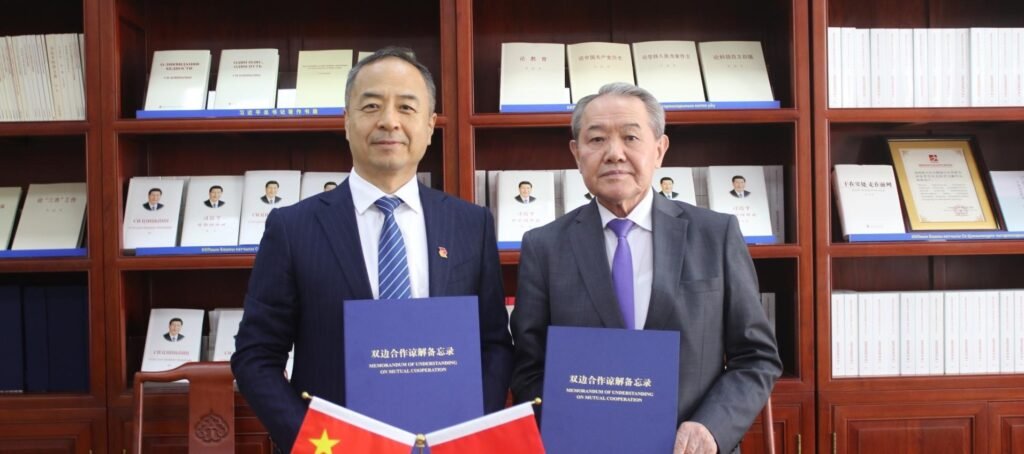
Beyond the comments, independent civil society pushback gets squeezed using the same legal tools used against journalists. A large number of NGOs and their activities have been facing more strict regulations due to the adoption of Russian-style law on foreign agents, leaving little room for constructive criticism and reporting on local issues. However, in the majority of cases, it only targets funding from Western donors compared to funding coming from China or Russia. In addition to foreign agent law, it became common to frame certain critical voices as ‘an attempt to call for mass riots and violence and extremism, including concerns raised about the increase of Chinese influence and debt. Frequent anti-China protests taking place in Kyrgyzstan in the past have been taken under control by years of government-led campaigns about the positive impact on the economy due to Kyrgyzstan-China cooperation. Over the past few years, negative discourse on China has become more sensitive.
Journalists who go know it’s propaganda on some level, but they still come back and write it up favorably
Even diaspora media avoid the topic. The Uyghur community here has its own paper, but it’s deliberately apolitical, most of them were born and raised here, not recent arrivals, and they’re scared because of embassy monitoring. I tried to talk to them and got turned down. Same with the Dungan community and their radio and print outlets.
So overall, it’s a mixed picture: official coverage shifts, but the underlying skepticism among the population doesn’t really go away, and it’s largely anchored to the Uyghur issue.
DP: Lastly, how does Russia fit into this picture? We know the shared heritage, history, and culture, and one of the languages used is Russian — what does Russia represent in this, and what does China’s position look like relative to Russia’s and Central Asia’s closest partners?
AM: Russia and China aren’t open rivals in Central Asia; they’re mutually reinforcing. Both share an interest in pushing back against US influence, and they amplify each other’s narratives through platforms like the Shanghai Cooperation Forum, promoting ideas like non-interference and sovereignty that effectively redefine human rights and democracy on their own terms. More broadly, the war in Ukraine has shifted the balance: Russia, weakened by sanctions, now needs China and Central Asia more than before, so it’s ceding regional influence rather than guarding it.
With media specifically, it’s not just indirect Russian influence through shared culture or language, there’s actual formal cooperation. The Russian government has an agreement with the Kyrgyz media, and there is journalistic cooperation between the two. You can see it clearly in outlets that always report positively about our government — they’re the same ones pushing pro-China narratives. And it’s not only the official coverage. In the comments sections, there’s a clear pattern of troll farms, and they’re just as active defending Russia and praising the government as they are with China. Sometimes accounts are even paid through group chats on WhatsApp or Telegram to post something positive. So in the media space, Russia’s role isn’t just cultural or historical — it’s structural, baked into how our state-aligned outlets actually operate.
Adina Masalbekova is a Visiting Research Fellow at Taiwan’s Institute for National Defense and Security Research with a focus on Chinese influence in Central Asia as well as Taiwan’s engagement with the region. Originally from Kyrgyzstan, she previously worked with OSCE Academy in Bishkek, a skills training center for young journalists, and in Germany at the Center for European Security Studies and the Network for Border Crossing Journalism (N-OST). Her work examines Chinese political and media narratives, public diplomacy, and economic and security cooperation in Central Asia.


