On March 2, just days before China’s annual parliamentary sessions opened in Beijing, the country’s state-run women’s organization held its annual ceremony to mark International Women’s Day — a holiday recognized by the United Nations in 1977 as a global call for women’s rights and equal participation in public life. But the organization’s vision of the limits of that participation was clear from the start, as its chair, Chen Yiqin (谌贻琴), a senior government official, called on women to follow the party, contribute to China’s next five-year development plan, and promote family civilization to “consolidate the family foundation for Chinese-style modernization.”
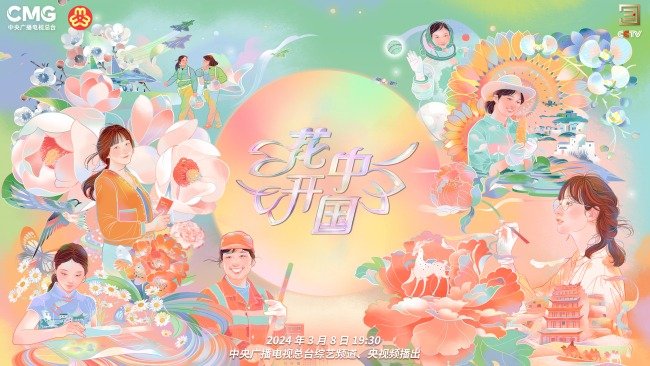
It was the beginning of a barrage of official messaging in which women were not subjects but instruments of state policy. China Women’s News (中国妇女报), the organization’s official newspaper, ran its usual coverage. Model workers were honored, and speeches made about the “wisdom and strength” of women in the service of national rejuvenation. On March 8, International Women’s Day itself, the paper ran a full-page spread titled “THIS Is Our Women’s Day!”
The question of who exactly was subject to that “our” had in fact been settled three days earlier by China’s premier, Li Qiang (李强), as he delivered his annual policy address to the country’s National People’s Congress. He pledged to build a “fertility-friendly society” (生育友好型社会), offer housing support for first-time married couples, extend parental leave, and expand childcare subsidies, which he said had already reached more than 30 million infants. With births plunging to a record low of 7.92 million in 2025, the premier’s message was clear: women have a primary role in resolving China’s demographic emergency — and the state will pay for their cooperation in these goals.
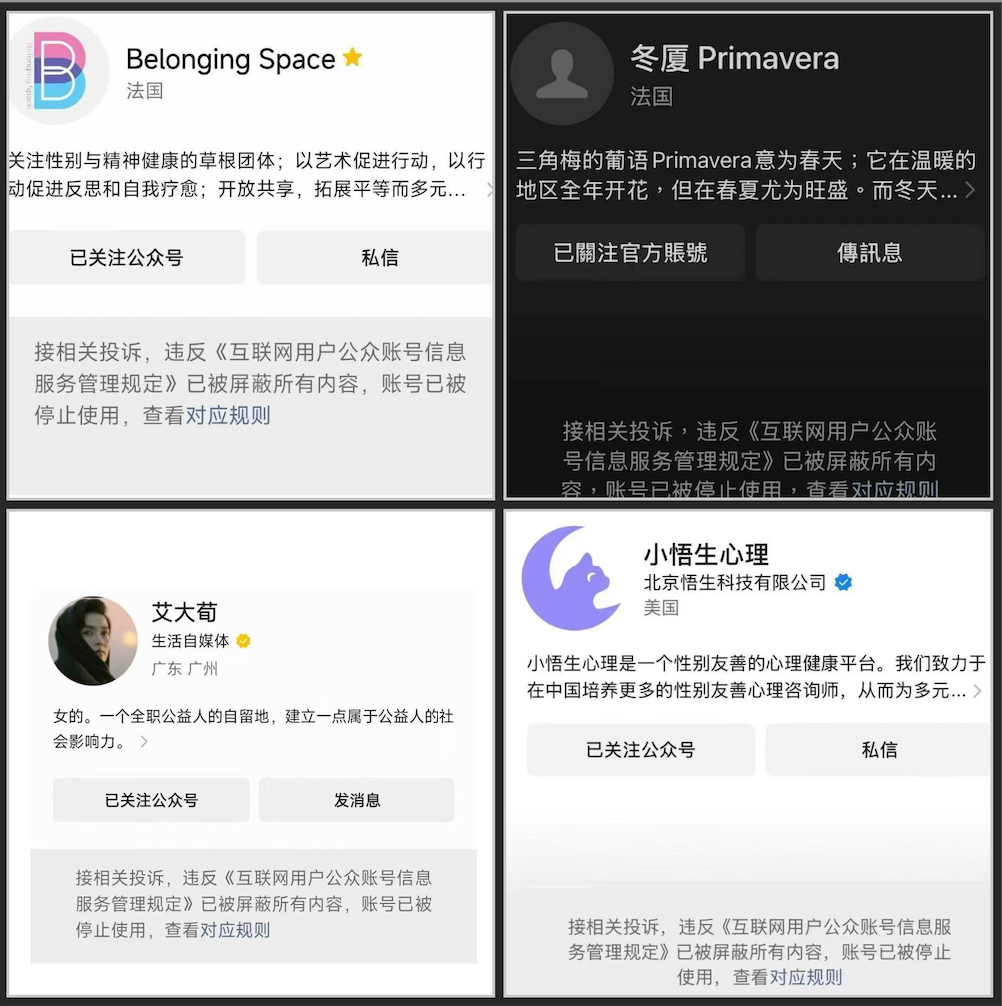
The price of that bargain, so familiar to women around the world, is silence and marginalization. And just as the state prepared its empty message of female empowerment, this was enforced with precision. In the days leading up to International Women’s Day, authorities shut down at least 10 WeChat public accounts that had built communities around the real concerns of women. Taken together, those accounts offered a different vision of participation — one the party-state was not prepared to tolerate.
These were not fringe voices. For years, Chinese women have been telling a different story — on WeChat, on Weibo, on Xiaohongshu — about why they do not want to marry, do not want children, or simply do not see motherhood as the defining purpose of their lives. But for a state bent on managing demographic trends, these voices are regarded as a form of contamination.
Weeks ahead of International Women’s Day, as the Cyberspace Administration of China (CAC) launched its latest periodic “Clear and Bright” (清朗) campaign, social media platforms were ordered to purge not just the usual content deemed harmful to the state but also speech that “promotes not marrying and not having children” (鼓吹不婚不育) or that “provokes gender antagonism” (挑动性别对立) — language that has tended in recent years to radicalize feminism in all of its forms.
Platforms were ordered to set up dedicated task forces and proactively purge content from front pages, trending lists, and comment sections. Then, on the evening of March 6, as the Women’s Federation held a reception celebrating International Women’s Day with foreign dignitaries, the purge directly impacted feminist and sexual minority communities online.
From the evening of March 6 into the early hours of March 7, at least ten WeChat public accounts focused on gender rights vanished one after another. Among them were “Xiaowusheng Psychology” (小悟生心理), which writes about the mental health of marginalized communities; “Dongxia Primavera” (冬廈Primavera), a platform discussing feminism and left-wing youth issues; the Gen Z feminist account “Letters from Two Stranger Girls” (两个陌生女生的来信); “HerStoryNow,” a grassroots feminist community space; “Free NORA” (自由娜拉NORA), which advocates for victims of human trafficking and people with mental disabilities; “Belonging Space,” a counseling and community platform; “Ai Dasun”(艾大荀) which focuses on public welfare, science popularization, and related social issues; “Pride Voice” (骄傲声浪), renamed from the once prominent LGBTQ Weibo account “Voice of Comrades” (同志之声); and “Exile LandAi Dasun” (流放地), which publishes essays, fiction, and personal narratives by sexual minorities.
For those who follow China’s online feminist communities, this playbook from the authorities is all too familiar. Nearly 10 years ago, on March 6, 2018, “Feminist Voices” (女权之声), the country’s most influential feminist account with a following of at least 180,000 on Weibo and 70,000 on WeChat, published an article titled “The Ultimate Women’s Day Celebration Guide” (最强妇女节过节指南) — which called on women to mark the holiday not with shopping discounts or the flattery of being called a “goddess,” but by joining a campus anti-sexual harassment campaign that had grown out of China’s nascent #MeToo movement.
Two days later, on March 8, as official outlets like China Women’s News ran their usual tributes to International Women’s Day that put the achievements of the Party first, “Feminist Voices” was permanently banned. Similar waves of enforcement against accounts devoted to women have followed nearly every year since. In an article this year called “Multiple Gender Equality Accounts ‘Arranged’ Ahead of International Women’s Day,” writer and independent commentator Li Yuchen (李宇琛) observed that the early-March crackdown has become almost a form of ritual. “This operation has already formed a stable, institutionalized rhythm,” he wrote.
The action this year has not been limited to public accounts. Individual voices on social media have also been targeted. In February, Xinjiang stand-up comedian Xiao Pa (小帕) became another casualty. On February 5, she posted on Weibo: “I’ve been lying at home with a fever for two days. I was thinking that if I had a husband and children, I’d probably have to force myself up against the wall right now to cook for them.” Her account was quickly muted and remains restricted.
Three weeks later, the platform’s official moderator account “Weiboxia” (围脖侠) explained the reasons behind the closure. Xiao Pa, it said, had violated requirements of the CAC’s “Clear and Bright” campaign against content that “incites gender antagonism” and stokes “marriage fear” and “fertility anxiety.” Posts expressing support for the comedian were also quietly scrubbed from the platform.
Even caution has offered little protection. On March 7, author “Ai Daxun” (艾大荀), a public-welfare worker who writes about social work, women’s rights, and civil society, published a farewell essay after her WeChat account was pulled down. Called “Written at the Moment My Public Account Was Banned,” the post described the constant paranoia that prevails when one writes under tightening restrictions.
In 2025, “Ai Daxun” had tried to organize an offline book club in Guangdong ahead of International Women’s Day, only to have it canceled two nights before the event. She never attempted such an event again, and said she had grown accustomed on a fundamental level to the atmosphere of self-censorship. She was someone who knew every sensitive keyword and every shifting red line on Chinese cyberspace. “I might even be the mildest among the accounts you follow that still track social issues,” she wrote. “But even so, my account was banned. I kept retreating and treading carefully, yet as the red lines kept tightening, there was still no way around them.”
Each year around March 8, the cycle repeats. Accounts disappear, keywords are scrubbed, and communities scatter and regroup elsewhere. For those trying to speak about gender, feminism, or women’s rights in China’s digital public sphere, the space left to speak grows smaller still.