On the evening of January 18, 2026, Phạm Thanh Nghiên went live on Facebook. A former prisoner of conscience and Vietnamese journalist now living in Houston, Texas, Phạm had nearly 30,000 followers on Facebook, but rarely livestreamed on the platform.
As Phạm prepared to go live, media outlets across Vietnam were trained on the 14th National Congress of the Communist Party of Vietnam (CPV). But the 1,586 party members attending the Congress were subject to strict limitations. Mobile phones were not allowed — only designated tablets. And with the exception of the opening and closing ceremonies, the media were not permitted to attend.
Before Phạm began her livestream, she cautiously asked her husband — a former political prisoner — to open Facebook to ensure the platform was functioning properly. As soon as the livestream began, she repeatedly asked viewers if the audio and video were clear. This additional caution was not without reason: often, especially during politically sensitive periods, her posts touching on politically taboo topics — such as criticism of a political leader, revelations about harassment her family faced in Vietnam, or news about dissidents who had recently been arrested or imprisoned — would be blocked in Vietnam within hours, or even minutes.
During the January livestream, she read to the audience from her 2008 investigative report, “Resentment — Oh, Our Sea!” The report covered a 2005 incident in which fishermen were fired upon by Chinese coast guard vessels in the Gulf of Tonkin, killing nine people. The report had led to her arrest in 2008, under the charge of “conducting propaganda activities against the Socialist Republic of Vietnam.”
The January reading also coincided with the 52nd anniversary of the Battle of the Paracel Islands, a 1974 armed naval conflict between China and South Vietnam over islands off Vietnam’s central coast — well into the contested territory that China now claims as the South China Sea. That conflict ended in a Chinese victory. Amid the clamor surrounding the 14th National Congress this year, the Vietnamese media seemed to have overlooked the anniversary.
A friend of Phạm’s shared the livestream on her Facebook page. Less than 24 hours later, this friend received a call from the police demanding that she delete the post, on the grounds that “they didn’t want to see it while the Party Congress was in session.”
The police had intervened with astonishing speed, but the reason for the crackdown came as no surprise. The “China factor” is considered a “major hidden threat” in Vietnam’s news and social media spaces, where platforms are subject to increasingly strict state control. China is Vietnam’s closest ideological ally, yet armed conflicts between China and Vietnam, China’s aggressive actions in the South China Sea, and the Vietnamese public’s intense anti-China sentiment continue to pose a significant threat to the Vietnamese government’s legitimacy.
Sensitive Reports About China
Born in Haiphong, Vietnam in 1977, Phạm was the youngest of seven children. Her parents were both once members of the Communist Party, but left after becoming disillusioned.
Phạm was forced to drop out of school due to health issues when she was 18. To make a living, she took on various manual labor jobs, such as selling beverages, knitting, and cleaning. Making frequent visits to internet cafes and exploring the richer conversations online, she gained a clearer understanding of socioeconomic issues facing her country, and soon felt inspired to do something to impact change. She established connections online with Vietnamese public intellectuals who dared to openly criticize the injustices of the Communist government and call for reform. Finally, in 2006, she wrote several articles on human rights issues under a pen name. The following year, feeling a strong urge to speak out openly, she began publishing articles under her own name, initiating and joining several human rights campaigns.
In 2005, Phạm had stumbled upon a report on the online media outlet VietNamNet about an incident that had occurred in January that year. Chinese coast guard vessels had opened fire on Vietnamese fishing boats in the Gulf of Tonkin, killing nine and wounding six others. China defended its actions, claiming the coast guard was defending Chinese fishermen against armed Vietnamese “bandits” who had robbed their ships within Chinese territorial waters. At the time, Phạm recalled, VietNamNet was relatively independent and not yet under government supervision, allowing its journalists the freedom to publish such reports.
The waters where the incident occurred are known as the East Sea in Vietnam [NOTE: In China and Taiwan, the preferred term is South China Sea, but “East Sea” is maintained throughout this article to respect the author’s perspective.] In 1974, a battle broke out between the South Vietnamese Navy and China’s People’s Liberation Army Navy over the Paracel Islands, located about 200 nautical miles off Vietnam’s east coast and about 162 nautical miles south of China’s Hainan island. Prior to this conflict, both countries occupied parts of the island group until Chinese fishing boats were discovered in the group claimed by South Vietnam in 1974, sparking the conflict. China has maintained de facto control over all of the islands since its victory in the battle. The Vietnamese government continues to claim sovereignty over the islands, though it remains relatively silent over this conflict today.
In 2008, Phạm and a friend — who was later also imprisoned — traveled together to the hometown of the affected fishermen to pursue a story. After conducting interviews, she wrote the article and shared it with her friends, who then printed it out and sent it to Vietnamese media outlets overseas so that it could be disseminated more quickly and widely.
The report shed light on the numerous hardships faced by the victims’ families, particularly those of the fishermen who were killed by Chinese forces. The Vietnamese government’s complete silence on the matter only exacerbated their suffering — not only did the government fail to protect them, but it also neglected to provide support to these families.
On September 18, 2008, Phạm staged a protest at her home in Haiphong, publicly declaring that “the Paracel and Spratly Islands belong to Vietnam” — the latter referring to another archipelago claimed by the PRC and others but partially administered by Vietnam. She criticized the Vietnamese government for being too weak in the sovereignty dispute in the East Sea, arguing this made it a vassal of China. Her choice to protest at home resulted from increased police surveillance and restriction of her freedom of movement after she had published several articles criticizing the Vietnamese government and participated in protests related to the East Sea dispute. Protesting from home, however, was no less perceived as a provocation by the authorities, and Phạm was arrested. Two years later, she was sentenced to four years in prison followed by three years of house arrest for “spreading propaganda against the state.”
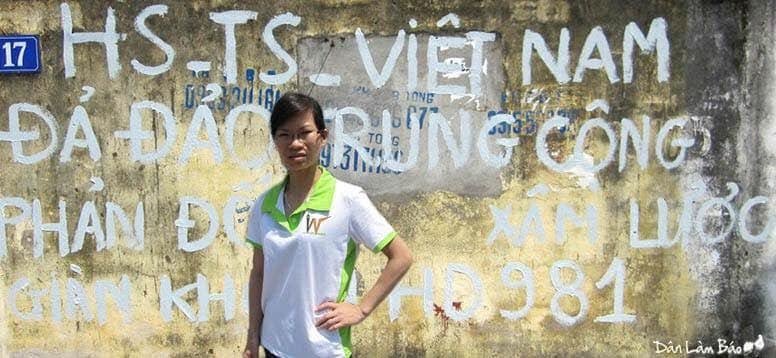
Phạm undertook the difficult work that few state media reporters dared to do. During her imprisonment, police repeatedly interrogated her, demanding to know who had funded the trips that enabled her to write the report. “The police kept asking me if anyone had funded me, even though I told them over and over that I had paid for it myself,” she said. They couldn’t believe that someone from a poor family would visit strangers at her own expense purely out of compassion. The investigative report was later included in Phạm’s memoir, “Fragments of Life Behind Bars,” which was published underground in 2017, five years after her release from prison.
In the 1980s and 1990s, Vietnam experienced a period of dynamic media development driven by increasing commercialization, and eventually by the rise of the internet, though the CPV never fully relaxed its controls over content. In 2023, Vietnam ranked 178th in the World Press Freedom Index released by Reporters Without Borders (RSF), placing it above only China and North Korea among the 180 countries surveyed. In 2025, it ranked 173rd. Every year since RSF began its rankings in 2002 — except for 2022 — Vietnam has placed last among Southeast Asian countries on the index. It also consistently ranks among the countries holding the most journalists behind bars.
Under government pressure, content from Phạm’s January livestream was quickly removed by Facebook. This didn’t surprise her, as posts are deleted all the time. “I’m so used to it by now that I don’t even pay attention when they’re removed anymore,” she said.
Since her release in 2012, Phạm has had a love-hate relationship with Facebook. As it is Vietnam’s most popular social media platform, Phạm uses it to share her activities with the public and connect with other activists both at home and abroad, since the Party-controlled media does not provide such channels of communication.
However, Meta, Facebook’s parent company, has also cooperated with the CPV. The company shut down Phạm’s personal account, as well as several platforms she co-founded with others, leading to numerous complaints and appeals. She manages the Facebook page “The Way Home,” now called “The Walls Have Ears” (Tai vách mạch dừng), which features videos of victims of human rights abuses and has accumulated over 100,000 followers. In the third quarter of 2025, at the request of the Vietnamese government, Facebook removed nearly 11,000 posts, according to Vietnam’s Ministry of Culture, Sports and Tourism. In the same period, YouTube and TikTok removed 705 and 798 videos respectively in response to requests from Vietnam. The blog Phạm founded in 2013, which exposes human rights violations in Vietnam, is now inaccessible from the country without a VPN.
“Strange Vessels”
This year, the first day of the Lunar New Year fell on February 17, coinciding with the anniversary of the outbreak of the 1979 Sino-Vietnamese War — the first open military conflict between the two communist-ruled states. The CPV harbored such intense hostility toward China following that conflict that the preamble to the 1980 constitution — the first constitution following Vietnam’s reunification — referred to China as “a direct and dangerous enemy of Vietnam.” This wording was quietly removed in 1988, paving the way for the normalization of bilateral relations in 1991. Both countries have since deliberately downplayed the war as they sought to mend their diplomatic relationship in the following decades.
The war was triggered by China’s goal to “teach the Vietnamese a lesson.” The newly unified country had not only aligned itself with the Soviet Union, but had also invaded Cambodia and toppled Pol Pot’s Khmer Rouge, which the PRC had supported, threatening its interests in the region. The war left an estimated 26,000 Chinese and 20,000 Vietnamese dead, and relations remained tense well into the 1980s, with subsequent conflicts periodically breaking out along Vietnam’s northern border. But the economic crisis of the 1980s, coupled with the international isolation resulting from Western sanctions imposed for Vietnam’s intervention in Cambodian affairs, forced Vietnam to realign itself with China and ideological allies. It wasn’t until 1991, after the Tiananmen Square incident, that relations were finally normalized. Both countries have since scaled back official war commemorations.
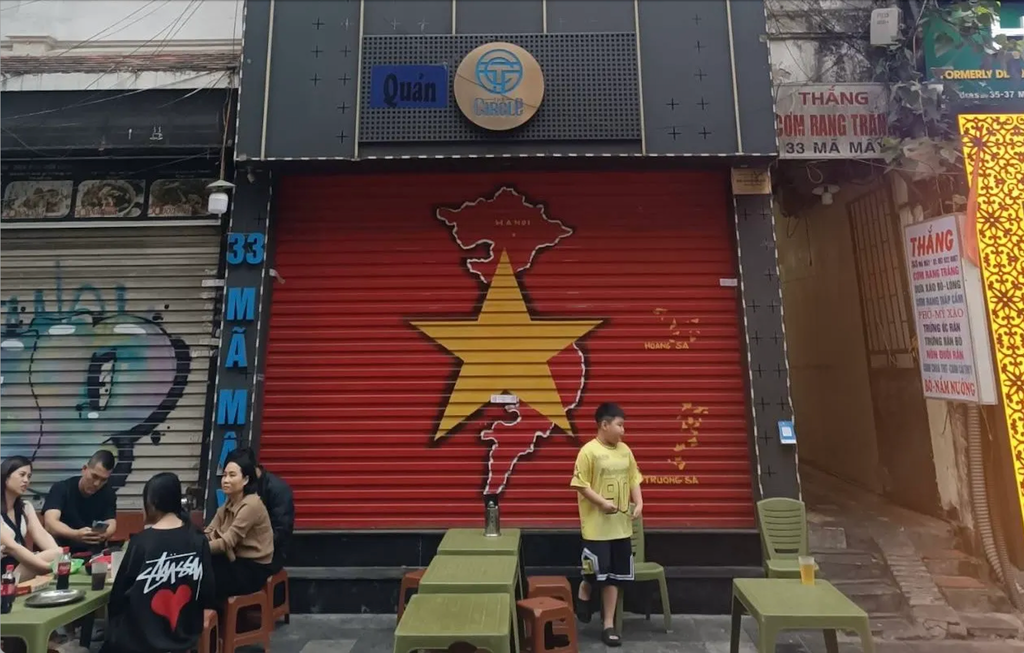
Initially, Vietnamese media referred to the Sino-Vietnamese War as the “war to defend the country against encroachment at the northern border.” But this changed in 2014, after China positioned an oil rig in Vietnam’s East Sea, an area over which Vietnam claims sovereignty, triggering a standoff between Chinese and Vietnamese vessels and sparking deadly large-scale anti-China protests in Vietnam. Afterward, Vietnam’s official language began to sharpen, framing China as the aggressor and condemning its “violent acts.”
In recent maritime conflicts, the Vietnamese media has taken to using the terms “strange vessels” (tàu lạ) or “foreign vessels” (tàu nước ngoài) as euphemisms for “Chinese vessels.” The term “strange vessel” initially referred to ships that carried no flag or plate and suddenly attacked and sank Vietnamese fishing boats, leaving the victims in peril. As the conflict in Vietnam’s East Sea has escalated, many Vietnamese have come to assume that these vessels are Chinese, sometimes without clear evidence.
But both officials and the media have begun to refer to Chinese ships cryptically as “strange vessels,” even when there is clear evidence of their country of origin. In 2024, Chinese maritime security personnel allegedly pursued and boarded a Vietnamese fishing boat near the Paracel Islands in the East Sea and beat the crew with iron rods. Several domestic media outlets continued to use the terms “foreign” or “unknown vessel,” even as China’s foreign ministry acknowledged the incident, claiming that authorities were responding to illegal Vietnamese boats in Chinese waters and that “no injuries were found.”
Such restricted language applies to other red-line China issues as well. Lâm is a former reporter for Vietnamese state-run media who later chose to pursue further studies abroad. He said that because all operating funds came from the state, media personnel had to adhere to strict censorship rules. For security reasons, and following discussions with TianJian, the interviewee is identified by a pseudonym.
“State-funded media face greater pressure when referring to Taiwan and are required to call it ‘Taiwan (China)’ or ‘Chinese Taipei,’” said Lâm. “The Chinese Embassy in Hanoi closely monitors this issue.”
Trịnh Hữu Long, an exiled journalist and editor-in-chief of the independent Vietnamese-language media outlet Luật khoa tạp chí, which is registered in Taiwan, said that Vietnam’s state-run media are required to refer to Taiwan as “Taiwan (China)” or “Taipei (China),” which demonstrates their role as tools that must accurately convey the government’s foreign policy. Specifically, this entails acknowledging the “One China” policy. In nations with freer media environments, whether to refer to Taiwan as “Taiwan” or “Taiwan (China)” depends on the editorial decisions of each media outlet, rather than government pressure.
“When the government exerts pressure by punishing those whose statements run counter to its foreign policy, this creates a chilling effect throughout the national media system, leading them to engage in self-censorship and proactively produce content that aligns with the government’s intentions,” Trịnh said. “We can see that they have never mentioned the Taiwanese government’s response to China’s threats or the Democratic Progressive Party’s independence policy.”
“However, to a certain extent, I believe Vietnam also hopes to maintain good relations with Taiwan because of Taiwan’s economic influence on Vietnam,” Trịnh said. “In particular, Vietnam is in great need of foreign investment in high-tech sectors, areas in which Taiwan is particularly strong. Consequently, the Vietnamese media also appears to maintain a cautious yet harmonious tone toward Taiwan. In fact, I believe this reflects Vietnam’s overall ‘Bamboo Diplomacy’ policy.”
A Documentary That Lacked “Party Spirit”
André Menras (Hồ Cương Quyết), an 82-year-old French independent documentary filmmaker, was the first foreigner to be granted Vietnamese citizenship. He first arrived in South Vietnam in 1968 to teach French. Two years later, he was detained and imprisoned by the South Vietnamese government in Saigon for his support of the National Liberation Front of South Vietnam and for protesting the presence of US and allied troops. Although he went back to France in 1973, he returned to Vietnam in 2002 and continued his work in education through the French-Vietnamese Association of Educational Development and Exchange.
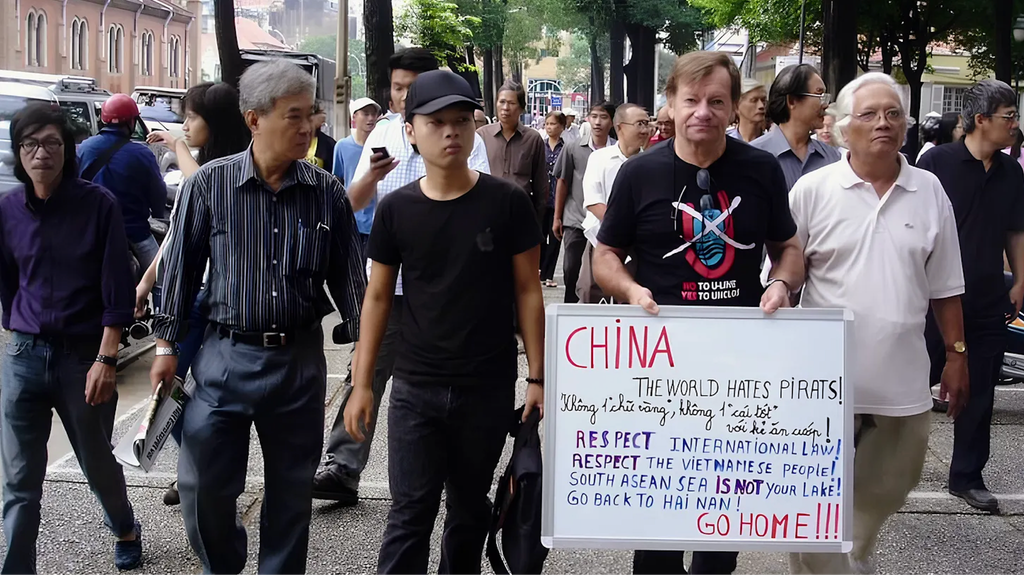
However, his protests against China’s aggressive actions in the East Sea and his continued contact with Vietnamese dissidents soon strained his relationship with the Vietnamese government, which he had criticized for “kowtowing to the Chinese Communist Party,” Menras said in an interview.
Menras considers himself a responsible Vietnamese citizen. Because he holds a French passport, he enjoys greater freedom of expression than many Vietnamese and has produced several documentaries addressing taboo topics in Vietnam. He is no stranger to censorship, whether inside or outside Vietnam — especially when it comes to issues involving China. One of his most controversial works is the 2011 documentary La Meurtrissure (The Bruise), which exposes the tragedy of Vietnamese fishermen attacked by Chinese ships. The film indirectly criticizes the silence of the Vietnamese authorities — the government’s failure to protect the fishermen, compensate them for their losses, and even its efforts to prevent supporters from speaking out on their behalf.
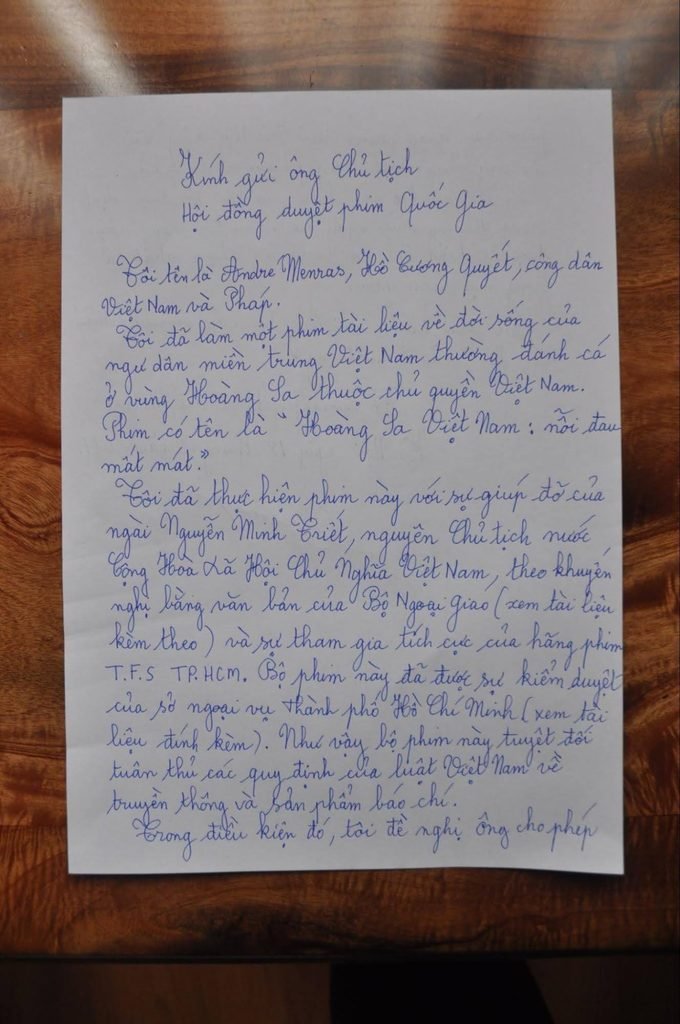
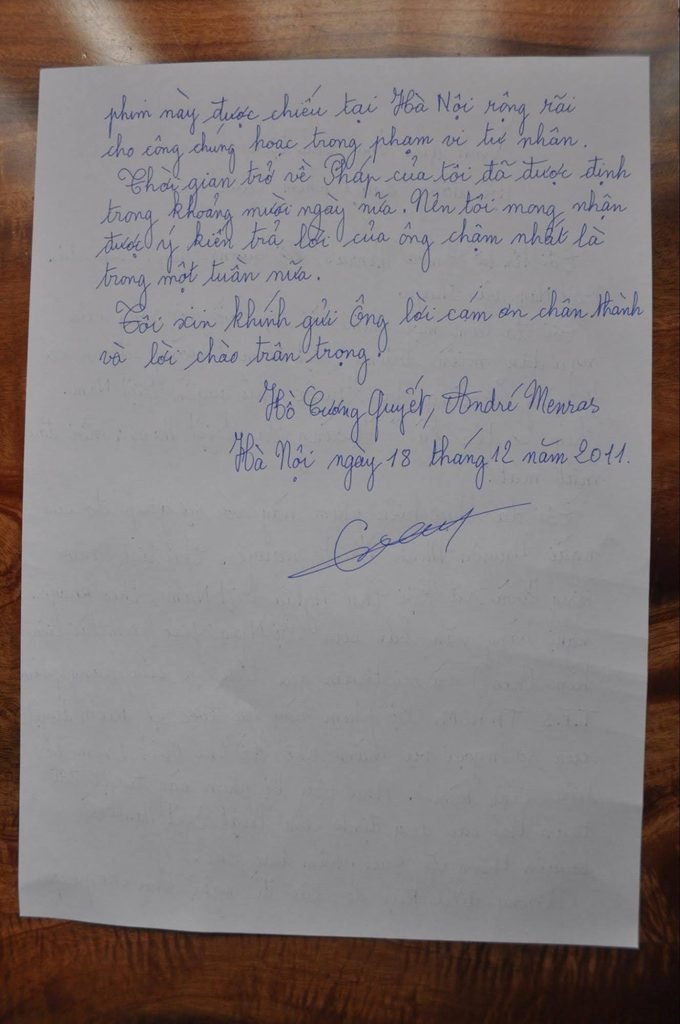
Making the documentary was an uphill battle; interviewees who spoke with Menras were frequently harassed by the police. Public screenings also faced numerous challenges. Even at a screening at the French Cultural Center in Ho Chi Minh City, the organizers attempted to limit the Q&A session. Menras, meanwhile, confronted Vietnam’s censorship authorities head-on. In 2011, he personally delivered a handwritten letter to the National Film Censorship Board of the Ministry of Culture, pleading with the leadership to allow the documentary to be screened publicly. “Of course, I never received a reply,” Menras said.
Because the Vietnamese government needed to maintain good relations with the Chinese Communist Party, La Meurtrissure was ultimately banned in Vietnam and could only be screened privately in Hanoi, Da Nang, and Ho Chi Minh City.
Menras continues to use film as a medium to speak out. He produced another documentary, Les Chevaliers des sables jaunes (The Knights of the Yellow Sands), to further expose the injustices faced by Vietnamese fishermen. He subsequently uploaded all of his documentaries — including his latest film, Vietnam au cœur (Vietnam in My Heart) —to YouTube in their entirety and free of charge.
“For me, the suffering endured by the fishermen and their families has evolved from a humanitarian issue into a political struggle for justice and democracy — one centered on the demands for freedom of speech and freedom of information. Fundamentally, the fishermen’s tragedy concerns these basic rights: the right to live and work freely in their own country. The authorities in Beijing violate these rights by targeting the fishermen, while the Vietnamese government suppresses their voices both at home and abroad. This is precisely why breaking the silence is so difficult — but it also makes this struggle all the more noble,” Menras said.
“I might return to Vietnam in 2026, after my latest film is screened in France,” he added. “You can never predict — let’s dream a little — maybe one day I’ll be able to screen the Vietnamese version in Saigon and Hanoi, or the French version at the French Academy… but that would require the authorities to show an extraordinary degree of openness.”
Christelle Nguyen is a development researcher based in Southeast Asia. Her research interests include East Asian politics and technology diplomacy. This article originally appeared in Chinese at TianJian (田間).