
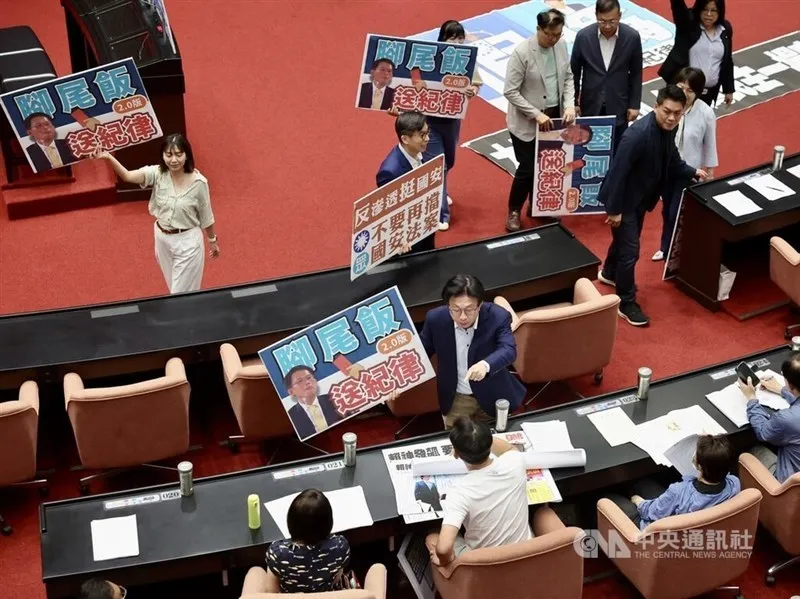
Huang Kuo-chang (黃國昌), the chairman of the Taiwan People’s Party (TPP), the center-left political party formed in 2019 by now-jailed former Taipei mayor Ko Wen-je (柯文哲) and in coalition with the KMT, faces criminal investigation after playing what he called a “demonstration tape” (示範帶) during legislative questioning of Justice Minister Cheng Ming-chien (鄭銘謙) on June 16 about alleged misconduct by prosecutors under the current government.
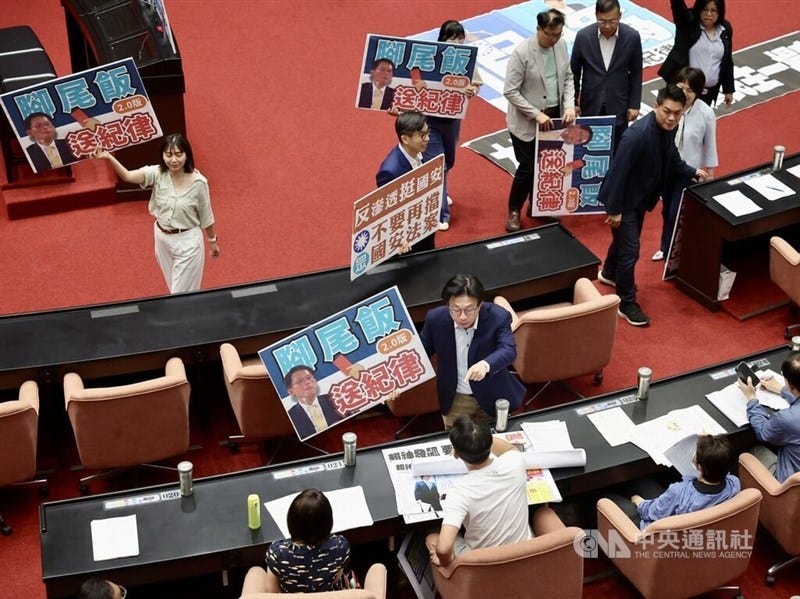
The audio, which purported to show prosecutorial misconduct against a suspect named “Mr. Chu,” appeared to feature a prosecutor conducting a harsh interrogation using threatening language, but Huang later admitted to having created the recording himself. Fellow TPP legislator Zhang Qi-kai (張啓楷) complicated matters by claiming to have listened repeatedly to “the entire Ko Wen-je case prosecutor interrogation CD” — implying there had been misconduct in the case against the former Taipei mayor and TPP leader.
The Taipei District Prosecutors Office has opened an investigation into potential document forgery. Critics, meanwhile, compare the incident to Taiwan’s “funeral rice” (腳尾飯) scandal of 2005, in which Taipei city councilor Wang Yu-cheng (王育誠) was found to have staged video purporting to show that funeral parlor workers were selling leftover “funeral rice” (food offerings set beside corpses during funerals) to civilian restaurants — an apparent bid to embarrass the KMT city administration of then-mayor Ma Ying-jeou (馬英九).


