

As China’s concerted national “AI+” campaign to leverage the technology for national development has begun to reshape educational priorities in the country, The Paper (澎湃新闻), a Shanghai-based media outlet under the state-run Shanghai United Media Group, published a commentary this week that endorses the country’s new AI education guidelines, released earlier this month. The commentary argues for a “human-centered” perspective that balances technological adoption with critical thinking, explicitly rejecting fears of AI. “It is not necessary to view artificial intelligence as a menacing flood,” the editorial said, addressing concerns about how AI might affect students’ learning abilities.
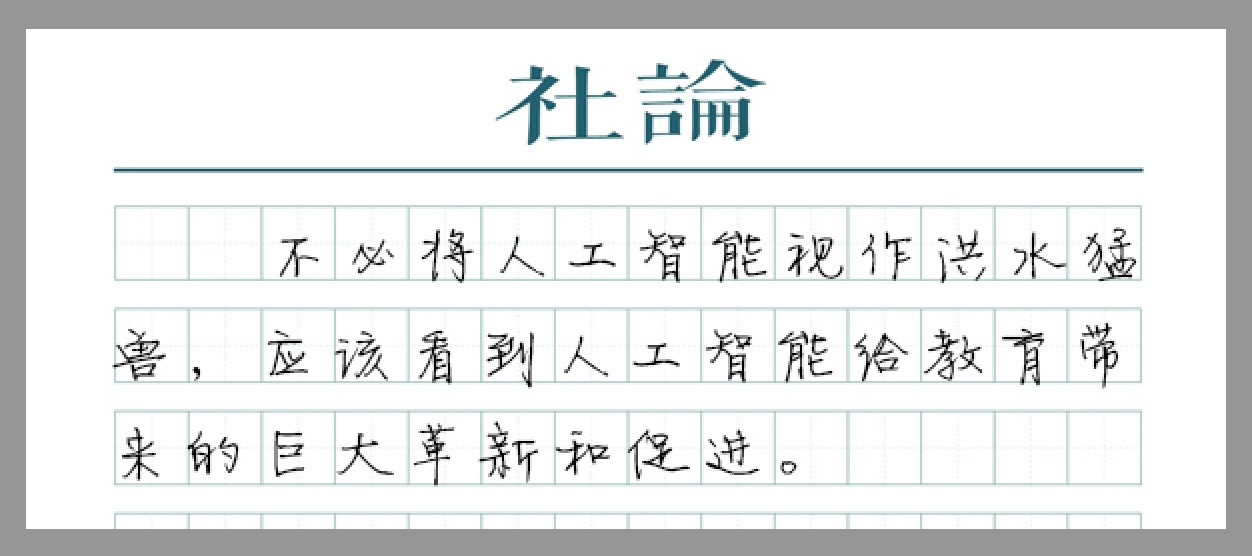
The commentary argues that AI will improve China’s education system by pushing it to “focus more on cultivating children’s independent thinking and innovation abilities, applying knowledge to practical life, and transforming knowledge into true wisdom.” Since the launch of “AI+” — a government campaign to inject AI into every area of Chinese society and industry — Chinese state media have been touting a positive outlook on the emerging technology. This includes the government’s bold overhaul of the nation’s education system, angling it towards AI.
It bears noting that while China has officially invested a great deal of hope in AI as a driver of advancement in many areas, the challenges facing education — and in particular critical thinking — stem not from technical limitations, but from political restraints on speech and truth-seeking.
For more on AI and education in China, read CMP’s “China’s AI Job Mirage” and “Shrinking Humanities for AI”. For more thoughts on critical thinking in China, see our past interview with Lan Fang and Guo Zhaofan.


