Tag: Disinformation

Manufacturing Dissent

TikTok, often criticized in Western capitals as a vector for Chinese disinformation, has become a platform for distributing fake news about protests within China itself. Following the suspicious death of actor Yu Menglong (于朦朧) and what appeared to be a government cover-up in September, AI-generated videos falsely depicting mass anti-government rallies circulated widely on the platform, according to AFP’s fact-checking service. The terrifyingly realistic clips — betrayed at points only by slightly distorted faces and nonsensical Chinese characters — bore the watermark for Sora, the visual generation software from OpenAI. They originated from an account called “Team Taiwan Value” and garnered hundreds of thousands of views and comments.

Many users believed the fabricated protests were genuine, with commenters expressing solidarity. No evidence exists of actual large-scale rallies in China over Yu’s death, which Beijing police attributed to an accidental fall, prompting widespread questioning from fans, and related reports in Chinese-language outlets globally. The videos, including this one and this one, were taken down Tuesday afternoon.
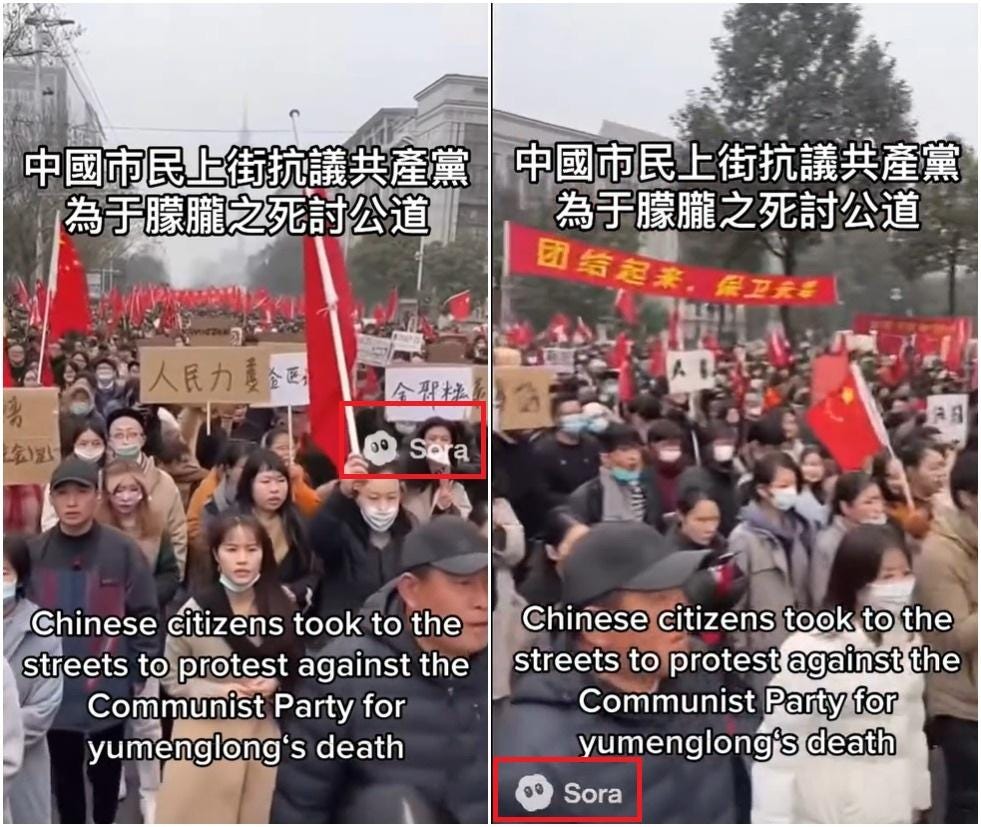
SOURCE: AFP Factcheck.

Breaking Ranks

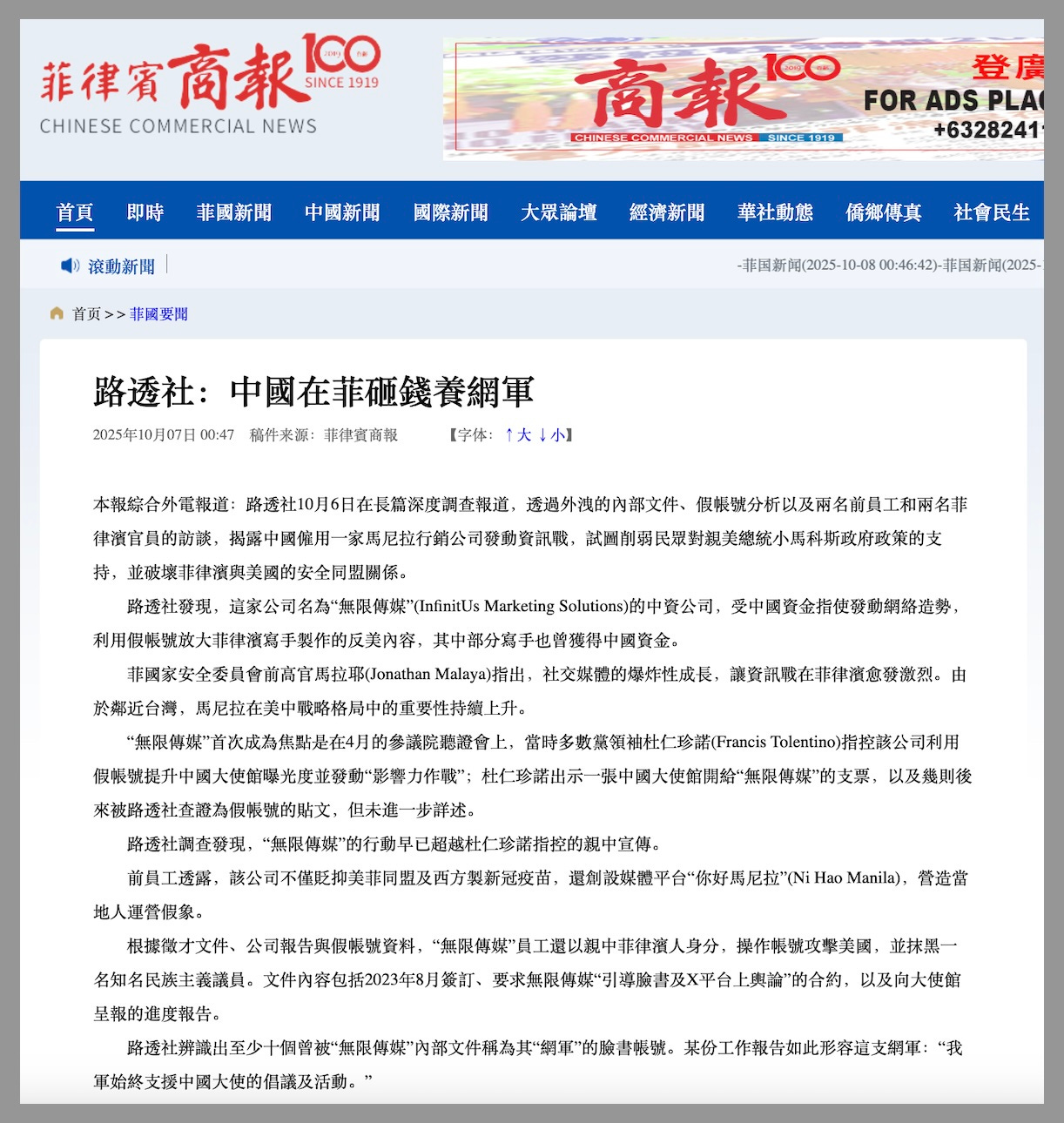
The long-established Filipino Chinese newspaper Chinese Commercial News (菲律賓商報) devoted substantial coverage in its October 7 print edition to a Reuters investigation published on Monday alleging China hired a Manila-based marketing company to conduct information operations in the Philippines. The report detailed how InfinitUs Marketing Solutions allegedly used fake social media accounts to undermine support for President Marcos’s pro-U.S. policies and weaken the Philippines-U.S. security alliance. The newspaper’s prominent treatment of the story is notable given that it is generally seen as China-leaning and lists the Chinese embassy, China News Service, and other official Chinese media as “friendly links” on its website.

The Chinese Commercial News republishes the Reuters investigation on its website Tuesday.

Promotion Unlocked

Sun Shangwu (孫尚武), deputy editor of the state-run China Daily (中國日報) newspaper, will become deputy director of China’s central government Liaison Office (中聯辦) in Hong Kong, according to a report by Hong Kong’s Sing Tao Daily. The 56-year-old Sun, the paper reported, has “extensive foreign propaganda experience” (外宣經驗豐富) and will oversee external communication work for the office, which also closely controls such outlets as the Ta Kung Pao (大公報). This “extensive” experience is an apparent reference to Sun’s launch in 2021 of China Daily’s “Media Unlocked” (起底) studio, a combative social media brand that claims to produce “investigative documentaries” (调查纪录片) but more often peddles outright disinformation targeting critics of China in the West. “Media Unlocked” recently launched a personal attack on Simon Fraser University’s Darren Byler, who has criticized internment camps in Xinjiang.

Unsuspecting Singapore

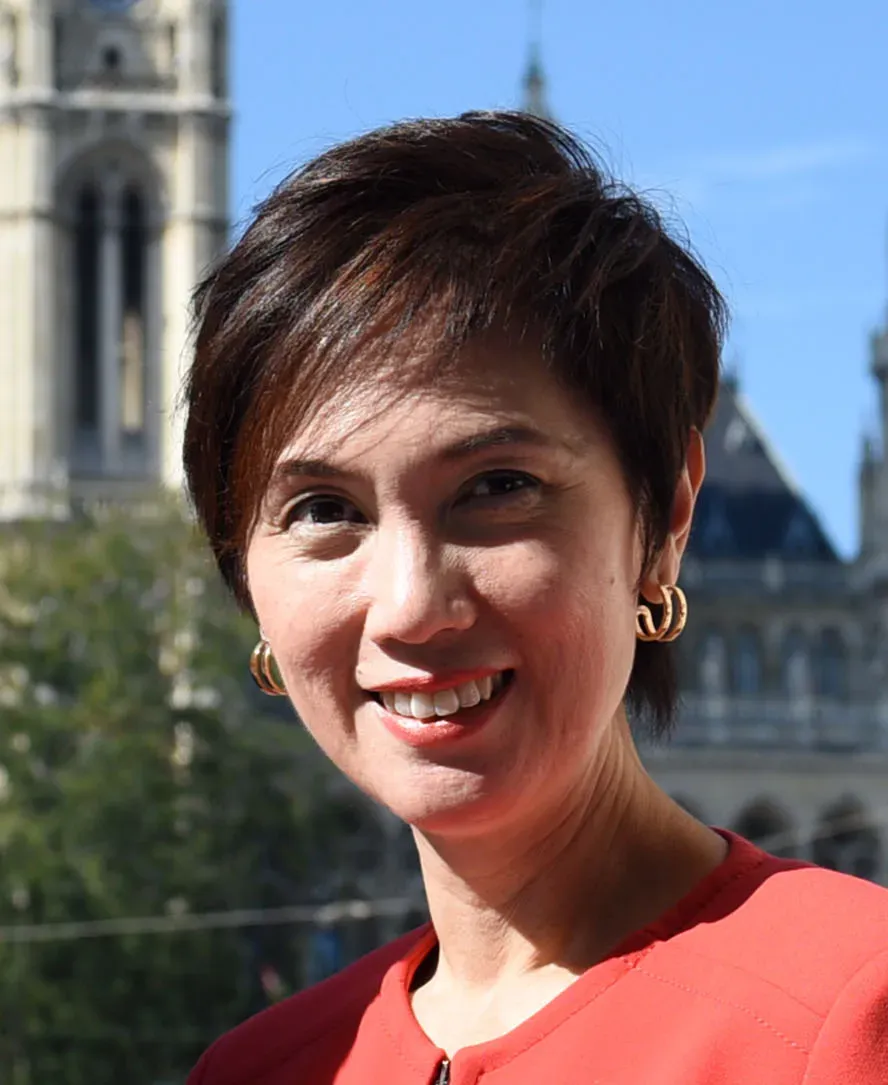
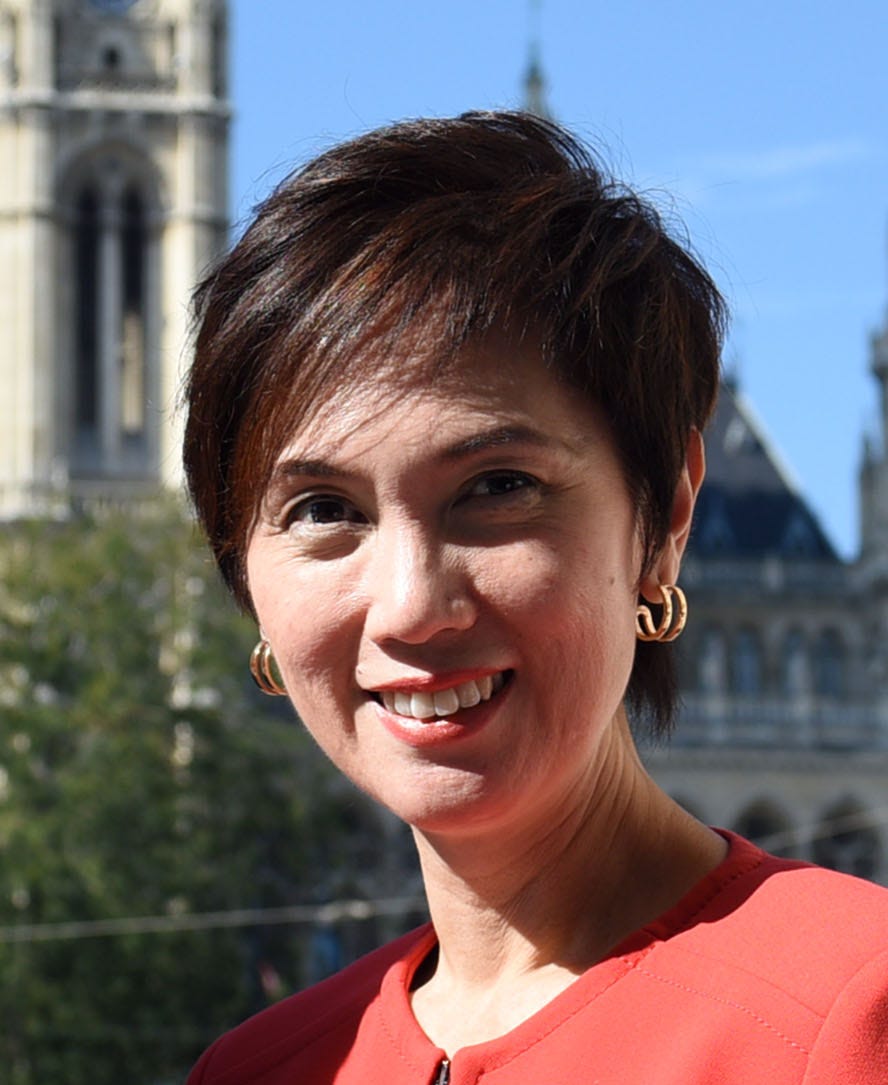
Last week, Singapore’s top digital development and information official, Josephine Teo (杨莉明), revealed that just one quarter of Singaporeans can distinguish between deepfake and authentic videos, citing a recent Cyber Security Agency survey. Speaking at the Singapore Press Club awards ceremony July 16, Teo emphasized the critical role of trusted media in an era of information manipulation, warning that authorities must prevent malicious actors from exploiting Singapore’s information space while building “a resilient ecosystem where truth can stand independently” (一个真相能够独立存在 …. 的生态系统). The comments come two months after Reporters Without Borders ranked Singapore 126th out of 180 countries in its latest press freedom index, citing the city-state as “an example of what not to be” on media freedoms.

Josephine Teo. SOURCE: Wikimedia Commons.

DeepSeek’s Democratic Deficit

DeepSeek’s R1 AI model, released in February, has been rapidly adopted by governments and companies worldwide, including India’s government and American tech multinational Nvidia. Meanwhile, China’s government has promoted the model as democratizing AI access. “DeepSeek has accelerated the democratization of the latest AI advancements,” China’s embassy in Australia declared back in March this year.

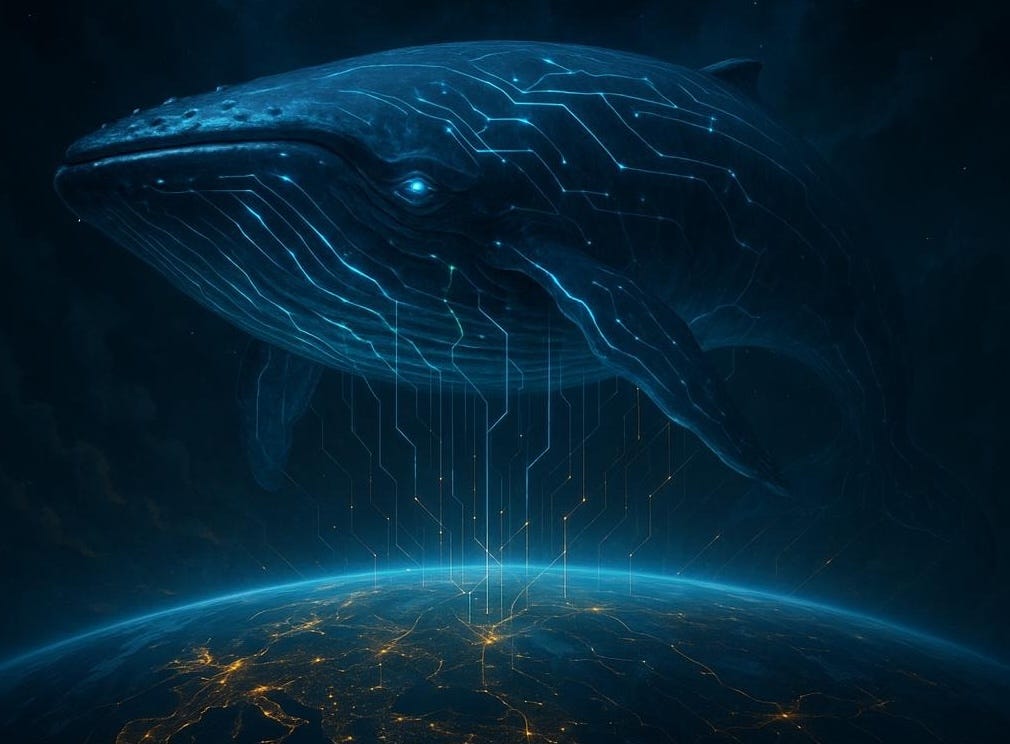
DeepSeek, a global whale in Chinese AI. Image: ChatGPT by CMP.

Much of the hype around DeepSeek is premised on the idea that the model can be “de-censored” — training out of its embedded PRC biases. But our research at the China Media Project questions this premise, suggesting the model risks becoming a vehicle for the global spread of Chinese Communist Party narratives and authoritarian influence rather than genuine democratization of information. Our work suggests the model’s biases run deeper than simple censorship, and that even “uncensored” versions continue spreading CCP disinformation — for example claiming Taiwan has been “part of China since ancient times.”

CMP researcher Alex Colville writes: “Open-source can mean, broadly speaking, greater democratic decision of the benefits of AI. But if crucial aspects of the open-source AI shared across the world perpetuate the values of a closed society with narrow political agendas — what might that mean?”

Learn more about this important issue at the China Media Project.

Propaganda Pushback

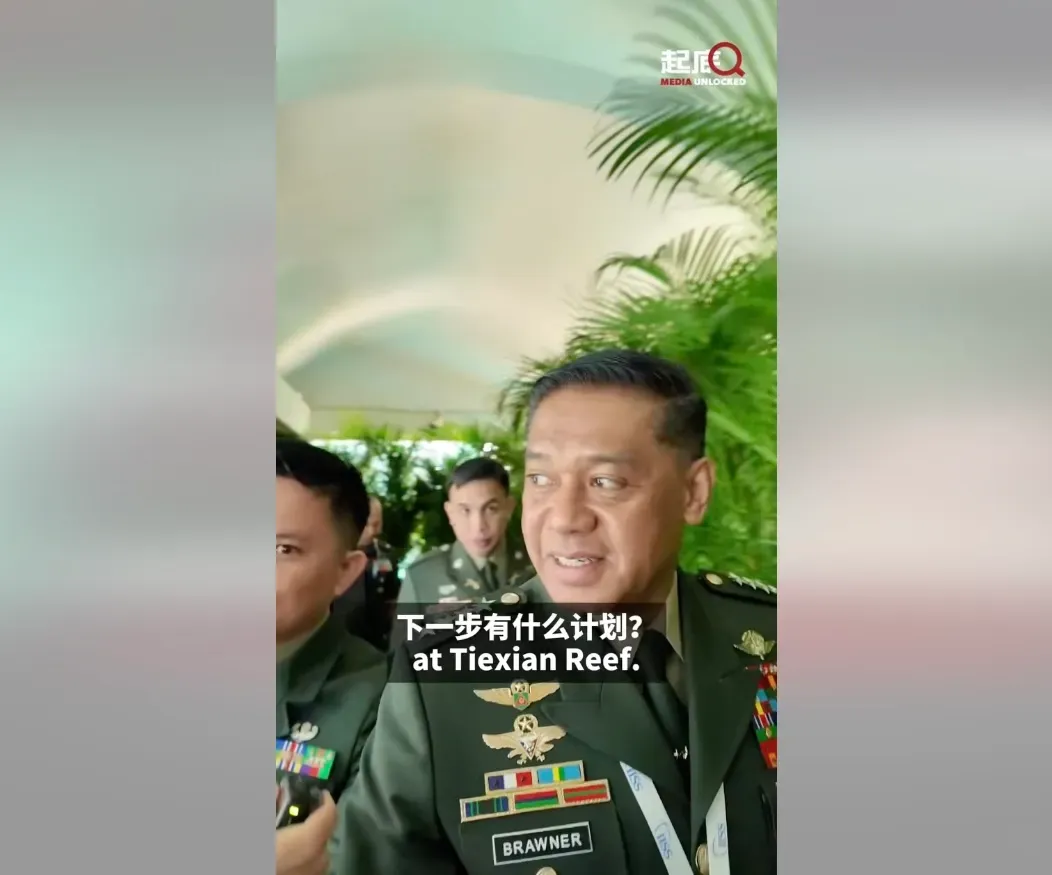
The Armed Forces of the Philippines dismissed as “propaganda” a China Daily video showing General Romeo Brawner Jr. allegedly avoiding reporters at Singapore’s Shangri-La Dialogue, held May 30-June 1. The video was posted online yesterday by “Media Unlocked” (起底), a social media brand of China Daily that takes a shallow and confrontational approach while purporting to explore topics more deeply. In the video, the “Media Unlocked” reporters appear to have not clearly identified themselves as reporters. They then allege that Brawner “dodged the question” about what they characterize as “the Philippines’ recent provocations in the South China Sea.”

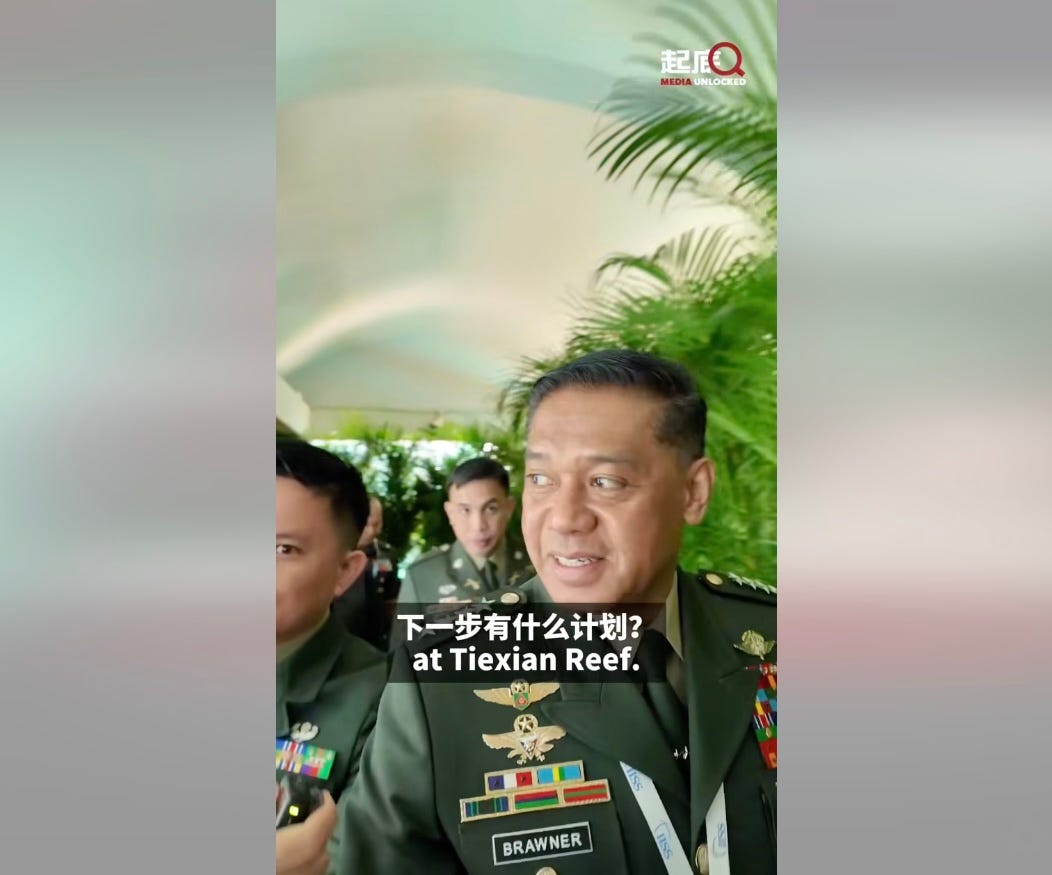
A screenshot of the China Daily “Media Unlocked” video in which Brawner and others are cornered for questions about territorial disputes.

Defense Secretary Gilberto Teodoro Jr. noted that China had not sent an official delegation to the security forum, where he addressed Beijing’s assertions in the West Philippine Sea (西菲律賓海) — referring to the portion of the South China Sea claimed by the Philippines.

The incident in Singapore reflects how maritime disputes between the Philippines and China over the South China Sea have intensified in recent months and spilled over into the information space, becoming a contest of narratives. But it also offers an illuminating look at how Chinese state media go on the attack — seeking to create and distribute propaganda and disinformation on issues of core interest through prescribed proxy media brands and viral content. The “Media Unlocked” video was produced by Meng Zhe (孟哲) and Xupan Yiru (徐潘依如), who are identified elsewhere as reporters for “the Unlocked Media Studio of China Daily” — though not in the video itself. The “Unlocked” brand is part of a growing social media “studio” system implemented by central CCP-run media in recent years, partly to distance core state media brands from more provocative statements and conduct, and partly to disguise their state affiliation on social media platforms. Notably, the military delegation from the Philippines was approached at the same time by a reporter from Yutuantantian (玉渊谭天), a social media brand under the CCP-run China Media Group. In April 2023, a top CMG executive said the account had been “planned in advance and prepared over the long term to deliver powerful punches at critical moments.”