

In 2009, as more than 150,000 Hong Kongers massed in the city’s iconic Victoria Park for a candlelight vigil marking the 20th anniversary of the Tiananmen massacre, radio host Li Siu-mei (李小薇) was on the scene for Hong Kong’s public broadcaster. She interviewed former Beijing student leaders alongside Polish democracy activists from the 1980s who compared their decades-long struggle against Soviet occupation to China’s pro-democracy movement. The program drew immediate fury from pro-Beijing figures and Chinese government-run media, which accused the broadcaster, Radio Television Hong Kong (香港電台), of “political mobilization” and of taking an “anti-Communist” stance. But the episode, which the network defended, demonstrated how much space for political debate remained possible under a charter that required “accurate and impartial” coverage representing diverse views “without fear or favor.”
Nearly two decades on, debate of such frankness on Hong Kong’s public broadcaster is unimaginable, and the closure this month of “LegCo Review” (議事論事), the program Li Siu-mei hosted in 2009, and another well-known radio program, “Letters from Hong Kong” (香港家書), marks the end of an era for independent analysis on the network, known generally as “RTHK.” Both programs officially ended on January 3, having run their final episodes last month. The shuttering of the programs came just days before RTHK announced that it had also pulled scores of its podcasts from Spotify as well as from its Podcast One platform.
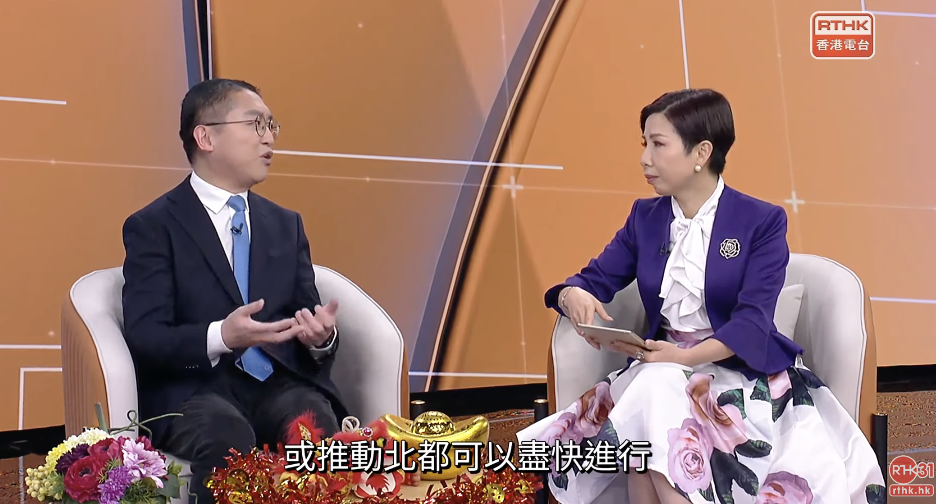
RTHK explained both program cancellations by claiming it was “keeping pace with the times,” and that with numerous platforms now available, the programs were no longer current.
These rationalizations fly in the face of data showing that 42 percent of Hong Kong consumers tuned in to podcasts for at least one hour per week in 2025 — suggesting strong, and growing, demand for audio content. Beyond the commercial pretext, it is important to remember that what made these programs irreplaceable was their unique civic role. Funded by public money and broadcast on public airwaves, they occupied a space for political debate that the government itself was obligated to provide.
These moves, following years of heavy-handed management that saw programs canceled, or pulled hours before airing, and sensitive episodes scrubbed from schedules and archives, mark RTHK’s continued retreat on the programming side from its role as a public broadcaster — and increasingly, its integration into the orbit of China’s state media.
The latter shift was crystal clear this month as Hong Kong’s director of broadcasting, Angelina Kwan Yuen-yee (關婉儀), who oversees RTHK, led a delegation to Beijing and Tianjin. She met with officials from China Media Group (CMG) and the National Radio and Television Administration (NRTA) — both directly under the Central Propaganda Department — as well as local state-run broadcasters and private platforms like Alibaba’s Youku. During the visit, Kwan emphasized the need for RTHK to fulfill a state-centered role that has been core to media policy under the Chinese leadership since 2013. RTHK, she said, must “tell the national story and the Hong Kong story well.”
To that end, Kwan’s delegation explored “deepening collaboration” on program content, production techniques, and “talent training.” According to the official report, these exchanges were intended to lay the groundwork for “jointly planning” programs on culture and tourism while “enhancing program quality.” Kwan told her counterparts in Beijing that such cooperation would help “provide higher-quality broadcast services to citizens.” However, this commitment to “deepening collaboration” with mainland organs sits uneasily with RTHK’s charter as a public broadcaster, which mandates accurate and impartial coverage reflecting diverse views, rather than alignment with the priorities and practices of party-state media.
The notion that Hong Kong audiences now have abundant platforms for political debate rings hollow. Independent outlets in the territory have repeatedly been shuttered under national security investigations, and self-censorship is widespread.
The transformation at RTHK began under Patrick Li Pak-chuen (李百全), who was appointed director of broadcasting in February 2021, within a year of Hong Kong’s national security law. A former director of Home Affairs, Li took charge after a government review found that RTHK’s management had “exhibited many problems.” Under Li, editorial control was steady and systematic: programs were canceled or pulled hours before airing, sensitive episodes removed from schedules and archives, and production of some content shifted to external contractors — granting management strict control while maintaining a veneer of procedural oversight.
This commitment to “deepening collaboration” with mainland organs sits uneasily with RTHK’s charter as a public broadcaster, which mandates accurate and impartial coverage reflecting diverse views.
Li Pak-chuen left RTHK in July 2022 to become Hong Kong’s permanent secretary for security. The culture of control he established continues under the current director, Kwan, who has made it her mission to accelerate integration with official state media and the priorities of the state. Early in her tenure as director of broadcasting, Kwan pledged to “strengthen cross-media multilingual broadcasting, actively play the role of linking the interior and connecting the exterior,” signaling a strategic repositioning of RTHK’s role as a Hong Kong public broadcaster. Since then, she has actively pursued links with Chinese state media groups from the central down to the local level.
In June last year, signing a memorandum of cooperation with the state-run Guangzhou TV expressly for the promotion of the 80th anniversary of Japan’s World War II surrender, one of the key propaganda events of the year, Kwan told her hosts in China that RTHK would “actively promote the integrated development of Hong Kong and the Mainland.” And again in September 2025, Li led RTHK in signing a strategic memorandum of understanding on program resources and talent exchange with the state-run Guangxi Radio and Television, the focus again on “telling China’s story well.”
The fate of RTHK’s current affairs programs this month underscores the collapse of independent voices on the public broadcaster as it nears its 2028 centennial. Even the memory of RTHK’s fearlessness and independence has become a matter of sensitivity. In 2023, the network quietly removed a 34-year-old letter of gratitude from its newsroom, which had honored journalists for their reporting on the 1989 Tiananmen crackdown. Once willing to confront sensitive truths, RTHK has now fully retreated from its public mission. Far from defending editorial independence, its executives bow to officials in Beijing, surrendering the broadcaster’s once-proud commitment to impartial journalism for Hong Kong audiences in favor of state narratives.


