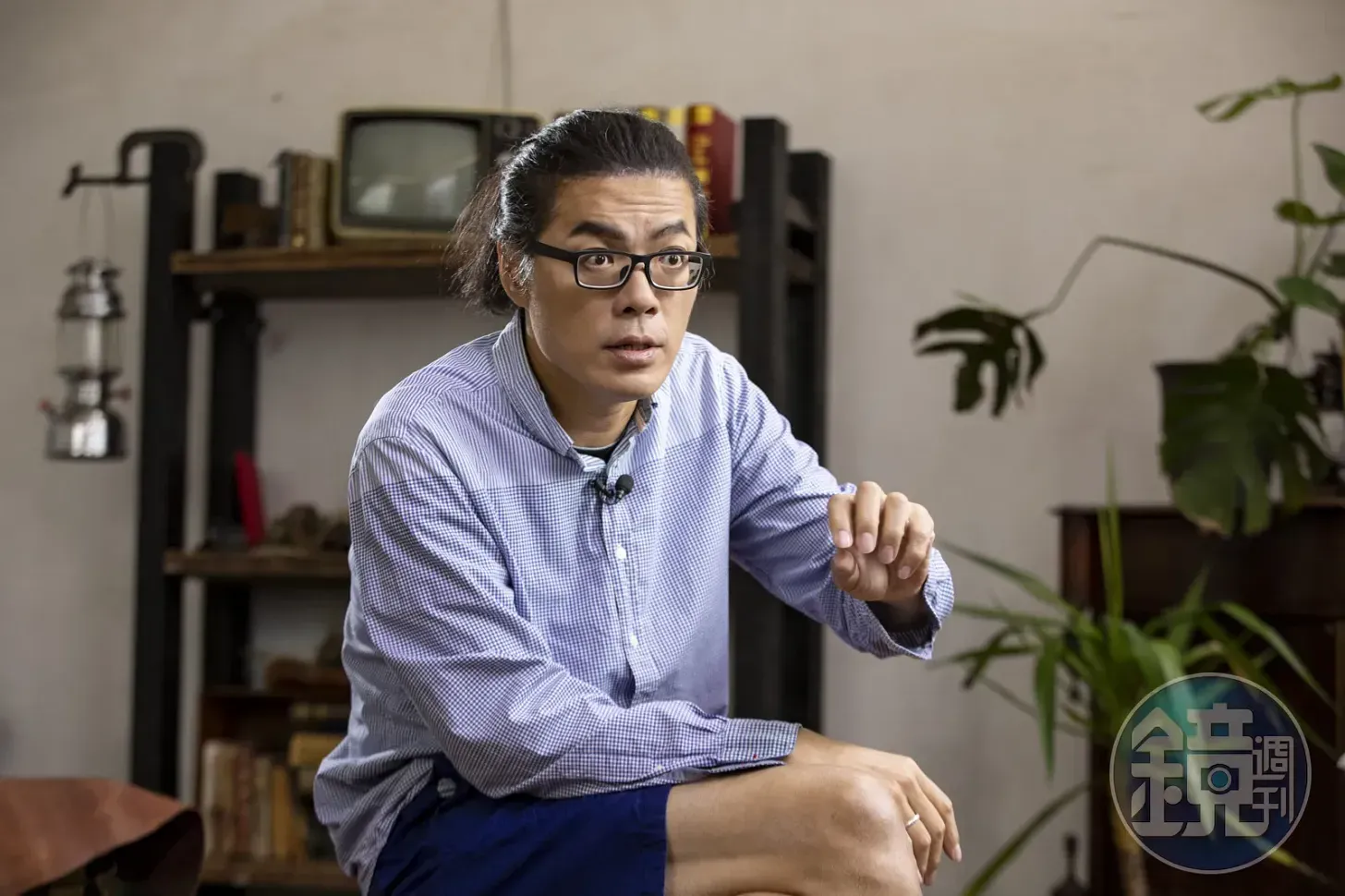
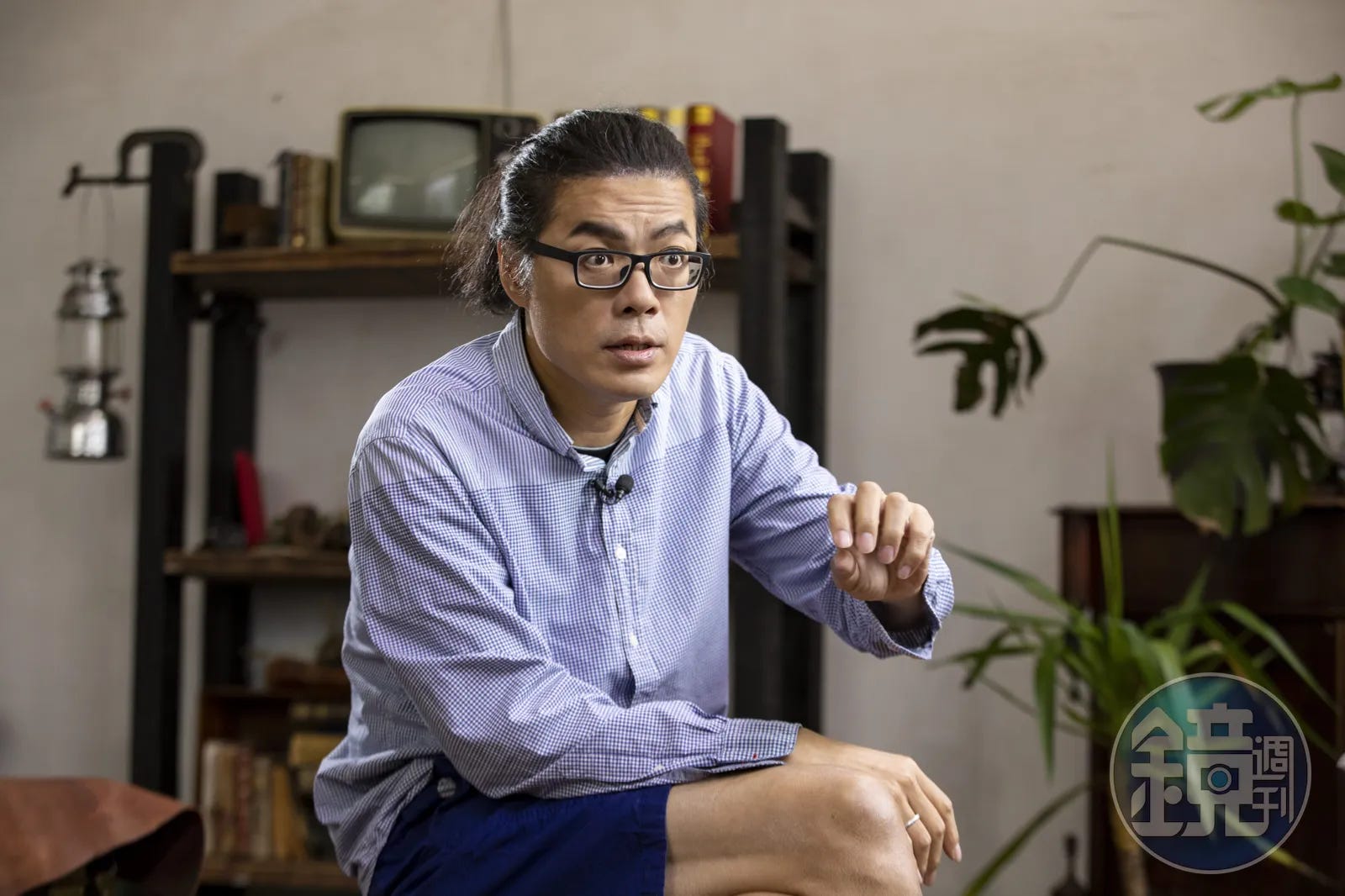
New KMT Chairperson Cheng Li-wun’s (鄭麗文) claim in an October 31 Deutsche Welle interview that Russian President Vladimir Putin “is not a dictator” because he was elected has sparked controversy in Taiwan in recent days. But another source of controversy has been the confrontational approach of DW interviewer Tsou Tzung-han (鄒宗翰). Lee Chih-te (李志德), a seasoned Taiwan journalist, compared Tsou unfavorably to former Al Jazeera host Mehdi Hasan, known for his cool yet “pointed questions,” and suggested Tsou lacked the preparation and strategic questioning that makes for effective interviewing.
News&Market (上下游新聞), a niche Taiwan media outlet focusing on agriculture and environmental issues since 2011,found itself embroiled in controversy over social media framing after posts on Facebook promoting its relatively balanced coverage of Taiwan’s first African swine fever outbreak in seven years triggered allegations of bias in favor of the opposition Kuomintang (KMT) party — and escalated into questions about its financial backing.
The controversy began when News&Market’s social media posts framed its outbreak coverage in ways critics saw as deflecting blame from KMT officials currently leading the local government in Taichung, where the outbreak was confirmed on October 21. One Facebook post asked: “Is Taichung really the outbreak’s source? The answer isn’t that simple.” While the underlying reporting examined systemic failures across both local and national governments — ranging from inadequate enforcement of food waste sterilization to gaps in veterinary care — the social media packaging triggered allegations of bias as it seemed to give Taichung officials a pass and lay blame instead on the national government, currently run by the Democratic Progressive Party (DPP). As skepticism grew online, users questioning the perceived slant began probing the outlet’s funding sources. In Taiwan’s divisive political environment, KMT alignment can often be perceived by “pan-green” DPP supporters as simply pro-China.
The outlet denied allegations of Chinese funding on October 30, saying its operations are supported by “small donations and market product sales.” Risking further speculation, however, it has so far not provided financial data or verifiable documentation of these revenue sources.
The case is a sobering illustration of how intentionally viral social media posts about the news — regardless of its actual reporting quality — can lead to an outbreak of questions about credibility, especially against a backdrop of political divisiveness.
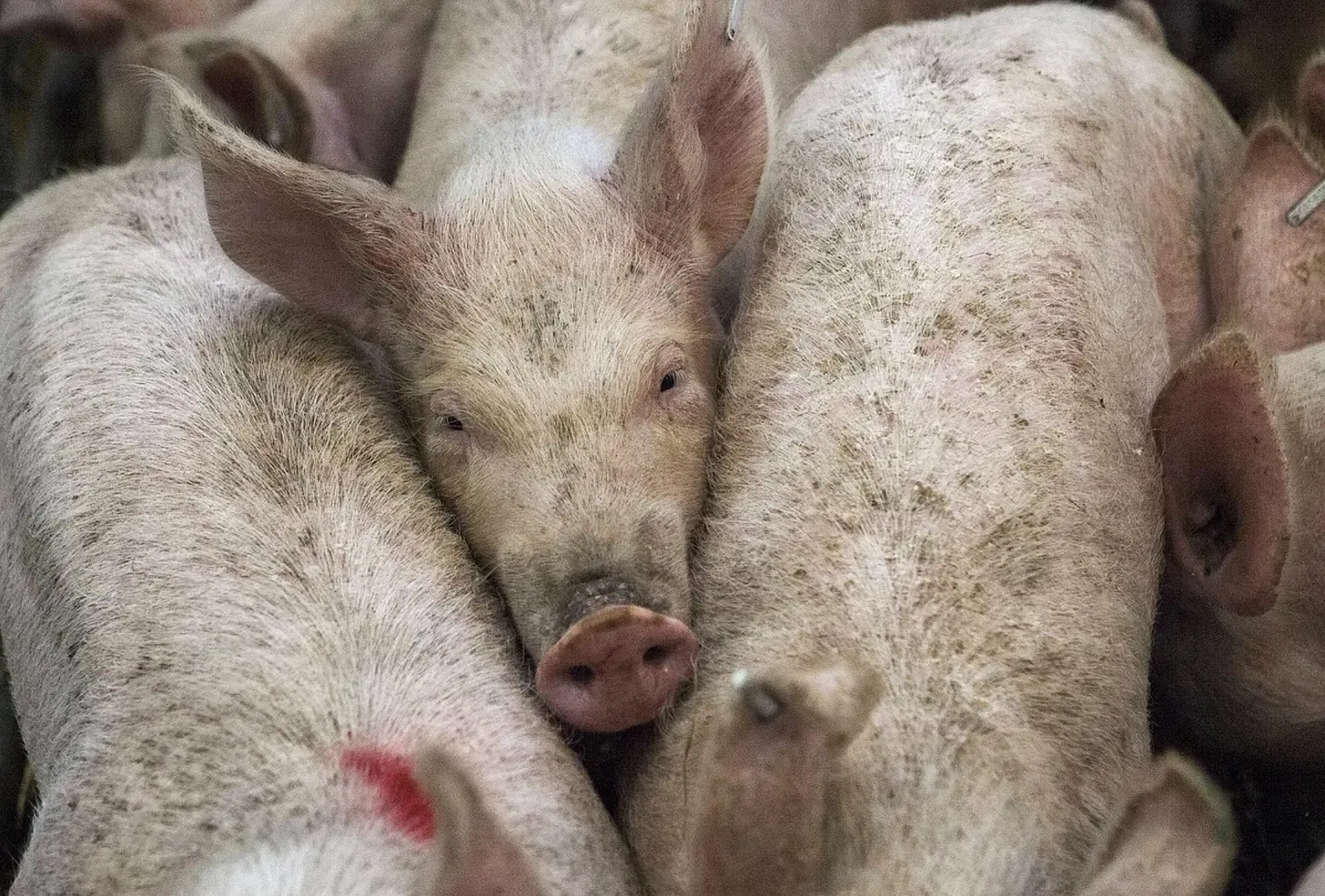
Taiwan’s first African swine fever outbreak in seven years in late October sparked controversy over coverage by News&Market, a niche outlet focusing on agriculture. For illustrative purposes only. SOURCE: Pixabay.
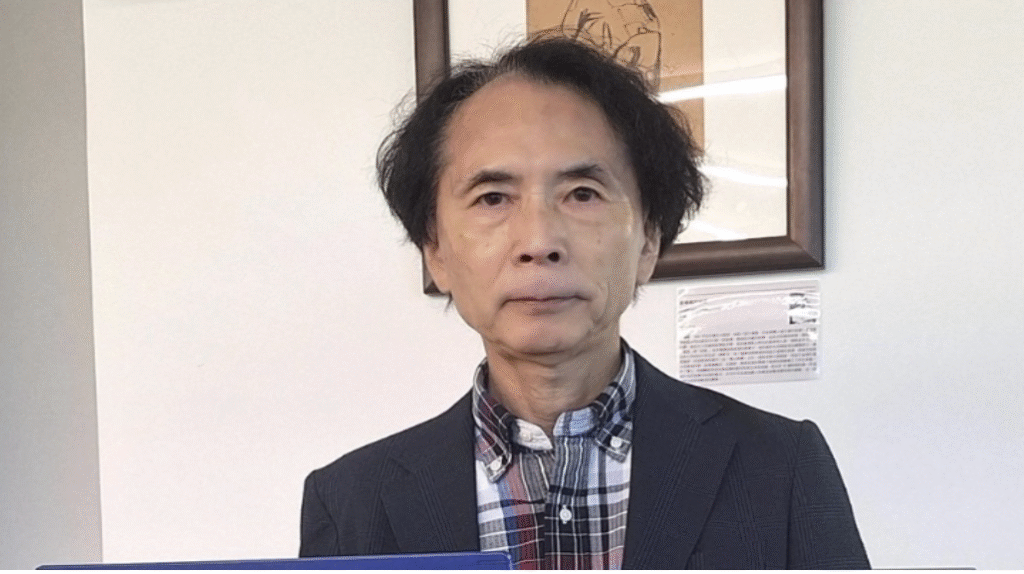
A Japanese scholar accused the China Times (中國時報) of fabricating his analysis of the results of the leadership election for Taiwan’s opposition Kuomintang (KMT) party. Yoshiyuki Ogasawara (小笠原欣幸), a political scientist and honorary chair professor at National Tsing Hua University who specializes in Taiwan politics, posted his analysis on Facebook on October 22 after Cheng Li-wen (鄭麗文) won the KMT chairmanship with just over 50 percent of the vote. Multiple media outlets in Taiwan reported Ogasawara’s commentary, but the scholar singled out the China Times for distorting his remarks.
Ogasawara publicly detailed the discrepancies on October 23, noting that the China Times had transformed his characterization of Cheng’s clearly pro-China line (明確的親中路線) into language instead emphasizing “historical-cultural continuity” (歷史文化的延續). He alleged that the newspaper had fabricated entire quotes that he never wrote, including claims about the party “rebuilding confidence” (重建自信). Ogasawara demanded that the matter be addressed as a matter of professionalism. “If the China Times still has media self-respect,” he said, “please make corrections.” The China Times subsequently deleted the article, but to date has not issued a correction.
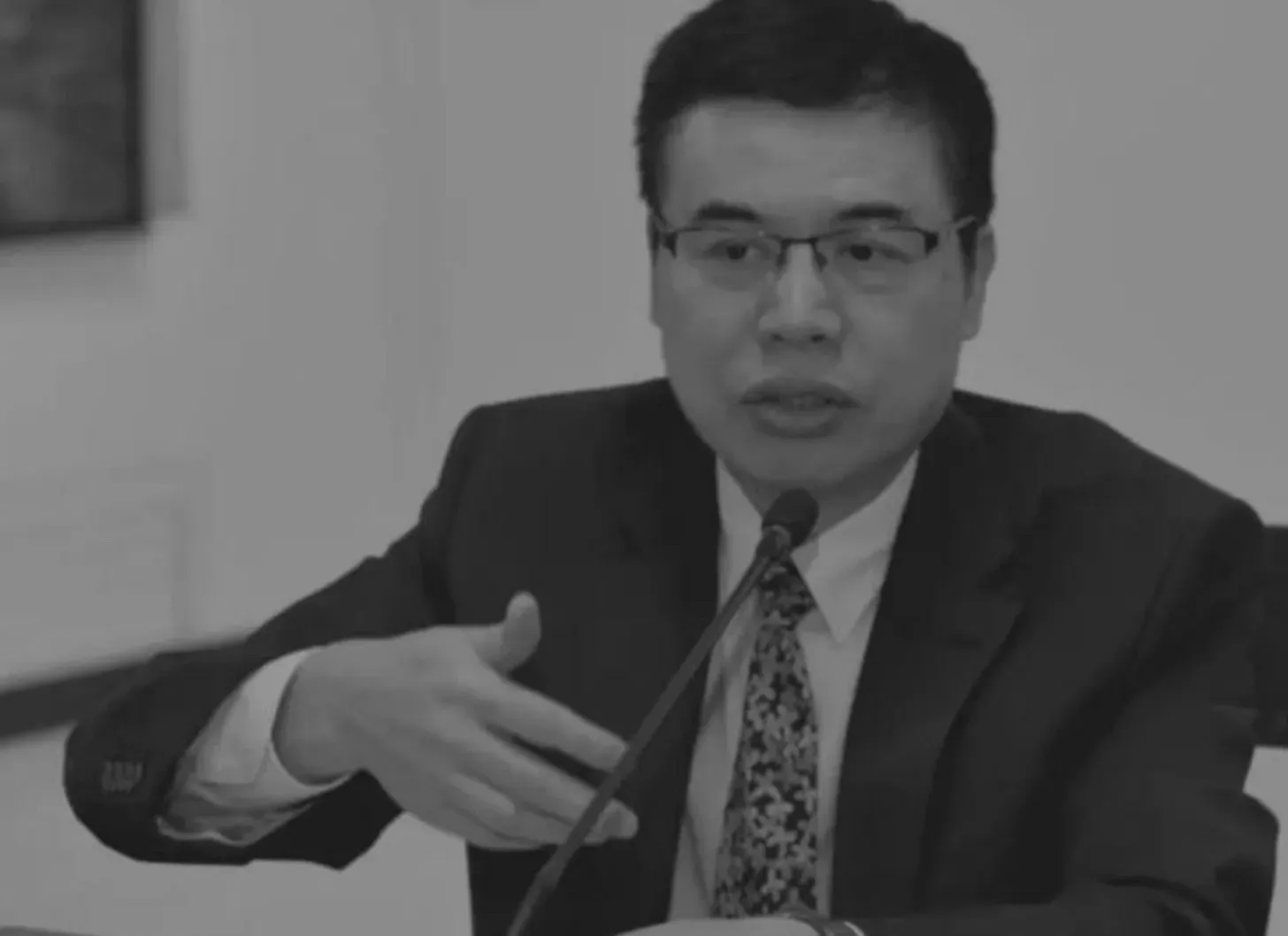
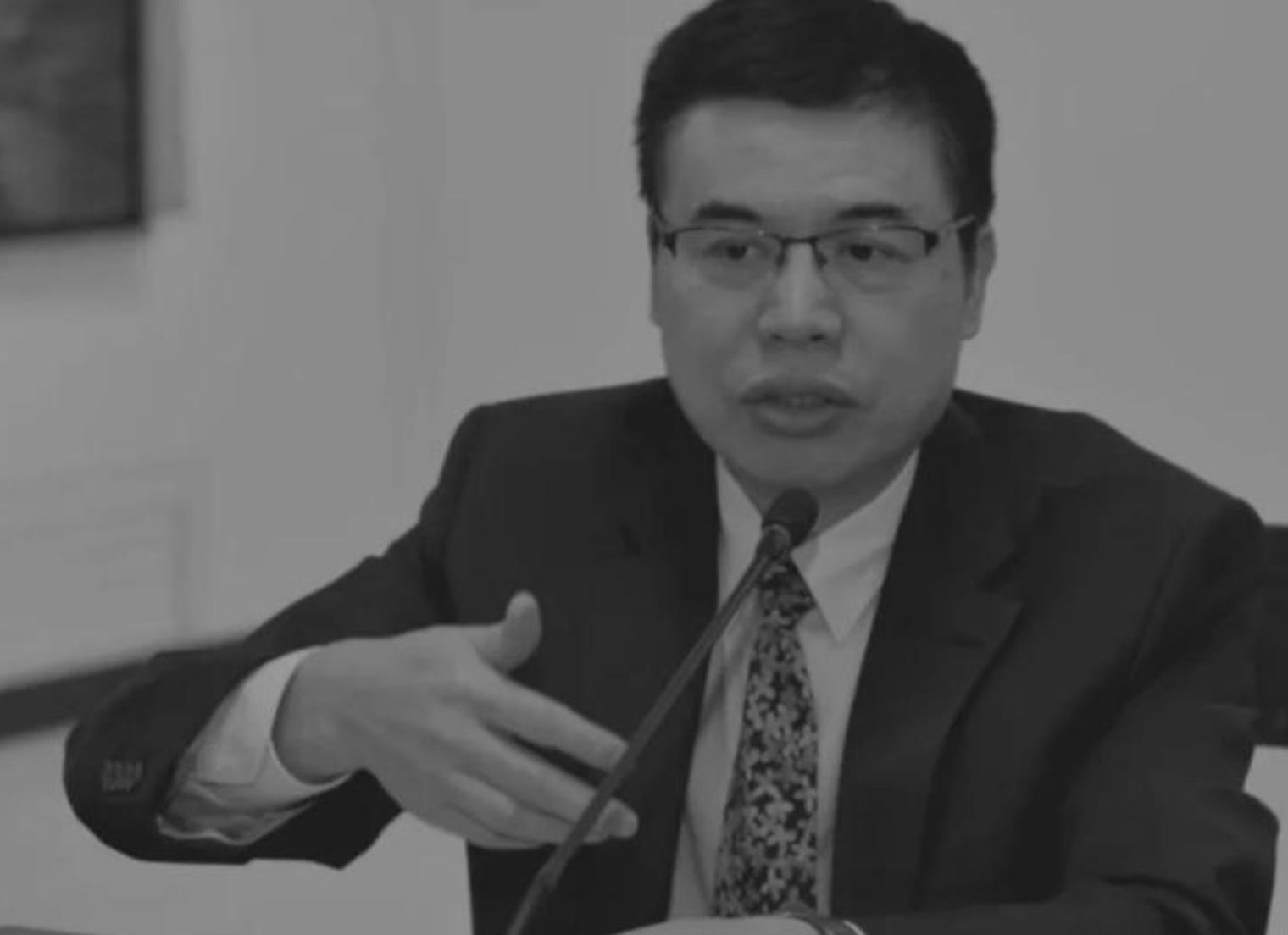
Japanese political scientist Yoshiyuki Ogasawara. SOURCE: UpMedia.
Hong Kong outlet CRNTT (中評社) issued a public apology to Taiwanese director Lo Ging-zim (羅景壬), one of the creators of the recently popular political thriller seriesZero Day Attack (零日攻擊), after it labelled him as a “corruption defendant” in an August news report. Lo filed a defamation lawsuit against CRNTT last month, after which the agency removed the article and issued an apology, admitting to “editorial negligence” (編輯部疏失). The false claim followed a smear campaign led by Taiwan’s opposition Kuomintang (KMT) Party that falsely alleged Lo’s team had received government funds and then failed to fulfill the terms of a contract. Company records in Hong Kong show that CRNTT is linked to the official China News Service, under the CCP’s United Front Work Department. Lo noted in a Facebook post after the apology that misinformation spreads instantly while “justice, no matter how swift, can only arrive late” (哪怕正義再快,也只能遲到).
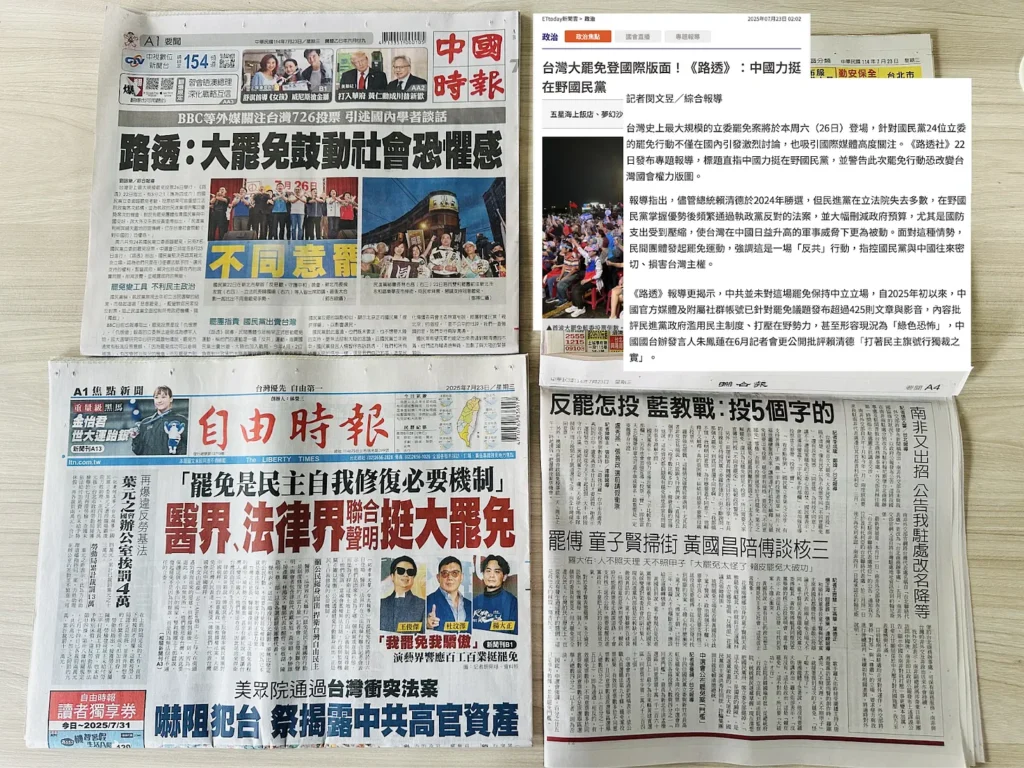
Taiwan’s China Times (中國時報) sparked controversy last month by mistranslating a Reuters report about parliamentary recalls. The paper’s headline claimed “Reuters: Mass Recalls Stoke Social Fear” (路透:大罷免鼓動社會恐懼感). In fact, the quoted assessment came not from Reuters but from National Chengchi University professor Huang Kuei-po (黃奎博).
Reuters reporter Lee Yimou (李憶慕) quickly corrected the misrepresentation on social media, sharing the accurate translation and encouraging readers to practice “media literacy” (媒體識讀). The incident highlights broader concerns about editorial standards and information accuracy amid Taiwan’s contentious recall campaigns, where media outlets across the political spectrum face accusations of bias in their coverage of cross-strait politics.
Taiwan’s recall drama has now entered its second wave. In the trough between these political swells — a moment when observers can pause and take stock — a media issue rose to the surface this past week: neutrality (中立).
The Reporter (報導者), one of the country’s most respected independent outlets, published a video [below] on July 22 by producer Fang Jun-zhu (方君竹) discussing the recalls, featuring interviews with targeted lawmakers and civic group members who initiated the recall campaigns. The video has so far gathered close to a million views, but some users on Threads have criticized the report as an example of “fake neutrality” (假中立). Anti-recall perspectives in the video comprised just 20 percent of the content, they said, questioning whether The Reporter was too closely aligned with the Democratic Progressive Party (DPP).
“I must say, I feel really disappointed,” one YouTube viewer commented. “I originally expected The Reporter to provide a balanced, rational discussion space that would present the viewpoints and context of both sides of the recall issue. Instead, the entire video almost completely adopts the recall side’s narrative, with very little mention of the other side’s viewpoints, completely losing the impartiality that media should have.”
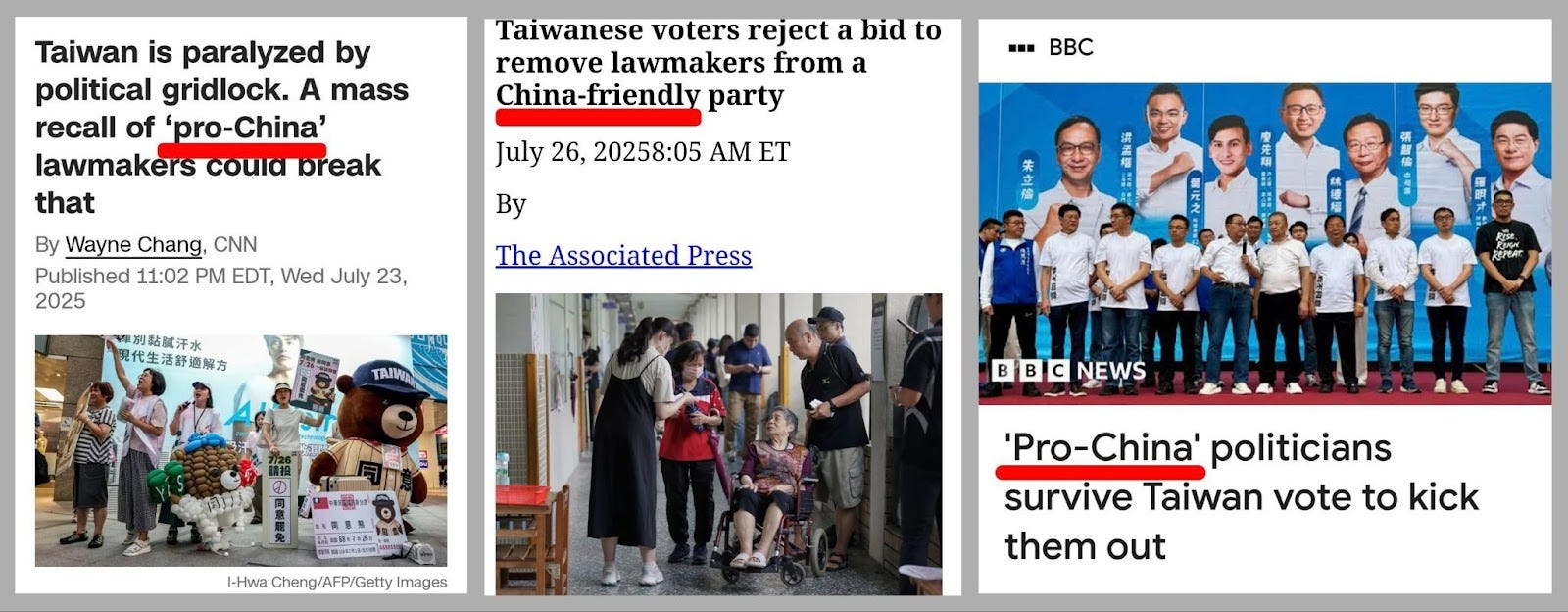
Some criticism on the same grounds also turned to foreign media coverage of the story, with some alleging that international coverage was too strongly influenced by the DPP, including labeling Kuomintang lawmakers as “pro-China” (親中) or “China-friendly” (友中). American lawyer Ross Feingold (方恩格), who lives in Taiwan, posted to Facebook on July 27 that the DPP and recall groups had “convinced foreign media to headline that the KMT is a pro-China party.” In an interview with Storm Media (風傳媒), Feingold argued that the generally “anti-China” stance of the international media, combined with an easy acceptance of DPP narratives, led them to frame recall results through the oversimplified lens of whether or not candidates were “pro-China.” International media coverage of Taiwan, he said, was “mostly not neutral” (大部分不中立).
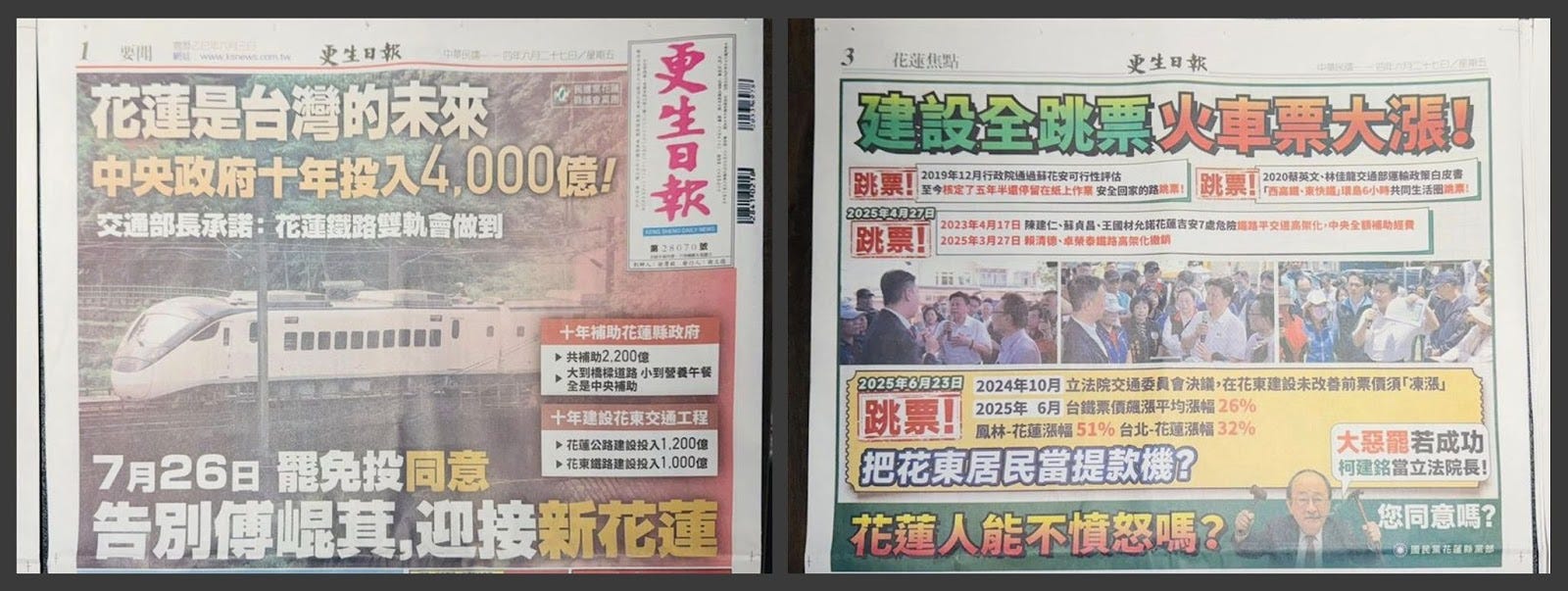
Keng Sheng Daily News (更生日報), the largest newspaper in the eastern coastal Taiwanese city of Hualien, found itself at the center of political theater late last week when it published advertisements from both sides of an upcoming recall election in the same daily edition. Taiwan is presently in the midst of an intensifying recall campaign that could mean early ejection from office for 24 directly elected lawmakers from the opposition Kuomintang (KMT) party. The recall votes are scheduled for July 26. (Read this English explainer from Taiwan’s Commonwealth magazine.)
The Keng Sheng Daily News front page featured a Democratic Progressive Party (DPP) ad targeting a local KMT legislator and urging voters to “Say goodbye to Fu Kun-chi, [and to] welcome a new Hualien.” Inside pages carried a starkly different message from the KMT county office, criticizing the DPP with headlines like, “Construction promises broken, train fares soaring.” Radio and TV host Lin Yu-hui (林育卉), who shared photos of the newspaper on social media, declared: “Hualien’s Keng Sheng battle officially begins” (花蓮更生大戰正式開打). The unusual juxtaposition drew widespread online commentary, with readers calling it “spectacular” and “worth collecting”.
Historically aligned with the opposition KMT, the newspaper appears to be taking paid advertisements from both parties as Taiwan prepares for multiple recall elections. Inter-party politics can be bitter — but so is the battle for media survival.
President Lai Ching-te (賴清德) of Taiwan’s ruling Democratic Progressive Party (DPP) launched his “Ten Talks on National Unity” (團結國家十講) series June 22 with a sweeping historical narrative designed to reinforce Taiwan’s sovereignty amid deep political divisions surrounding constitutional gridlock, legislative paralysis, and an unprecedented recall campaign targeting 24 lawmakers from the opposition Kuomintang (KMT). Dismissing Taiwan as “the island” and referring to Lai’s “so-called Ten Talks on National Unity,” China’s state-run Global Times (環球時報)described the initiative as “a desperate political show” and “hypocritical political rhetoric.” The Chinese Communist Party’s People’s Daily newspaper fired back with a commentary the same day under the official pen name Wang Ping (王平), which has been used as a moniker for denunciation of politics in Taiwan.
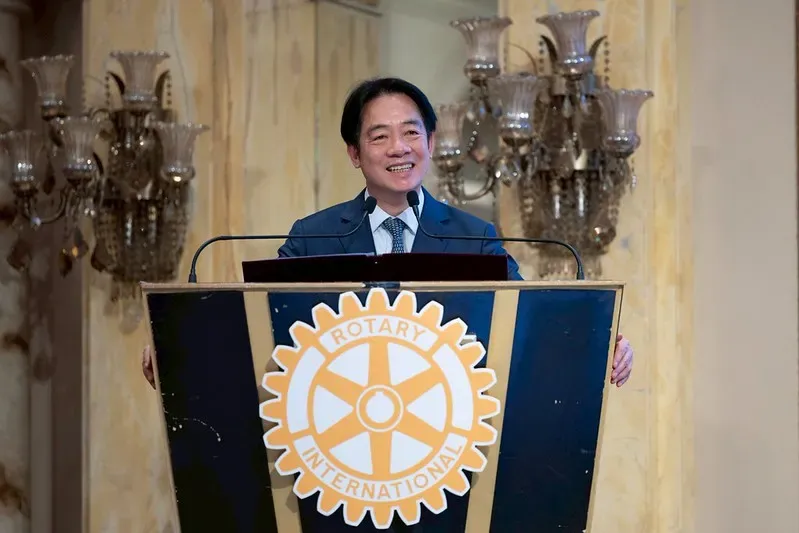
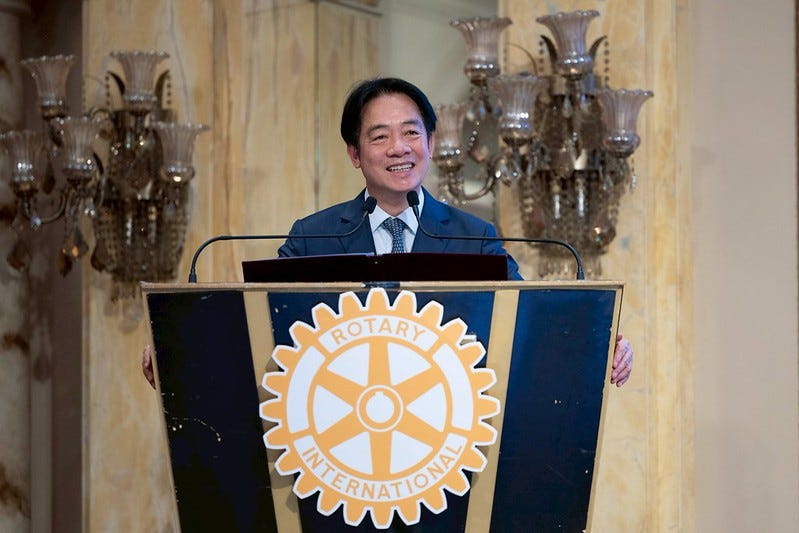
Lai addresses his audience at Rotary International for the first of ten planned addresses on national unity. SOURCE: Office of the President of the ROC.
Speaking to members of Rotary International (國際扶輪社), an international service organization first formed in Taiwan in 1948 and having a strong connection to business leaders and professionals in the country, Lai deployed familiar talking points about Taiwan’s prehistoric independence — from 40,000-year-old mammoth fossils to Austronesian cultural origins — while poking holes in the CCP leadership’s “One China” principle through legal particulars surrounding UN Resolution 2758. The speech was made available through Lai’s Facebook account. Opposition critics immediately denounced the talks as political theater designed to shore up support ahead of the mass slate of recall votes on July 26.
Kwok Wai Fung (郭偉峰), or “Guo Weifeng,” president of Hong Kong’s China Review News Agency (CRNTT) — which long advertised itself as “the first digital network news agency in the greater China region” — died May 29 in Hong Kong at age 68. Kwok’s passing prompted condolences from China’s Taiwan Affairs Office (TAO), which took the opportunity to promote the journalist as an exemplary advocate of closer engagement between China and Taiwan. Kwok was among the first mainland journalists to visit Taiwan for reporting in 1991, arriving at Taoyuan Airport on August 12 with Xinhua reporter Fan Liying (範麗青) after 42 years of cross-strait separation.
The TAO praised Kwok’s work establishing China Review (中國評論) magazine in Hong Kong in 1998. During the recent Cross-Strait Media Summit in Beijing, an official event led by the government-run Xinhua News Agency and China Daily, CRNTT promoted new media as a platform for youth dialogue across the strait, with Chang Jung-kung (張榮恭), a member of the Central Advisory Committee of Taiwan’s opposition Kuomintang (KMT) party and an advisor to Meihua Media Group (梅花媒體集團), advocating for such digital exchanges — which have been seen in Taiwan as divisive and potentially harmful. (Stay tuned to Lingua Sinica for more on the Meihua Media Group).
In praising Kwok, the TAO was in fact praising one of its own. According to company registration files in Hong Kong, China Review News Agency Limited remained 50 percent held by Kwok at its latest annual filing in February this year. The remaining shares were held by Wang Ping (王平), the deputy director of CRNTT. Despite this apparent private status, however, CRNTT has direct links to the Chinese government. The agency was founded in 1997 under the direction of Wang Daohan (汪道涵), a former Shanghai mayor who at that time was president of the Association for Relations Across the Taiwan Straits (ARATS) — an ostensible social organization directly under the management of the Taiwan Affairs Office.