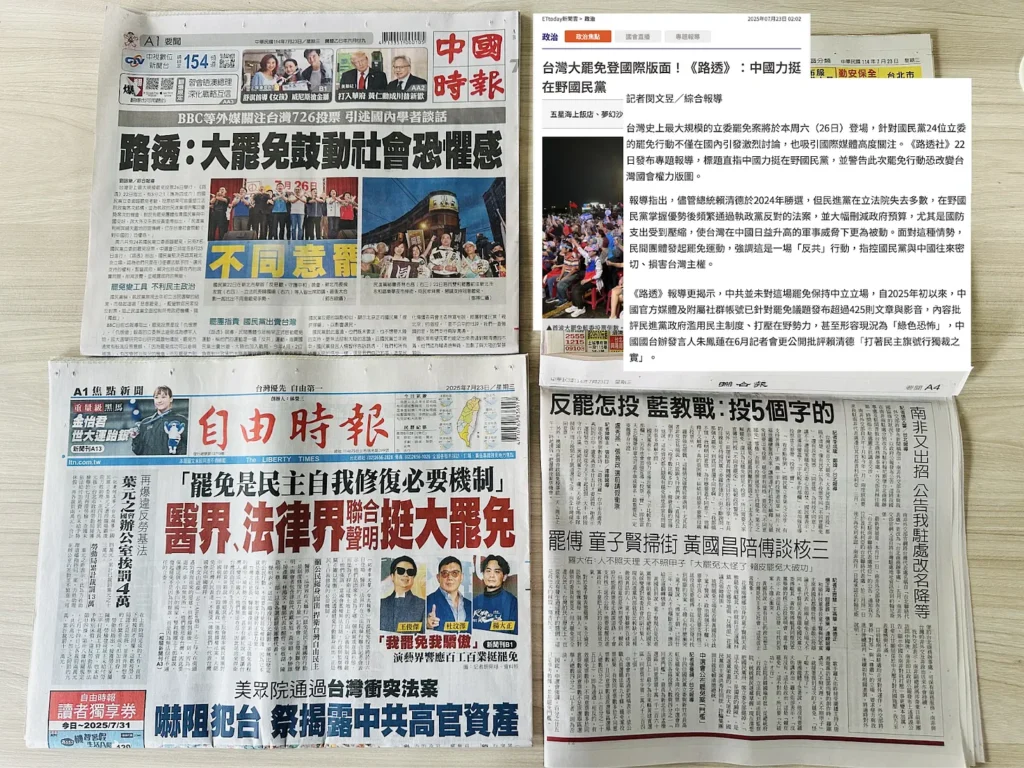
Taiwan’s China Times (中國時報) sparked controversy last month by mistranslating a Reuters report about parliamentary recalls. The paper’s headline claimed “Reuters: Mass Recalls Stoke Social Fear” (路透:大罷免鼓動社會恐懼感). In fact, the quoted assessment came not from Reuters but from National Chengchi University professor Huang Kuei-po (黃奎博).
Reuters reporter Lee Yimou (李憶慕) quickly corrected the misrepresentation on social media, sharing the accurate translation and encouraging readers to practice “media literacy” (媒體識讀). The incident highlights broader concerns about editorial standards and information accuracy amid Taiwan’s contentious recall campaigns, where media outlets across the political spectrum face accusations of bias in their coverage of cross-strait politics.
Taiwan’s recall drama has now entered its second wave. In the trough between these political swells — a moment when observers can pause and take stock — a media issue rose to the surface this past week: neutrality (中立).
The Reporter (報導者), one of the country’s most respected independent outlets, published a video [below] on July 22 by producer Fang Jun-zhu (方君竹) discussing the recalls, featuring interviews with targeted lawmakers and civic group members who initiated the recall campaigns. The video has so far gathered close to a million views, but some users on Threads have criticized the report as an example of “fake neutrality” (假中立). Anti-recall perspectives in the video comprised just 20 percent of the content, they said, questioning whether The Reporter was too closely aligned with the Democratic Progressive Party (DPP).
“I must say, I feel really disappointed,” one YouTube viewer commented. “I originally expected The Reporter to provide a balanced, rational discussion space that would present the viewpoints and context of both sides of the recall issue. Instead, the entire video almost completely adopts the recall side’s narrative, with very little mention of the other side’s viewpoints, completely losing the impartiality that media should have.”
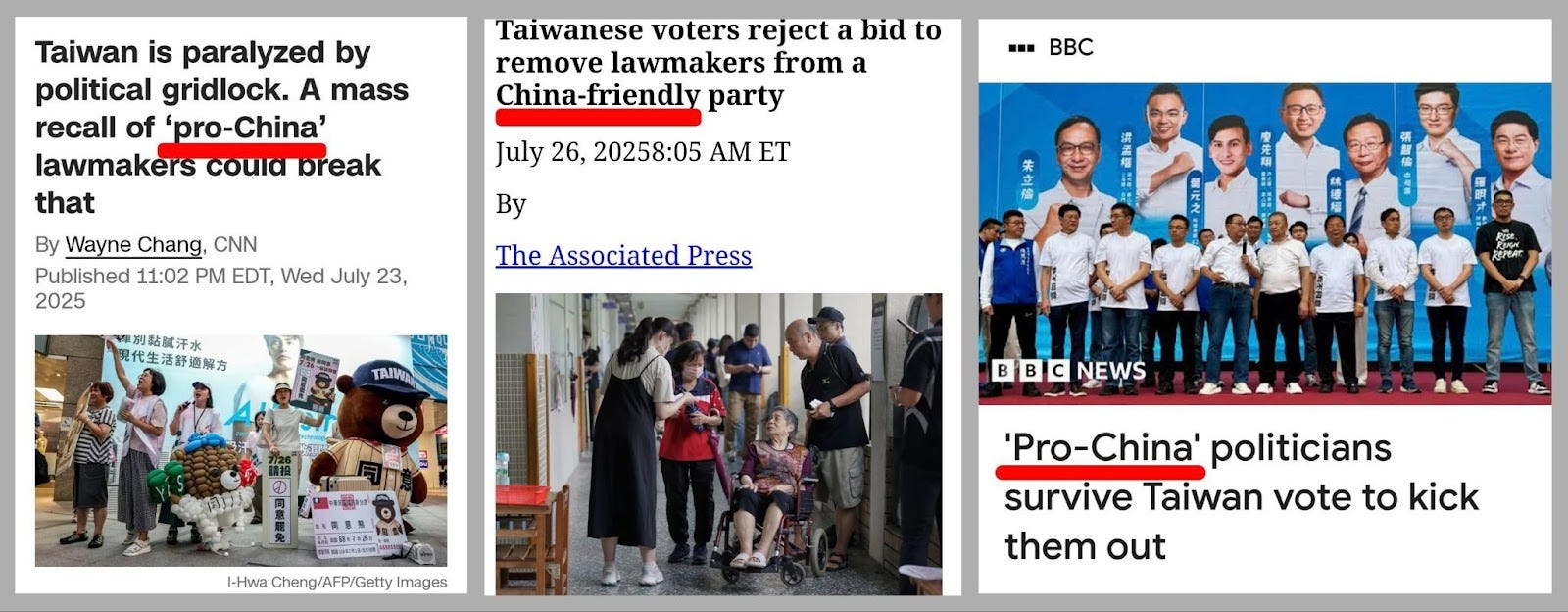
Some criticism on the same grounds also turned to foreign media coverage of the story, with some alleging that international coverage was too strongly influenced by the DPP, including labeling Kuomintang lawmakers as “pro-China” (親中) or “China-friendly” (友中). American lawyer Ross Feingold (方恩格), who lives in Taiwan, posted to Facebook on July 27 that the DPP and recall groups had “convinced foreign media to headline that the KMT is a pro-China party.” In an interview with Storm Media (風傳媒), Feingold argued that the generally “anti-China” stance of the international media, combined with an easy acceptance of DPP narratives, led them to frame recall results through the oversimplified lens of whether or not candidates were “pro-China.” International media coverage of Taiwan, he said, was “mostly not neutral” (大部分不中立).
Talk about selective reporting. While protest activity in China remains largely invisible in domestic media, American demonstrations receive front-page treatment. This narrative, emphasizing the apparent disorder of democratic and populist politics in America, is the message that media consumers across China are presumably meant to take away from the wave of protests happening in cities across the country last week.
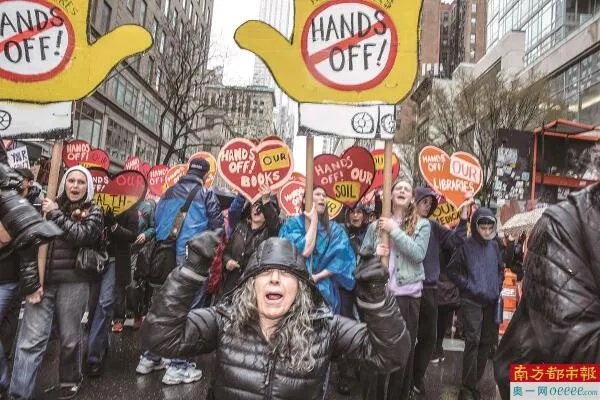
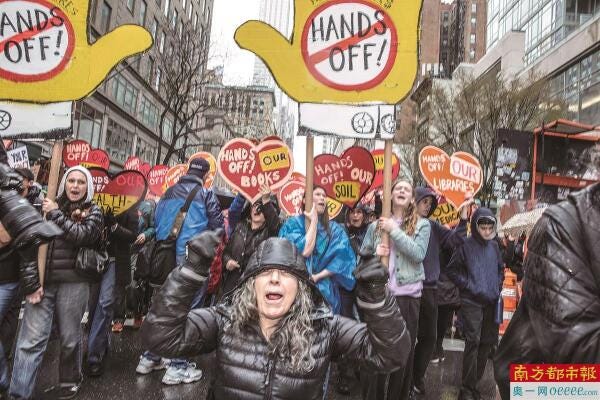
Chinese coverage of American demonstrations was extensive in its reach, though the official Xinhua News Agency and China Central Television served as the sole sources for most reports, with nearly identical phrasing across outlets. Guangzhou’s Southern Metropolis Daily (南方都市報) reported on April 7 that “more than 500,000 people participated in 1,300 protest events across America” against the Trump administration. The article noted that “even ‘red counties’” — those generally supportive of Republican Party candidates and policies — had seen sizable protest crowds waving banners with messages like “King of Corruption” and “Make Lying Wrong Again.” The Paper (澎湃), a Shanghai-based online outlet, published an extensive gallery of photos showing demonstrations across major US cities on April 5, describing the events as “the largest collective protest since Trump took office.”
While providing comprehensive coverage of American unrest, Chinese media outlets remain silent on domestic protests — even in the once relatively free environment of Hong Kong. The city’s police commissioner, Chow Yat-ming (周一鳴) stressed earlier this month when discussing national security that citizens should consider it their “personal duty” to report violations. The contrast could hardly be clearer. American protests merit detailed coverage, while Chinese ones warrant police scrutiny. If only the Trump administration hadn’t frozen funding for one of the only projects actually monitoring dissent in China.