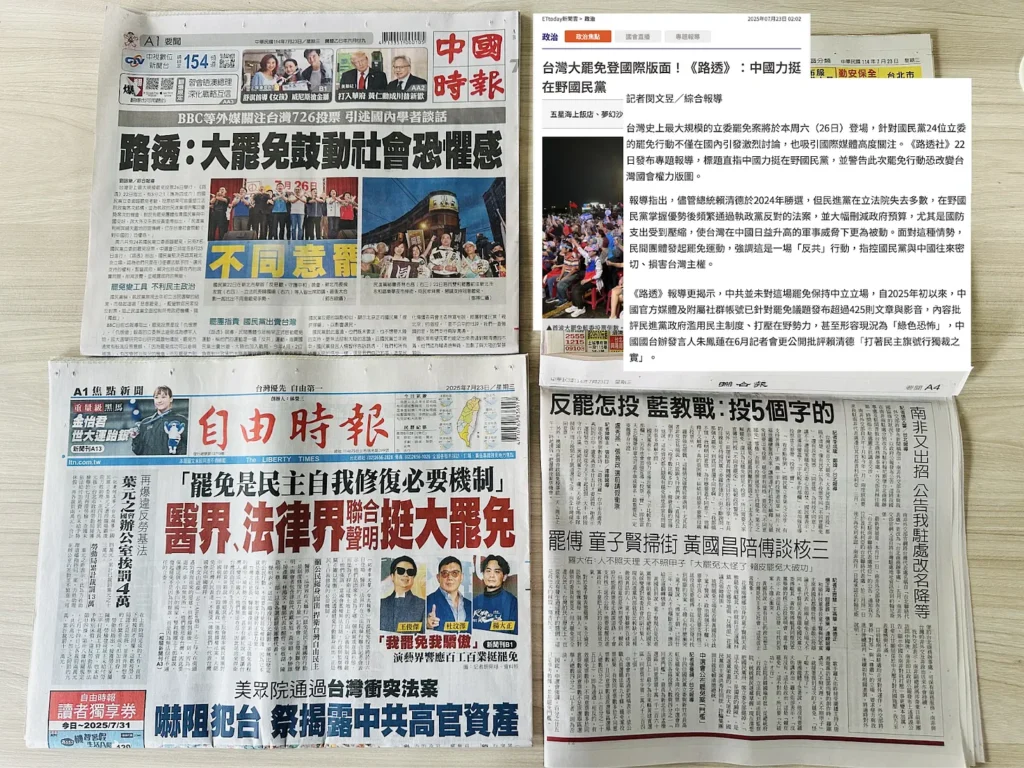
Taiwan’s China Times (中國時報) sparked controversy last month by mistranslating a Reuters report about parliamentary recalls. The paper’s headline claimed “Reuters: Mass Recalls Stoke Social Fear” (路透:大罷免鼓動社會恐懼感). In fact, the quoted assessment came not from Reuters but from National Chengchi University professor Huang Kuei-po (黃奎博).
Reuters reporter Lee Yimou (李憶慕) quickly corrected the misrepresentation on social media, sharing the accurate translation and encouraging readers to practice “media literacy” (媒體識讀). The incident highlights broader concerns about editorial standards and information accuracy amid Taiwan’s contentious recall campaigns, where media outlets across the political spectrum face accusations of bias in their coverage of cross-strait politics.
Taiwan’s recall drama has now entered its second wave. In the trough between these political swells — a moment when observers can pause and take stock — a media issue rose to the surface this past week: neutrality (中立).
The Reporter (報導者), one of the country’s most respected independent outlets, published a video [below] on July 22 by producer Fang Jun-zhu (方君竹) discussing the recalls, featuring interviews with targeted lawmakers and civic group members who initiated the recall campaigns. The video has so far gathered close to a million views, but some users on Threads have criticized the report as an example of “fake neutrality” (假中立). Anti-recall perspectives in the video comprised just 20 percent of the content, they said, questioning whether The Reporter was too closely aligned with the Democratic Progressive Party (DPP).
“I must say, I feel really disappointed,” one YouTube viewer commented. “I originally expected The Reporter to provide a balanced, rational discussion space that would present the viewpoints and context of both sides of the recall issue. Instead, the entire video almost completely adopts the recall side’s narrative, with very little mention of the other side’s viewpoints, completely losing the impartiality that media should have.”
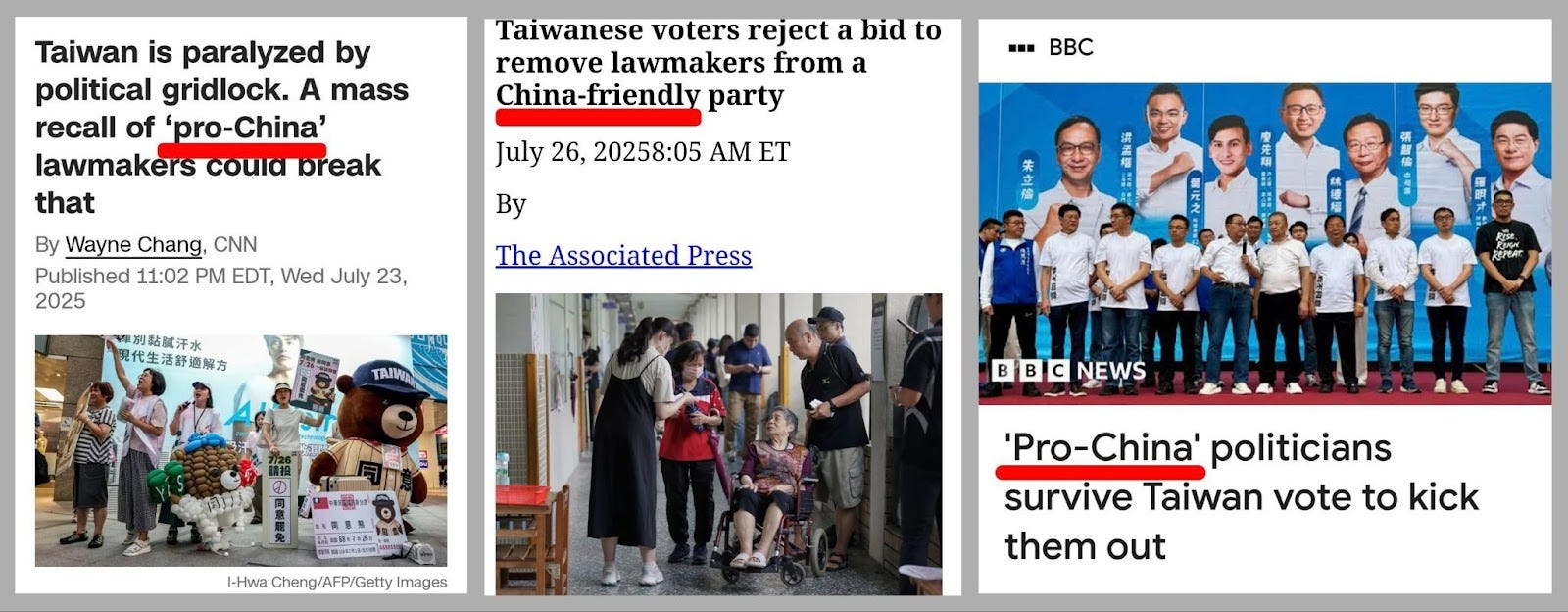
Some criticism on the same grounds also turned to foreign media coverage of the story, with some alleging that international coverage was too strongly influenced by the DPP, including labeling Kuomintang lawmakers as “pro-China” (親中) or “China-friendly” (友中). American lawyer Ross Feingold (方恩格), who lives in Taiwan, posted to Facebook on July 27 that the DPP and recall groups had “convinced foreign media to headline that the KMT is a pro-China party.” In an interview with Storm Media (風傳媒), Feingold argued that the generally “anti-China” stance of the international media, combined with an easy acceptance of DPP narratives, led them to frame recall results through the oversimplified lens of whether or not candidates were “pro-China.” International media coverage of Taiwan, he said, was “mostly not neutral” (大部分不中立).
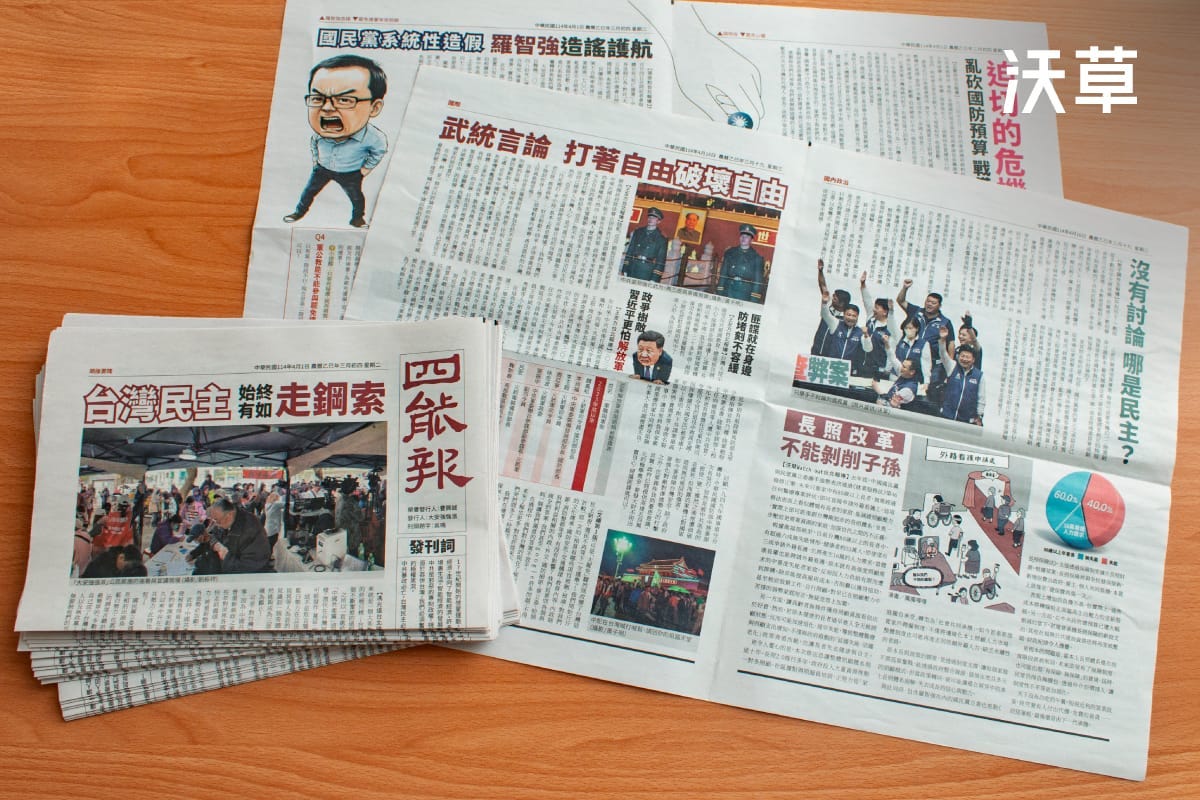
You might call it an ink insurgency. As Taiwan’s so-called“Great Recall” (大罷免) movement, a wave of campaigns to remove newly elected legislators through citizen petitions, has taken the country by storm, creative print media initiatives have emerged to reach voters in traditional strongholds for the Kuomintang (國民黨) party, whose members tend to be older and more politically conservative — and much less digital savvy — than their counterparts in the ruling Democratic Progressive Party (DPP). According to a fascinating report by the watchdog organizationWatchout (沃草), these print strategies aim to connect with digitally-disconnected constituencies as campaigners face a 60-day window to gather a sufficient number of signatures to push recall actions.
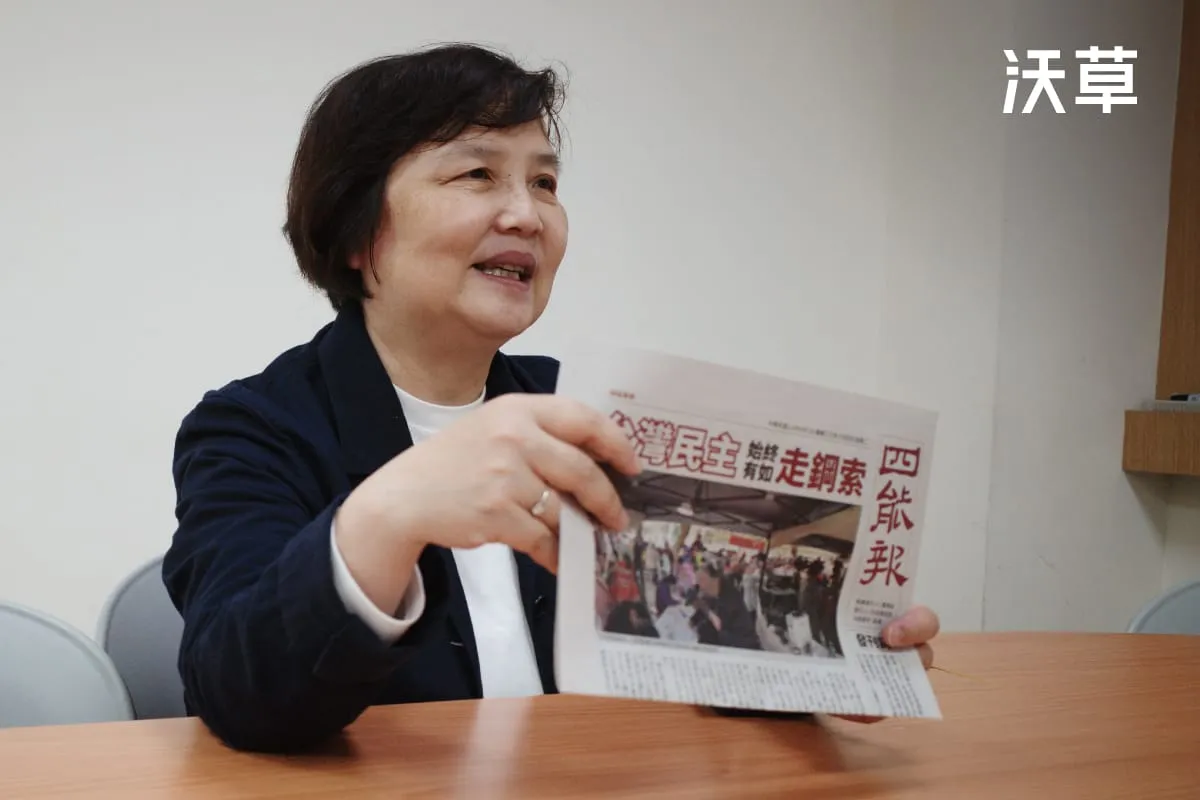
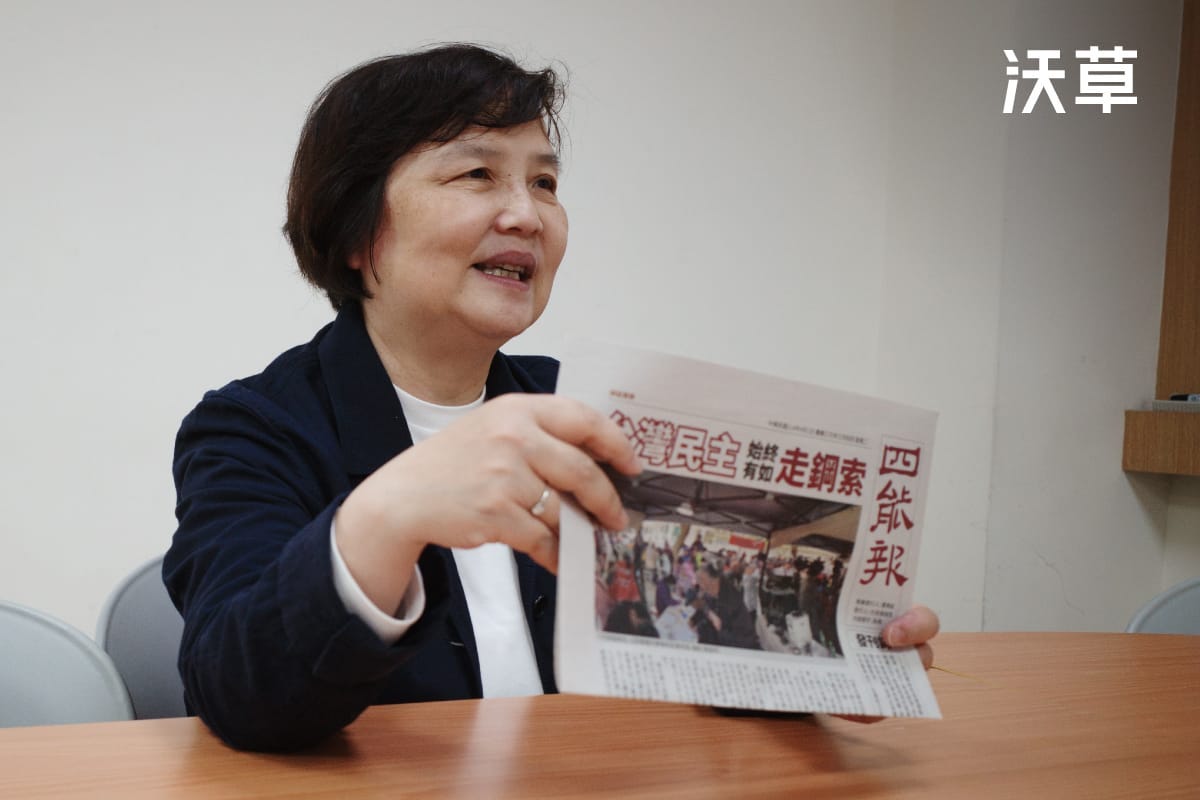
Veteran journalist Gu Bi-Ling (古碧玲) invited several friends from the media and cultural sectors to publish the physical newspaper Four Able News amid the recall push. SOURCE: WatchOut.
Media veterans in Taipei’s Da’an district have launched “Four Able News” (四能報), a biweekly publication promoting the recall of KMT legislator Lo Chih-chiang (羅智強), while activists in Xizhi, an inner city district in eastern New Taipei City, have created “Shrimp News” (蝦報) to campaign against KMT legislator Liao Hsien-hsiang (廖先翔), referencing his “shrimp diplomacy” controversy (He proposed resuming cut-off diplomatic relations with Honduras back in January as shrimp exports to the country from Taiwan dropped sharply). In Hualien, DPP-aligned recall campaigners have placed advertisements in the traditionally pro-KMT Update Daily (更生日報), featuring painter Chen Cheng-po’s (陳澄波) artwork to appeal to local sentiment.
These diverse print campaigns share a common strategy: bypassing digital barriers to reach older, more conservative voters. In north Songshan district, recall groups have even leveraged imagery of former KMT dictator Chiang Kai-shek (蔣介石), the architect of the country’s White Terror, to connect with traditional KMT supporters, demonstrating how the movement is adapting traditional media for modern political activism.