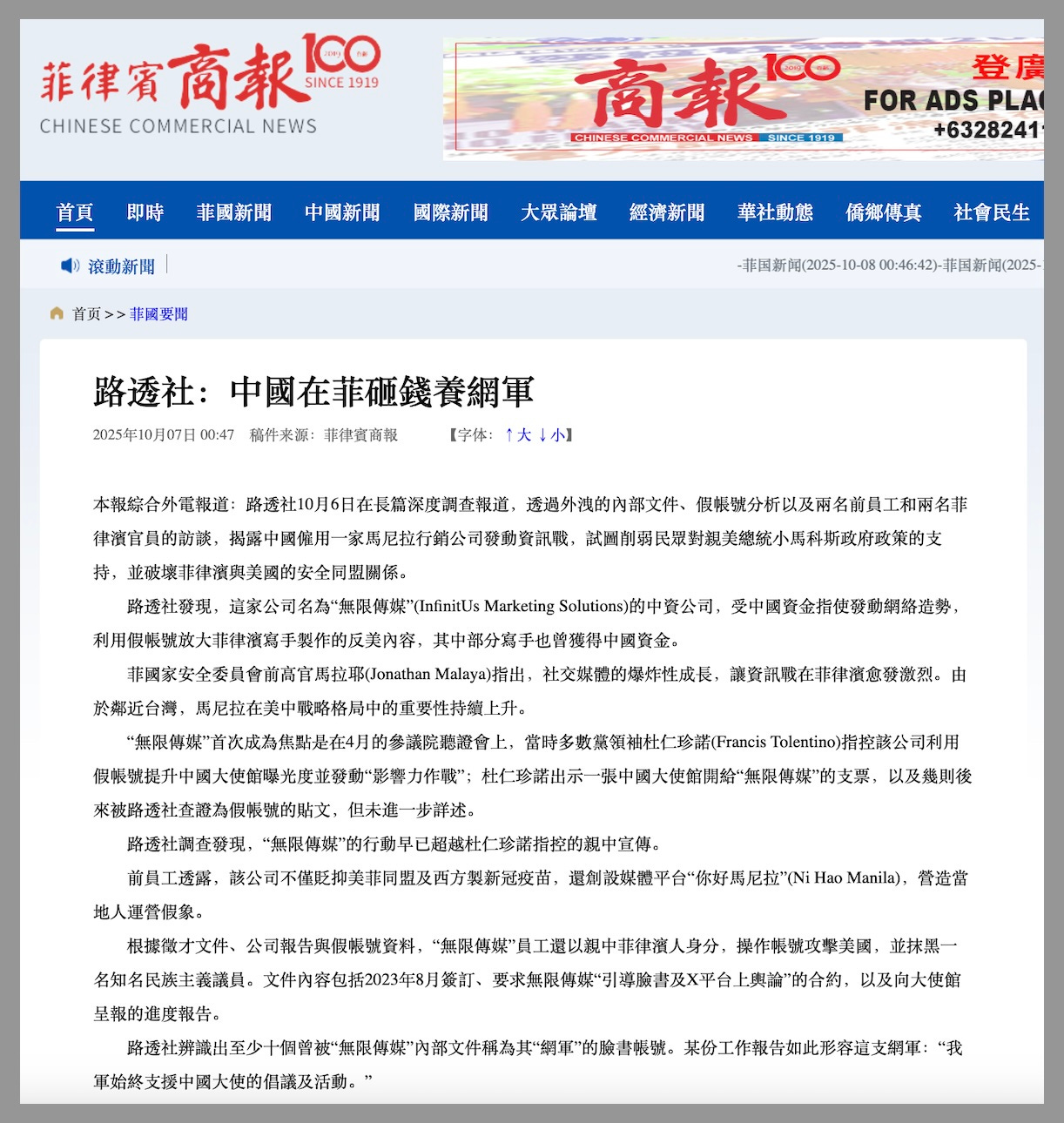
The long-established Filipino Chinese newspaper Chinese Commercial News (菲律賓商報) devoted substantial coverage in its October 7 print edition to a Reuters investigation published on Monday alleging China hired a Manila-based marketing company to conduct information operations in the Philippines. The report detailed how InfinitUs Marketing Solutions allegedly used fake social media accounts to undermine support for President Marcos’s pro-U.S. policies and weaken the Philippines-U.S. security alliance. The newspaper’s prominent treatment of the story is notable given that it is generally seen as China-leaning and lists the Chinese embassy, China News Service, and other official Chinese media as “friendly links” on its website.
The Chinese Commercial News republishes the Reuters investigation on its website Tuesday.
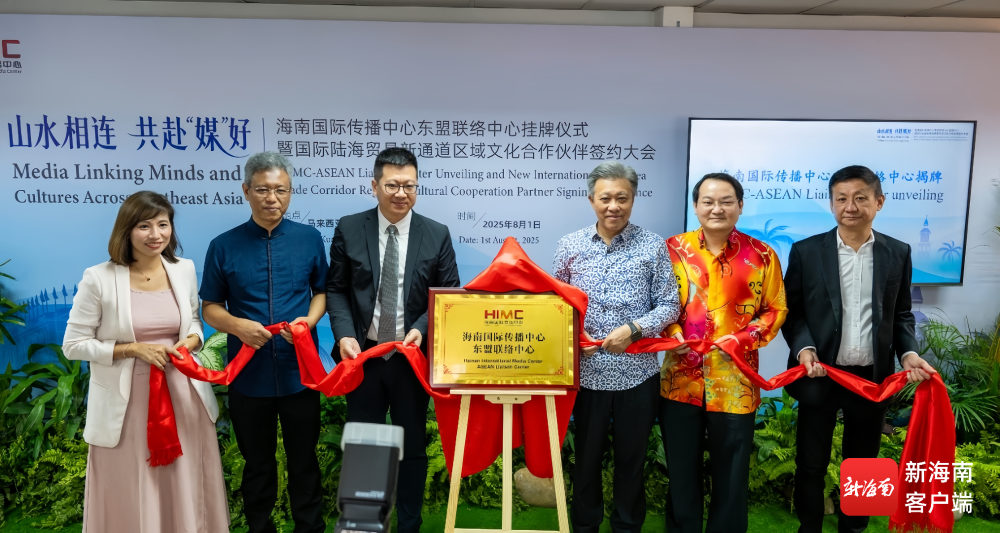
Hainan province, long China’s testing ground for economic and policy innovation, has emerged as a key experimental front in Beijing’s latest campaign — leveraging local and regional media to boost the country’s global “discourse power.” Earlier this summer, the Hainan International Media Center (HIMC), an office directly under the province’s propaganda office, unveiled a liaison center in Dubai, planting its flag in the Middle East. In Kuala Lumpur on Friday, it opened a new ASEAN Liaison Center (東盟聯絡中心), staking out Southeast Asia as a priority region for outreach.
Established in 2019, the HIMC was among China’s earliest provincial-level international communication centers (ICCs), following on the heels of the municipality of Chongqing, which launched its ICC in June 2018. The province’s unique position as a trade port experiment along what the CCP leadership has in recent years dubbed the “Maritime Silk Road” makes it a natural laboratory for President Xi Jinping’s “centralization+” approach to international messaging. It is also a key military region in the South China Sea from which China presses its territorial claims, a constant agitation for many ASEAN member states.
The launch ceremony for the HIMC liaison hub was attended by more than 60 guests under the theme “Media Linking Minds and Cultures Across Southeast Asia,” including Datuk Seri Wong Chun Wai (拿督斯里黃振威), chairman of the Malaysian National News Agency, Teh Hao Ran (鄭豪然), executive editor of Kwong Wah Yit Poh (光華日報), and Niu Xiaomin (牛曉民), deputy editor-in-chief of Hainan Daily Media Group (海南日報報業集團). The formation comes as Hainan prepares for the December 18 start of its free trade port’s closed-loop operation (封關運作), a development that officials say will dramatically increase connections with ASEAN countries. ASEAN has been Hainan’s largest trading partner since 2021.
The center, guided by Hainan’s provincial propaganda department and led by Hainan Daily Media Group, aims to serve as what officials described as a “comprehensive cooperation bridge” linking Hainan with ASEAN countries through international communication, economic cooperation, cultural exchange, and think tank collaboration.
The overseas expansion reflects Xi’s 2021 directive to “tell China’s story well” (講好中國故事) — terminology that has been core to the party’s international communication objectives since August 2013 — and make China “credible, lovable and respected” (可信、可愛、可敬), as Xi urged in a May 2021 speech to a collective study session of the CCP Politburo on “external propaganda” (外宣). Officials at the Kuala Lumpur ceremony invoked the same language, emphasizing the center’s mission to “tell good stories of China and Hainan” (講好中國故事、海南故事) to ASEAN audiences.
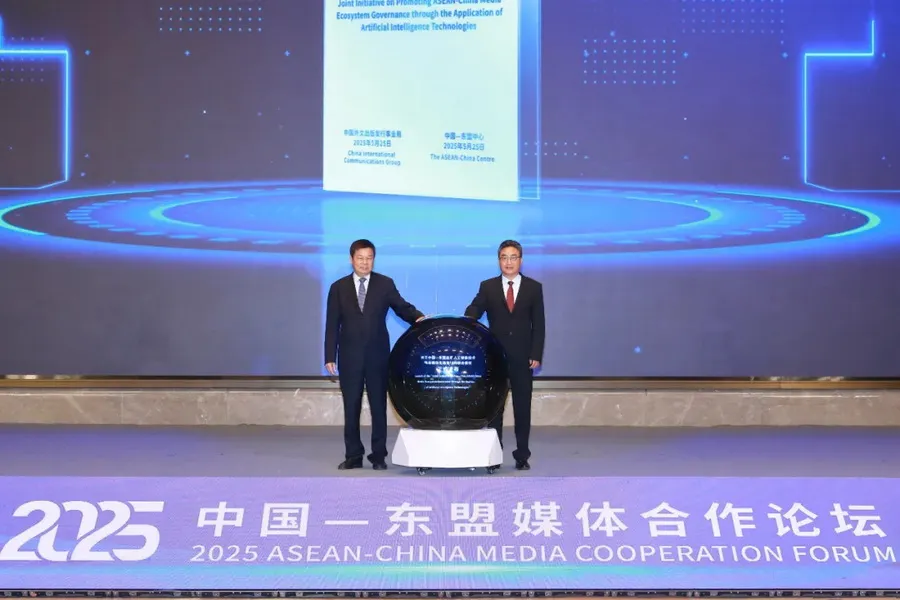
On May 25, China and the multilateral Southeast Asian body ASEAN launched a joint initiative to boost AI in the media. Details on the initiative, unveiled at the China-ASEAN Media Cooperation Forum at Luoyang, are thin so far. The Chinese readout says it calls for Chinese and ASEAN media to boost cooperation in research and development for AI and AI capacity building, alongside mutual recognition of media standards on the topic. Chinese media giant Kuaishou spoke to representatives from countries like Malaysia, Singapore and Thailand on the company’s experiences with AI and “media innovation pathways.”
The forum is one data point in a wider strategy to boost China’s influence in the Global South through AI development. China has already cobbled together a group of nations at the UN united in their desire to build AI capacity, using the group as an advert for Chinese AI products. Xi Jinping has said AI will create a “lead-goose effect” (头雁效应) — that is, other countries following wherever the leader goes — and hopes it will pave the way for China to become that leader.