Tag: Taiwan media

Attention Hogs

News&Market (上下游新聞), a niche Taiwan media outlet focusing on agriculture and environmental issues since 2011, found itself embroiled in controversy over social media framing after posts on Facebook promoting its relatively balanced coverage of Taiwan’s first African swine fever outbreak in seven years triggered allegations of bias in favor of the opposition Kuomintang (KMT) party — and escalated into questions about its financial backing.

The controversy began when News&Market’s social media posts framed its outbreak coverage in ways critics saw as deflecting blame from KMT officials currently leading the local government in Taichung, where the outbreak was confirmed on October 21. One Facebook post asked: “Is Taichung really the outbreak’s source? The answer isn’t that simple.” While the underlying reporting examined systemic failures across both local and national governments — ranging from inadequate enforcement of food waste sterilization to gaps in veterinary care — the social media packaging triggered allegations of bias as it seemed to give Taichung officials a pass and lay blame instead on the national government, currently run by the Democratic Progressive Party (DPP). As skepticism grew online, users questioning the perceived slant began probing the outlet’s funding sources. In Taiwan’s divisive political environment, KMT alignment can often be perceived by “pan-green” DPP supporters as simply pro-China.

The outlet denied allegations of Chinese funding on October 30, saying its operations are supported by “small donations and market product sales.” Risking further speculation, however, it has so far not provided financial data or verifiable documentation of these revenue sources.

The case is a sobering illustration of how intentionally viral social media posts about the news — regardless of its actual reporting quality — can lead to an outbreak of questions about credibility, especially against a backdrop of political divisiveness.
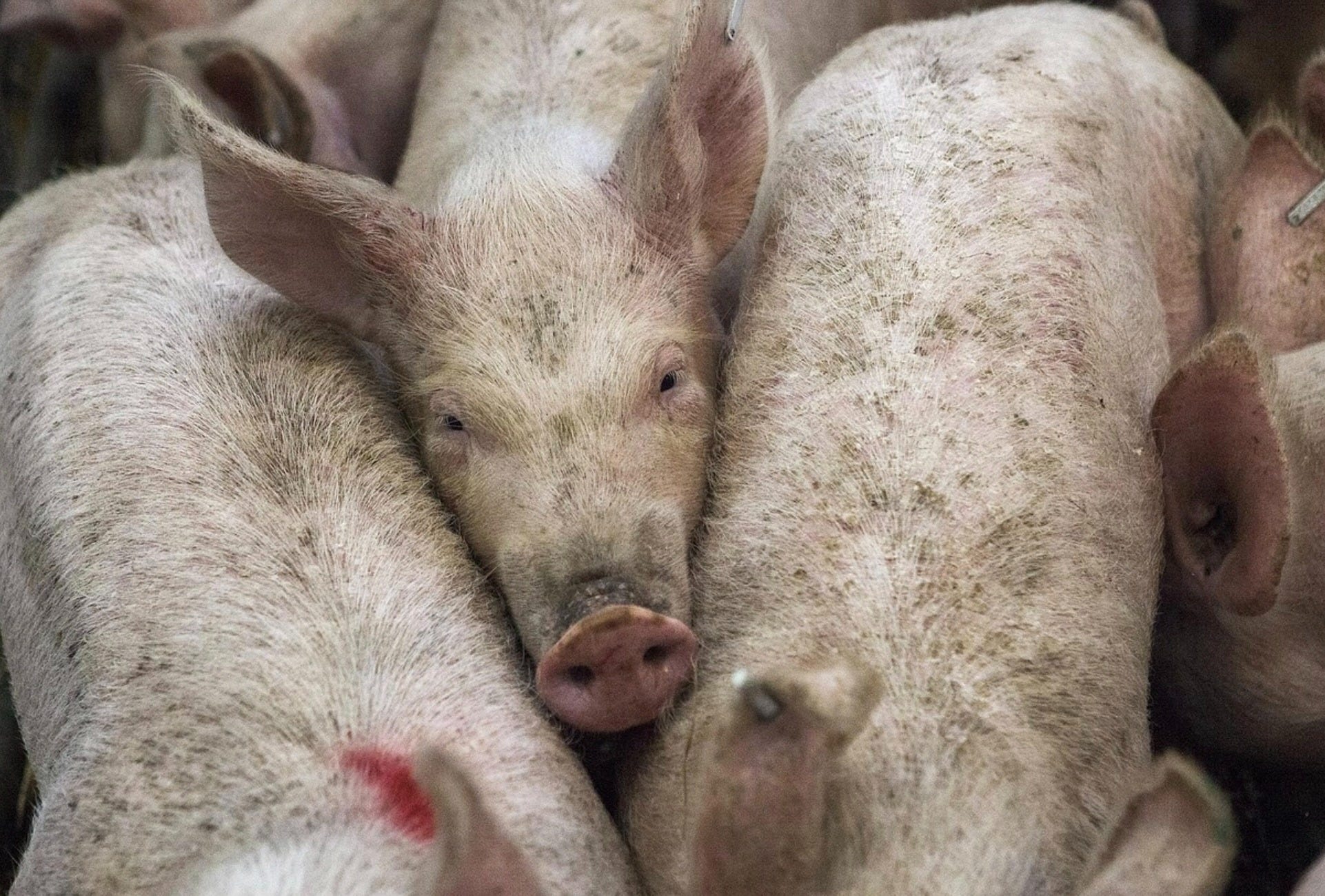
Taiwan’s first African swine fever outbreak in seven years in late October sparked controversy over coverage by News&Market, a niche outlet focusing on agriculture. For illustrative purposes only. SOURCE: Pixabay.

Pulse HK Launches

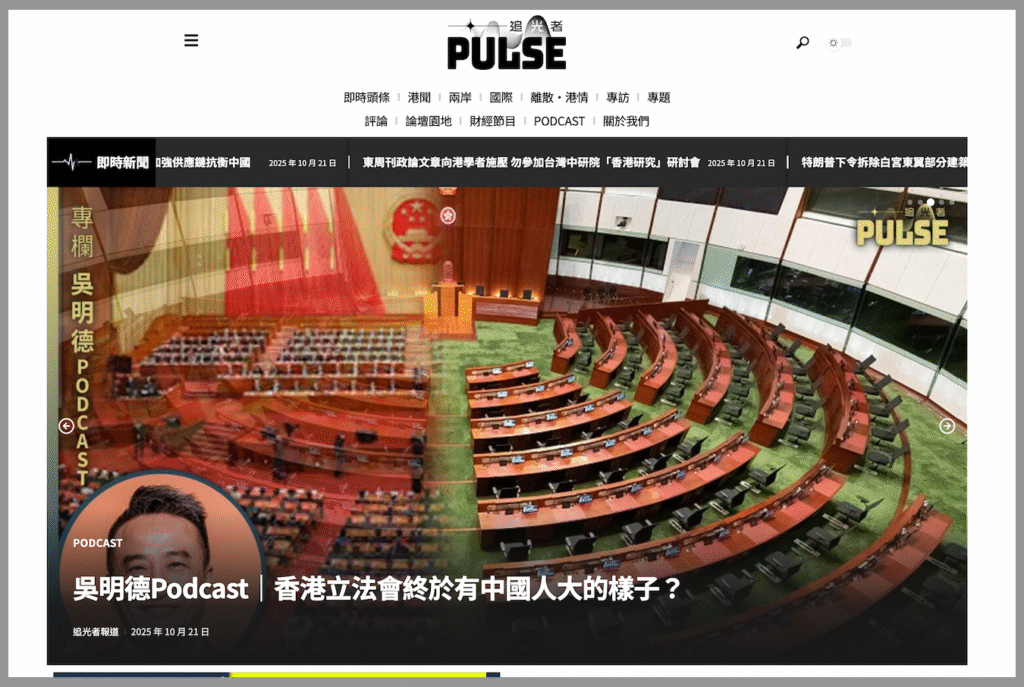
Pulse HK (追光者), a news outlet serving Hong Kong audiences worldwide, formally launched on Monday, positioning itself as an information platform for the city’s expanding diaspora. “Let us continue to look to the world and chase the light,” said editor-in-chief Wu Lik Hon (胡力漢) in his founding message, echoing the outlet’s Chinese name, which translates literally as “light chaser.”

The outlet was initially formed in August through a merger of two exile publications, The Chaser (追新聞) and Photon Media (光傳媒). The combined newsroom now operates from Taiwan, the United Kingdom, and North America — a geography that reflects the scattering of Hong Kong’s once-vibrant media scene following the 2019 protests and the imposition of a sweeping national security law in 2020.

The launch comes as Hong Kong exile and diaspora communities have grown substantially abroad, particularly in the UK, Canada and the United States. More than 150,000 Hong Kongers have relocated to the UK through the British National (Overseas) pathway since its introduction, according to UK Home Office figures released in August 2024. Substantial communities have also formed in Canada and the United States.

Operating beyond Hong Kong’s jurisdiction, Pulse HK plans to cover local news, cross-strait developments, diaspora stories, and international affairs through articles, interviews, and podcasts. Wu, the former head of the China desk at Hong Kong’s i-Cable News who later worked for the Cantonese Service at Radio Free Asia, said the team would provide 24-hour coverage, with a daily news broadcast set to begin November 3.

China’s Un-killable AI

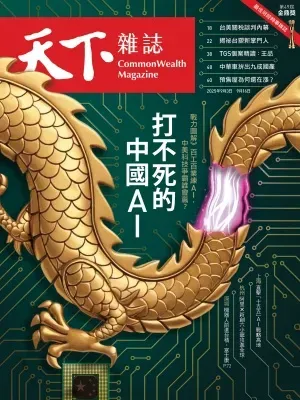
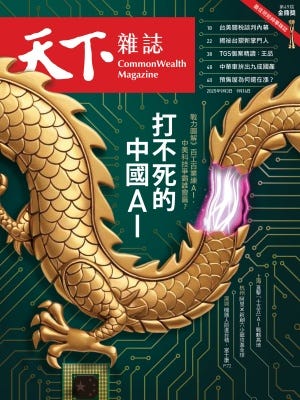
This month marks the third anniversary of significant AI computing chip export restrictions imposed by the United States on China. Has the stranglehold slowed China’s progress? Hardly. In a special report last week called “Un-killable Chinese AI” (打不死的中國AI) Taiwan’s Commonwealth (天下) magazine examined China’s resilient artificial intelligence sector across four major Chinese cities: Beijing, Shanghai, Hangzhou, and Shenzhen. In a note accompanying the series, editor-in-chief Chen Yi-shan (陳一姍) summed up the key reasons for China’s AI resilience: “The vast domestic population, diverse industries of the world’s second-largest economy, plus an efficient national system for mobilizing resources and fierce competition among tech giants have created China’s un-killable AI,” she wrote.

SET News Spotlights Transnational Repression

SET News (三立新聞), a Taiwanese news outlet, has launched a multimedia series examining the Chinese Communist Party’s tactics for cross-border repression. The project features interviews with individuals from the United States, China and Hong Kong, including Mark Clifford (祈福德), a former executive at Next Digital, and Ka-Man Lau (劉珈汶), a Hong Kong activist now based in the United Kingdom. Other participants include Shirley Leung (梁嘉麗) and Ka-Chung Li (李家聰), who co-founded the Taiwan-based news outlet PulseHK (追光者), as well as various Chinese sources who remain anonymous to avoid repercussions.

The reporting explores what interviewees describe as “bloodless torture” methods used against political prisoners in China, as well as intimidation tactics targeting overseas Chinese communities. The series provides direct testimonials from individuals who have either faced or witnessed Beijing’s pressure tactics across multiple regions.

Discussing their motivations for speaking out, one anonymous Chinese individual told SET News, “I feel a responsibility to raise my voice for those in China who do not have a voice.”

Distorted Headlines

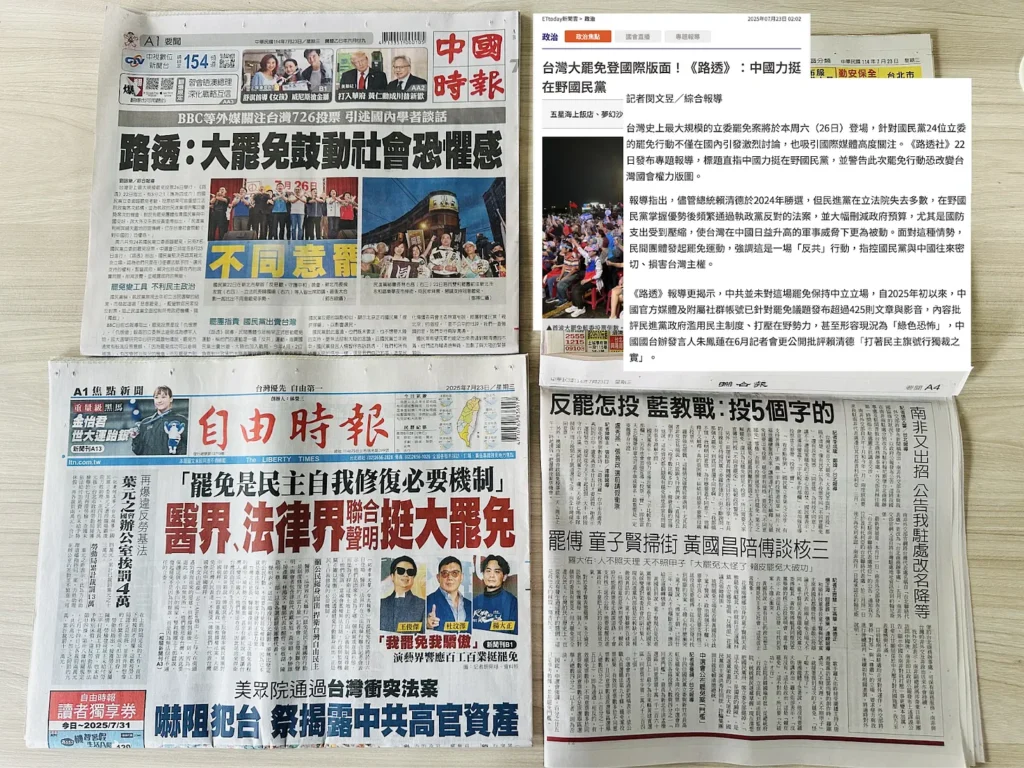
Taiwan’s China Times (中國時報) sparked controversy last month by mistranslating a Reuters report about parliamentary recalls. The paper’s headline claimed “Reuters: Mass Recalls Stoke Social Fear” (路透:大罷免鼓動社會恐懼感). In fact, the quoted assessment came not from Reuters but from National Chengchi University professor Huang Kuei-po (黃奎博).

Reuters reporter Lee Yimou (李憶慕) quickly corrected the misrepresentation on social media, sharing the accurate translation and encouraging readers to practice “media literacy” (媒體識讀). The incident highlights broader concerns about editorial standards and information accuracy amid Taiwan’s contentious recall campaigns, where media outlets across the political spectrum face accusations of bias in their coverage of cross-strait politics.

Recalling Neutrality

Taiwan’s recall drama has now entered its second wave. In the trough between these political swells — a moment when observers can pause and take stock — a media issue rose to the surface this past week: neutrality (中立).

The Reporter (報導者), one of the country’s most respected independent outlets, published a video [below] on July 22 by producer Fang Jun-zhu (方君竹) discussing the recalls, featuring interviews with targeted lawmakers and civic group members who initiated the recall campaigns. The video has so far gathered close to a million views, but some users on Threads have criticized the report as an example of “fake neutrality” (假中立). Anti-recall perspectives in the video comprised just 20 percent of the content, they said, questioning whether The Reporter was too closely aligned with the Democratic Progressive Party (DPP).

“I must say, I feel really disappointed,” one YouTube viewer commented. “I originally expected The Reporter to provide a balanced, rational discussion space that would present the viewpoints and context of both sides of the recall issue. Instead, the entire video almost completely adopts the recall side’s narrative, with very little mention of the other side’s viewpoints, completely losing the impartiality that media should have.”

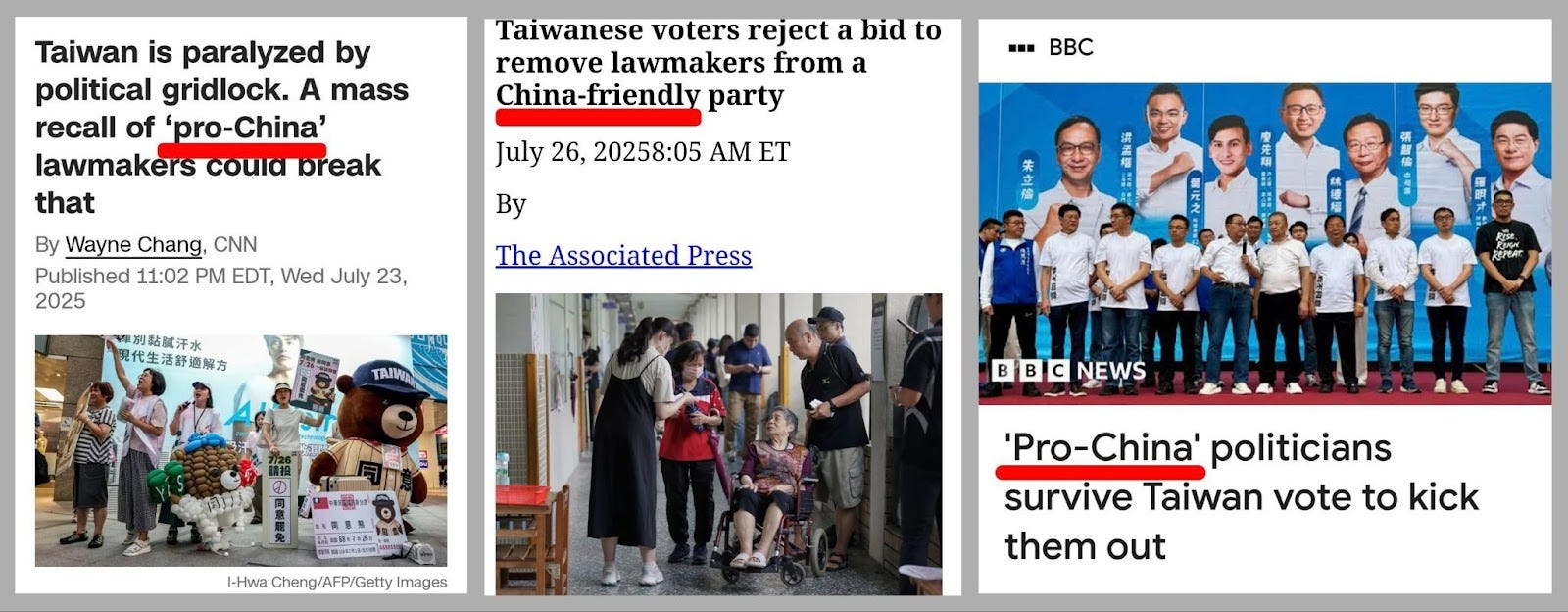
Some criticism on the same grounds also turned to foreign media coverage of the story, with some alleging that international coverage was too strongly influenced by the DPP, including labeling Kuomintang lawmakers as “pro-China” (親中) or “China-friendly” (友中). American lawyer Ross Feingold (方恩格), who lives in Taiwan, posted to Facebook on July 27 that the DPP and recall groups had “convinced foreign media to headline that the KMT is a pro-China party.” In an interview with Storm Media (風傳媒), Feingold argued that the generally “anti-China” stance of the international media, combined with an easy acceptance of DPP narratives, led them to frame recall results through the oversimplified lens of whether or not candidates were “pro-China.” International media coverage of Taiwan, he said, was “mostly not neutral” (大部分不中立).

Dueling Ads

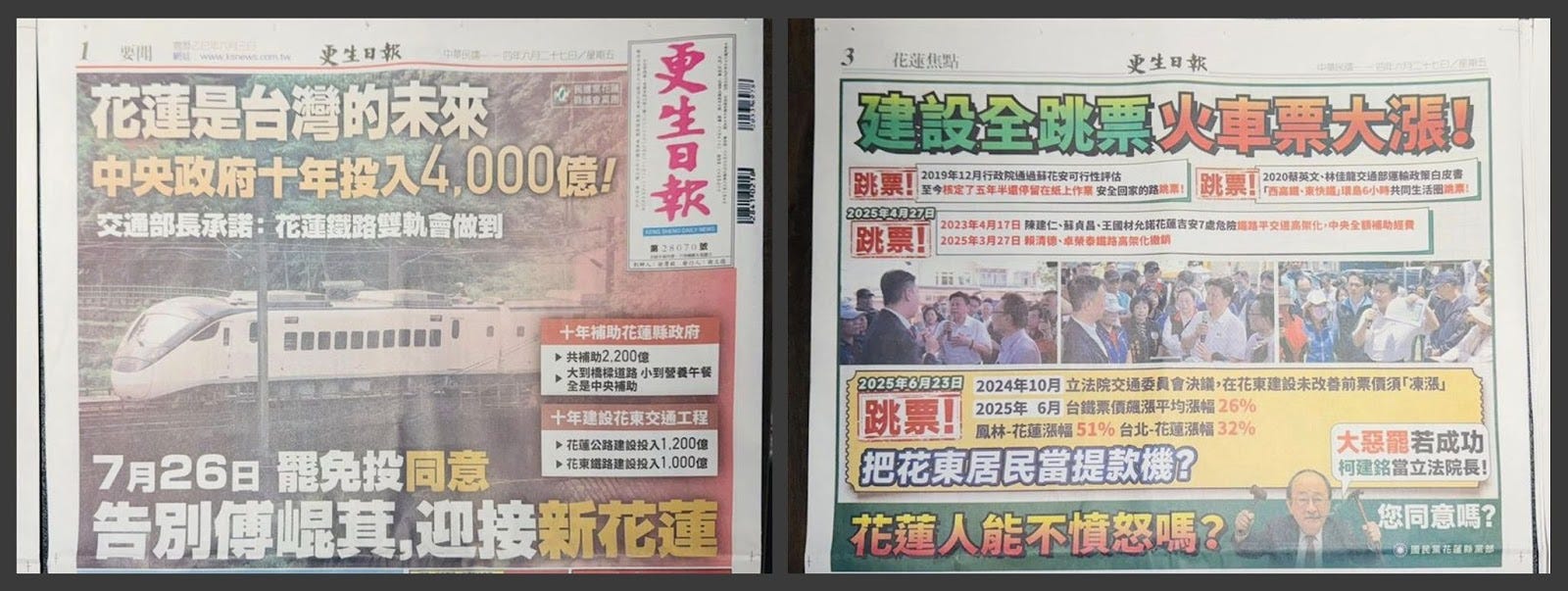
Keng Sheng Daily News (更生日報), the largest newspaper in the eastern coastal Taiwanese city of Hualien, found itself at the center of political theater late last week when it published advertisements from both sides of an upcoming recall election in the same daily edition. Taiwan is presently in the midst of an intensifying recall campaign that could mean early ejection from office for 24 directly elected lawmakers from the opposition Kuomintang (KMT) party. The recall votes are scheduled for July 26. (Read this English explainer from Taiwan’s Commonwealth magazine.)

The Keng Sheng Daily News front page featured a Democratic Progressive Party (DPP) ad targeting a local KMT legislator and urging voters to “Say goodbye to Fu Kun-chi, [and to] welcome a new Hualien.” Inside pages carried a starkly different message from the KMT county office, criticizing the DPP with headlines like, “Construction promises broken, train fares soaring.” Radio and TV host Lin Yu-hui (林育卉), who shared photos of the newspaper on social media, declared: “Hualien’s Keng Sheng battle officially begins” (花蓮更生大戰正式開打). The unusual juxtaposition drew widespread online commentary, with readers calling it “spectacular” and “worth collecting”.

Historically aligned with the opposition KMT, the newspaper appears to be taking paid advertisements from both parties as Taiwan prepares for multiple recall elections. Inter-party politics can be bitter — but so is the battle for media survival.

Propaganda Playbook

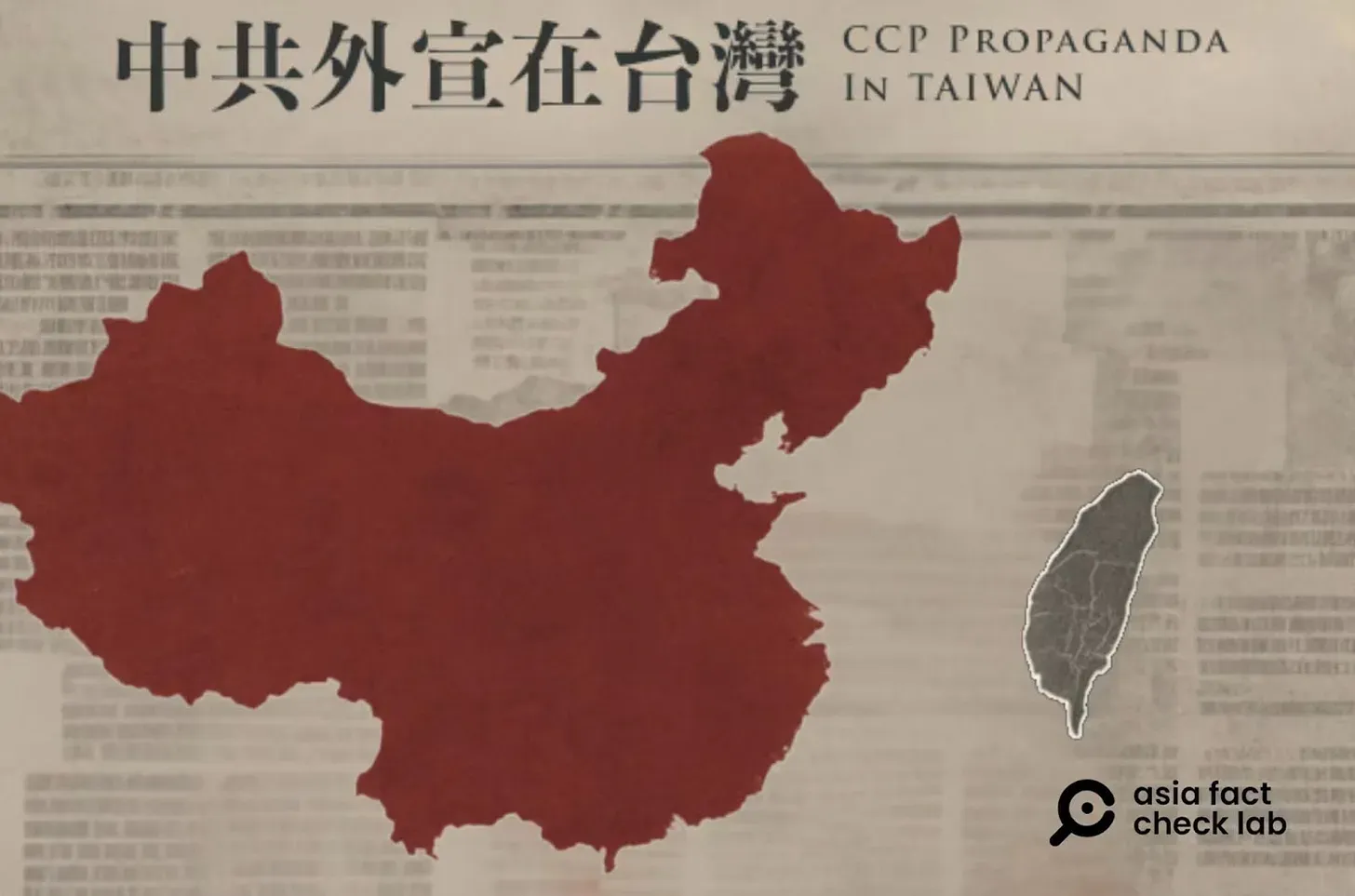
The Asia Fact Check Lab has published an 11-part investigative report series as an e-book detailing China’s propaganda operations targeting Taiwan. The reports expose what they call the “Fujian Network” (福建網絡), comprising the Fujian Daily Newspaper Group (福建日報報業集團) and Fujian Broadcasting and Television Group (福建廣播影視集團), both provincial-level media groups under control of the local CCP committee.

The e-book alleges that the media groups coordinate cross-strait united front activities. According to the investigation, these entities pay local content creators to produce content advancing pro-China narratives. In a news report about the AFCL study, the Liberty Times (自由時報) reported that Chiu Chui-cheng (邱垂正), minister of the Mainland Affairs Council, described Fujian media as “the forward base for united front media operations against Taiwan.”

Seeking Clarity

Taiwan’s Mirror Media (鏡週刊) recently announced a relaunch in order, the company said, to “deliver clarity” (讓事情講清楚) in what it called a time of “chaos, anxiety, confrontation, and collapse” (混沌、不安、對抗、崩壞). This is the latest metamorphosis for an outlet that has ridden a wave of commercial development in Taiwan’s media over the past decade, often capitalizing on sensationalist content and approaches. Mirror Media was first founded in 2016 as a tabloid magazine after Pei Wei (裴偉), the former managing editor of the local edition of Jimmy Lai’s Next Magazine (壹週刊), left with several colleagues to create a competing publication. Mirror Media said in its announcement that it aims to provide clarity through professional journalism combined with engaging short videos and AI-enhanced content. The new outlet could be found at www.mirrordaily.news starting yesterday.