On April 22, the day after the death of Pope Francis, China’s official Xinhua News Agency published a brief official release (通稿). As is general practice, the release was subsequently republished by other state-run media, including the People’s Daily. During the press conference later that day, Ministry of Foreign Affairs spokesperson Guo Jiakun offered scripted condolences and highlighted “constructive engagement” with the Vatican, while avoiding questions about attending the funeral.
The restraint in coverage reflects the complicated Vatican-China relationship, especially during Pope Francis’s pontificate — particularly regarding bishop appointments. Guo stated, “China is willing to make joint efforts with the Vatican to promote the continued improvement of China-Vatican relations,” but China ultimately declined to send any delegation to the April 26 funeral.
Commentator Michael Chambon described China’s absence as “a slap to Pope Francis,” noting that “from the very beginning of his papacy, Pope Francis showed particular attention to China.” Despite the diplomatic snub, China did authorize Hong Kong Cardinals Joseph Zen and Stephen Chow to travel to the Vatican, with Cardinal Chow participating in the conclave.
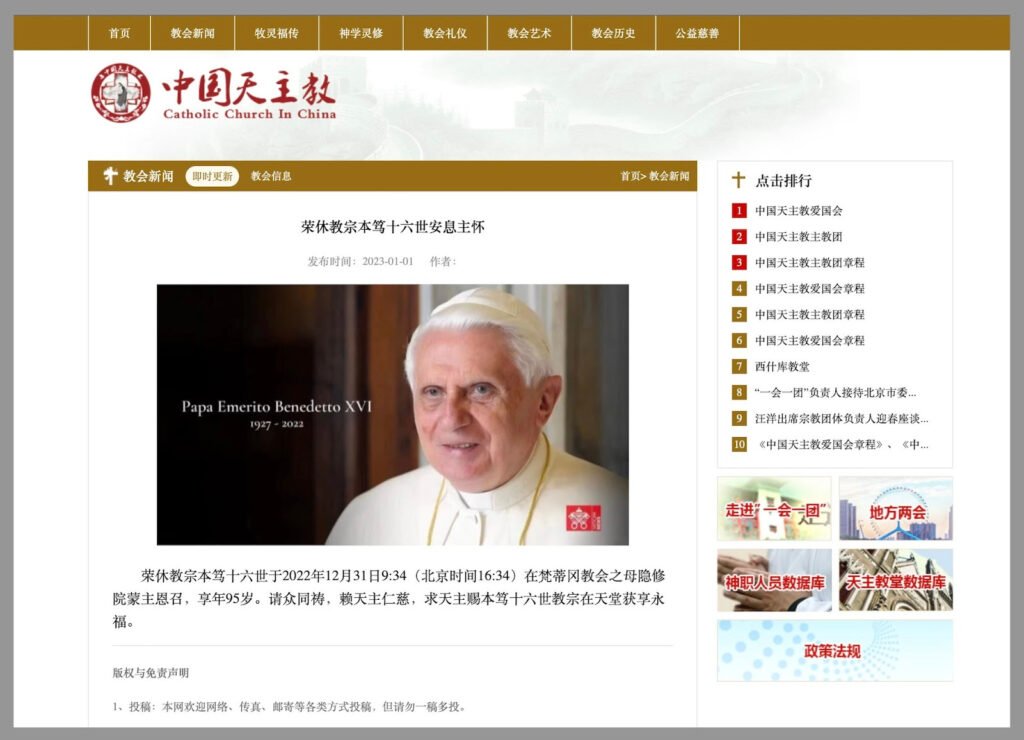
Media outlets in China generally adhered to the language of Xinhua and the MFA, with the Global Times (环球时报) being a rare exception that covered the funeral logistics, citing Vatican News. Notably silent was the website “Catholic Church in China” (中国天主教), operated by the Chinese Catholic Patriotic Association (CCPA), an organization closely linked to the United Front Work Department of the CCP. Following the death of former Pope Benedict XVI in December 2022, the CCPA’s website did issue a condolence statement — although the message was later removed from the CCPA site. This time, however, the site, a CCP-led voice on Catholic matters, posted no message after Francis’ death.