
Vietnam
While the Vietnamese government has deepened economic and diplomatic cooperation with Vietnam in recent years, the Vietnamese public remains largely skeptical of China due to decades of territorial conflicts, most recently in the South China Sea. But in one of the world’s strictest media environments, China has sought actively to improve its image and information presence with a flurry of new Sino-Vietnamese media cooperation initiatives — including joint productions and publications, journalist training sessions, and media conferences.
Sinosphere
The name Vietnam in Mandarin, Yuenan (越南), itself calls back to a long history of cross-border migration, trade and diplomacy between China and Vietnam. The name derives from Nanyue (南越), an independent state and later Han tributary kingdom established by the former Qin general Zhao Tuo (趙佗) in 207 BC that stretched from today’s northern Vietnam to the present-day Guangxi and Guangdong provinces. From the establishment of Nanyue, or Nam Việt in Vietnamese, until the 10th century, parts of today’s northern Vietnam had been ruled to varying extents and in different capacities by Chinese dynastic powers. This influence led to the adoption of Chinese religions as well as Chinese characters to represent the Vietnamese language, known aschữ Nôm, which was in use until banned under French colonial rule in the 19th century. Though divided by a border since the Song Dynasty, people on either side share ethnic and linguistic identities — particularly the Tai-speaking Zhuang (an ethnic minority in China which actually encompasses several distinct groups) — and have continued to migrate, trade, and intermarry through today.
Geographic proximity and historic Chinese rule also meant a significant presence of ethnic Chinese, known domestically as Hoa, living in Vietnam. As early as the 15th century and continuing through the 19th and 20th centuries, Vietnamese (and later French) leadership attempted to control Chinese immigration and domination of the Chinese in certain economic sectors by confining them to certain areas and imposing heavy taxes. After gaining independence from the French, North Vietnam imposed a programme of “Vietnamization,” encouraging Chinese to adopt Vietnamese citizenship. A more aggressive programme of imposed Vietnamese citizenship followed unification — as well as a ban on Chinese in certain trades, and anti-bourgeois policies believed to be aimed specifically at Chinese communities — and led to protests in Ho Chi Minh City. These developments worsened relations with the Chinese government, which were already strained by Vietnam’s siding with the Soviet Union during the Sino-Soviet Split. When a border conflict broke out later that year — and as harsh anti-Chinese policies continued — tens of thousands of ethnic Chinese crossed to the Chinese side of the land border. Others fled to Hong Kong, Taiwan, and Southeast Asian countries by boat. By 1979, when China invaded Vietnam, over 260,000 refugees had been accepted into China. Border clashes continued along the northern Vietnamese border intermittently until 1991, when ties between the two countries were normalized.
Waves of Chinese, many of them returnees who had fled or been expelled in the previous decade, began to return to Vietnam after the implementation of free-market reforms (Doi Moi, or “renovation”) in 1986. As Yuk Wah Chan notes, though their Hoa identity was one of their reasons for escape, “they were lumped together with all other returnees into the category of Việt kiều (越僑), meaning “overseas Vietnamese,” and enjoyed the special rights offered by the Việt kiều policy of the Vietnamese government, which was aimed at boosting the national economy.” According to the country’s 2019 census, there were 749,466 Hoa people living in Vietnam, representing less than 1 percent of the population. However, according to the Minority Rights Group, an international human rights organization based in the UK, other outside estimates put the population at over 2 million.
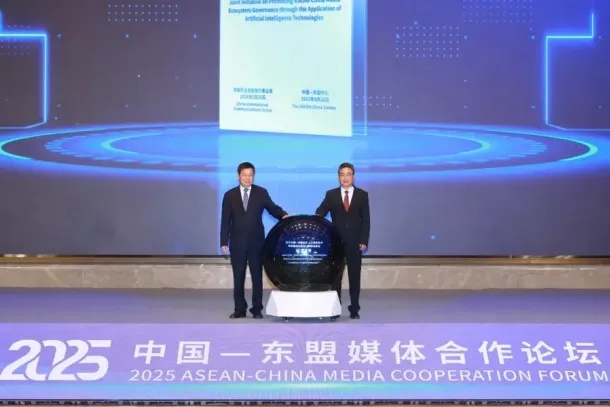
Despite periodic territorial disputes in the South China Sea, Chinese-Vietnamese relations have improved since 1991, marked by enhanced economic and diplomatic cooperation and the establishment of a “comprehensive strategic cooperative partnership” in 2008. This agreement was reaffirmed in 2026 under the leadership’s agreement to establish a “Vietnam-China community with a shared future of strategic significance at a higher level in the new era,” which has included deepening media cooperation. In the past decade, China’s Vietnam-oriented engagement activities have been primarily grounded in neighboring Guangxi province, which is home to the China-ASEAN Cybersecurity Exchange and Training Center (中國一東盟網路安全交流培訓中心) as well as several media groups that engage closely with Vietnam and other ASEAN countries.
China’s pre-revolutionary intellectual environment played a crucial role in the formation of the modern Vietnamese state. In the 1920s — before Chiang Kai-Shek’s crackdown on the Left in 1927 — Guangzhou served as a “revolutionary base” where Ho Chi Minh connected with other Vietnamese nationalists and revolutionaries. There, in 1925, he started what the CPVN refers to today as Vietnam’s first revolutionary newspaper, Thanh Nien, which was dedicated to “awaken[ing] national sentiment and create an état d’esprit leading to a general uprising against the French.”
Man Man, a longtime Chinese journalist in Vietnam, regarded the Chinese-language press in the southern Vietnamese city of Chợ Lớn (提岸) as “the best in Southeast Asia [in the 1960s], and third in Asia behind Taiwan and Hong Kong.” Chinese publications first emerged there in the 1920s due to the influx of Chinese merchants and laborers under French colonization. Under the Republic of Vietnam (1955-1975), press freedom was limited, though fourteen daily Chinese-language newspapers that published local news, women’s issues, essays, and serialized fiction remained in circulation. Under policies meant to pressure the Chinese to assimilate in Vietnam, the Vietnamese government closed all Chinese schools and newspapers in 1976. A traditional Mandarin edition of the party-run Liberated Saigon (Sài Gòn Giải Phóng) launched on May 1, 1975, the day of Vietnamese unification, and still operates in both Vietnamese and Chinese as the official newspaper of the Ho Chi Minh City party committee. Originally a paper of the Chinese Movement Organization (華運組織), it was the last remaining traditional Chinese print newspaper in Vietnam until it stopped print operations in 2025. The state-run wire service, the Vietnam News Agency (越通社), or VNA, established in Hanoi in 1945, also provides Chinese programming, including a website launched in 2010.
Climate & Challenges
Vietnam has one of the most restrictive media environments in the world. The independent press freedom advocacy organization Reporters Without Borders has called Vietnam “one of the world’s biggest prisons for journalists,” giving it a ranking of 174 out of 180 countries in its 2026 World Press Freedom Index. Likewise, the country received a score of 19/100 in Freedom House’s 2021 “Freedom in the World” report, noting that freedom of expression is strictly limited under the rule of the Communist Party of Vietnam (CPVN). According to the Committee to Protect Journalists, 16 journalists were jailed in Vietnam in 2024.
All domestic media in Vietnam are owned — either partially or wholly — and supervised by the party-state. As of February 2025, Vietnam’s Ministry of Culture, Sports and Tourism oversees several media and broadcasting bureaus, while central media agencies — including Vietnam Television (VTV), Voice of Vietnam (VOV), and VNA — were placed under direct party management as of April 1, 2026.
Despite the constitutional guarantee of freedom of speech and the press, several legal provisions are designed to limit these freedoms. While the 1990 Press Law gave reporters the right to gather their own information, it also stipulates that “no one shall be allowed to abuse the right to freedom of the press and freedom of speech in the press to violate the interests of the State, of any collective group or individual citizen.” Further articles in the criminal code — including articles 109, 117, and 331— make it a crime to spread information or commit actions that go “against the people’s government” or “infringe upon the interests of the State.”
Journalists have faced intimidation and imprisonment under these laws in a number of recent high-profile cases. In 2021, pro-democracy journalist and activist Pham Doan Trang was abducted in Bangkok before being sent back to Vietnam, where she was convicted of “anti-state propaganda” under Article 117 and sentenced to nine years in prison. In 2025, two journalists — Do Van Nga and Huynh Ngoc Tuan — were arrested under the same law, while journalist Truong Huy San was sentenced to 30 months in prison under Article 331. Another, Doan Bao Chu, has gone into hiding since the government put out a warrant for his arrest.
Top Social Media and Messaging Platforms — Vietnam
Vietnam’s digital landscape is co-dominated by Facebook and Zalo, with TikTok as the fastest-growing platform. The country has approximately 70 million social media users (71% of the population), with strong engagement driven by a young, mobile-first population.
| Rank | Platform | Active Users (millions) | User Share (%) |
|---|---|---|---|
| 1 | 86.1 | 80% | |
| 1 | Zalo | 77.8 | 80% |
| 3 | TikTok | 67.0 | 51% |
| 4 | 10.9 | 26% |
As in China, the CPVN tolerates some critical reporting on popular grievances and low-level corruption, though it draws a line at stories that “venture outside a hazy red line,” namely those that are perceived as a threat to party-state legitimacy. According to Vietnamese journalist Hà, interviewed for the Al Jazeera Journalism Review, party membership is not required to work in journalism in Vietnam, but all editors-in-chief must be party members. Another journalist, Quyên, said that “doing journalism [in Vietnam] is just like walking on a tightrope […] What might not be sensitive today could be dangerously delicate tomorrow.” Some journalists report on Vietnamese in exile for publications like The Vietnamese and Luật Khoa Magazine, which are both based in Taiwan.
There are notable similarities between the laws, systems, structures, and ideology relating to public opinion guidance and propaganda in China and Vietnam. In 2016, the Vietnamese army set up an online information warfare unit, Force 47, which is responsible for maintaining a “healthy” internet environment and “proactively fighting against wrong views” online. The Vietnamese government also makes use of CPV volunteers as “opinion shapers” known as the “E47” brigade. The work of Force 47 and E47 and the combined use of both hired and volunteer commentators are not unlike the work of China’s “50 cent army” (五毛黨), the CCP’s paid online commentators who work anonymously to promote pro-government discourse (though Force 47 is a unit under the Vietnamese military, while China’s commentators are employed under various central, provincial, and local-level agencies). Observers have also noted the similarities in Vietnam’s 2019 cybersecurity law with China’s (2017), both of which target online activities deemed a threat to state security and emphasize the need to create a “healthy” cyberspace. The two countries have also collaborated closely on cybersecurity initiatives. For example, the PRC’s National Computer Network Emergency Response Technical Team/Coordination Center of China (CNCERT/CC) under the CCP’s Cyberspace Affairs Commission has held training on cybersecurity with its Vietnamese counterpart (VNCERT/CC). Apart from covering common cybersecurity threats like phishing, CNCERT/CC also promoted and shared the PRC’s approach to cyberspace management.
| Legislation | Chinese | Purpose |
|---|---|---|
| The Constitution of the Socialist Republic of Vietnam, Article 25 | 越南社會主義共和國憲法第二十五條 | Guarantees the freedom of speech, the press, and opinion, but is limited by further laws and policies. |
| 1990 Press Law | 1990年新聞法 | Gives reporters the right to gather information, but states that “no one shall be allowed to abuse the right to freedom of the press and freedom of speech in the press to violate the interests of the State, of any collective group or individual citizen.” |
| Criminal Code Article 109 | 越南刑法第109條 | Specifies punishments for anyone who establishes or joins an organization that acts against the government. |
| Criminal Code Article 117 | 越南刑法第117條 | Specifies punishments for anyone who stores or spreads information or materials for the purpose of opposing the Socialist Republic of Vietnam. |
| Criminal Code Article 331 | 越南刑法第331條 | Specifies punishments for anyone who “abuses democratic freedoms to infringe upon the interests of the State, lawful rights and interests of organizations and/or citizens,” including abusing “freedom of speech” and “freedom of the press.” |
Domestic Chinese-language Media
Given the strained media environment in Vietnam, domestic Vietnamese Chinese-language media is owned and guided by the Vietnamese party-state. In addition to the aforementioned Liberated Saigon (Sài Gòn Giải Phóng) and VNA, several websites, television stations, and radio stations provide programming in Chinese.
One of these is the Simplified Chinese edition of People (越南人民報), or Nhân Dân, the official mouthpiece of the Central Committee of the CPVN, which in 2012 began offering a Simplified Chinese digital edition, announced at a ceremony attended by members of the CPVN Central Committee. A news report in China’s People’s Daily stated that the Chinese-language launch will “promote the development of traditional friendship between Vietnam and China, and comprehensively introduce and report on Vietnam to Chinese readers and Chinese-speaking readers worldwide.”
Vietnam Television (VTV), now under the direct control of the CPVN, is tasked with “informing and disseminating the Party’s guidelines and policies, and the State’s laws and regulations; contributing to education, raising public awareness, and serving the people’s spiritual life through television programs and other forms of journalism and multimedia communication.” In 2018, the channel scrapped its global foreign-language broadcasts on VTV4 for a digital model, and in 2025 announced Vietnam Today, a channel offering 24-hour broadcasts in foreign languages, including the fortnightly Chinese-language program “China Link,” which “offers Chinese-speaking audiences an authentic view of the country today.”
Voice of Vietnam (VOV) is Vietnam’s official radio broadcaster. Its international channel, VOV5, offers programming in a dozen foreign languages, including Mandarin Chinese. Like VOV and VNA, it is under the direct guidance of the CVPN and is tasked with broadcasting the Party’s views and policies.
In addition, the CPVN’s online newspaper is available in simplified Chinese with sections dedicated to China-Vietnam relations, as is its theoretical journal, the Communist Review (共產主意雜誌).
Lines of PRC Impact & Engagement
The combination of a tightly censored media environment, the presence of a Chinese diaspora, ideological alignment of the ruling parties of both countries, and geographical proximity has borne significant official media engagement. But despite the advancement of friendly ties and deepening cooperation between the two governments, the Vietnamese public remains largely skeptical toward China due to continuing tensions over territorial claims in the South China Sea. Anti-China protests, some of which have turned violent, have periodically broken out in response to China’s encroachment of Vietnamese waters and Chinese investments. The ISEAS – Yusof Ishak Institute’s 2025 state of Southeast Asia report found that, in 2025, 91% of Vietnamese were concerned about China’s growing regional influence, while only 35% were worried about the influence of the United States.
Vietnam Press Freedom Timeline
From colonial censorship to digital crackdowns: a century of controlled media
DRV Founded, Press Under Party Control
Legal Foundation:
- Nhan Dan (The People) founded as the official party newspaper
- All private newspapers gradually nationalized or shut down
- Press freedom enshrined in constitution but subordinated to party directives
Reunification Silences Southern Press
Complete Control:
- Over 30 independent southern newspapers closed overnight
- Hundreds of journalists detained in re-education camps
- All media consolidated under the Vietnam Fatherland Front
Economic Reforms Loosen Press Controls
Reform Era:
- Investigative reports on official corruption gain public attention
- Number of licensed publications expands significantly
- Freedom remains conditional — self-censorship stays mandatory
Blogger Nguyen Van Hai (Dieu Cay) Arrested
Individual Case:
- Sentenced to 12 years after a 2012 national security retrial
- CPJ named him one of the world’s leading imprisoned journalists
- Released in 2014 under US diplomatic pressure and exiled
Cybersecurity Law Passes
Wave of Journalist Arrests
Targeting Pattern:
- Pham Chi Dung (VIJA founder) sentenced to 15 years in 2021
- Nguyen Tuong Thuy and Le Huu Minh Tuan each sentenced to 11 years
- Vietnam ranked among world’s top jailers of journalists (CPJ, RSF)
This has resulted in a heightened sensitivity toward China-related topics online, with authorities toeing a fine line between tolerance for useful anti-Chinese nationalism and censorship of anti-China online speech deemed a threat. The result is an environment that has impacted journalists’ ability to report on China-related issues and caused some to self-censor. One journalist told the Al Jazeera Journalism Review that reporting on China is particularly sensitive because “we depend on China so much that we need to mind our words,” and that her outlet was instructed to reduce coverage of tensions in the South China Sea in 2012. While hostility toward China remains, censorship of anti-China views appears to have made some impact. “Economic interests are prevailing over nationalism,” Nguyen Hung, a scholar at RMIT University Vietnam, told Reuters.
Hard Approaches
As China seeks to improve its international image and win over countries in the Global South in its quest to establish a “China-ASEAN community with shared future,” it has escalated direct media cooperation that began decades ago. During a 2017 Xinhua delegation to Vietnam, Nhan Dan’s (越南人民報) chief editor Thuan Huu said the newspaper “frequently consults with Xinhua’s reports, considering the Chinese news agency an important source for global affairs news.” The years 2017-2019 saw several meetings between representatives from China’s Xinhua and Global Times (環球網), China Radio International (中國國際廣播電台), and those of Vietnam’s Nhan Dan, VNA, and VOV, in which the two sides discussed collaboration opportunities and signed agreements aimed at strengthening cooperation. Since 2018, representatives from Vietnam’s official media channels have been attending the Mekong-Lancang Cooperation Media Summit, organized annually by the People’s Daily and attended by delegates from China, Laos, Cambodia, Thailand, and Myanmar. In 2025, Vietnam’s People (人民報) signed an MOU with China’s People’s Daily and Xinhua aimed at deepening media cooperation and trainings. On the same day, Xi Jinping published a lengthy op-ed in Vietnam’s People discussing plans for deepening the China-Vietnam “community with a shared future.”
Regional-level Chinese media — particularly from neighboring Yunnan and Guangxi provinces — also have a long history of cooperation with Vietnamese official media outlets. Yunnan Satellite TV (雲南衛視), led by the Propaganda Department of the Yunnan provincial party committee, started airing its programs on Hanoi Radio and TV (河內廣播電視台) as early as 2005.
As an “ASEAN-facing international corridor,” Guangxi Radio and Television (廣西廣播電視台; GXRTV) has been the most active media cooperation partner with Vietnamese media. It has been cooperating with Quang Ninh Radio and Television (廣寧省廣播電視台) on joint programming, exchanges, and training since 2007. In 2011, they began co-producing the Vietnamese-Chinese bilingual Lotus Magazine (荷花). In 2015, GXRTV’s ASEAN working group set up “work stations” with staff in ASEAN countries, including Vietnam. GXRTV has also collaborated with the China Intercontinental Communication Center (CICC), a media company under the State Council Information Office (SCIO), to co-produce and air programs on VTV. By 2021, it claimed to have broadcast 1,456 hours of programming in Vietnam.
In 2024, GXRTV and the Guangxi Daily (廣西日報) inaugurated the Guangxi International Communication Center (廣西國際傳播中心; GXICC) — establishing a strategic partnership with China Daily at the launch ceremony — as part of Xi Jinping’s broader effort to leverage provincial media resources while amplifying central-level narratives abroad. Its central brand, Hello Guangxi, offers news and travel information in Vietnamese through its website and Instagram account. In April 2025, the GXICC, alongside the SCIO, CICC, VOV, and others, co-hosted a media cooperation event titled “Dialogue in the New Era,” attended by over 500 people in Hanoi and Nanning, where new media initiatives, including documentaries, reporting tours, and new joint programming, were launched. Other ICCs, including those from Yunnan and Nanning, have also engaged Vietnamese media through tours and cooperation agreements.
For examples of the various forms of cooperation and engagement between Chinese and Vietnamese media and media-related organizations, see our Activity Reports for Vietnam.
More Stories from this Region

Guangxi Seeks Vietnamese Media Partners
Keeping the Global South in the Loop

Telling the Mekong Story


