Activity Category: Media Engagement Activity

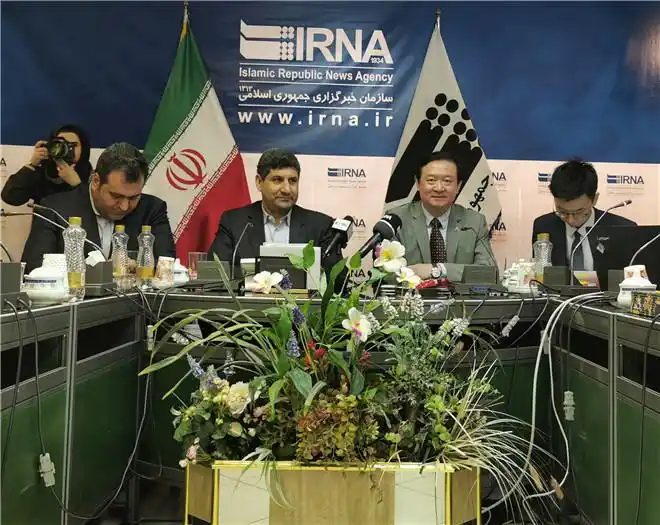
Jinan Overseas International Communication Center Opens in Paris

The Jinan Overseas International Communication Center (濟南海外國際傳播中心) was inaugurated in Paris on November 26, 2024, alongside a cultural exhibition celebrating the city’s spring water heritage. Tang Ji (唐霽), Deputy Director of Xinhua News Agency Paris Branch (新華社巴黎分社副社長), and Sun Shihui (孫世會), Deputy Director of the Jinan Propaganda Office, presided over the ceremony with French officials. The center claimed it would “tell Jinan’s story to the world and showcase the unique charm of spring culture” (向世界講述濟南故事,展示泉水文化的獨特魅力), according to coverage by Jinan Daily News Group. Three French representatives were appointed as “Spring City Recommenders” including France-China Friendship Association vice-chair Liyakid Ben Ami, “My French Friends” association president Mai Sui, and Beatrice de Focko, former global communications director at BNP Paribas (法國巴黎銀行). Sophie Mette, a French National Assembly member representing Gironde, stated that the exhibition would deepen understanding of Jinan’s culture among French citizens. Officials said the center would serve as a platform for deepening cultural exchanges between China and France.

CMG Signs MOU with Brazilian Culture Ministry

On November 18, 2024, China Media Group (中央廣播電視總台) signed a Memorandum of Understanding with Brazil’s Ministry of Culture in Rio de Janeiro. The agreement was signed by CMG President Shen Haixiong (慎海雄) and Brazilian Culture Minister Margareth Menezes, establishing cooperation in audiovisual production, cultural heritage promotion, and technical exchanges. The signing took place amid what Shen described as a “new golden 50 years” of China-Brazil diplomatic relations under the leadership of Presidents Xi Jinping and Luiz Inácio Lula da Silva. The collaboration will focus on film market development, media co-production, cultural heritage preservation, and tourism promotion to strengthen people-to-people connections between the nations. Menezes, who became Brazil’s first Black woman Culture Minister in 2023, emphasized the partnership’s importance for “Global South” nations pursuing mutual understanding and development.

CMG Signs Deal With Greek Media at Bilateral Dialogue

On October 30, 2023, China Media Group (中央廣播電視總台) hosted a “China-Greece Belt and Road Dialogue” (中國希臘”一帶一路”對話會) in Athens. The event was attended by former Greek President Prokopis Pavlopoulos, who served as president from 2015 to 2020, China Media Group President Shen Haixiong (慎海雄), who has headed the umbrella state media organization since 2018, Greek Tourism Minister Vasilis Kikilias, who served in that role from August 2021 to March 2023, and Chinese Ambassador to Greece Xiao Junzheng (肖軍正). During the event, CMG signed a cooperation memorandum with Greece’s largest financial media outlet, Shipping and Business News (航運與商業報), covering international news reporting and financial content collaboration. CMG also exchanged an agreement with the Greek satellite platform NOVA to broadcast CGTN English and Documentary channels in Greece. Greek Culture Minister Lina Mendoni (麗娜·門佐尼) announced plans for a comprehensive cooperation memorandum with CMG covering multiple joint cultural projects.

ACJA Hosts Tibet Media Exchange in Lhasa

On July 22, 2025, the All-China Journalists Association’s (中国记协) Taiwan, Hong Kong and Macao Affairs Department organized an exchange event in the Tibetan capital of Lhasa between overseas Chinese-language media and Tibetan media outlets, bringing together 30 representatives from Chinese-language media organizations across 18 countries and five continents who toured facilities at the official Tibet Daily (西藏日报), the paper under the local committee of the Chinese Communist Party (CCP), and Tibet Broadcasting and Television Station (西藏广播电视台), the state-run broadcaster in the region. Also attending were government-run multimedia centers and representatives from the Tibet International Communication Center (西藏国际传播中心), an ICC created to conduct external propaganda for the Tibetan CCP leadership. Among the foreign media taking part in the event were Cambodia’s Jian Hua Daily (柬华日报), Japan’s Chubun (中文导报), Canada’s Seven Days Media (七天傳媒), Australia’s AUS-China TV Media (澳视传媒), Fiji Daily (斐济日报), New Zealand’s Home Voice Chinese News (乡音报), Portugal’s Europe Weekly (葡华报), and the Central and Eastern Europe edition of the European Times (欧洲时报中东欧版), which is produced from the outlet’s offices in Austria. The event was aimed at advancing media transformation, strengthening international cooperation, and collectively “telling Tibet’s story in the new era” (讲好新时代中国西藏故事) — agendas echoing the official narratives of the CCP leadership.

Yunnan ICC Runs Media Training with Myanmar

On July 21, 2025, Yunnan province’s South Asia and Southeast Asia International Communication Center (雲南省南亞東南亞區域國際傳播中心) and the propaganda office of the prefecture of Dehong (德宏傣族景頗族自治州委宣傳部), which borders Myanmar’s Kachin State, hosted a China-Myanmar digital media training program in Mangshi (芒市), the local county seat. The Yunnan ICC, formed as part of a national push from the central leadership to invigorate global propaganda through local and regional participation, has played a key role in media related outreach toward Southeast Asia. The six-day initiative brought together officials and journalists from Myanmar’s Ministry of Information (緬甸宣傳部) and Myanmar National Television (緬甸國家電視台). Participants visited border cities including Ruili (瑞麗) and Longchuan (隴川) to study digital communication techniques and experience what organizers described as China’s modernization efforts in border areas. The program, timed for the 75th anniversary of China-Myanmar diplomatic relations, aimed to strengthen bilateral media cooperation through joint content creation and cultural exchanges, though specific outcomes beyond stated diplomatic objectives remained unclear from the official coverage.​​​​​​​​​​​​​​​​

Los Angeles Times Runs China Daily Propaganda Insert

An eight-page China Watch supplement appeared in the financially-struggling Los Angeles Times in June 2020, distributed by the Chinese government-backed China Daily. The standalone insert, branded “All You Need to Know,” featured content promoting Chinese perspectives during the COVID-19 pandemic period. The supplement was clearly labeled as not involving the newspaper’s editorial staff, but presented as news reading material. The timing coincided with the LA Times’ well-documented financial difficulties, suggesting economic motivations for accepting the paid insert. China expert Clayton Dube documented the supplement’s appearance, highlighting the case as another example of Chinese state media’s efforts to reach American audiences through established US newspaper distribution networks.​​​​​​​​​​​​​​​​

China Daily Runs Supplement in India’s Hindustan Times

A China Watch supplement appeared in India’s Hindustan Times on October 30, 2020, as part of China Daily’s global propaganda campaign targeting foreign audiences. The insert featured environmental stories including “Yellow River cleanup brings bright future” and coverage promoting Chinese development initiatives. China’s “China Watch” pages, which have appeared in newspapers across the world, blur the lines between Chinese propaganda and legitimate journalism, with the Chinese Communist Party paying substantial sums—including one million dollars annually to the UK’s Daily Telegraph—for such supplements. These payments represent a key component of China’s external propaganda (外宣) strategy to shape international perceptions.

China Internet Body Holds Global Training

The World Internet Conference Digital Academy (世界互联网大会数字研修院) held a training program on “Digital Economy Innovation and Development” during the 2025 World Internet Conference Digital Silk Road Development Forum on July 24, 2025. According to a state media readout, the program attracted government officials and business representatives from 26 countries and regions, focusing on data governance and cross-border data flows. Liang Hao (梁昊), the executive deputy secretary-general of the WIC and executive vice-dean of the WICDA, said the academy aims to “inject new vitality into digital development” and build an “open, trustworthy, and shared global digital economy ecosystem.” The training was jointly organized by the Cyberspace Administration of China (CAC), China’s primary internet control body, and featured instructors from Beijing Normal University’s Belt and Road School (北京师范大学”一带一路”学院) and the Asia Academy of Digital Economics, though specific participating countries were not disclosed. The World Internet Conference (WIC) was founded in 2014 as an annual forum hosted by China in Wuzhen, promoting Beijing’s vision of internet governance and digital cooperation. The event, through which China has often tried to force joint declarations with participants to support its views on cyberspace governance, has had limited participation, despite its global branding.

Kenya’s Star Signs Insert Deal with China Daily

Kenya’s Star newspaper signed a content-sharing agreement with China Daily Africa on July 16, 2025, at the Star’s Westlands headquarters in Nairobi. Radio Africa Group CEO Martin Khafafa and China Daily Africa Director Wang Xiaodong (王晓东) officiated the deal, which will see “China Watch” inserts published weekly in the Star, leveraging its “100,000-copy circulation.” Khafafa welcomed the partnership as showcasing China’s “contributions to Kenya’s economic growth,” while China Daily’s Kennedy Mureithi said the goal was to “break down Western bias” and expand influence across 15 African countries through local partnerships countering “misperceptions” about China’s continental role. This language closely mirrors Chinese state talking points, including Xi Jinping’s notion of “telling China’s story well.” Mureithi was quoted by China Daily as saying: “We believe that by telling our story in our own voice, more Africans will come to appreciate the values, innovations, and opportunities that China offers.” Xi’s notion of “China’s story,” however, does not suggest individual stories but refers to the “discourse power” (話語權) and voice of the Chinese Party-state, which is perpetuated also through restraints on discourse.