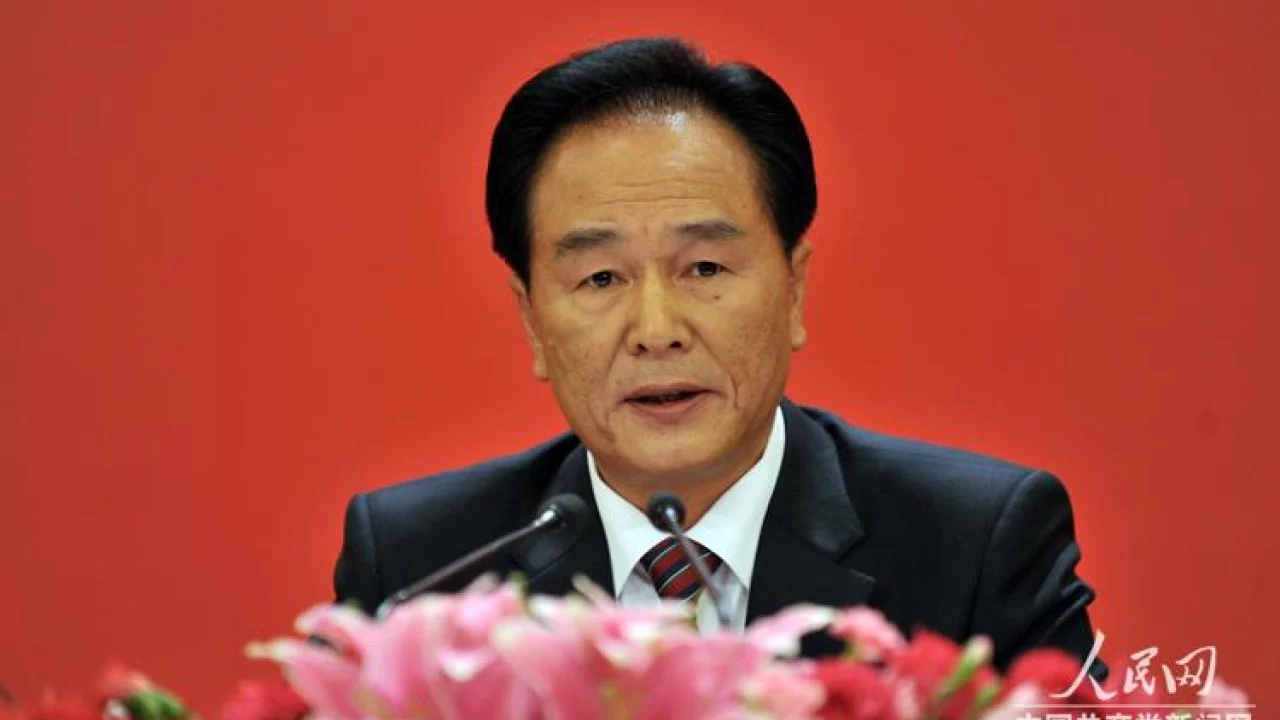
The Third Cross-Strait Media Summit (第三屆兩岸媒體人北京峰會) was held in Beijing in December 2017, themed around the thirtieth anniversary of cross-strait journalism exchange. Taiwan Affairs Office (國台辦) and Taiwan Work Office of the CCP Central Committee (中共中央台灣工作辦公室) director Zhang Zhijun (張志軍) attended and addressed the gathering. Want Want Holdings (旺旺集團) and Want Want China Times Media Group (旺旺中時媒體集團) chairman Tsai Eng-meng (蔡衍明) and Want Want China Times Media Group vice chairman Hu Chih-chiang (胡志強) both attended. The summit was co-organized by Beijing Daily Group (北京日報報業集團) and Want Want China Times Media Group, as reported by The News Lens.
The 2018 China-Latin America Media Forum took place in Buenos Aires, Argentina on November 19, 2018, focusing on “Deepening Media Cooperation to Help Build a China-Latin America Community with a Shared Future,” according to Xinhua News Agency. Representatives discussed media’s role in bilateral cooperation and new media platforms. Xinhua reported that a Brazilian representative from a financial information group claimed that media plays an “incomparable role” in cooperation, allowing audiences to receive “first-hand information” rather than filtered news from Europe and the United States, language that closely mirrors Chinese state media talking points about Western media bias—as reported by Xinhua. Alejandro Ramos Esquivel (亞歷杭德羅·拉莫斯·埃斯基維爾), who served as Notimex’s Director-General from 2013-2018, reportedly stated the forum brought together diverse media organizations to analyze cooperation trends, predicting collaboration would “flourish” as China’s “Belt and Road Initiative” gains influence. The event highlighted opportunities in website development and capacity building.
The Third China-Australia Media Forum (第三屆中澳媒體論壇) was held in Sydney on August 25, 2014, jointly organized by China’s State Council Information Office (中國國務院新聞辦公室) and Australian News Channel Pty Ltd (澳大利亞新聞頻道股份有限公司). Over 50 government and media representatives from both countries discussed topics including economic cooperation, reporting, and media exchange mechanisms under the theme “Media’s Role in Building Stable China-Australia Relations.” Cai Mingzhao (蔡名照), then-director of China’s State Council Information Office, delivered a keynote speech emphasizing the media’s role in fostering bilateral understanding and proposing three recommendations for strengthening cooperation. Paul Fletcher, representing Australia’s Communications Minister Malcolm Turnbull, noted the forum provided “a valuable platform” for media exchange. Chinese state media reported that “both sides agreed media exchanges are increasingly close and should continue playing a constructive role in deepening bilateral relations.” The forum, established in April 2006, alternates annually between the two countries.
The China Foreign Languages Bureau (中國外文局), also known as the China International Communication Group (CICG) — one of China’s key external propaganda entities — and Lao PDR propaganda officials jointly released the “Lancang-Mekong Cooperation 2025 Top Ten News” in Luang Prabang, Laos (老撾琅勃拉邦) on February 4, 2026, attended by approximately 200 participants. China Foreign Languages Bureau Vice Director Yu Yunquan (于運全) and Lao People’s Revolutionary Party Central Propaganda Department Vice Minister Khammon Chanthaxy (坎蒙·占塔吉) co-hosted the event, which emphasized building “multi-level media cooperation networks” and “shaping the Lancang-Mekong narrative system.” Khammon stated that media cooperation has “laid a solid foundation of public opinion” for the Laos-China community of shared future — referencing a core foreign policy concept of Chinese leader Xi Jinping. The annual news selection is jointly conducted by Chinese state media including China Report (中國報道) magazine and mainstream media from Cambodia, Laos, Myanmar, Thailand, and Vietnam, now in its sixth year, designed to coordinate messaging on regional cooperation and strengthen what participants called “narrative collaboration” among the six countries.
On January 10, 2026, a symposium on China-South Korea media content exchange and “cultural community building” (文化共同體建設) — a term referencing Xi Jinping’s shared future foreign policy concept — was held at the Communication University of China (中國傳媒大學). Organized by the university’s Institute for a Community of Shared Future (人類命運共同體研究院), the event brought together scholars from both countries to discuss the dissemination of cultural products (referring to media content broadly, including films and television shows) and cooperation in the digital age. Participants analyzed media policy between the two countries, compared the strengths of the film industry, discussed the reception of Korean cultural products in China, and called for expanded distribution of Chinese content in Korean and Southeast Asian markets, while acknowledging persistent challenges, including asymmetric market access and content restrictions (which were not specified). Li Huailiang (李懷亮), director of the Institute for a Community of Shared Future for Mankind, said that China and South Korea should build “bridges of mutual trust” through media collaboration. Participants from South Korea included Joo Jung-min (朱定珉), president of the Korean Association for Media Policy and dean of the School of Media and Communication at Chonnam National University; Jung Hye-yoon (郑惠允), research fellow at the Center for Social Issues Research at Korea University; Ha Joo-yong (河周容), dean of the College of Social Sciences and director of the Institute of Social Science Research at Inha University; Lee Heon-yul (李宪律), dean of the School of Media Studies at Korea University; Lee Seung-hyun (李承炫), director of student affairs and dean of the International Education Institute at Dong Seoul University; and Chae Jung-hwa (蔡廷和), research professor at the ICT Law and Economics Research Institute at Sogang University.
On June 12, 2024, Xinhua News Agency President Fu Hua (傅華) met with Associated Press President and CEO Daisy Veerasingham and Reuters President Paul Bascobert in New York. Fu and Veerasingham signed a new cooperation agreement on news and information services, and both sides discussed artificial intelligence’s impact on media and Olympic coverage. Fu expressed hope for strengthening cooperation with Reuters on emerging technologies and international news services, noting the partnership between the two agencies dating back to 1957. While Xinhua provided enthusiastic coverage of the meetings, neither the Associated Press nor Reuters reported on them. These partnerships allow Western news agencies to operate in China, while Xinhua views the cooperation as part of China’s broader efforts to shape global discourse and enhance its government’s international image.
On October 14, 2024, Xinhua News Agency and the Xinjiang regional government co-hosted the 6th World Media Summit in Urumqi, China, with over 500 participants from 106 countries and regions attending, according to Xinhua. The summit focused on “Artificial Intelligence and Media Transformation.” Organizers arranged a tour of Xinjiang for attendees, which Xinhua documented in vlogs featuring media representatives from Thailand, Pakistan, and Myanmar describing their positive impressions of the region. China faces widespread allegations of human rights violations against Uyghurs and other Turkic Muslims in Xinjiang, including mass detention and forced labor, which the U.S. has characterized as genocide. China rejects these accusations, claiming the facilities are vocational training centers. The World Media Summit (WMS), is a forum conceived by China in the midst of the 2008 Beijing Olympic Games and first held in October 2009, with the explicit idea on China’s part to expand its global influence and “discourse power” (話語權) through a semi-formal international mechanism under its leadership. Eight months ahead of the first meeting, Xinhua News Agency chief Li Congjun (李从军) wrote in the official periodical China Journalist that the event of conceived “[according] to the Central Committee’s strategic demand for ‘strengthening external propaganda’” (大外宣).
On October 12, 2024, representatives from Xinhua News Agency, Reuters, the Associated Press, and Agence France-Presse convened in Beijing for a high-level meeting among the four agencies. This was the second dialogue event hosted by Xinhua since the December 2023 inaugural meeting. Unlike the first meeting, which included top executives, the October gathering featured senior officials rather than agency leaders. According toXinhua, the agencies discussed AI’s impact on journalism, with Xinhua’s president Fu Hua (傅華) saying that AI poses many challenges to news reporting, including the risk of spreading false information through AI-generated images and videos. Fu suggested the agencies “embrace technological change” while combating misinformation, claiming “major global wire services should jointly shoulder the responsibility of upholding journalistic ethics.” Representatives from Reuters, AP, and AFP reportedly stated news agencies should redefine AI use while building safeguards, and all four agencies agreed to continue strengthening communication on AI-related topics. Xinhua has been keen to establish dialogue with the major international news wires in order to be seen as a key player in global information dissemination, but global news agencies have distanced themselves from the idea that cooperation with Xinhua relates to their professional journalism work — AP’s CEO emphasizing to US lawmakers in 2019 that cooperation is “purely commercial in nature.”
The 16th Media Forum China Germany (第16屆中德媒體圓桌對話會) was held in Shenzhen from November 10-13, 2025, co-hosted by the state-run Global Times (環球時報) newspaper and China Media Management Inc (CMM-I传媒咨询有限公司), a Beijing-based consulting and business development firm originally founded in Hong Kong with ties to Germany and the UK. While Chinese state media characterized the event as receiving “support from the United Nations,” this appears to refer solely to the online participation of the UN Resident Coordinator in China, not to institutional endorsement or substantive UN involvement documented in any public record. The Global Times reported that participants discussed China’s four “Global Initiatives,” one of Xi Jinping’s signature policy initiatives on development, security, civilization, and governance. Attendees also toured Shenzhen’s technology parks. The Global Times editor-in-chief said the forum would “make new contributions to deepening the China-Germany all-round strategic partnership.” The forum has been held annually since 2010 , with support at least until 2016 by the Robert Bosch Foundation, as an effort to encourage exchange between Chinese and German media outlets. The media event has received continued criticism in recent years from activists who argue that the Forum allows Chinese state-controlled media representatives to promote official Chinese narratives.