
Current Status: Active

Chinese Embassy in Laos

The Embassy of the People’s Republic of China in the Lao People’s Democratic Republic is China’s chief diplomatic mission to Laos, located in Vientiane. The mission’s origins trace to the establishment of diplomatic relations between the People’s Republic of China and Laos on April 25, 1961, when Laos switched recognition from the Republic of China (Taiwan) to the PRC government in Beijing. However, diplomatic relations experienced significant challenges, with Laos severing diplomatic relations with the PRC in May 1962 and restoring relations with the Republic of China, before recognition was changed again in 1975 when the new Lao communist government came to power. Relations were fully normalized in 1989, and diplomatic ties were restored to the ambassadorial level in June 1988. The embassy is currently located at Wat Nak Road, Sisattanak, Vientiane, Lao P.D.R. The current ambassador is Fang Hong (方红).
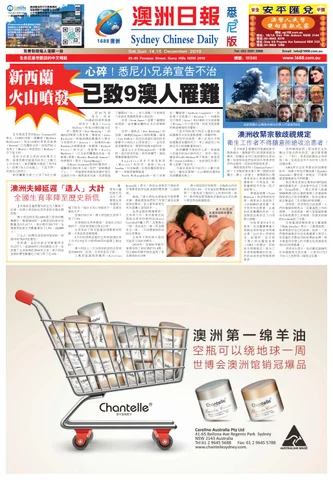
Sydney Chinese Daily

The Sydney Chinese Daily is published by the Chinese News and Media Group, which describes itself as “the largest 100% Australian Owned and Independent Chinese Media Company.” The group’s flagship publication, the Daily Chinese Herald (澳洲日報), was established in 1986, with the company operating a portfolio that includes Chinese Melbourne Daily and Queensland Chinese Daily. The company’s website states that the Sydney Chinese Daily is “Sydney’s most influential and widely-read Chinese language publications” and “the first and only free daily newspaper to cover Sydney based local news.”

Thai Chinese New Generation Business Association

The Thai Chinese New Generation Business Association, founded on July 1, 2002, is Thailand’s first Chinese youth organization representing new immigrants and overseas Chinese youth from various regions of China, including Hong Kong and Macau. Members work across industries, including manufacturing, finance, trade, technology, real estate, construction, jewelry, medical treatment, insurance, e-commerce, and tourism. The association claims to “serve as a bridge for the new generation of overseas Chinese, helping members integrate into Thai society, building business relationships, and protecting legitimate rights”. In 2020, marking its 18th anniversary, the organization underwent leadership changes and expressed support for China’s Belt and Road Initiative, RCEP, and the Guangdong-Hong Kong-Macao Greater Bay Area development plan.

58 Lao

58 Lao (老撾資訊網), established in 2012 in Vientiane, Laos’ capital, is one of the country’s first Chinese-language media platforms. The platform claims to have become “one of the most influential Chinese-language media in Laos” by 2019. The network operates as part of Laos Future Media Co., Ltd., with technological support from Shenzhen Wangce Technology Co., Ltd. (深圳网策科技有限公司). The platform’s mission involves serving the Chinese community in Laos by delivering news, policy updates, business information, and lifestyle content through WeChat and print media. The company claims to be “currently the only Chinese information classification and publishing platform that has obtained filing permits from both China and Laos.”

Liberia Broadcasting System

Liberia Broadcasting System (LBS) is Liberia’s primary state-owned media network, operating television channels LNTV and Metro TV alongside radio stations ELBC 99.9 FM and Metro 89.9. Established in 1960 under British management, LBS transitioned to full government control in 1968. Today, the network receives approximately 60-70% of its funding through state subsidies, with presidential appointees governing its operations and editorial direction. LBS also accepts funds from foreign governments like China, with officials noting they are “very pleased” with Chinese support for the construction of a modern studio at the network’s headquarters.

Confederation of Young Leaders of India

The Confederation of Young Leaders of India is a youth development organization established in 2017 under the guidance of former Prime Minister Lal Bahadur Shastri’s family. Shastri, India’s second Prime Minister (1964-1966), led the country during the challenging period following the 1962 Sino-Indian War while maintaining India’s non-alignment policy. The organization claims to have “engaged more than 50,000 youth” through various initiatives. Its patrons include Member of Parliament Dr. Sonal Mansingh, a Padma Vibhushan recipient and classical dancer nominated to the Rajya Sabha in 2018, and former Union Minister Suresh Prabhu, who held multiple ministerial portfolios but is no longer serving as a minister. The organization states its “Youth Dialogue Series” has “drawn wide attention” from India’s political circles, including Prime Minister Narendra Modi. The Confederation operates the Indian Institute of Governance and Leadership and received a “Global Youth Promotion and Development” Award in 2018 from the International Association of Educators for World Peace, which is affiliated with UN-ECOSOC, UNICEF, UNESCO, and DPI.

Ministry of Commerce of the People’s Republic of China

The Ministry of Commerce of the People’s Republic of China, or “MOFCOM,” serves as China’s primary state organ for domestic and international trade policy. Established in 2003 through institutional consolidation, MOFCOM merged the former Ministry of Foreign Trade and Economic Cooperation with select functions from the State Development Planning Commission and State Economic and Trade Commission.
The ministry’s extensive mandate encompasses both domestic commercial regulation and international economic diplomacy. Current Minister Wang Wentao (王文濤), appointed in 2020, oversees operations from the Beijing headquarters at 2 East Chang’an Street. MOFCOM’s institutional evolution reflects China’s economic transition – from centrally-planned trade apparatus (1952-1982) to market-oriented commercial governance. Key responsibilities include formulating trade policies, managing foreign investment approvals, conducting WTO negotiations, and coordinating anti-dumping investigations. The ministry also administers China’s foreign aid programs and oversees special economic zones. Recent organizational changes in 2018 transferred antitrust enforcement to market regulators and foreign aid coordination to the newly created National International Development Cooperation Agency, indicating ongoing institutional refinement within China’s economic governance structure.

Al Eqtisadiah

Al Eqtisadiah is a leading Saudi daily business newspaper established on December 1, 1992, by brothers Hisham Hafiz and Mohammad Hafiz. Currently published by Saudi Research and Publishing Company, a subsidiary of Saudi Research and Marketing Group (SRMG), the publication is often dubbed “The Financial Times of Saudi Arabia.” The newspaper provides comprehensive coverage of economic and business events at domestic, regional, and international levels, featuring translated articles from major global financial publications including the Financial Times, Harvard Business Review, and INSEAD. Its target readership includes business executives, academics, and government officials throughout Saudi Arabia and the Gulf region. In 2024, Al Eqtisadiah underwent a significant transformation when SRMG approved a strategic partnership with Asharq Business with Bloomberg, creating one of the largest specialized economic media platforms in the region. Beyond its print edition, Al Eqtisadiah has expanded into broadcasting with Al Eqtisadiah TV, further cementing its position as a cornerstone of Saudi business media.

Ministry of Information and Broadcasting Pakistan

The Ministry of Information and Broadcasting, established in 1947, describes itself as Pakistan’s focal ministry for “projection related activities” and claims to act as a bridge between the government, media, and citizens while providing policy guidelines to state electronic media. According to the ministry, it offers professional support to federal organizations for effective promotion of government policies domestically and internationally, and says it is responsible for formulating and implementing policies, laws, and regulatory frameworks governing print and electronic media as well as news agencies. The ministry also states that it works to promote and project what it characterizes as Pakistan’s “soft, progressive, and democratic image” both within the country and abroad. The ministry operates under a federal minister and oversees the Pakistan Electronic Media Regulatory Authority (PEMRA), which was established in 2002 to regulate private electronic media. The ministry has actively participated with China, a close and longstanding ally, on media-related activities.