Current Status: Active

El Mundo Financiero

El Mundo Financiero, founded in 1946 by José Luis Barceló Fernández de la Mora, is an international economic and financial daily publication based in Madrid. The outlet specializes in economics, finance, small and medium-sized enterprises (SMEs), stock markets, foreign trade, banking, and insurance. The publication also features specialized sections on automotive, wine, and gastronomy. El Mundo Financiero maintains offices in Madrid, Barcelona, and Pamplona.

ANO TV-Novosti

ANO TV-Novosti is the parent company of RT (formerly Russia Today), registered as an “autonomous non-profit organization” on 6 April 2005 in Moscow with registration number 1057746595367. The organization was founded by the Russian state news agency RIA Novosti and operates from 111020 Moscow, Borovaya Street 3, Building 1. ANO TV-Novosti has been sanctioned by multiple jurisdictions including the European Union, United Kingdom, Switzerland, Ukraine, and Australia for its role in spreading propaganda. According to EU sanctions documentation, TV-Novosti is “funded from the federal budget of the Russian Federation” and has “consistently spread pro-Kremlin propaganda and disinformation, and supported Russia’s war of aggression against Ukraine.” The sanctions restrict its media operations internationally, with the EU Council imposing a ban on RT‘s broadcasting activities in March 2022. Despite these restrictions, research organizations have documented that RT continues to circumvent sanctions through mirror websites and alternative domains.

Secretariat of Media and Public Communication

Argentina’s Federal System of Public Media and Content (Sistema Federal de Medios y Contenidos Públicos) was created on December 10, 2015, through Decree 12/2015 under President Mauricio Macri. Initially headed by Hernán Lombardi, the system oversees Argentina’s public media ecosystem, including Télam news agency, public television and radio networks, digital channels, and cultural centers. In 2018, it was downgraded from ministerial status to secretariat level. Following President Javier Milei’s inauguration in December 2023, the secretariat was transferred to the Communication and Press Secretariat of the Presidency through Decree 45/2023. The entity manages platforms including TV Pública, Radio Nacional, and the Centro Cultural Kirchner.

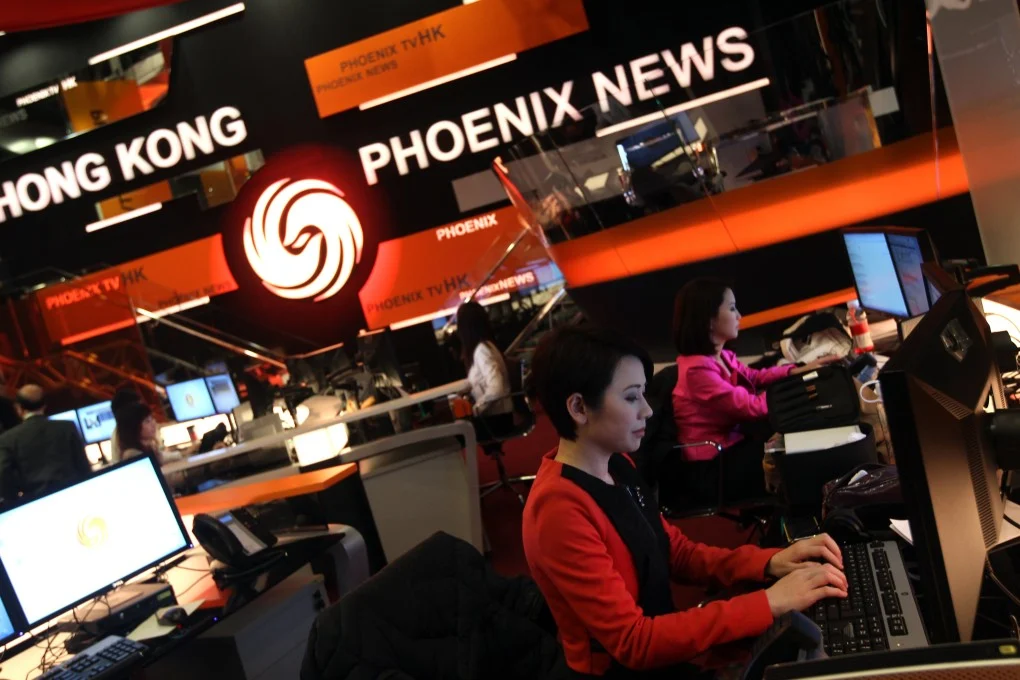
Phoenix Media Investment Holdings Limited

Phoenix Media Investment Holdings Limited is a multinational media corporation headquartered in Hong Kong, with major operations in Beijing and Shenzhen. The company operates six satellite television channels targeting global Chinese audiences. The company was founded on March 31, 1996, by Liu Changle (劉長樂), initially through a joint venture between his Today’s Asia Limited company, Hong Kong Satellite Television, and Huaying International. Liu, who previously served as a journalist and senior manager at China Central Radio before moving overseas in 1988, established Phoenix TV with the mission of “reducing the distance within the global Chinese community”. The company went public on the Hong Kong Stock Exchange in June 2000. Following the 2021 sale of Liu’s controlling stake, the company’s largest shareholder is now Bauhinia Culture Holdings (紫荊文化集團) with 21 percent, a Beijing-backed cultural enterprise directly owned by China’s central government, while Shun Tak Holdings (信德集團) owns 16.93 percent.

Chongqing Jiazuo Film and Culture Media

Chongqing Jiazuo Film and Culture Media (重慶佳左影視文化傳媒有限公司) is a privately held Chongqing company that specializes in film and television production and distribution and that distributes Chinese programming in Latin America under state guidance. Founded in June 2017 with a registered capital of 5 million yuan, it is 80 percent owned by its founder and general manager, Zuo Yue (左越), and 20 percent by Yin Boyu (尹博宇). Although privately held, the company has worked closely with state bodies since its founding. It set up a Latin American subsidiary in Peru in 2018 under the guidance of Chongqing’s culture commission. In December 2022, it joined that commission, Sichuan International Studies University (四川外國語大學) and the AI company iFlytek (科大訊飛) in co-founding a film translation center. A state media report said the center was meant to “promote the construction” of the Western China International Communication Organization (西部國際傳播中心), which formally launched in August 2023. Jiazuo was thus a founding partner in infrastructure built for Chongqing’s external propaganda apparatus, which suggests close cooperation with both the city’s international communication center and Chongqing’s leadership. The company has participated in “China Time Slot” (中國時段) initiatives in Peru, Colombia and Mexico, which were carried out “under the auspices of the National Radio and Television Administration and the Chongqing Municipal People’s Government.” The project was selected in 2023 among the first demonstration projects of the “TV China Theater” (電視中國劇場) program run by the National Radio and Television Administration, or NRTA, which places Chinese series in fixed time slots on foreign broadcasters. The NRTA, a ministry-level agency controlled by the Central Propaganda Department of the Chinese Communist Party, has promoted international cooperation in radio, television and online audiovisual content. In November 2024, Jiazuo signed a trilateral cooperation agreement with Peru’s Willax TV and Classic Media China Internacional SAC(經典傳媒中國國際有限公司). The company claims to have opened such slots in more than ten Latin American countries. Zuo was named to the NRTA’s 2023 leading talent program for international communication. In October 2025, she presented the company’s Latin American work at the launch of a research workstation in Chongqing. The event was guided by the propaganda office of the Chongqing CCP Committee and co-organized by the Western China International Communication Organization, whose chairman, Zhao Wujun (趙武君), spoke on the international communication of the Party’s “innovative theory.”

Cyberspace Administration of China

The Cyberspace Administration of China, established in May 2011 as the State Internet Information Office, functions as China’s powerful internet regulator and censor. Now serving as the executive arm of the Central Cyberspace Affairs Commission (chaired by Xi Jinping), the CAC implements far-reaching censorship, regulates internet content, and oversees data security policies. Led by Zhuang Rongwen (庄榮文), who concurrently serves as a deputy head of the Chinese Communist Party’s Central Propaganda Department (officially translated as “Publicity Department”), the agency exercises extensive powers through the 2016 Cybersecurity Law and 2021 Data Security Law. The CAC’s activities include censoring “rumors,” controlling cross-border data transfers, requiring pre-review of online comments, ensuring AI systems uphold Communist Party ideology, and maintaining majority ownership in the China Internet Investment Fund (中國互聯網投資基金), which holds stakes in major tech companies like ByteDance and Weibo through “golden shares.”

Thailand TV5

Thailand TV5, officially the Royal Thai Army Radio and Television Station, is Thailand’s second-oldest television station, launched in January 1958 by the Royal Thai Army. Owned and operated by the Royal Thai Army, the network is headquartered at 210 Phaholyothin Road in Phaya Thai District, Bangkok. Originally known as HSA-TV Channel 7, the station transitioned to color broadcasting and adopted the Channel 5 name in 1974. Academic research notes that Thailand’s “Army Signal Corps and MCOT operate Channels 5 and 9” within the country’s military-controlled broadcasting structure. Channel 5 ceased analog broadcasting in 2018 as part of Thailand’s digital television transition. The station broadcasts news, military affairs programming, documentaries, drama series, and variety shows to audiences nationwide.

China Public Diplomacy Association

The China Public Diplomacy Association (中國公共外交協會 )was established in March 2013 as a juridical association with 64 founding members, functioning as a “nationwide non-profit organization.” The organization strives to “project to the world a positive image of China that is civilized, democratic, open, and progressive, and create an international environment conducive to China’s peaceful development.” Former Foreign Minister Li Zhaoxing (李肇星) served as its first president, followed by current president Wu Hailong (吳海龍), a former ambassador to the European Union. The association conducts theoretical research, hosts public diplomacy activities including lectures and symposiums, organizes exchanges between Chinese and foreign media, and provides training for China’s public diplomacy work, operating under the supervision of China’s foreign affairs apparatus.

South African Government

The South African Government, established in 1968, operates as a parliamentary republic with a three-tier system and independent judiciary. The national government consists of three branches: the legislative (Parliament with National Assembly and National Council of Provinces based in Cape Town), the executive (President, Deputy President and 32 Ministers based in Pretoria), and the judicial (Constitutional Court, Supreme Court of Appeal, and High Court). The second tier comprises nine provincial governments, each with legislatures and executives led by Premiers. The third tier consists of local governments organized as metropolitan, district, and local municipalities. All levels operate under the Constitution through a cooperative governance model, with each having distinct yet interdependent powers, operating with an annual budget of R2.37 trillion (2024).