Current Status: Active

Radio Televizioni Shqiptar

Albanian Radio-Television, known as Radio Televizioni Shqiptar (RTSH), is the public service broadcaster of Albania, established with the founding of Radio Tirana, which began broadcasting on November 28, 1944. The television division, known as TVSH, commenced operations in April 1960. Today, RTSH operates more than 20 television and radio channels, including Radio Tirana International. While RTSH is formally governed by the Albanian Parliament and funded through license fees, state subsidies, and commercial revenue, its editorial independence has been severely undermined since 2023, according to news reports. The appointment of Alfred Peza, a former Socialist Party MP, as Director General in June 2023 was followed by mass dismissals of journalists, prompting objections from the European Federation of Journalists.

Bulgarian National Radio

Bulgarian National Radio (BNR) is Bulgaria’s national radio broadcaster, founded on March 30, 1930 by a group of engineers and intellectuals, before being nationalized on January 25, 1935. The broadcaster operates two nationwide channels — Horizont, which offers news and music, and Hristo Botev, focused on culture and the arts—alongside nine regional channels and Radio Bulgaria.  BNR is governed by a five-member Management Board appointed by the Council for Electronic Media (CEM), Bulgaria’s media regulatory authority, whose composition is politically influenced with members appointed by Parliament and the President. According to State Media Monitor, BNR faces chronic underfunding and political pressure that limit its independence, with incidents including the dismissal of journalists and broadcasting suspensions.

Council for Electronic Media

The Council for Electronic Media (CEM) is Bulgaria’s regulatory body for media services, established in late 2001. Operating under the Radio and Television Act, the CEM oversees both linear and nonlinear (fixed and on-demand) media services, including radio and television broadcasting, by setting standards and regulations that operators must comply with. The agency’s members are appointed by the National Assembly and the President through a rotational system. The CEM’s responsibilities include licensing broadcasters, monitoring compliance with advertising and content regulations, arbitrating disputes, protecting consumer rights, and promoting fair competition in the electronic media sector. 

People’s Daily Overseas / Haiwainet

Haiwainet officially launched on November 6, 2012, as the official website and new media platform of the overseas edition of the Chinese Communist Party’s People’s Daily (人民日報). The overseas edition of People’s Daily was first published on July 1, 1985. Haiwainet was established through Haiqiao (Beijing) Cultural Media Co., Ltd., which was founded on August 27, 2012, and later renamed to Haiwainet Media Co., Ltd. on March 1, 2014. In March 2018, allegations emerged suggesting connections between Haiwainet and All America TV Station in Pasadena, with claims they operated as “one team under two brands.” Haiwainet denied these allegations, stating it had “no relationship” with either All America TV Station or its executive director Zhang Huijun (張慧君). Seattle-based AAT Television Corporation (亞美衛視) also distanced itself from All America TV Station.

Aus-China TV Media

AUS-China TV Media (澳華電視傳媒), abbreviated as ACTV, is a Sydney-based multimedia company founded on February 21, 2006, that closely collaborates with China’s official state-run broadcaster China Central Television (CCTV), under the CCP’s China Media Group (CMG). According to CCTV’s website, the company is registered with the Australian Taxation Office and has “always cooperated” with CCTV-4’s “Chinese World” program since its establishment, providing content about Australian Chinese communities. Led by Chairman James Ren (任傳功), ACTV positions itself as a bridge connecting overseas Chinese communities with China while explicitly supporting Beijing’s Belt and Road Initiative and the “Chinese Dream” (中國夢). The company describes itself as focused on “overseas Chinese media unity” — according to a profile on the CCTV website from 2012 — and claims to promote “the prosperity and stability of multicultural Australia” and “mutual understanding between Australia and Asia-Pacific countries including China.”

The Post-Courier

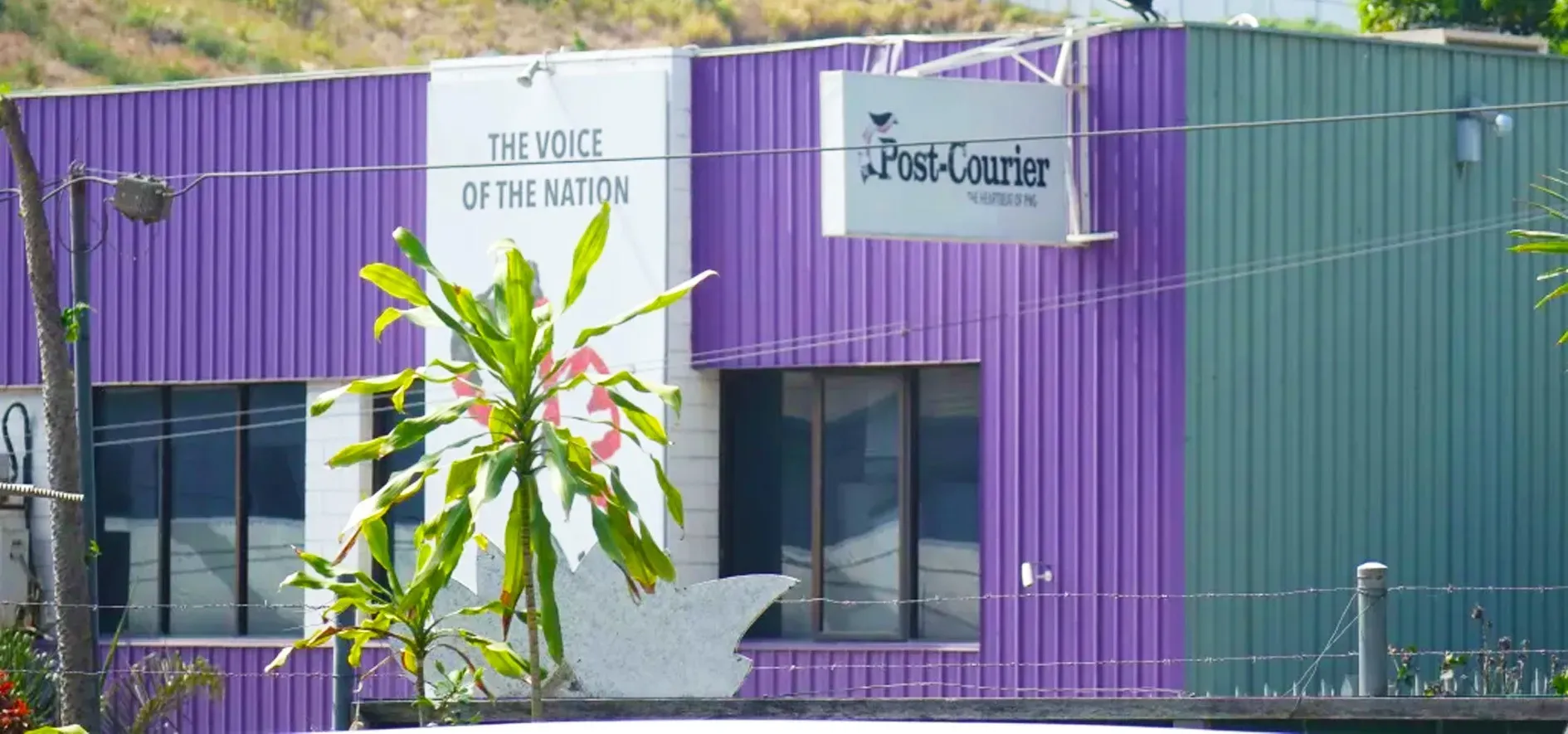
The Post-Courier is the nation’s first daily newspaper, established on 30 June 1969 and headquartered in Port Moresby, Papua New Guinea. Majority owned by Rupert Murdoch’s News Corp Australia, the publication was formed through the merger of two newspapers: the three-days-a-week South Pacific Post and the twice-weekly New Guinea Times Courier. The newspaper operates as Papua New Guinea’s primary daily publication, claiming an audited circulation of 26,262. It serves a predominantly urban readership with its news coverage and reporting. The Post-Courier has, according to its editorial board, an influential voice within Papua New Guinea’s media landscape, playing a crucial role in informing public discourse and maintaining its position as “the country’s leading newspaper publication.”

Shanghai Cooperation Organization

The Shanghai Cooperation Organisation (上海合作组织), known as SCO, is a Eurasian political, economic, international security and defense organization established on June 15, 2001, and headquartered in Beijing, China, claiming to promote mutual security, political, and economic cooperation among member states. The organization emerged from the Shanghai Five mechanism formed in 1996 between China, Kazakhstan, Kyrgyzstan, Russia, and Tajikistan, with Uzbekistan joining at establishment and subsequent expansion to include India and Pakistan in 2017, Iran in July 2023, and Belarus in July 2024. According to organizational documents, the SCO positions itself as the world’s largest regional organization by geographic scope and population, covering approximately 24 percent of the world’s total area and 42 percent of the world population, with combined nominal GDP accounting for around 23 percent of the global total as of 2024. Members of the organization include: China, India, Iran, Kazakhstan, Kyrgyzstan, Pakistan, Russia, Tajikistan, Uzbekistan, and Belarus.

HT Media Group

HT Media is an Indian mass media company headquartered in Delhi, operating across print, electronic, and digital media platforms, and founded in 2002. Going back to 1924 with Mahatma Gandhi’s editorial vision, according to the company, HT Media has grown into a multimedia conglomerate under the leadership of chairperson Shobhana Bhartia, a member of India’s influential Birla family. Its flagship publication, the Hindustan Times, ranks as India’s second-largest English newspaper, alongside business daily Mint, Hindi newspaper Hindustan, and magazines Kadambini and Nandan. The group operates 19 printing facilities nationwide, while its digital properties include Hindustantimes.com, Livemint.com, and recruitment platform Shine.com, plus radio stations Fever FM and Radio Nasha.

Bakhtar News Agency

Bakhtar News Agency (آژانس خبری باختر) is Afghanistan’s official state news agency, established in 1939 by the Government Press Department and headquartered in Kabul. The agency operates under the supervision of the Afghan Ministry of Information and Culture and publishes content in eight languages: Dari, Pashto, English, Arabic, Russian, Urdu, Uzbek, and Chinese, with its English-language service launched in 1992 to serve foreign diplomats and international audiences. Since the Taliban’s return to power in August 2021, Bakhtar has become a key component of the regime’s media infrastructure, with reports indicating the agency now functions as “a state propaganda outlet” under strict editorial oversight. The agency operates with approximately 175 staff including 90 journalists across all 33 provinces, producing around 200 news reports daily while serving as the primary news source for all governmental media outlets. In 2002, Agence France-Presse established a satellite link to provide news information to Bakhtar.