Current Status: Active

Ministry of Agriculture and Rural Affairs of the PRC

The Ministry of Agriculture and Rural Affairs of the People’s Republic of China is a cabinet-level executive department of the State Council responsible for agriculture and rural affairs nationwide. Formed on March 19, 2018, superseding the former Ministry of Agriculture, the ministry gained additional responsibilities from agricultural investment projects previously managed by other government departments. In 2023, it absorbed the National Rural Revitalization Administration and gained rural science and technology functions from the Ministry of Science and Technology as part of broader government restructuring. The ministry handles China’s “three rural issues” (三农问题) — agriculture, rural areas, and farmers — managing fisheries, animal husbandry, farmland resources, irrigation, agricultural mechanization, and food safety. It houses the Office of the Central Rural Work Leading Group and oversees China’s rural vitalization strategy, reflecting the government’s prioritization of agricultural modernization and rural development. The ministry can play a role, as most offices, in conducting external propaganda and public diplomacy around key areas within its remit — including advertising China’s claimed achievements in rural development and poverty alleviation for developing nations in the Global South.
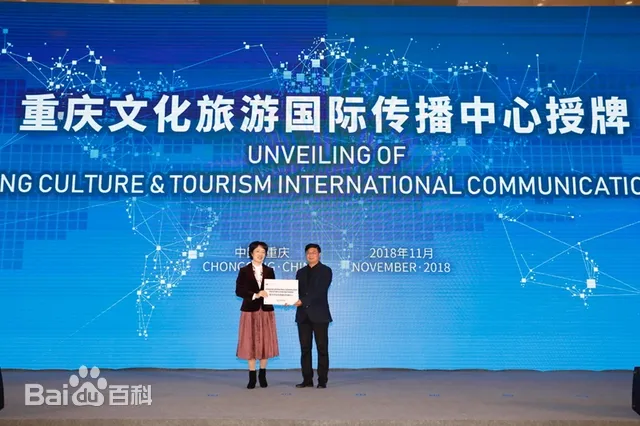
Chongqing International Communication Center

Established as China’s first provincial-level ICC, the Chongqing International Communication Center claims to serve as the “main force” for the city’s overseas promotion. Operated by Chongqing Daily News Group (重庆日报报业集团) under the guidance of the city’s Propaganda Department, the center manages iChongqing—a multi-platform media network targeting international audiences through Facebook, Twitter, YouTube, and other platforms censored within China itself. The center claims to have “expanded Chongqing’s overseas influence” through its foreign-language content, with officials reporting that Chongqing’s international exposure ranks “fifth nationally” and “first in western China.” In February 2024, it was upgraded to the Western International Communication Center (西部國際傳播中心), with 23 cultural and media organizations housed in its industrial park—the first such ICC industrial park in China, according to official statements.

Nigerian Federal Ministry of Information and National Orientation

The Federal Ministry of Information and National Orientation is a government ministry in Nigeria responsible for managing the country’s public image, information dissemination, and cultural promotion. Established in 1999 under President Olusegun Obasanjo, dissolved on January 11, 2007, and re-established in 2015 under President Muhammadu Buhari, the ministry is currently headed by Minister Mohammed Idris Malagi, who assumed office in August 2023. The ministry claims its mandate is to establish “a dynamic public information system” that provides citizens and global communities with “credible and timely information.” Its stated functions include “strategic communication of government policies,” promoting “national consciousness,” regulating media, developing “cultural values and awareness,” and managing the National Archives.

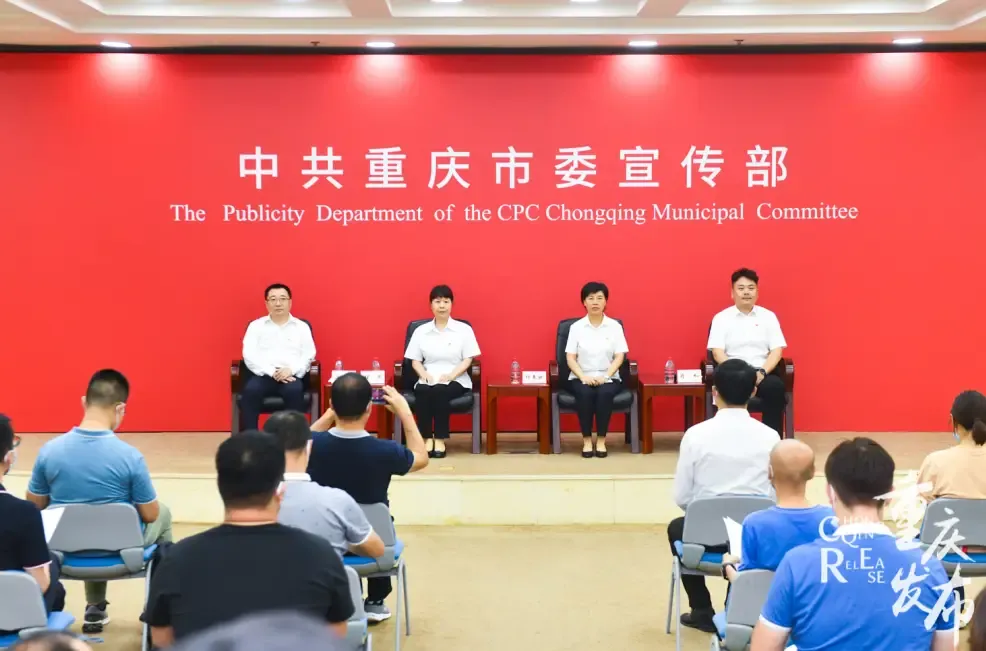
Propaganda Office of the Chongqing Committee of the Chinese Communist Party

The Propaganda Office of the Chinese Communist Party’s Chongqing Municipal Committee serves as the chief office responsible for communicating the agendas of the local party leadership and overseeing state-run media in Chongqing, including the mouthpiece newspaper Chongqing Daily. It “coordinates party ideological work” throughout the city while simultaneously operating under multiple official names—including the Municipal Government Information Office, Municipal Press and Publication Bureau, and Municipal Film Bureau—allowing it to exercise comprehensive control over news, publishing, and cultural production. The department functions as the central enforcer of the party’s media discipline, ensuring all local outlets maintain proper political orientation in line with central and municipal level directives.

Guangxi Daily

Guangxi Daily serves as the official newspaper of the Chinese Communist Party’s Guangxi Zhuang Autonomous Region Committee (中國共產黨廣西壯族自治區委員會). Established on December 3, 1949, as the CCP Guangxi Provincial Committee’s organ, it relocated from Guilin to Nanning on January 22, 1950, following the province’s liberation. When Guangxi became an autonomous region on March 5, 1958, the newspaper became the regional party committee’s official organ. In December 2009, the Guangxi Daily Media Group (廣西日報傳媒集團) was established while maintaining the newspaper’s operations. The publication claims to be “the most authoritative and influential party committee organ newspaper in Guangxi” (廣西最具權威性和影響力的黨委機關報), guided by Marxist-Leninist principles, Mao Zedong Thought, Deng Xiaoping Theory, the Three Represents, Scientific Outlook on Development, and Xi Jinping’s important speeches. With a daily circulation of 230,000 copies, since 2005, it has become one of China’s first provincial party newspapers to manage its own distribution.

Chinese Embassy in Senegal

The Embassy of the People’s Republic of China in Senegal is China’s chief diplomatic mission to the Republic of Senegal and the Republic of The Gambia, located in Dakar. The mission’s origins trace to the establishment of diplomatic relations between the People’s Republic of China and Senegal on December 7, 1971, when Senegal recognized the People’s Republic of China, positioning it among the early West African nations to establish diplomatic ties with the People’s Republic of China during the Cold War era. The embassy is currently located at Rue 18 Prolongée, Fann Residence in Dakar, Senegal. The embassy’s consular operations extend to The Gambia, where consular services, including visa processing, are administered through the Senegal office. The diplomatic team includes counsellors responsible for Political Affairs and Economic and Commercial Affairs, operating under China’s Ministry of Foreign Affairs (外交部). For visa applications, the embassy operates a dedicated China Visa Application Center in Dakar that processes documentation for both countries. The embassy maintains official communication channels through its website and emergency consular hotline services for Chinese nationals in both countries, while actively engaging in public diplomacy and media diplomacy through networking with local media groups and hosting training programs and official visits.

Government of the United Kingdom

The Government of the United Kingdom, formally known as His Majesty’s Government (HMG), is the central executive authority of the UK led by Prime Minister Keir Starmer since July 2024. While King Charles III serves as head of state, executive power is exercised by the government, with the Prime Minister selecting all ministers. The Cabinet, comprising the PM and senior ministers, forms the supreme decision-making committee. Ministers are typically members of Parliament, accountable to either the House of Commons or Lords, though the government primarily depends on Commons’ confidence. The government operates through 24 ministerial departments and 20 non-ministerial departments, supported by approximately 560,000 civil servants. Government ministers lead legislative debates, answer questions during Prime Minister’s Questions and departmental sessions, and appear before parliamentary committees. While the monarch possesses constitutional authority through the Royal Prerogative, these powers are largely delegated to ministers and exercised conventionally with minimal direct royal involvement in governing.

Government of Bangladesh

The Government of Bangladesh operates as a unitary state with its central government headquartered in Dhaka. Following Sheikh Hasina’s resignation in August 2024, Dr. Muhammad Yunus serves as chief adviser of the interim government. The president functions as head of state and commander-in-chief of the armed forces, while the prime minister typically holds executive authority. The country employs a unique power transfer system where civil society members oversee a three-month transition period and general elections, a practice first implemented in 1991 and constitutionally adopted in 1996. The unicameral legislature, Jatiya Sangsad, contains 350 seats, including 50 reserved for women. The most recent parliamentary election was held on January 7, 2024. Local governance is structured through divisions, districts, subdistricts (upazilas), unions, and villages, with elected officials at the union level and civil servants administering larger units.

Chinese Embassy in Bangladesh

The Chinese Embassy in Bangladesh serves as China’s official diplomatic mission to the People’s Republic of Bangladesh under the Ministry of Foreign Affairs (外交部). The embassy claims to be dedicated to promoting bilateral cooperation and providing services to Chinese nationals in Bangladesh. Since establishing diplomatic relations in 1975, the embassy emphasizes that China has become Bangladesh’s “largest trading partner” and highlights growing cooperation under the Belt and Road Initiative (一帶一路 ). The embassy maintains active engagement with Bangladeshi media and government officials.