
Current Status: Active

Secretariat of Media and Public Communication

Argentina’s Federal System of Public Media and Content (Sistema Federal de Medios y Contenidos Públicos) was created on December 10, 2015, through Decree 12/2015 under President Mauricio Macri. Initially headed by Hernán Lombardi, the system oversees Argentina’s public media ecosystem, including Télam news agency, public television and radio networks, digital channels, and cultural centers. In 2018, it was downgraded from ministerial status to secretariat level. Following President Javier Milei’s inauguration in December 2023, the secretariat was transferred to the Communication and Press Secretariat of the Presidency through Decree 45/2023. The entity manages platforms including TV Pública, Radio Nacional, and the Centro Cultural Kirchner.
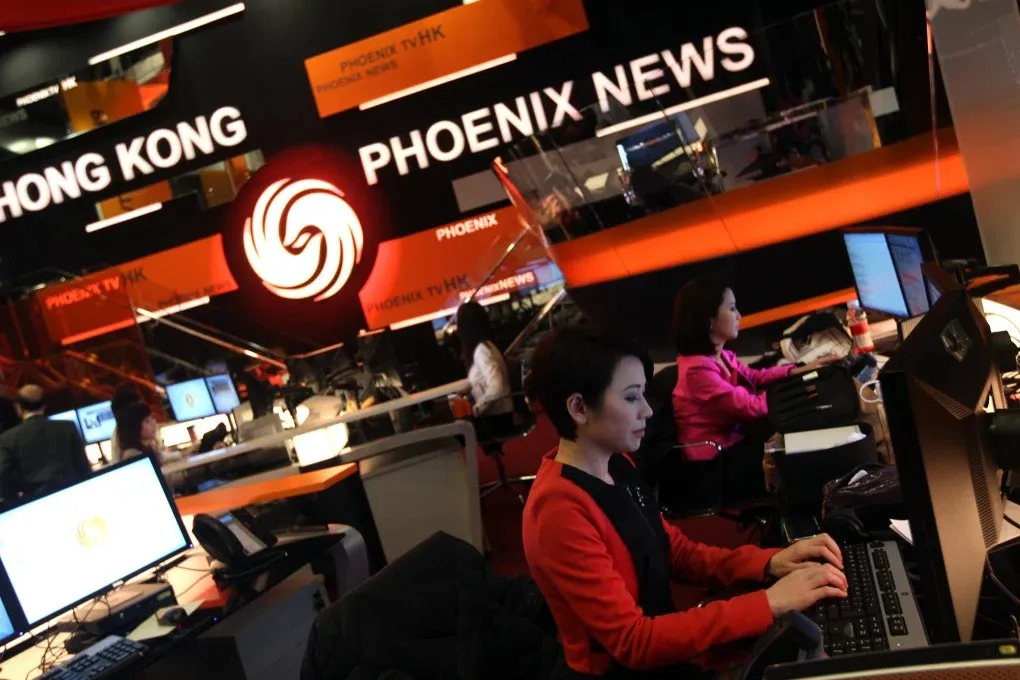
Phoenix Media Investment Holdings Limited

Phoenix Media Investment Holdings Limited is a multinational media corporation headquartered in Hong Kong, with major operations in Beijing and Shenzhen. The company operates six satellite television channels targeting global Chinese audiences. The company was founded on March 31, 1996, by Liu Changle (劉長樂), initially through a joint venture between his Today’s Asia Limited company, Hong Kong Satellite Television, and Huaying International. Liu, who previously served as a journalist and senior manager at China Central Radio before moving overseas in 1988, established Phoenix TV with the mission of “reducing the distance within the global Chinese community”. The company went public on the Hong Kong Stock Exchange in June 2000. Following the 2021 sale of Liu’s controlling stake, the company’s largest shareholder is now Bauhinia Culture Holdings (紫荊文化集團) with 21 percent, a Beijing-backed cultural enterprise directly owned by China’s central government, while Shun Tak Holdings (信德集團) owns 16.93 percent.

Independent Media

Independent Media is a South African multi-platform media company that publishes several influential newspapers, including the daily newspapers Cape Times, Cape Argus, The Star, Pretoria News, and Isolezwe, and operates the news website Independent Online. The company has substantial Chinese state investment through Interacom Investment Holding Limited, which represents China International Television Corporation (中國國際電視總公司), a wholly owned subsidiary of China Central Television that distributes television content, and the China-Africa Development Fund (中非發展基金), an state-run PRC investment fund established in 2007. Founded initially as the Argus Publishing Group with the launch of the Cape Argus in 1857, the company was purchased by the Sekunjalo Independent Media Consortium in August 2013 for 175 US million dollars. The ownership structure includes Sagarmatha Technologies Limited, a subsidiary of the Sekunjalo Group, which holds 55 percent; the Public Investment Corporation, which owns 25 percent; and the Chinese entities, which together have the remaining 20 percent through Interacom.

Chongqing Jiazuo Film and Culture Media

Established in Chongqing, Jiazuo Film and Television Culture Media Co., Ltd., specializes in film production, distribution, digital cultural creative activities, and broadcast media services. The company is headquartered in Building 7 of Jingyu International Cultural and Creative Park in Jiulongpo District. With a registered capital of 5 million yuan, the firm is majority-owned by CEO Zuo Yue (左越), with 80 percent, and Yin Boyu (尹博宇) as a minority shareholder with 20 percent. While there is no evidence of direct state involvement in Jiazuo Film and Television Culture Media, the company has been involved in international content distribution with explicit governmental involvement. The company has participated in the “China Time Slot” initiative in Peru and Colombia, facilitating the distribution of Chinese visual content abroad. The National Radio and Television Administration (NRTA) pushed these initiatives “under the auspices of the National Radio and Television Administration and the Chongqing Municipal People’s Government.” The NRTA, a ministry-level agency controlled by the Central Propaganda Department of the Chinese Communist Party, has promoted international cooperation and exchange in radio, television, and online audio-visual content. In November 2024, Jiazuo signed a trilateral cooperation agreement with Peru’s Willax TV and Classic Media China International Ltd. to expand Chongqing’s film and television industry in the Latin American market.

Cyberspace Administration of China

The Cyberspace Administration of China, established in May 2011 as the State Internet Information Office, functions as China’s powerful internet regulator and censor. Now serving as the executive arm of the Central Cyberspace Affairs Commission (chaired by Xi Jinping), the CAC implements far-reaching censorship, regulates internet content, and oversees data security policies. Led by Zhuang Rongwen (庄榮文), who concurrently serves as a deputy head of the Chinese Communist Party’s Central Propaganda Department (officially translated as “Publicity Department”), the agency exercises extensive powers through the 2016 Cybersecurity Law and 2021 Data Security Law. The CAC’s activities include censoring “rumors,” controlling cross-border data transfers, requiring pre-review of online comments, ensuring AI systems uphold Communist Party ideology, and maintaining majority ownership in the China Internet Investment Fund (中國互聯網投資基金), which holds stakes in major tech companies like ByteDance and Weibo through “golden shares.”

Thailand TV5

Thailand TV5, officially the Royal Thai Army Radio and Television Station, is Thailand’s second-oldest television station, launched in January 1958 by the Royal Thai Army. Owned and operated by the Royal Thai Army, the network is headquartered at 210 Phaholyothin Road in Phaya Thai District, Bangkok. Originally known as HSA-TV Channel 7, the station transitioned to color broadcasting and adopted the Channel 5 name in 1974. Academic research notes that Thailand’s “Army Signal Corps and MCOT operate Channels 5 and 9” within the country’s military-controlled broadcasting structure. Channel 5 ceased analog broadcasting in 2018 as part of Thailand’s digital television transition. The station broadcasts news, military affairs programming, documentaries, drama series, and variety shows to audiences nationwide.

China Public Diplomacy Association

The China Public Diplomacy Association (中國公共外交協會 )was established in March 2013 as a juridical association with 64 founding members, functioning as a “nationwide non-profit organization.” The organization strives to “project to the world a positive image of China that is civilized, democratic, open, and progressive, and create an international environment conducive to China’s peaceful development.” Former Foreign Minister Li Zhaoxing (李肇星) served as its first president, followed by current president Wu Hailong (吳海龍), a former ambassador to the European Union. The association conducts theoretical research, hosts public diplomacy activities including lectures and symposiums, organizes exchanges between Chinese and foreign media, and provides training for China’s public diplomacy work, operating under the supervision of China’s foreign affairs apparatus.

South African Government

The South African Government, established in 1968, operates as a parliamentary republic with a three-tier system and independent judiciary. The national government consists of three branches: the legislative (Parliament with National Assembly and National Council of Provinces based in Cape Town), the executive (President, Deputy President and 32 Ministers based in Pretoria), and the judicial (Constitutional Court, Supreme Court of Appeal, and High Court). The second tier comprises nine provincial governments, each with legislatures and executives led by Premiers. The third tier consists of local governments organized as metropolitan, district, and local municipalities. All levels operate under the Constitution through a cooperative governance model, with each having distinct yet interdependent powers, operating with an annual budget of R2.37 trillion (2024).

China Institute of International Studies

The China Institute of International Studies or CIIS (中國國際問題研究所) is a professional research institute established in 1956 and directly administered by China’s Ministry of Foreign Affairs. Originally founded as the Institute of International Relations of the Chinese Academy of Sciences, it was renamed the Institute of International Relations in 1958 and assumed its current name in December 1986. In 1998, the China Center for International Studies was incorporated into CIIS. The institute focuses on global politics and economics research to facilitate central government decision-making. CIIS comprises eight departments covering regional studies and strategic analysis, with four affiliate bodies. In July 2020, CIIS opened the Research Center for Xi Jinping Thought on Foreign Affairs. In 2020, CIIS was designated as one of China’s 29 “national high-level think tanks.” The organization employs approximately 200 researchers and staff, typically led by former Chinese ambassadors.