Archives: Dispatches

All Lingua Sinica Dispatches

CMG Signs Deal with Two Peruvian Media

On November 20, 2024, América TV and the newspaper El Comercio signed a collaboration agreement with China Media Group (中央廣播電視總台), or CMG, the media conglomerate under China’s Central Propaganda Department. The agreement aims to “produce content that appeals to both Peruvian and Chinese audiences,” according to Fernando Muñiz Bethancourt, CEO of América Multimedia. The collaboration includes program exchange, joint production, technology innovation, and personnel training. Specific projects mentioned in the announcement include news exchange, joint film production, joint content broadcasting, and personnel exchange and training. The agreement was signed during the Asia-Pacific Economic Cooperation (APEC) summit in Lima, which took place from November 13-16, 2024. The Chinese delegation was led by Shen Haixiong (慎海雄), the president and editor-in-chief of CMG, who concurrently serves as a deputy director of the Central Propaganda Department.
CMG Signs MoU to Broadcast 2026 Winter Olympics

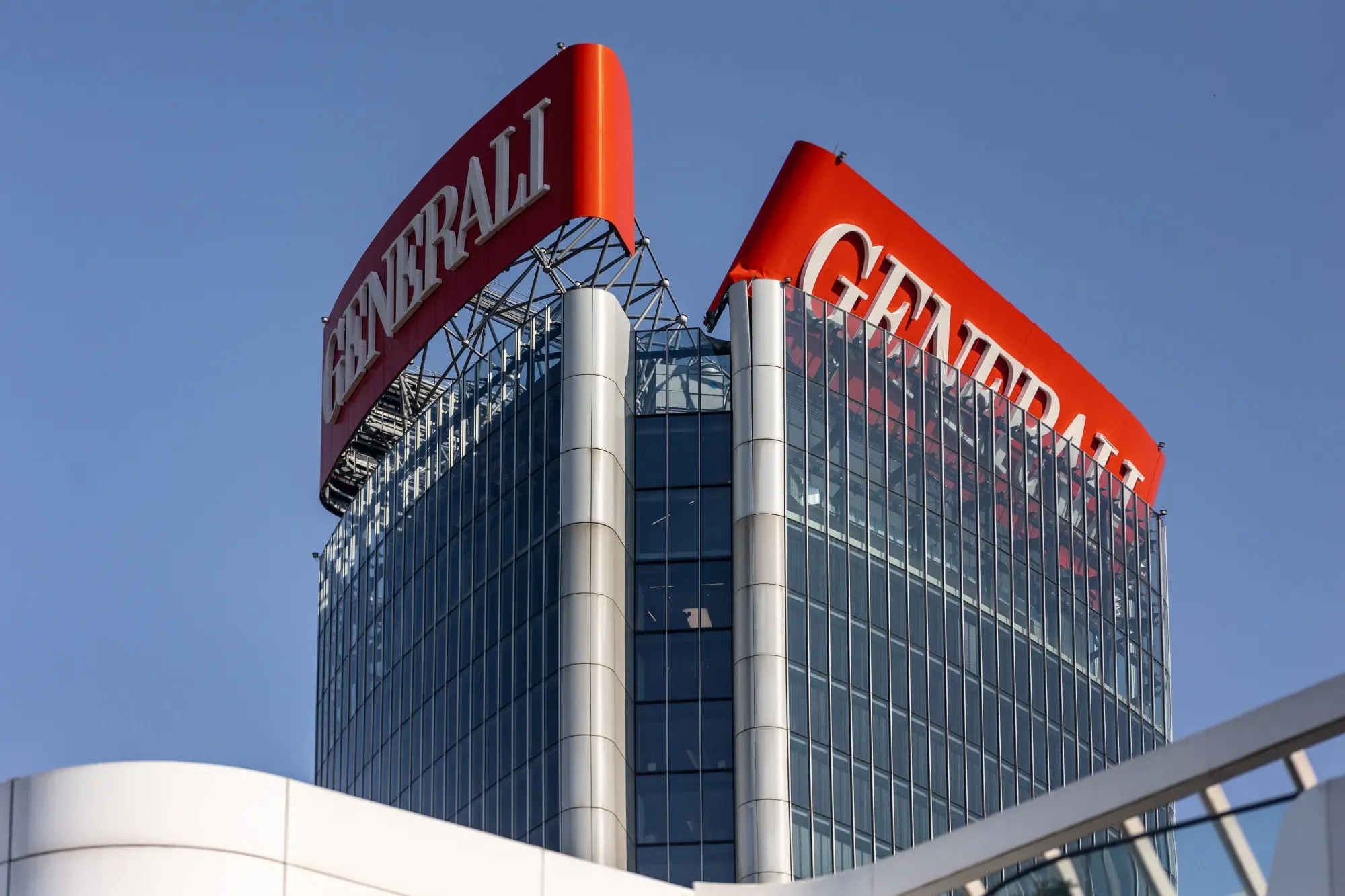
The China Media Group (中央廣播電視總台) signed a memorandum of understanding with Italian foundation Fondazione Milano Cortina 2026 on June 23, 2025, to become a rights-holding broadcaster for the Winter Olympic Games in Milano area in February 2026. The state-run media group, directly under the CCP’s Central Propaganda Department, will collaborate on news coverage, program production, and promotional campaigns ahead of and during the Games. CGTN, the Chinese group’s international broadcasting arm, reported that the agreement includes integrating artificial intelligence and 8K ultra-high-definition broadcasting technologies into live coverage. Emphasizing the bilateral significance of the arrangement, the two sides characterized the commercial deal as an opportunity to deepen China-Italy relations, coinciding with the 55th anniversary of diplomatic ties between the People’s Republic of China and Italy, formally established on November 6, 1970.

Xinhua and Jiji Press Sign MoU on Media Cooperation

China’s Xinhua News Agency (新華社) and Japan’s Jiji Press signed a memorandum of understanding on media cooperation in Tokyo on February 18, 2025. Xinhua President Fu Hua (傅華) and Jiji Press President Katsuhiko Sakai formalized the agreement to strengthen bilateral media ties. Fu Hua (傅華), Xinhua’s president, emphasized the media’s role as “an important bridge for political exchanges, economic cooperation and cultural exchanges among countries.” According to state media, the MoU aims to enhance technical exchanges, expand cooperation in economic information sharing, and coordinate activities within the framework of the World Media Summit (世界媒體峰會) — a China-led body initiated by Xinhua that China has tried to use to shore up its leadership in global media sector. Both media group leaders expressed a commitment to building a long-term partnership. According to state media, Sakai welcomed the agreement as opening “a new chapter” in their cooperative relationship.

Grupo El Comercio

Grupo El Comercio (GEC) is Peru’s largest media conglomerate in South America, owning the country’s oldest newspaper, El Comercio, founded in 1839 by Manuel Amunátegui and Alejandro Villota. The company operates through two main business units: Press (El Comercio, Gestión, Trome, Correo, Ojo, and Depor) and Television (América TV and Canal N). The Miró Quesada family has controlled the newspaper since 1876, surviving major disruptions including a closure from 1879-1883 during the War of the Pacific and expropriation from 1968-1980 under military rule. The conglomerate controls approximately eighty percent of Peru’s newspaper circulation and operates over 1,000 employees. The group underwent significant restructuring in 2020 when Gabriel Miró Quesada Bojanovich was appointed as chairman, though the corporate website currently lists Luis Alonso Miró Quesada Villarán as board president.

America Multimedia

América Multimedia, formerly known as Grupo Plural TV, is a Peruvian media conglomerate based in Lima, founded on March 5, 2003. The company operates as a joint venture between Grupo El Comercio (70%) and Grupo La República (30%), with Maki Miró Quesada serving as president. The group’s primary assets include América Televisión (100% ownership), Peru’s leading free-to-air television network, and Canal N (100%), a dedicated news channel. The company also operates América tvGO, a streaming platform offering live and on-demand content.

Chinese Consul General Meets with Local Media in Laos

Chinese Consul General in Luang Prabang Li Baoguang (黎宝光) met with Lao Deputy Minister of Information, Culture and Tourism Savankhone Razmountry (沙万坤·兰蒙迪) on August 15, 2017, according to reports from China’s Ministry of Foreign Affairs (MFA). The meeting, which included officials from Lao state media outlets, including the Lao News Agency (巴特寮) and the Lao People’s Revolutionary Party-run Pasaxon (人民报), focused on what both sides characterized as expanding cooperation between northern Laos and China in media, culture, and tourism. Savankhone praised China’s role in launching “Laos’ first communications satellite” in 2015 and claimed Chinese tourists to Laos were “increasing every year.” Li referenced the planned completion in 2021 of the China-Laos railway, saying it would “significantly increase” bilateral trade and personnel exchanges between the neighboring countries.

Sberbank Cooperates with China on AI Projects

In February 2025, Sberbank, Russia’s largest bank, announced plans to collaborate with Chinese researchers on joint AI projects, as First Deputy CEO Alexander Vedyakhin told Reuters. This partnership emerges as China’s DeepSeek disrupts the tech landscape with its low-cost AI models challenging U.S. competitors. The collaboration follows President Putin’s January directive ordering Sberbank and the Russian government to develop AI cooperation with China amid Western sanctions restricting Moscow’s access to advanced computing hardware. Under CEO German Gref, Sberbank has transformed from a Soviet-era institution into a leading Russian AI player, releasing its GigaChat model in 2023. This initiative reflects the deepening “no limits” strategic partnership between Moscow and Beijing, with both nations aiming to challenge U.S. dominance in AI as Russia, currently ranked 31st globally in AI implementation, seeks alternative technological solutions.

China-Arab TV and China’s FECC Discuss Cooperation

On May 29, 2020, officials from the Investment Promotion Department of China’s Foreign Economic Cooperation Center (外经中心投资促进处), or FECC, an agency under the Ministry of Agriculture and Rural Affairs, met with representatives from China-Arab TV’s Beijing-based China News Center (中阿卫视中国新闻中心) to discuss enhancing China-Arab agricultural cooperation. The meeting focused on leveraging the Dubai-headquartered but Chinese-operated media platform to promote Chinese agricultural technological achievements, boost China’s international agricultural influence, and facilitate investment and trade between Chinese agricultural enterprises and Arab nations. Both parties reached preliminary consensus on cooperation frameworks and development directions, establishing groundwork for future collaborative initiatives in various agricultural sectors between China and Arab countries. The meeting highlighted the important diplomatic and trade role played by China-Arab TV, which a China Media Project investigation in 2024 showed has direct links to China’s Ministry of Foreign Affairs (MFA).

Foreign Economic Cooperation Center

China’s Foreign Economic Cooperation Center (FECC) is a specialized agency under the Ministry of Agriculture and Rural Affairs that claims to serve as a window for foreign agricultural cooperation and manages China’s international agricultural development programs. Facilitating and managing agricultural international exchanges, south-south cooperation, and agricultural aid projects, FECC coordinates with international organizations including the FAO, World Bank, and International Fund for Agricultural Development. Since 2002, FECC has managed the FAO-China South-South Cooperation Programme, deploying over 252 Chinese agricultural experts and technicians to 11 countries, primarily in Africa and Asia. The center promotes the international transfer of China’s agricultural development experience and “Chinese solutions” (中国方案) to developing countries along the Belt and Road, positioning itself as a key instrument of China’s agricultural diplomacy and soft power projection.