Archives: Dispatches

All Lingua Sinica Dispatches

Ambassador Featured in Saudi Media

In an interview with Saudi newspapers Riyadh Daily (利雅得報) and Al-Eqtisadiah (經濟報) in April 2024, outgoing Chinese Ambassador Chen Weiqing (陳偉慶) characterized bilateral relations as “full of spring’s new greenery on the ancient Silk Road” (丝路古道满眼生机,中沙关系充满春的新绿). He praised Saudi’s social and economic diversification efforts under Crown Prince Mohammed bin Salman’s leadership. The ambassador highlighted cooperation through China’s Belt and Road Initiative (一帶一路) and Saudi’s Vision 2030, pointing to Chinese companies’ involvement in major Saudi projects including NEOM, a planned futuristic city, and the Red Sea Project, a regenerative tourism initiative. Chen, who served five years in the position from 2019-2024, stated that bilateral trade had “increased by nearly 40 percent” during his tenure, from $780 billion in 2019 to over $1 trillion in 2023, and expressed his desire to return in 2030 to “witness the realization of Vision 2030.” The interviews featured extensive Chinese Communist Party terminology, including references to the “China-Arab community of shared destiny for the new era” (面向新時代的中阿命運共同體) and the “eight major joint actions” (八大共同行動) covering development, food security, health, green innovation, energy security, intercultural dialogue, youth empowerment, and security stability.

Saudi Research and Publishing Company

Established in 1972, Saudi Research and Media Group (SRMG) is a state-backed media conglomerate headquartered in Riyadh’s King Abdullah Financial District. As Saudi Arabia’s largest publishing enterprise, SRMG operates over 30 publications with a combined monthly reach of 172 million readers across seven languages and four continents. The group’s portfolio includes prestigious titles like Asharq Al-Awsat, Arab News, Al Eqtisadiah, and Al Majalla. Originally established as Al Madina Printing and Publishing Company in 1963, the company was renamed Saudi Printing and Packaging Company in 2007. SRMG was listed on the Saudi stock exchange (Tadawul) in May 2006. With close ties to the Saudi government, the company operates five divisions: media, international, events, research and polling, and innovation. In April 2022, SRMG announced its new headquarters in Riyadh’s King Abdullah Financial District (KAFD). The company recorded strong financial performance in 2023, with net profits declining 14% year-on-year to SAR 559.62 million but maintaining its dominant position in Middle Eastern media.

Saudi Broadcasting Authority

The Saudi Broadcasting Authority (SBA), formerly the Saudi Broadcasting Corporation, is Saudi Arabia’s state-owned media entity operating under the Ministry of Media. While Crown Prince Faisal issued a ministerial statement in 1962 to establish television broadcasting, actual operations began in 1965 from Riyadh and Jeddah stations. The entity was restructured in 2012 when the Council of Ministers approved the conversion of radio and television activities into a public authority. The authority changed its English name from Saudi Broadcasting Corporation to Saudi Broadcasting Authority in 2018. SBA manages nearly all broadcasting outlets in the Kingdom, operating television channels including Al Saudiya (the flagship Arabic channel), Al Ekhbariya (news), KSA SPORT, SBC (entertainment), and religious channels Quran TV and Sunnah TV. Radio services include the Saudi General Program, Holy Quran Radio, and international broadcasting.

StarTimes Media and NRTA Sign Content Sharing Agreement

China’s National Radio and Television Administration (國家廣播電視總局) and StarTimes Media Kenya signed a media cooperation agreement in Nairobi on July 1, 2024. NRTA Deputy Director Dong Xin (董新), who previously served as China Mobile CEO before his appointment to the media regulator in January 2024, said the deal would “help build bridges of friendship and mutual understanding” through content sharing, according to state media. The event launched “China TV Theater” and included a licensing agreement with Kenya’s Citizen Television for the drama series “Welcome to Milele Village” (歡迎來到麥樂村), which tells the story of Chinese medical teams working in Africa. Kenya’s Principal Secretary for Broadcasting and Telecommunications Edward Kisiang’ani said they hoped for “two-way exchanges” where “Kenyan content will also be viewed in China,” as reported by the outlet. The NRTA, controlled by the Chinese Communist Party’s Central Propaganda Department, actively promotes China’s international media partnerships through state-controlled entities and cultural exchanges.

National Radio and Television Administration of China

The National Radio and Television Administration, or NRTA, was established in March 2018 as a ministry-level agency controlled by the Chinese Communist Party’s Central Propaganda Department. Headquartered in Beijing, it succeeded the State Administration of Press, Publication, Radio, Film and Television, with Director Cao Shumin (曹淑敏) appointed as its current head in May 2023. The organization maintains direct control over state broadcasters, including China Central Television, China National Radio, and China Radio International, while issuing content guidelines that have restricted everything from reality TV shows to historical dramas. The agency has expanded its international reach, signing a cooperation agreement with Russia’s Ministry of Digital Development, Communications, and Mass Media in July 2021 on news coverage and media narratives. In June 2022, the NRTA and Ministry of Culture and Tourism issued a code of conduct for online content creators that banned material that “weakens, distorts, or denies the leadership of the CCP.”

China Media Group and Vietnam Television Sign Cooperation Agreement

China Media Group (中央廣播電視總台) and Vietnam Television (越南電視台) signed a cooperation memorandum on August 19, 2024, during Vietnamese Communist Party General Secretary and President To Lam’s (蘇林) state visit to China. Chinese President Xi Jinping (習近平) and To Lam witnessed the signing. The agreement outlines plans for content exchange, joint productions, and technical cooperation. State media claims this will “contribute to the foundation of public support” for China-Vietnam relations and “promote traditional friendship.” China Media Group, formed in March 2018 from the merger of CCTV, China National Radio, and China Radio International, operates under direct control of the Chinese Communist Party’s Central Publicity Department. Vietnam Television operates nine free public channels and three paid platforms. The memorandum represents increased media coordination between the two countries.

Vietnam Television

Vietnam Television, operating as VTV, is Vietnam’s national state broadcaster established in 1970 with Cuban assistance. Officially tasked with “propagating the views of the Party, policies, laws of the government,” VTV runs multiple channels including news, education, entertainment, and ethnic programming. The network has faced significant controversies, including criticism from Vietnamese emigrants for its pro-communist stance, copyright infringement resulting in its YouTube channel termination in 2016, and government fines for broadcasting false information. VTV maintains 17 international bureaus and produces programming through its film production company, Vietnam Television Film Centre.

The Dawn

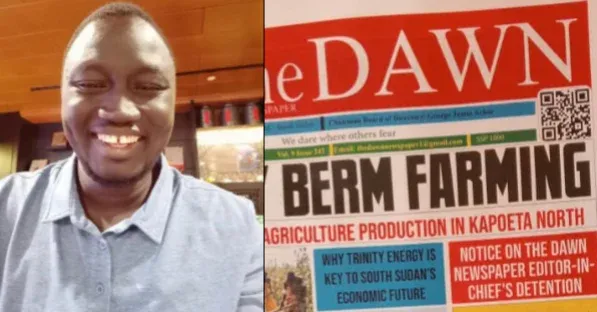
The Dawn, an English-language daily newspaper founded in 2016 and based in Juba, South Sudan’s capital, is described as “largely perceived as a pro-government newspaper” by media analysts. The publication, led by editor-in-chief Emmanuel Monychol Akop (艾曼努爾·蒙尼喬·阿科普), regularly features content from Chinese state media sources, particularly Xinhua News Agency (新華社). Recent examples include Xinhua’s December 15, 2024 commentary titled “China’s pro-growth policies deliver comfort in turbulent world,” which reported China’s transition to “moderately loose” monetary policy. Another featured piece, “CEWC a blueprint for China’s sustainable and inclusive growth in 2025,” described the Central Economic Work Conference as setting “the economic tone for 2025 amidst global uncertainties.” Sports columnist Akuot Goor contributes regularly to the newspaper. In December 2024, the newspaper’s Editor-in-Chief Emmanuel Monychol Akop was detained by suspected National Security Service officers, raising concerns about press freedom in the country.

Literarni noviny

Literární noviny is a Czech monthly magazine for culture and politics with a rich history dating back to 1927. Originally published by various companies, it became most notably associated with the European Literary Club (ELK) until 1941. After World War II, the publication was revived and later became part of the state-controlled publishing house Československý spisovatel. The magazine experienced its golden period in the mid-1960s, serving as a crucial platform for intellectual discourse across Czech society. It featured prominent domestic authors like Ivan Klíma, Ludvík Vaculík, and Václav Havel, alongside translations of international writers such as Sartre and Aragon.