
Archives: Dispatches

All Lingua Sinica Dispatches

Government of India

The Government of India, established in its current form on January 26, 1950, is the national authority of the Republic of India. Led by President Droupadi Murmu (de jure) and Prime Minister Narendra Modi (de facto), it comprises 54 ministries and 93 subordinate departments. The government has three primary branches: legislative (bicameral Parliament), executive (Union Council of Ministers), and judiciary (Supreme Court of India). Modeled after the Westminster system, it functions as a parliamentary democracy where the Council of Ministers is responsible to the Lok Sabha (lower house). The government operates under the Constitution of India, which replaced the colonial Government of India Act when India became a republic, transitioning from its previous status as a dominion of the Commonwealth.
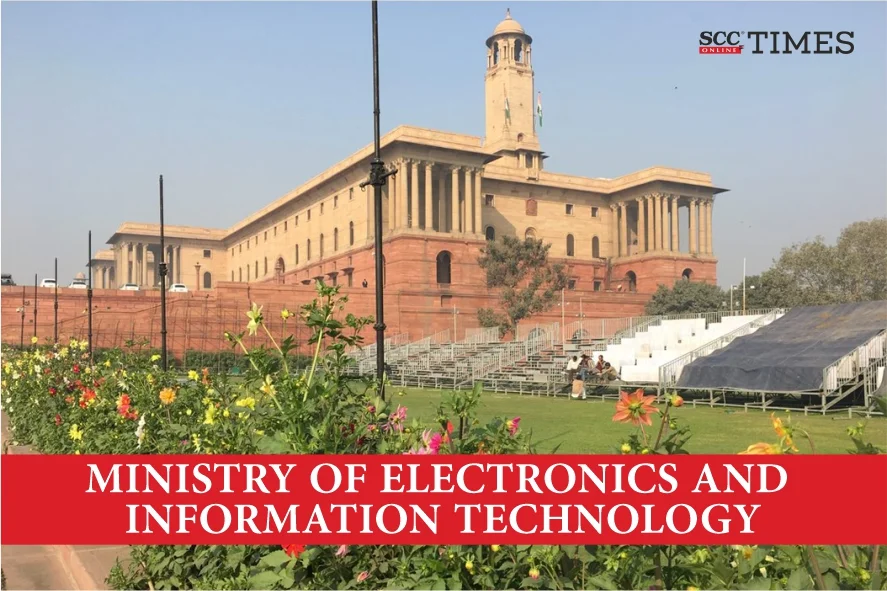
Government of India Ministry of Electronics and Information Technology (MeitY)

The Ministry of Electronics and Information Technology (MeitY) is a standalone Indian government agency responsible for developing and implementing policies for the electronics and IT sectors. Its mission focuses on promoting digital governance, inclusive growth of electronics and IT industries, enhancing India’s role in internet governance, developing human resources, promoting R&D, and ensuring cybersecurity. MeitY’s objectives include providing e-government infrastructure, promoting electronics manufacturing, implementing R&D frameworks, supporting e-learning, securing cyberspace, promoting inclusive growth through ICT, advancing India Stack, and strengthening India’s position in global internet governance. Its functions encompass IT policy matters, digital transaction promotion, e-governance assistance, IT education, cyber laws administration, semiconductor manufacturing, international IT cooperation, bridging the digital divide, standardization, and overseeing organizations like NIC and UIDAI.

Jiangxi Liu’s Industry Co. Ltd.

Jiangxi Liu Industry Co., Ltd., formerly located in Nanchang’s Honggutan New District, was a private company that has now been deregistered. According to its 2022 annual report, published in June 2023, the company reported no employee social insurance registrations and chose not to disclose its financial information. The company’s registration number was 91360125074279761H, and it had not transferred any shares or made investments in other companies during the reporting period. Jiangxi Liu Industry Co., Ltd. is mentioned online as being connected to the Argentina Chinese Network, based in Buenos Aires.

Bureau of International Exchange and Cooperation of the Ministry of Culture and Tourism of the PRC

The Bureau of International Exchange and Cooperation, also known as the Hong Kong, Macao and Taiwan Affairs Office, is a department within China’s Ministry of Culture and Tourism (文化和旅遊部). The Ministry of Culture and Tourism was established in April 2018 through government restructuring that merged the former Ministry of Culture and National Tourism Administration. Headquartered at 10 Chaoyangmen North Street in Beijing’s Dongcheng District, the bureau oversees cultural and tourism exchanges with foreign countries, Hong Kong, Macao, and Taiwan. The bureau maintains 19 internal divisions including regional offices, multilateral affairs, overseas institutions, and protocol services. Current leadership includes Director Gao Zheng (高政), Party Secretary and First-Level Inspector Xu Rong (許蓉), First-Level Inspectors Zheng Hao (鄭浩), and Deputy Directors Liu Quan (劉全), Shi Zeyi (石澤毅), and Kong Lun (孔倫). The bureau manages China’s overseas cultural institutions and coordinates international cultural agreements and major exchange activities.

Italy Overseas Chinese Network

The Italy Chinese Network is a news portal, founded in 2011 by Chinese media professionals and entrepreneurs in Italy, and is headquartered in Rome with correspondents across Europe and China. The organization states it “serves the motherland, serves overseas Chinese, and promotes Chinese culture” while providing news about Italian society and the Chinese diaspora. The website maintains partnerships with Chinese-language and mainstream Chinese media outlets and features research on overseas Chinese businesses. The organization claims it will “expand Europe-China trade relations, guide overseas Chinese investment in China, assist Chinese government and enterprises with overseas investment promotion, and help develop overseas markets.”

Lao People’s Democratic Republic

The Lao People’s Democratic Republic operates as a unitary Marxist-Leninist one-party socialist republic, one of the world’s few remaining communist states. The Lao People’s Revolutionary Party (LPRP) maintains absolute political control through its general secretary, who concurrently serves as president—currently Thongloun Sisoulith, the first civilian without military background to hold this position since his appointment in 2021. The government structure consists of a National Assembly legislature, with Vice Presidents Bounthong Chitmany and Pany Yathotou, Prime Minister Sonexay Siphandone, and National Assembly President Saysomphone Phomvihane completing the senior leadership. Since overthrowing the monarchy in 1975 after years of civil conflict during the Vietnam War era, the LPRP has gradually opened the economy while maintaining strict political control. Despite significant economic reforms and infrastructure development, particularly through Chinese investment in projects like the Laos-China Railway, the country remains classified as a least developed country by the UN, though it maintains membership in regional organizations including ASEAN and participates in the Greater Mekong Subregion economic cooperation program.

State Council of the People’s Republic of China

The State Council of the People’s Republic of China (中華人民共和國國務院 ), also known as the Central People’s Government (中央人民政府), operates as China’s chief administrative authority and national cabinet. Located in Zhongnanhai, Beijing, it functions as the executive organ of the National People’s Congress. The council consists of the premier, vice premiers, state councilors, ministers, and other senior officials. In 2024, the council’s organic law was amended to formally mandate Chinese Communist Party Central Committee leadership over its operations. The State Council oversees 26 constituent departments and provincial-level governments, though it does not control the military.

Chinese Embassy in Italy

The Embassy of the People’s Republic of China in Italy is China’s chief diplomatic mission to Italy, located in Rome. The mission’s origins trace to the establishment of formal diplomatic relations between the People’s Republic of China and Italy on November 6, 1970, when Italy became one of the first Western European countries to recognize the PRC, almost five years before the European Community opened diplomatic relations with the PRC. Following this diplomatic breakthrough, the embassy was established in early 1971. The embassy is currently located at No. 56, Via Bruxelles, 00198 Rome.

The People’s Government of Sichuan Province

The People’s Government of Sichuan Province is the provincial administrative authority of Sichuan Province in the People’s Republic of China. The government’s current structure includes 23 departments, one special institution, eight direct agencies, and ten departmental management institutions. According to the law, its functions include implementing higher-level directives, managing local economic and social development, protecting various forms of property ownership, and “promoting extensive interaction and integration among all ethnic groups.”