Archives: Dispatches

All Lingua Sinica Dispatches

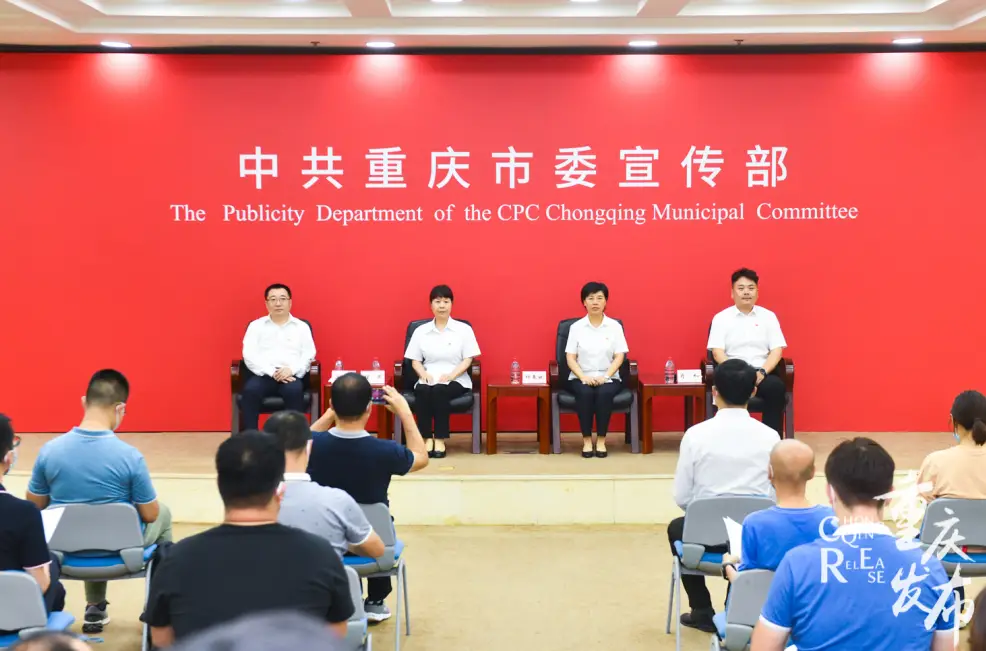
Propaganda Office of the Chongqing Committee of the Chinese Communist Party

The Propaganda Office of the Chinese Communist Party’s Chongqing Municipal Committee serves as the chief office responsible for communicating the agendas of the local party leadership and overseeing state-run media in Chongqing, including the mouthpiece newspaper Chongqing Daily. It “coordinates party ideological work” throughout the city while simultaneously operating under multiple official names—including the Municipal Government Information Office, Municipal Press and Publication Bureau, and Municipal Film Bureau—allowing it to exercise comprehensive control over news, publishing, and cultural production. The department functions as the central enforcer of the party’s media discipline, ensuring all local outlets maintain proper political orientation in line with central and municipal level directives.

Ministry of Agriculture and Rural Affairs of the PRC

The Ministry of Agriculture and Rural Affairs of the People’s Republic of China is a cabinet-level executive department of the State Council responsible for agriculture and rural affairs nationwide. Formed on March 19, 2018, superseding the former Ministry of Agriculture, the ministry gained additional responsibilities from agricultural investment projects previously managed by other government departments. In 2023, it absorbed the National Rural Revitalization Administration and gained rural science and technology functions from the Ministry of Science and Technology as part of broader government restructuring. The ministry handles China’s “three rural issues” (三农问题) — agriculture, rural areas, and farmers — managing fisheries, animal husbandry, farmland resources, irrigation, agricultural mechanization, and food safety. It houses the Office of the Central Rural Work Leading Group and oversees China’s rural vitalization strategy, reflecting the government’s prioritization of agricultural modernization and rural development. The ministry can play a role, as most offices, in conducting external propaganda and public diplomacy around key areas within its remit — including advertising China’s claimed achievements in rural development and poverty alleviation for developing nations in the Global South.

Western International Communication Center

Established in 2018 as the Chongqing International Communication Center (重慶國際傳播中心) to serve as the “main force” for the city’s overseas promotion, the center was upgraded in 2023 as the Western International Communication Center (西部国际传播中心), or WICC. It is operated by the Chongqing Daily News Group (重庆日报报业集团) under the guidance of the municipality’s provincial-level propaganda office. The center manages iChongqing — a multi-platform media network targeting international audiences through Facebook, Twitter, YouTube, and other platforms censored within China itself. The center claims to have “expanded Chongqing’s overseas influence” through its foreign-language content, with officials reporting that Chongqing’s international exposure ranks “fifth nationally” and “first in western China.”It describes itself as China’s first provincial-level international communication center and bills itself as a hub for international communication serving western China and facing the world. The center runs a “3+X” content matrix built around three platforms: the iChongqing English-language website, the Bridging News app, and the Let’s Meet online TV program, which is co-produced with Chongqing Satellite TV. The WICC claims more than 24 million overseas users and over 4.74 billion total views across its platforms, according to the center. It is part of Xi Jinping’s broader drive, accelerating from 2021, to leverage provincial and municipal media resources and propaganda offices in a centrally directed campaign to “tell China’s story” to global audiences. In April 2025, the WICC expanded its overseas distribution network by launching a dedicated Let’s Meet channel on Sri Lanka Mirror, a Colombo-based news outlet, marking what iChongqing described as the platform’s first overseas “station.”

Nigerian Federal Ministry of Information and National Orientation

The Federal Ministry of Information and National Orientation is a government ministry in Nigeria responsible for managing the country’s public image, information dissemination, and cultural promotion. Established in 1999 under President Olusegun Obasanjo, dissolved on January 11, 2007, and re-established in 2015 under President Muhammadu Buhari, the ministry is currently headed by Minister Mohammed Idris Malagi, who assumed office in August 2023. The ministry claims its mandate is to establish “a dynamic public information system” that provides citizens and global communities with “credible and timely information.” Its stated functions include “strategic communication of government policies,” promoting “national consciousness,” regulating media, developing “cultural values and awareness,” and managing the National Archives.

Government of the United Kingdom

The Government of the United Kingdom, formally known as His Majesty’s Government (HMG), is the central executive authority of the UK led by Prime Minister Keir Starmer since July 2024. While King Charles III serves as head of state, executive power is exercised by the government, with the Prime Minister selecting all ministers. The Cabinet, comprising the PM and senior ministers, forms the supreme decision-making committee. Ministers are typically members of Parliament, accountable to either the House of Commons or Lords, though the government primarily depends on Commons’ confidence. The government operates through 24 ministerial departments and 20 non-ministerial departments, supported by approximately 560,000 civil servants. Government ministers lead legislative debates, answer questions during Prime Minister’s Questions and departmental sessions, and appear before parliamentary committees. While the monarch possesses constitutional authority through the Royal Prerogative, these powers are largely delegated to ministers and exercised conventionally with minimal direct royal involvement in governing.

Government of Bangladesh

The Government of Bangladesh operates as a unitary state with its central government headquartered in Dhaka. Following Sheikh Hasina’s resignation in August 2024, Dr. Muhammad Yunus serves as chief adviser of the interim government. The president functions as head of state and commander-in-chief of the armed forces, while the prime minister typically holds executive authority. The country employs a unique power transfer system where civil society members oversee a three-month transition period and general elections, a practice first implemented in 1991 and constitutionally adopted in 1996. The unicameral legislature, Jatiya Sangsad, contains 350 seats, including 50 reserved for women. The most recent parliamentary election was held on January 7, 2024. Local governance is structured through divisions, districts, subdistricts (upazilas), unions, and villages, with elected officials at the union level and civil servants administering larger units.

Sinovision

Founded in 1990, SinoVision distributes television programs to Chinese-language viewers in the Greater New York area. The outlet describes its positioning as “facing local audiences, and getting close to mainstream society.” SinoVision launched its 24-hour digital news channel in 2011. It also operates the news website SinoVisionNet. The network is linked to the PRC and its official China News Service, under the auspices of the United Front Work Department of the CCP, through the Hong Kong-based Ya Zhou Wen Hua Enterprises Limited (HK).

Juba Echo TV

Juba Echo TV is South Sudan’s private television channel, broadcasting from Juba and available on South One Decoder Channel 50, MTNTV+, and Myhometv. Established in 2015, the channel has consistently delivered accurate, timely, and impactful news coverage to empower South Sudanese audiences. Under the leadership of CEO Patrick Oyet and Head of News Kelly Abale, Juba Echo TV has achieved remarkable milestones, including launching regional news segments in 2018, introducing online streaming services in 2022, and receiving international recognition for outstanding journalism in 2024. The channel’s comprehensive programming spans breaking news, sports coverage, entertainment shows, and business insights, all guided by core values of integrity, transparency, and excellence. Recent coverage includes significant national events and international recognition, with CEO Patrick Oyet providing insights into South Sudan’s current affairs.

Al Yamamah Press Establishment

Al Yamamah Press Establishment founded in 1963 in Riyadh, is one of Saudi Arabia’s most influential media companies. The establishment publishes the Arabic daily newspaper Al Riyadh (الرياض), whose first issue was published on May 1, 1965. The company also publishes the weekly magazine Al Yamamah (اليمامة), originally founded by prominent Saudi journalist and historian Sheikh Hamad Al Jassir (حمد الجاسر) in 1953. The magazine was initially titled Al Riyadh and later renamed Al Yamamah. In 1963, Al Yamamah Press Establishment began publishing the magazine on a weekly basis after acquiring the rights from Al Jassir. The company also publishes Riyadh Daily, an English-language publication that began as a newsletter in the 1960s, was developed into a broadsheet in 1985, and transitioned to a digital-only format on January 1, 2017.