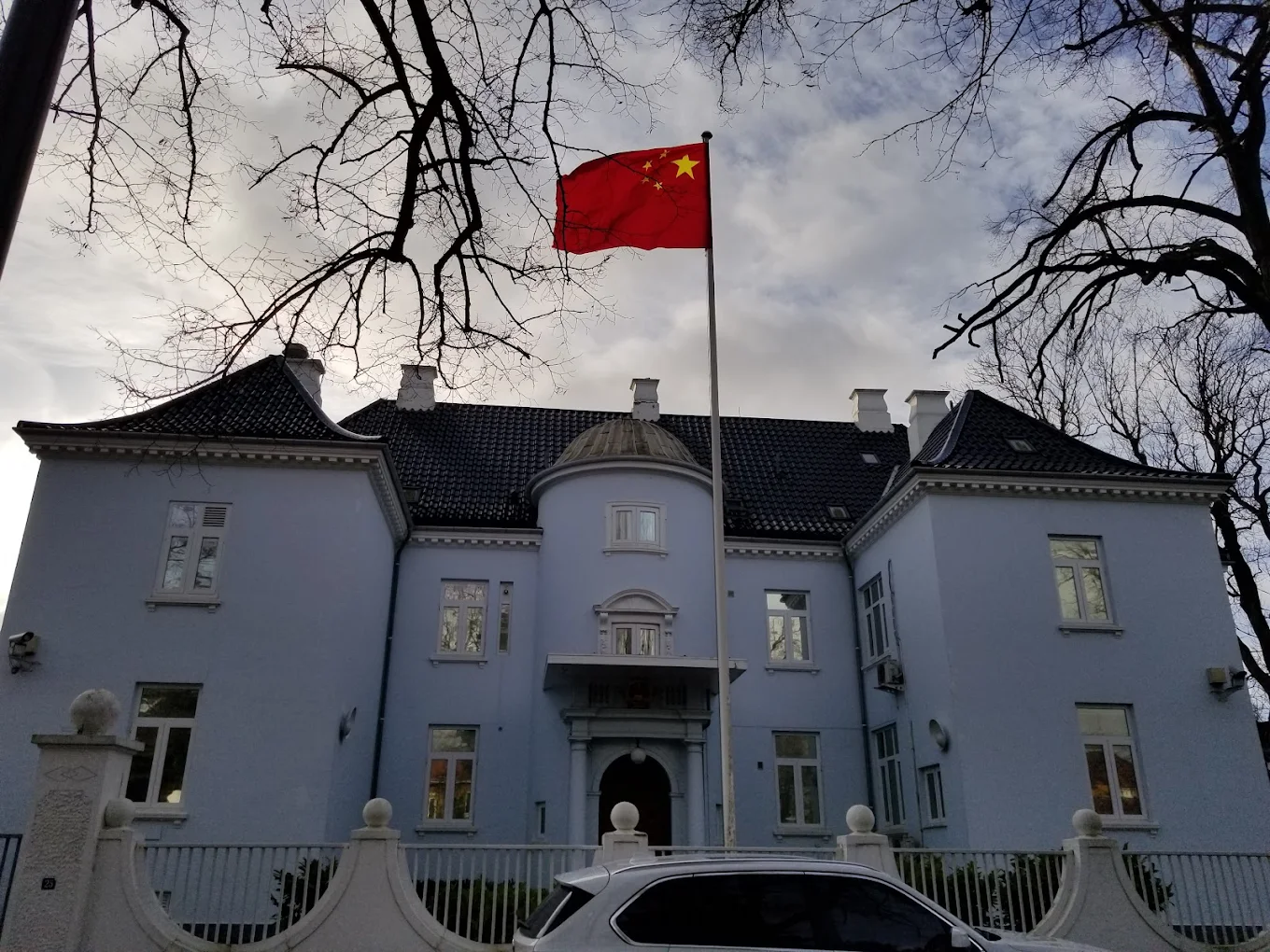
Entity Type: PRC Party-State Agency

Chinese Embassy in Ghana

The Embassy of the People’s Republic of China in the Republic of Ghana (中華人民共和國駐加納共和國大使館) is the primary diplomatic mission representing Beijing’s interests in Accra. Following the establishment of diplomatic relations in 1960 and their restoration in 1972, the embassy has overseen the elevation of bilateral ties to a “Strategic Partnership” as of 2024. The mission actively coordinates with local groups like the Ghana–China Friendship Association (加納—中國友好協會) to promote “friendship” (友好)—a term in CCP official discourse that generally entails the accommodating of China’s interests in relationships. The embassy’s economic and commercial office manages significant infrastructure and energy projects—such as the Bui Hydroelectric Power Station and the $2 billion Sinohydro bauxite-for-infrastructure deal—ensuring that local development aligns with Beijing’s broader strategic objectives in West Africa.

Academy of Contemporary China and World Studies

The Academy of Contemporary China and World Studies (当代中国與世界研究院), or ACCWS, is a state think tank under the China International Publishing Group (CIPG), also known as the China International Communication Group (CICG). an agency directly under the Chinese Communist Party’s Central Propaganda Department. Formally established in 2017 as the successor to CIPG’s Centre for International Communication Studies, founded in 2004, ACCWS fields an internal research team of over 100 specialists alongside a network of domestic and international fellows. The institute focuses on the international dissemination of “Xi Jinping Thought on Socialism with Chinese Characteristics for a New Era” (習近平新時代中國特色社會主義思想), foreign-discourse innovation, international public opinion, and regional communication studies. It publishes three national-level journals — including Contemporary China and the World (當代中國與世界), Chinese Translators Journal (中國翻譯), and International Communications (對外傳播) — operates a big-data platform for international communication analytics, and hosts flagship initiatives including the Global Young Leaders Dialogue and annual global surveys on China’s national image.

Chongqing Publishing Group

Chongqing Publishing Group (重慶出版集團), or CPGC, is a state-owned cultural enterprise based in Chongqing, tracing its origins to the former Chongqing Publishing House, with a history of more than 50 years. Formally established in 2005, CPGC claims more than 30 branch companies and subsidiaries spanning books, newspapers, journals, digital publishing, printing, and real estate. CPGC sits beneath Chongqing Xinhua Publishing Group (重慶新華出版集團有限公司), which is 100 percent owned by Chongqing State-owned Cultural Assets Management Co. (重慶市國有文化資產經營管理有限責任公司), itself 100 percent owned by the Chongqing Municipal People’s Government. Its LinkedIn presence lists just 11–50 employees and 34 associated members.

Chinese Embassy in Spain

The Embassy of the People’s Republic of China in Spain is China’s chief diplomatic mission in the country. The mission was established in March 1973, following the normalization of diplomatic relations between the People’s Republic of China and Spain. The embassy serves as the primary channel for political, economic, and cultural relations between China and Spain, and also represents China’s interests in Andorra. The embassy faced international scrutiny in September 2022 when human rights organization Safeguard Defenders alleged the existence of nine secret Chinese police stations operating in Spain, the second-highest number in any European country after Italy, according to the organization. The stations, ostensibly providing administrative services to Chinese nationals, were allegedly used to coerce Chinese dissidents and criminal suspects into returning to China through intimidation tactics. 

Chinese Embassy in Iceland

The Chinese Embassy in Iceland, located in Reykjavik, manages diplomatic relations between China and Iceland. Iceland established diplomatic ties with the People’s Republic of China on December 8, 1971, becoming one of the early Nordic countries to recognize the PRC. The embassy’s functions include promoting bilateral political dialogue, economic and trade cooperation, cultural exchanges, and consular services. In recent years, China-Iceland relations have maintained cooperation in areas including Arctic affairs, clean energy, and fisheries. The embassy disseminates diplomatic information through its official website and social media platforms, advancing mutually beneficial cooperation under the Belt and Road Initiative framework. 

Guangdong Provincial People’s Government

The Guangdong Provincial People’s Government (廣東省人民政府) serves as the provincial administrative authority for Guangdong Province in the People’s Republic of China. Established on November 6, 1949, the government operates as the executive organ of the Guangdong Provincial People’s Congress, implementing policies from Beijing while managing local affairs across the nation’s most economically dynamic province. Based in Guangzhou, the provincial government oversees constituent departments and institutions that manage everything from economic development to social services. The government exercises broad administrative powers including economic planning, urban development, education, healthcare, and environmental protection while serving as the key interface between central government directives and local implementation in China’s manufacturing and export hub.

China Federation of Literary and Art Circles

The China Federation of Literary and Art Circles (中國文學藝術界聯合會, CFLAC) is a national people’s organization led by the Chinese Communist Party (CCP), described officially as “a bridge and link for the party and the government to connect the literary and art circles.” Founded in July 1949, the CCP Central Propaganda Department (中央宣傳部) organized networks of cultural workers’ associations headed by CFLAC. Though characterized as a non-governmental organization, CFLAC is treated in practice as a government organization under direct CCP supervision, with over two million registered members and 49 regional branches. Its remit extends to literature, film, drama, fine arts, music, photography, calligraphy, dance, and folk arts, with branches extending to the provincial, municipal, and district level across China.

Xiamen Committee of the Chinese Communist Party

The Xiamen Municipal Committee of the Chinese Communist Party (中國共產黨廈門市委員會) is the highest organ of CCP authority in Xiamen, Fujian Province. As with all municipal-level party committees in China, it sits above the city government in the political hierarchy — the committee’s Party Secretary outranks the mayor. The committee oversees all party work in Xiamen, controls key personnel appointments across government, media, and state enterprises, and is responsible for implementing directives from the CCP Fujian Provincial Committee and the CCP Central Committee. Xiamen holds particular strategic significance within the CCP’s cross-strait policy apparatus as the mainland city closest to Taiwan, and its municipal committee has historically been a focal point for cross-strait economic, cultural, and political engagement. Xiamen Daily serves as the committee’s official organ.

Haicang District Propaganda Office of the Chinese Communist Party

The Haicang District Propaganda Office of the Chinese Communist Party (中共海滄區委宣傳部) is the district-level arm of the CCP’s Central Propaganda Department (中央宣傳部) in Haicang District, Xiamen. The department exercises direct leadership over the media control system and is one of the main entities that enforces media censorship and control in the People’s Republic of China, engaging in propaganda work for both domestic and foreign audiences designed to increase support for the CCP. At the district level, the office supervises ideological work, controls local media and cultural output, and implements directives from the Xiamen Municipal Propaganda Office and the CCP Central Propaganda Department above it.