Tag: Hong Kong politics

Hong Kong Court Backs Satirical Show

Hong Kong’s highest court has rejected a final appeal by the city’s communications regulator, ending a five-year legal battle over a satirical television program that mocked police during the coronavirus pandemic — just months before the national security law was enacted in the Special Administrative Region.

The Communications Authority had issued warnings to the public broadcaster Radio Television Hong Kong in February 2020 over an episode of the program “Headliner” (頭條新聞), which it claimed had derided the Hong Kong police force. Segments of the program made jokes about police officers hoarding masks, and in another skit an actor played a police officer emerging from a garbage bin.
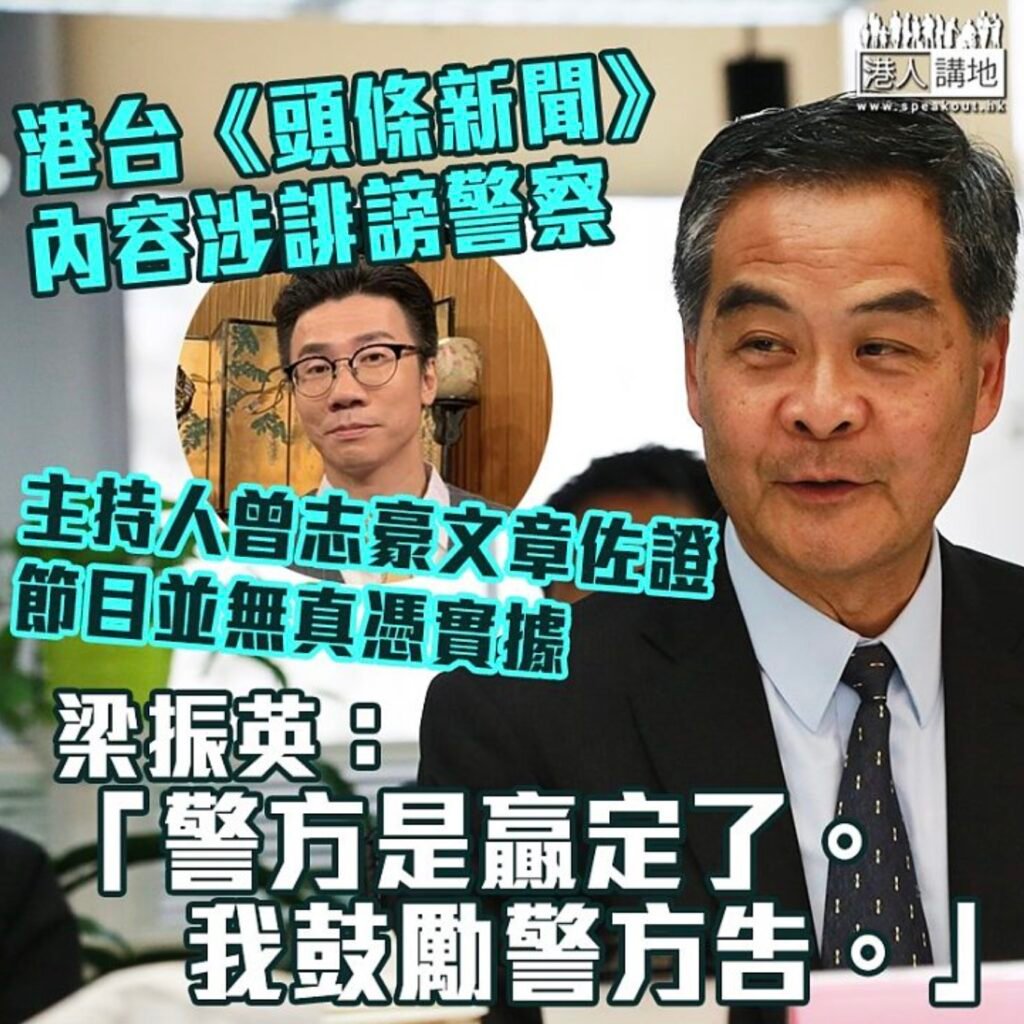
Some critics at the time, including former Hong Kong Chief Executive Leung Chun-ying (梁振英), claimed that the program had libeled the department, and called on police to sue the network.

Shortly after the warning came from the Communications Authority, the staff union at RTHK joined hands with the independent Hong Kong Journalists Association (HKJA) to challenge the decision through judicial review — a process by which the High Court’s Court of First Instance reviews actions taken by administrative bodies to ensure they act within the bounds of the law.

The Court of First Instance initially ruled in 2021 that some complaints were valid while others were not, prompting both sides to appeal. The Court of Appeal later sided with the journalists’ union and association, ordering all warnings to be rescinded.

The Court of Final Appeal’s Appeals Committee ruled on August 7 that the authority had shown no reasonable grounds for appeal, upholding lower court decisions that overturned the warnings. According to a report from InMedia, the court emphasized that regulators must distinguish between content targeting individuals’ or groups’ “status” versus their “behavior,” with the satirical program found to be criticizing police conduct rather than their professional standing. HKJA has called on the Communications Authority to publicly rescind its original ruling and acknowledge publicly that it was wrong.

(Un)Fair Exclusion

At least three independent Hong Kong bookstores, including Bluesky (藍藍的天) and Boundary Bookstore (界限書店), were rejected from participating in the Hong Kong Book Fair, which began last week and closes today. The restrictive moves follow actions last year requiring these outlets to remove works by journalist Allan Au (區家麟) from their displays. The Wen Wei Po (文匯報), an outlet run by China’s central government in Hong Kong, published a commentary asserting that after five years of the National Security Law, authorities “can no longer allow so-called ‘independent bookstores’ and ‘independent book fairs’ to act recklessly” (胡作非為). The reference to “so-called” is a common growling tactic used by Chinese state media. In response, the excluded bookstores have organized an alternative Independent Book Fair this month.

Going Away Parties

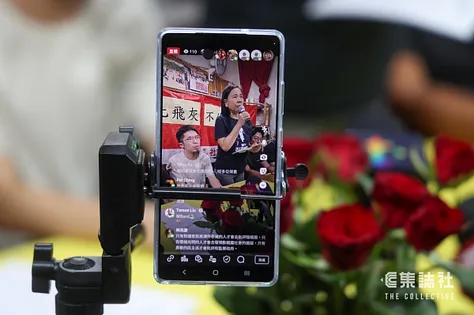
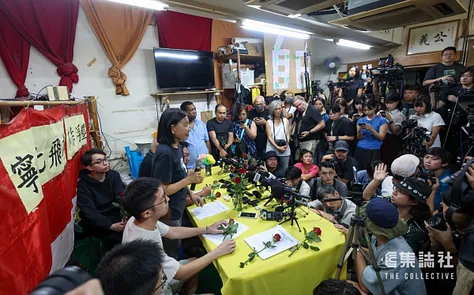
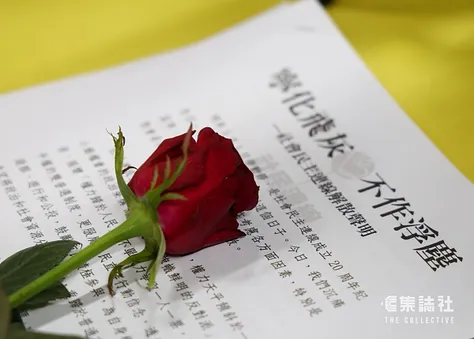
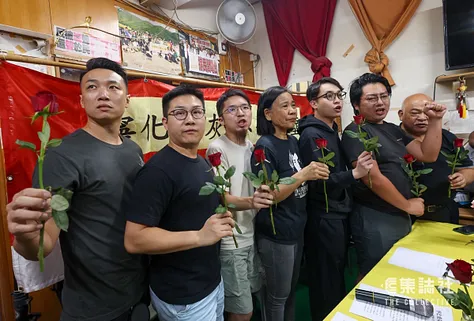
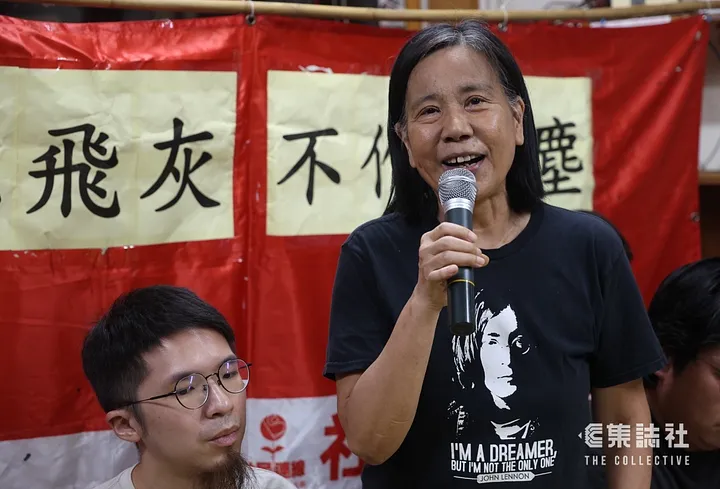
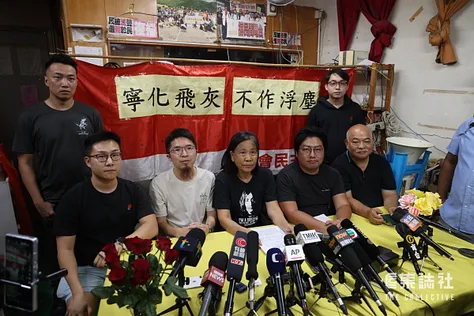
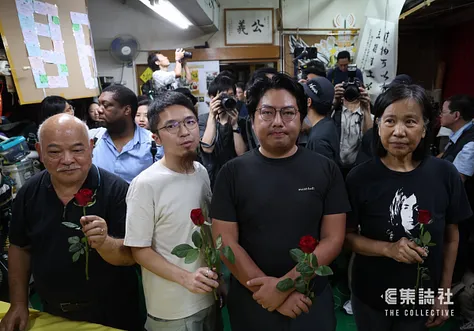
The League of Social Democrats (社會民主連線) announced its dissolution Sunday after nearly two decades of political activism in Hong Kong, with chairwoman Chan Po-ying (陳寶瑩) citing “tremendous political pressure” (強大的政治壓力) and concern for members’ safety. The left-wing party, founded in 2006 by prominent democracy advocates including “Long Hair” Leung Kwok-hung (梁國雄) and Wong Yuk-man (黃毓民), once held three legislative seats and championed street protests with the slogan “resistance within and outside the legislature.” The Collective (集誌社) reserved comment on the story, posting instead an image gallery (below) of the party’s closure. Also reporting the news, Taiwan’s CNA compiled a list of the nine parties disbanded in Hong Kong to date. Pro-Beijing media welcomed the move, with Wen Wei Po describing the organization as having “troubled Hong Kong for 20 years.”

Youth Exchange Scandal

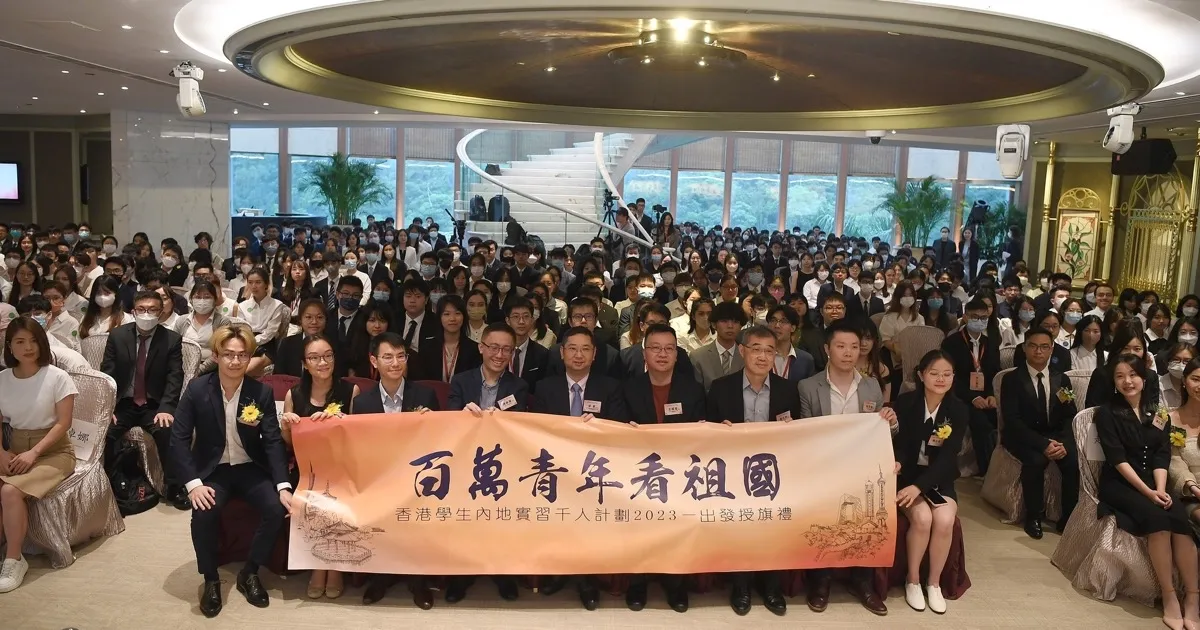
In a series of four investigative reports published starting last week, the independent Hong Kong outlet The Collective (集誌社) exposed potential irregularities in a government-funded mainland China internship program. According to the series, the budget of the Funding Scheme for Youth Internship in the Mainland has ballooned from HK$23 million in 2014 to over HK$113 million this year, with mainland programs this year accounting for 87 percent of Hong Kong’s overseas exchange budget. The Collective‘s investigation found that over half of audited projects violated guidelines by failing to publish financial reports, while some organizations with questionable backgrounds received millions in funding. Among the recipients, the series alleges, three companies linked to All-China Youth Federation member Wong Yiu-ying (王耀瑩) secured HK$23 million across 18 projects over three years, despite having websites created on identical dates and posting synchronized content.

Read On: Report 1 | Report 2 | Report 3 | Report 4

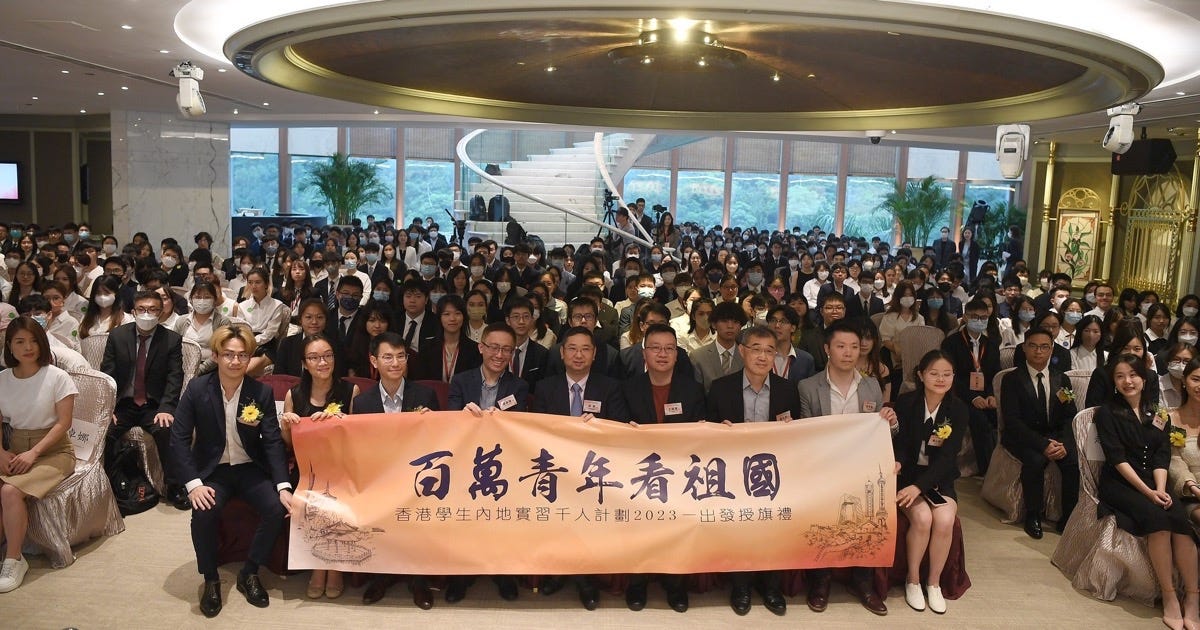
All-China Youth Federation member Wong Yiu-ying (fourth from right) has organized mainland internship programs for thousands of participants. Next to Wong, at center, is Song Lai, deputy director of the Youth Work Department of the central government’s Liaison Office. SOURCE: The Collective.

Unmasking China’s Ranking Rejection

Chinese state-run outlets in Hong Kong have launched a coordinated response against Reporters Without Borders after it ranked Hong Kong at 140 on its 2025 World Press Freedom Index — downgrading the city to its “very serious” category for the first time. The Ta Kung Pao (大公報) criticized RSF for “distorting facts” and “misrepresenting the truth,” while the Wen Wei Po (文匯報) claimed RSF views Hong Kong through an “ideological lens” that deliberately magnifies isolated cases. Meanwhile, pro-establishment lawmaker Elizabeth Quat (葛珮帆) accused RSF of “double standards,” citing a survey by the Bauhinia Institute (紫荊研究院) claiming 62.5 percent of Hong Kong residents believe the Basic Law (基本法) effectively protects press freedom.

Citing this source may actually support RSF’s basic concerns, however. The Bauhinia Institute, founded in 2016, is closely associated with the central government’s Liaison Office in Hong Kong. The company’s director and 100 percent shareholder is Zhang Chunsheng (張春生), a former Xinhua News Agency journalist who later joined Wen Wei Po and for many years was a top executive at the central government-run Bauhinia magazine.

RSF defended its methodology, noting that at least 28 journalists have been prosecuted and 10 remain detained since the implementation of national security legislation in 2020.

Paper Signals

The controversy surrounding Li Ka-shing’s proposed 23 billion dollar Panama ports deal, which has angered China, reveals a fundamental shift in Hong Kong’s political media landscape, according to Chris Yeung, former Ming Pao editor and now head of Green Bean Media (綠豆). Yeung wrote that Ta Kung Pao (大公報) and Wen Wei Po (文匯報) — both papers controlled by the central government’s Liaison Office in the city — have replaced the South China Morning Post as the city’s most politically influential publications, becoming “first-to-read” newspapers for government officials and business leaders alike.

When Ta Kung Pao condemned CK Hutchison’s ports sale as “groveling” and “betrayal,” it demonstrated the direct line between these publications and official policy positions. “Pro-democracy activists read looking for signs of imminent trouble,” Yeung wrote, highlighting the papers’ role as Beijing’s political barometer. In an update on that story this week, China’s Caixin Media reports that Pacific Century Group, the Hong Kong conglomerate run by Li Ka-shing’s son, Richard Li, has openly distanced itself from CK Hutchison and the now politically toxic deal.

Changing media dynamics in Hong Kong were further illustrated late last month when Security Secretary Chris Tang (鄧炳強) publicly criticized Ming Pao for “misleading” reporting. After a Ming Pao journalist questioned why Tang hadn’t announced his Thailand trip, Tang accused the paper of trying to “undermine public trust.” When the paper’s deputy chief editor defended the question, Tang responded with a letter condemning the “biased” coverage (See “Short Stories” below for more on Tang).

For a rundown of the Li Ka-shing story in Chinese, see Fang Ming’s (方明) take at Initium Media (端傳媒), which notes “more and more discussions are focusing on the risks of U.S.-China competition.”